
Tabriz does not introduce itself quickly. A visitor who lands at the airport, crosses the modern ring roads, and walks once through the vast covered bazaar will sense that the city is more than it appears, but the evidence of its remarkable past is layered, not loud. Tabriz was a capital before most European cities had stone walls. It lost its archive of monuments to earthquakes and rebuilt itself each time, which is why its greatest treasures today are not single buildings but habits: trade, craftsmanship, learning, and civic pride. The following facts, gathered from the city's chronicles and the memories of its families, offer a portrait that no single museum wall can provide. Read them before you go, and the streets will talk to you differently.
Ancient Foundations
1. The city is at least 2,500 years old, and probably far older. Chronicles trace Tabriz to the Parthian era, and local tradition pushes its founding back further, to the time of the Sasanians and the legends that surround them. One medieval story says the city rose beside a spring at the foot of the Sahand volcano, on a site praised by earlier writers as a garden valley. Whatever the exact date, archaeology and written records agree that this has been a continuous urban settlement since antiquity, one of the few in the Iranian highlands.
2. It has been the capital of more dynasties than any other Iranian city. Over the centuries Tabriz served as the seat of power for the Rawadids, the Ilkhanid Mongols, the Qara Qoyunlu, the Aq Qoyunlu, the Safavids at their founding, and briefly several other rulers. When historians count the dynasties that governed Iran from Tabriz, the number reaches at least seven. Isfahan and Shiraz have their claims, but no city in the country wore the crown so often.
3. Around the year 1500 it was one of the largest cities in the world. Contemporary travellers from Europe and the Ottoman lands described Tabriz as a metropolis of markets, gardens, and hundreds of thousands of residents, and ranked it among the five largest cities on earth. Its population at that moment rivalled Venice and Cairo. The traveller who reads those accounts today, standing on the same ground, feels the scale of what the city once was.
4. The name Tabriz changes spelling as you cross the region. Armenians have long written the name as Tavriz, and Kurdish speakers as Turiz, and older European documents carry a dozen variants. The Persian form Tabriz is now standard, but the family of spellings records how many peoples have lived in and around the city, and how far its fame travelled.
A City of Earthquakes and Survivors
5. Tabriz has been flattened and has risen again, repeatedly. The city lies close to the North Tabriz Fault, and the record of destruction goes back more than a thousand years. In 1774 a violent earthquake levelled whole quarters and killed tens of thousands. Each catastrophe was followed by rebuilding, usually within a generation, and each rebuilding returned the bazaar to trade faster than anything else. People sometimes say that in Tabriz the earthquake is the only force that has ever beaten the merchants, and even then only briefly.
6. The famous bazaar has been trading continuously for centuries and is now a World Heritage Site. UNESCO inscribed the Tabriz Historic Bazaar Complex on the World Heritage list in 2010, calling it one of the most complete examples of a traditional commercial urban system. Its vaulted brick corridors stretch for kilometres, and its family of caravanserais, mosques, schools, and bathhouses grew together as one organism. Walking it at mid-morning, when the spice sacks are opened and the tea samovars hiss, is the closest thing to time travel the city offers.
7. The Blue Mosque earned the title "Turquoise of Islam." Built in the fifteenth century under the Qara Qoyunlu ruler Jahan Shah, the mosque was sheathed in blue tiles of extraordinary depth. An earthquake in the eighteenth century destroyed much of it, and restorers have spent decades returning it to life. The surviving fragments of tilework are enough to explain the nickname that travelled through Persian poetry.

Firsts That Shaped Modern Iran
8. Iran's first printing house worked in Tabriz under Abbas Mirza. In 1227 of the solar calendar, during the reforms of the crown prince Abbas Mirza, the first printing establishment of the country set up shop in the city, issuing books and documents that no scribe could have matched for speed. The reform movement of that era reached further in Tabriz than anywhere else, and the press was its loudest voice.
9. The country's first public library opened here as well. The Tarbiat library, founded in 1300 of the solar calendar, placed thousands of volumes at the free disposal of the public. Before it, a book was usually locked in a private collection; after it, the idea of a civic library spread across Iran.
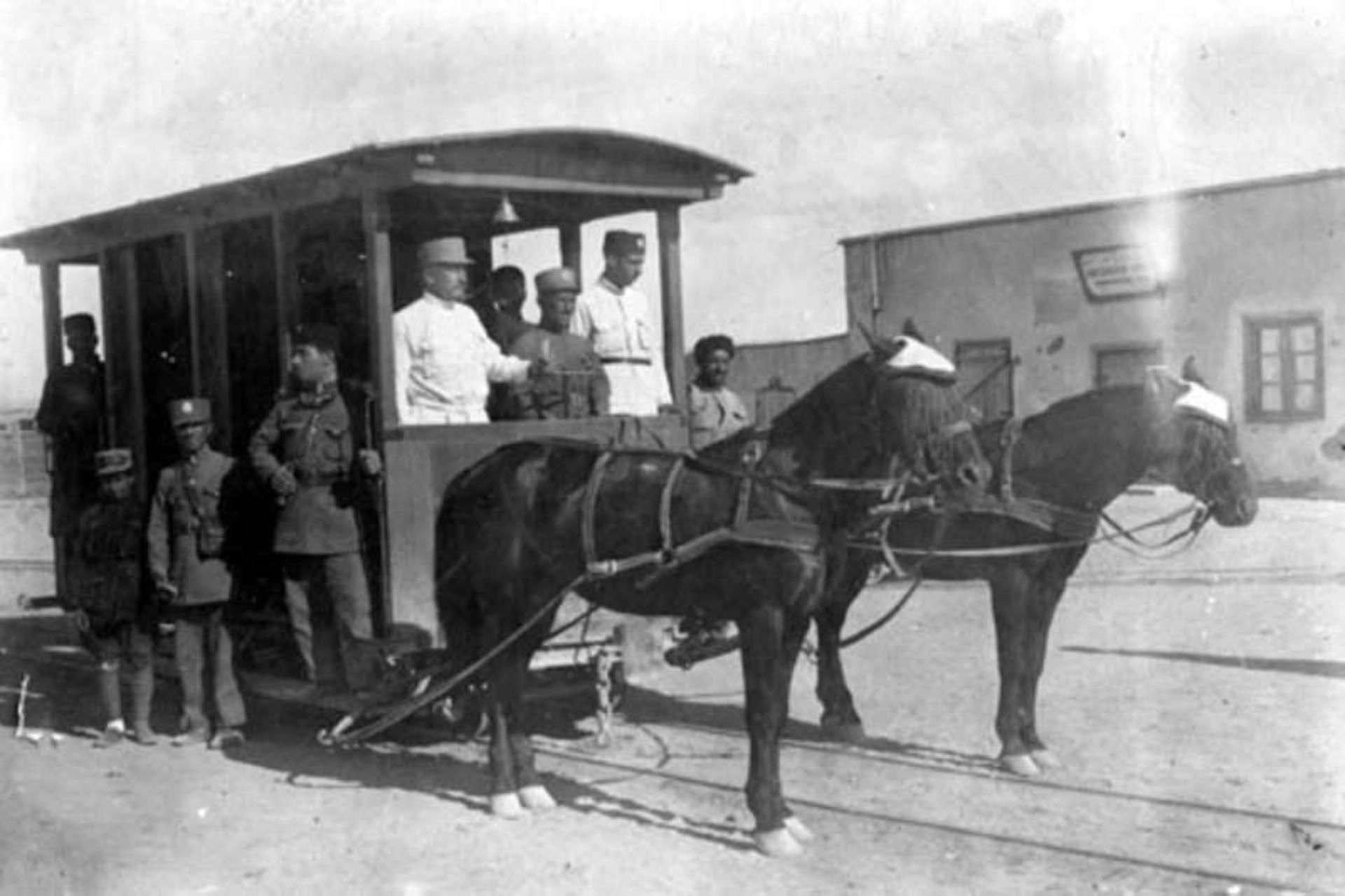
10. The first tramway in Iran carried passengers through Tabriz streets. In 1280 of the solar calendar a horse-drawn tramway, known locally by the Russian word qonqa, began service in the city decades before any other Iranian town dreamed of public transport. Passengers climbed aboard between the station square and the bazaar, and the sight of rails in an Iranian street dates from those years.
11. The telephone arrived early too. In the same year, 1280, the first telephone exchange in the country connected a handful of lines in Tabriz, years before the capital installed a comparable system. For a generation, the city's merchants could speak across town without sending a boy with a note.
12. The first modern restaurant and the first modern hotel opened their doors here. Cafe Tria, founded in 1284 of the solar calendar, is counted as the first modern restaurant in Iran, and the Nazafat hotel followed in 1321 as the first of its kind. The city's long acquaintance with travelling merchants made hospitality a serious trade.
13. Iran's first fire department was organised in Tabriz. In 1221 of the solar calendar, while foreign troops were stationed in the city, the first organised fire brigade of the country was formed, and its building survives as a monument. The brigade's brass helmets and hand pumps are remembered in the city's museum collections, and the service itself became a model for other towns.
14. The first chamber of commerce and the first modern municipality are Tabrizi inventions. In 1285 of the solar calendar the merchants organised the country's first chamber of commerce, and two years later, in 1287, the city received its first modern municipality under Ghasem Khan Vali, an officer trained in the Saint-Cyr military school in France. His successors built the institutions of city government that the rest of the country later copied.
15. The Municipality Palace tower became the city's first museum. The clock-towered palace built between 1314 and 1318 of the solar calendar still anchors the Saat square. Inside, its halls were converted into the first museum of the city, and today the building holds the municipal museum, the carpet museum, and a small hall of sculpture. It is the best single stop for a newcomer who wants the whole story under one roof.

A Society That Cared for Its Own
16. Writers and teachers of national importance came from these streets. The essayist and reformer Talebof taught here, and the playwright Mirza Aqa Tabrizi, honoured as the father of Persian satire on stage, worked and wrote in the city. The school of Mirza Hassan Roshdieh introduced modern pedagogy, and Jabbar Baghcheban founded the country's first school for deaf children. A city that produced so many teachers was never going to stay silent.
17. One of the oldest charitable foundations in the country still operates here. The Nobar charity, established in 1326 of the solar calendar from an endowment created by the city's notables, continues to fund schools, clinics, and aid for families in need. Philanthropy in Tabriz grew out of the guild system of the bazaar, where wealth carried an obligation to the quarter that produced it.
18. Tabriz University is the second oldest in Iran. Founded in 1325 of the solar calendar, only months after the university of the capital, it grew into one of the country's major centres of medicine, engineering, and the humanities. Generations of students from Azerbaijan and neighbouring provinces passed through its gates, and its alumni staff the hospitals and offices of the entire northwest.
19. Locals call it the safest city in the country, and the claim has substance. Surveys of urban crime and the testimony of travellers both point the same way: visitors walking the bazaar at night report a calm they rarely feel in larger cities. Residents add a second claim with a smile, that Tabriz is the city without beggars, because the guild networks and charitable foundations of the bazaar leave no one without a trade or a meal. Travellers can judge for themselves, but the statistic repeats year after year.
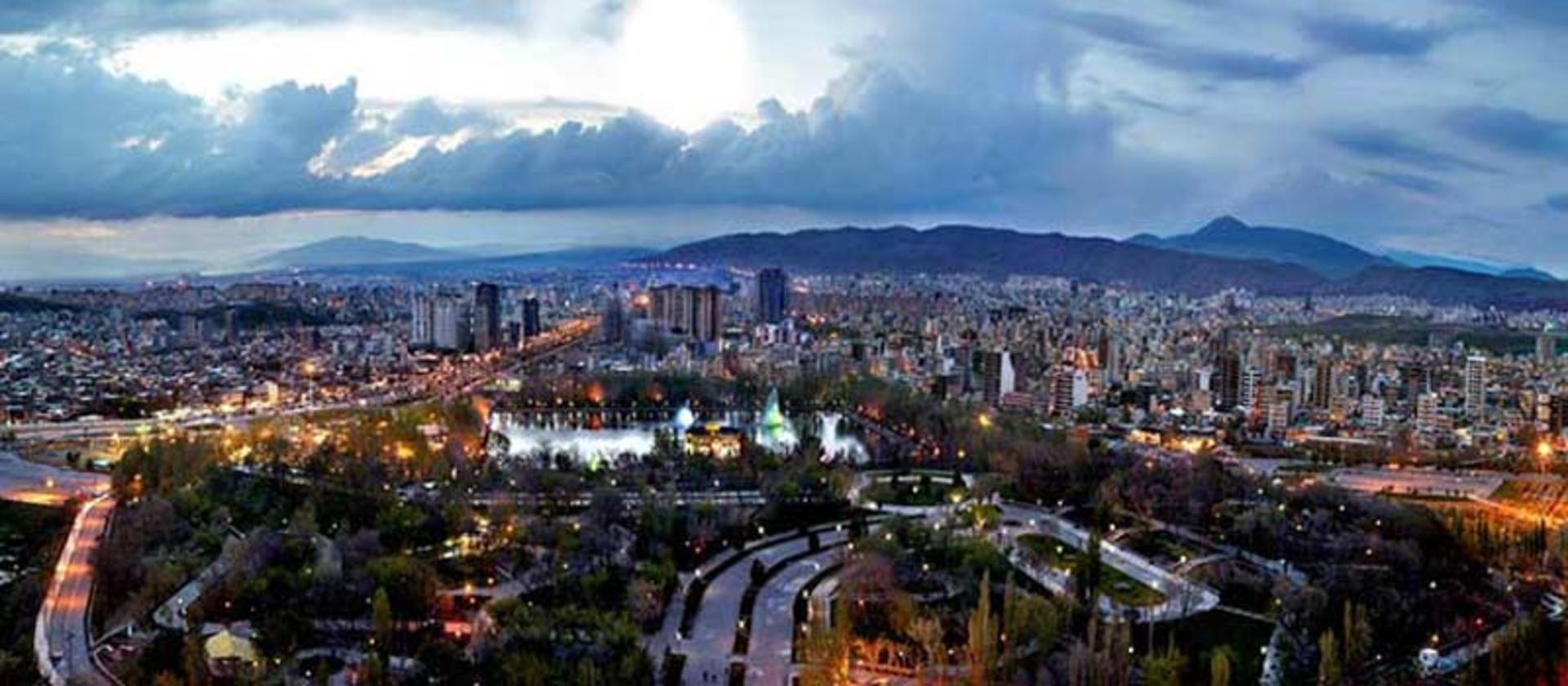
20. The city drives on a lattice of more than a hundred interchanges. Modern Tabriz, stretching across a valley under the Sahand heights, has been rebuilt with flyovers and tunnels on a scale unmatched in Iran, more than one hundred major interchanges by the city's own count. The number surprises visitors who expect a provincial town, and it explains how a metropolis of this size moves its traffic between the bazaar, the universities, and the ring of new districts.
Putting the Facts to Work
Numbers and dates only come alive on the ground. Start your visit at the Municipality Palace to orient yourself, then descend into the bazaar complex for the sensory half of the story, and finish in the afternoon at the Blue Mosque and the city museum for the artistic half. Allow at least two full days, because the distances between monuments are real and the bazaar alone can absorb a morning.
Getting around with Mehyar. Open Mehyar, choose Taxi, and set your destination, and the fare is displayed before you confirm, which makes hopping between the Saat tower, the bazaar, and the Blue Mosque simple. If you are travelling from Tehran or another province, Mehyar Buses brings you into the city's main terminal, where local taxis complete the journey into the historic centre.
The facts of Tabriz resist tidy summary because the city itself has never stopped adding to the list. An earthquake rebuilt it, dynasties crowned it, merchants organised it, and teachers reformed it, and today's residents keep every one of those memories in working order. Arrive with these twenty facts and you will not simply see Tabriz. You will recognise it.