
Every traveller who spends more than a few days in Tabriz hears the same sentence sooner or later, usually delivered with quiet pride over a cup of tea: "That was the first one in Iran, and it started right here." The claim is so frequent that it can begin to sound like a local legend, yet it is almost always true. The first printing press in the country, the first Persian novel, the first cinema screen, the first public library, the first school for deaf children, and the first open-heart operation in Iran all trace their beginnings to this city on the eastern edge of the Iranian plateau. Tabriz was not merely a spectator of the modern era. For roughly a century and a half it was the workshop where modern ideas were tested, adapted, and sent on to the rest of the country.
This article is the first part of a two-part journey through the firsts of Tabriz. Part one gathers the landmarks of invention in books, images, schools, and hospitals. Part two continues with transport, municipal administration, commerce, and the everyday comforts that the city introduced to Iran. Together they explain why many historians describe Tabriz as the open gate through which modernity entered the country.
Why Tabriz Moved First
Geography explains a great deal. Tabriz sits on the shortest route between the Iranian plateau and the Caucasus, Anatolia, and Europe. For centuries its bazaar was the western terminus of overland trade, and its merchants kept houses in Istanbul, Tbilisi, and the ports of the Black Sea. When the Industrial Revolution shortened distances and accelerated the movement of goods, it also accelerated the movement of ideas. Merchants brought home printing equipment alongside their bales of cloth. Students returned from European and Russian universities with new notions of pedagogy and medicine. Consulates opened, newspapers arrived by courier, and the city's literate merchant class read them hungrily.
The constitutional movement of the early twentieth century deepened this openness. Tabriz was the beating heart of that struggle, and a population that had fought for a parliament was unlikely to accept old habits in the classroom, the hospital, or the printing house. Innovation in Tabriz was never a fashion. It was a statement of civic identity, and the list of firsts below is the record of that statement.
The First Printing Press in Iran
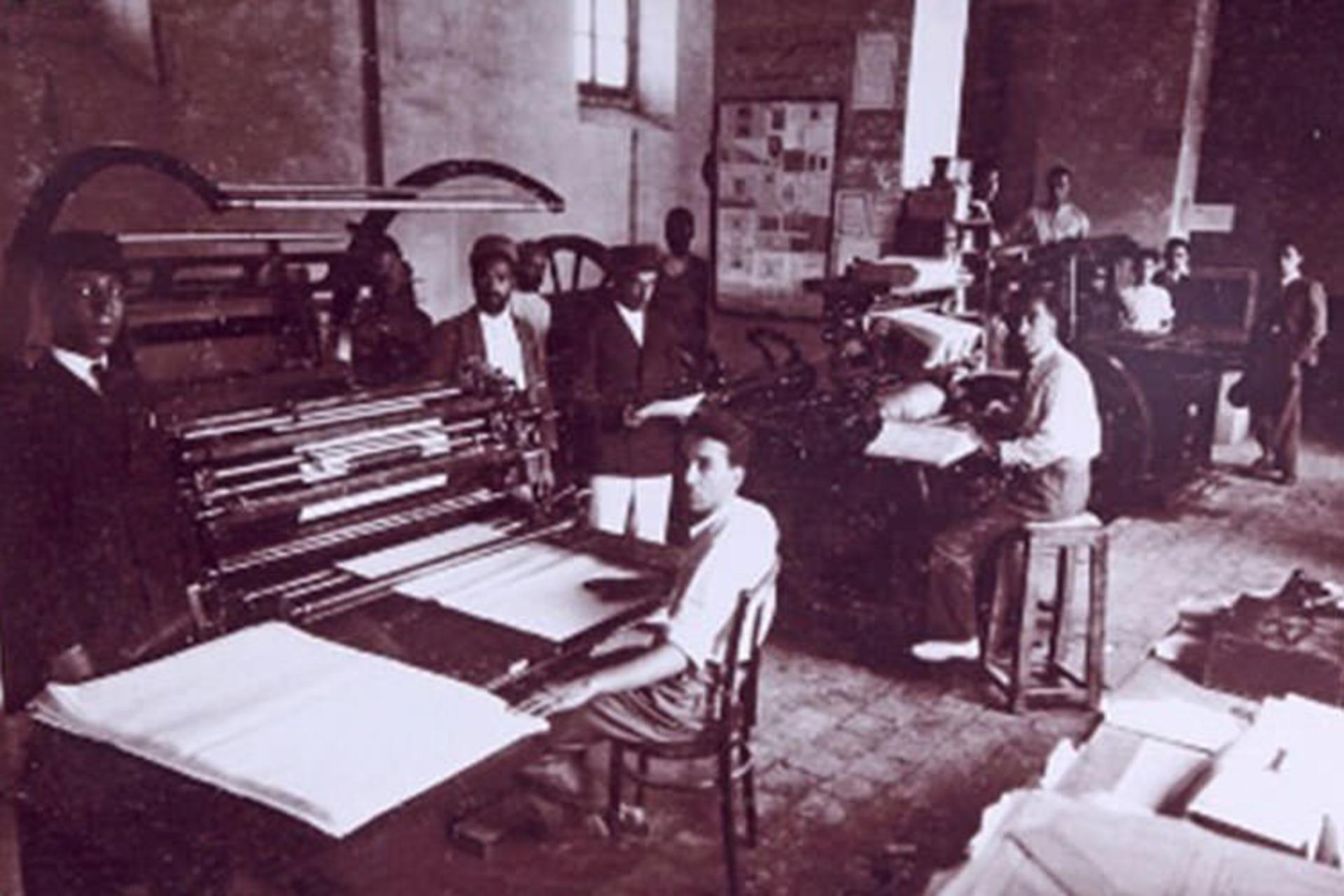
The story begins with books. In 1232 AH, corresponding to the year 1195 of the Persian solar calendar, Mirza Zin al-Abidin Tabrizi set up the first printing press in the country. Before this date, every book in Iran existed only as a handwritten manuscript, copied by scribes one page at a time. The arrival of movable type in Tabriz changed the economics of knowledge overnight. Texts that had once taken months to reproduce could now be printed in days, and the price of a book fell within reach of ordinary families.
The significance of this machine is difficult to overstate. Printing preceded the modern press, the modern school, and the modern bureaucracy. It standardised spelling, spread literacy, and created the very idea of a reading public. That it happened first in Tabriz is a matter of civic record and considerable local pride, and historians of the Iranian book treat the date as the opening of a new chapter.
The First Persian Novel
A generation later the city produced another literary milestone. In 1236 of the solar calendar, Mirza Fath Ali Akhundzadeh, a writer born in Nukha in the Caucasus and educated in Tabriz's cultural orbit, published what is counted as the first novel written in Persian. Fiction in verse and prose had deep roots in Iranian literature, but the novel, with its realistic characters, contemporary settings, and social criticism, was a new form. Akhundzadeh used it to poke fun at superstition and hypocrisy, and in doing so he opened a path that Persian fiction has followed ever since.
The same era produced another quieter first. The city's scholars compiled Riyaz al-Jannah, counted as the first encyclopaedia in the Islamic world arranged along modern lines. Scholarship in Tabriz was not content with inherited forms. It wanted the newest tools, and it used them.

The First Cinema Screen
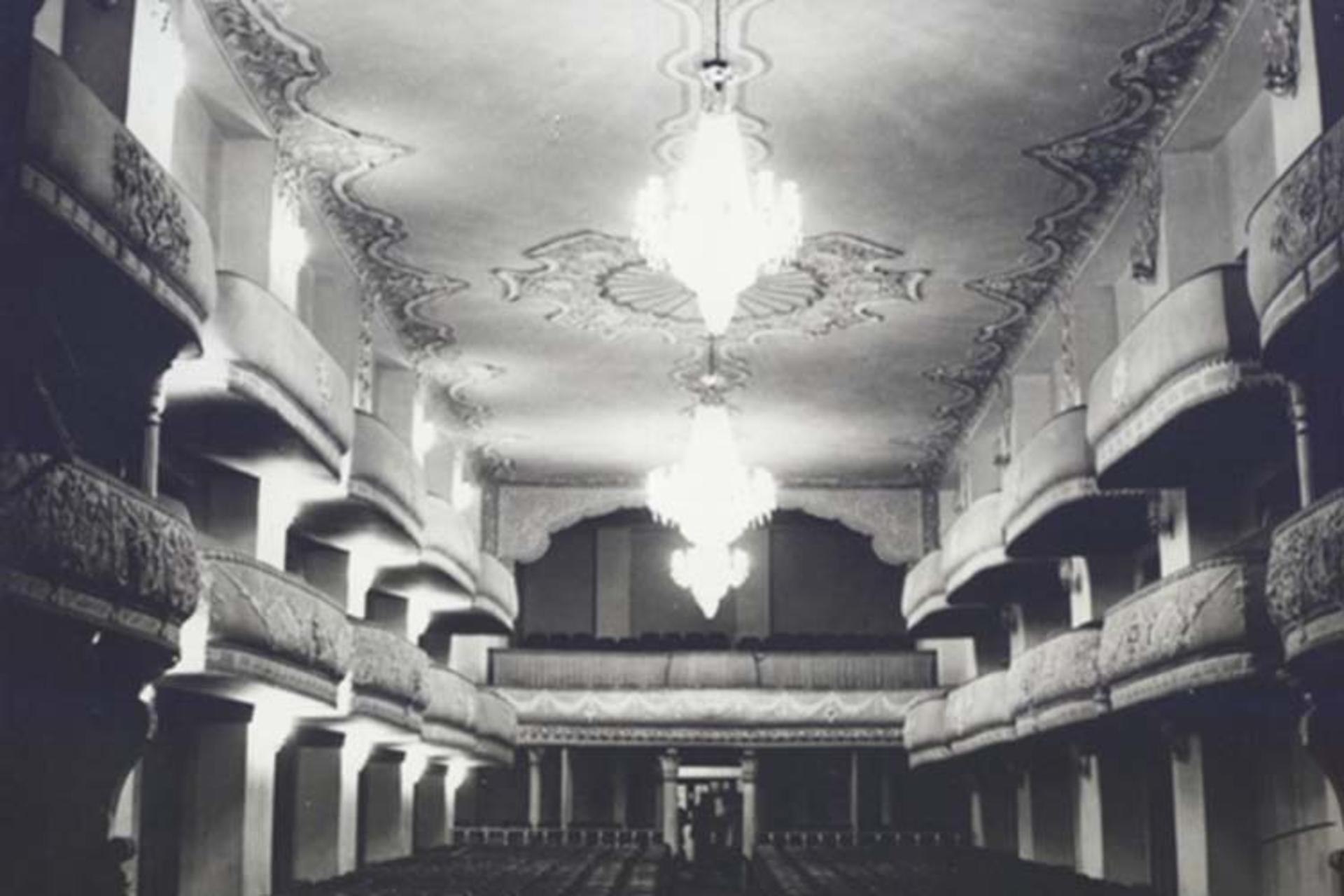
When the Lumiere brothers projected moving images in Paris, the spectacle took only a few years to reach Iran, and it reached it through Tabriz. In 1279 of the solar calendar, only about five years after the first public film screening in the world, Cinema Soli opened in the city and became the first commercial cinema in Iran. Audiences watched silent shorts with the same astonishment that had gripped Parisian viewers, and the habit of going to the pictures took root in the city's social calendar.
Tabriz went on to become one of the most film-literate cities in the country, a reputation it keeps today through its active festival circuit and its proud line of actors and directors. Travellers who want to understand modern Iranian cinema should remember that the story begins in a hall in Tabriz where a flickering beam first fell on a white wall.
The First Photograph
Images on paper arrived even before images in motion. In 1185 of the solar calendar, Malek Ghasem Mirza, a prince of the Qajar house posted in Azerbaijan, took up the new craft of photography, making Tabriz the first city in Iran where the camera was practiced. Court painters had long served as the keepers of likeness and memory; the photograph now offered an exact alternative, and the city's studios multiplied quickly. Portraits of merchants, views of the bazaar, and records of the constitutional struggle all passed through Tabrizi lenses, leaving an archive of national importance.
The First Public Library
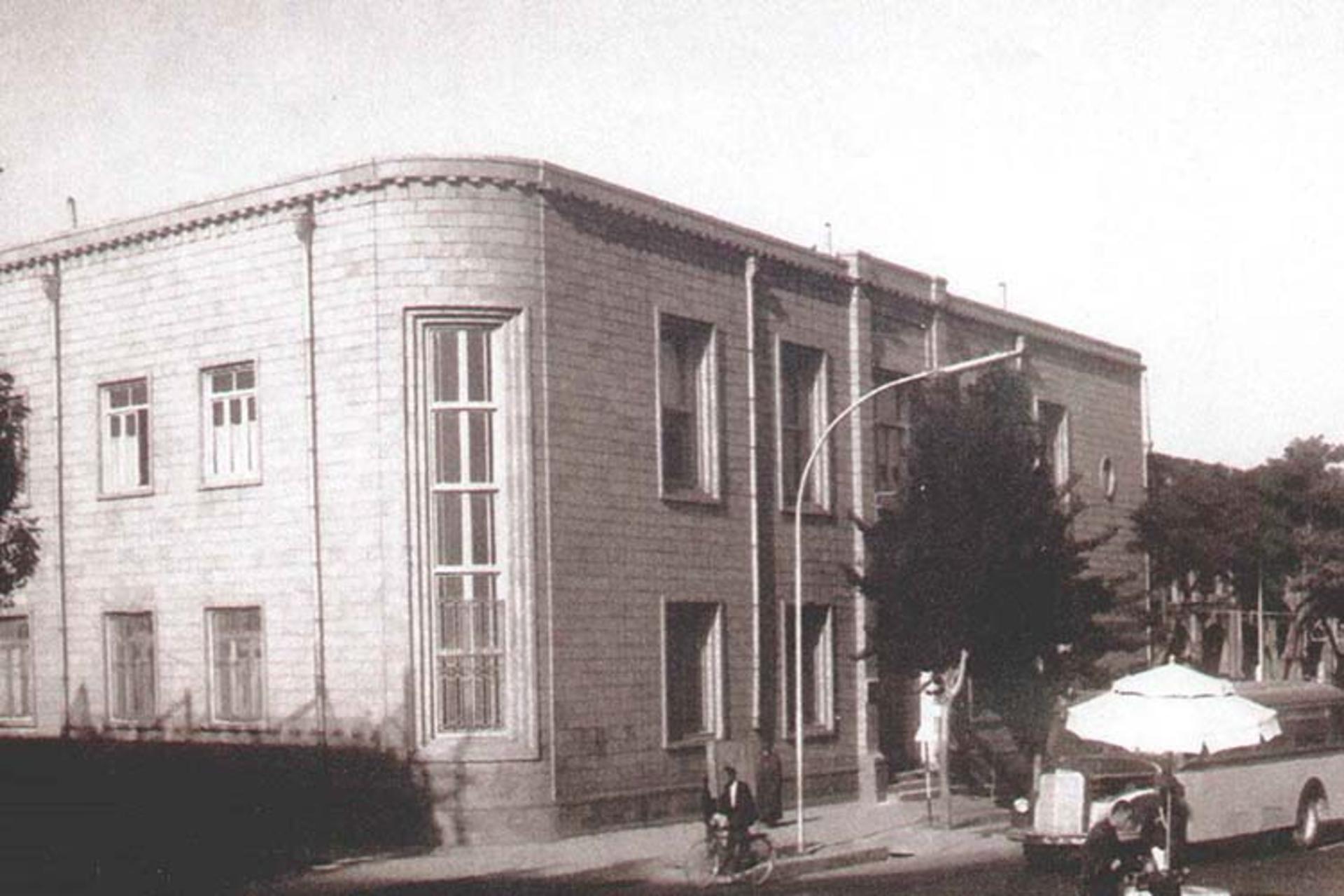
Private book collections were common among wealthy families, but a library open to every citizen was a new institution. In 1300 of the solar calendar, the Tarbiat library opened its doors in Tabriz as the first public library in Iran. Its founders gathered thousands of volumes, from medieval manuscripts to contemporary journals, and placed them at the disposal of students who owned nothing but curiosity.
The library took its name from the Tarbiat family, whose scholarly house produced generations of teachers, historians, and officials. Today the institution continues in a purpose-built hall, and its reading rooms remain a working monument to the idea that knowledge should not be a privilege. A modern city that funds schools and hospitals out of civic pride needed an argument for the free circulation of books, and Tabriz made that argument first.
A Revolution in the Classroom
No field shows Tabriz's pioneering spirit more clearly than education. Mirza Hassan Roshdieh, a schoolteacher from the city, is honoured across the country as the father of the modern Iranian school. Appalled by the rote memorisation of the traditional maktab, he designed a new kind of school in which reading was taught directly, arithmetic was demonstrated with objects, and geography and science joined the timetable. His pupils learned Persian through Persian instead of through Arabic primers, and his methods spread from Tabriz to every province.
The city's educational firsts read like a checklist of the modern school system. The first kindergarten in Iran, Baghcheh Atfal, opened here, giving young children a place designed for play rather than discipline. The first school for deaf children followed in 1303 of the solar calendar, founded by Jabbar Baghcheban, a teacher of genius who invented techniques for teaching lip-reading and articulation without any foreign textbook to guide him. Two years later, in 1305, the first school for blind children opened in the same city, and Baghcheban's methods were extended to braille instruction. The first commercial school, established in 1301, trained the bookkeepers and trade clerks that the bazaar's expanding firms required. Each of these institutions was the first of its kind in the country, and each was born in a city whose families demanded schooling for all their children, including the ones other systems had ignored.
Firsts in Medicine
Medicine in Tabriz has always carried prestige. The city's rulers endowed hospitals in the medieval period, and in the modern era the tradition of innovation continued. The first medical faculties of the country owe their earliest form to the work of Dr. Loghman Adham, a Tabrizi physician who organised clinical teaching on European models. In 1295 of the solar calendar the city opened the first nursing faculty in Iran, professionalising a role that had previously been informal and untrained. The father of modern psychology in Iran, Dr. Barahni, likewise came from Tabriz and built the discipline's first institutional home.
The surgical record is the most dramatic of all. In 1341 of the solar calendar, surgeons in Tabriz performed the first open-heart operation in Iran, a feat that requires anaesthesia, transfusion, and a heart-lung capability that most hospitals of the era could not supply. Six years later, in 1347, Dr. Javad Heyat led the team that carried out the country's first kidney transplant, again in Tabriz. These were not borrowed spectacles staged by visiting teams. They were the work of local departments that had built their skills step by step, and their example pushed hospitals across the country to raise their standards.
Visiting the Landmarks of the Firsts
The pleasure of this history is that it can be walked. The Tarbiat library stands near the heart of the city and welcomes readers in its modern building. The earth-quake scarred streets around the bazaar still hold the halls where the first cinema screened its shorts and the first photographs were printed. Roshdieh's school and the Baghcheban institutions are commemorated in the city's museums of education, and the medical faculty that trained the country's first nurses still anchors the university quarter. Allow a full day for the trail, and start early, because the bazaar district is liveliest in the morning.
Getting around with Mehyar. The sites of this trail are scattered across central Tabriz, and the quickest way to cover them is to open Mehyar, choose Taxi, and ride between the library, the museum quarter, and the university. Fares are displayed before you confirm, so you always know the cost of the next leg. If you are arriving from another province, Mehyar Buses can bring you into Tabriz's main terminal, where taxis wait for the final hop into the historic centre.
Why the Firsts Still Matter
A list of firsts could easily become a matter of parochial boasting, but the record of Tabriz teaches something more useful. It shows how change actually happens: not by decree from a distant capital, but in trading cities where people meet new things daily and have both the means and the confidence to adopt them. The city's merchants had capital, its scholars had curiosity, and its streets had the traffic of three empires. When those ingredients met, the printing press worked, the school bell rang, and the heart of a patient beat through the country's first open-heart operation.
Part two of this series follows the same story into the streets themselves: the first tramway, the first municipality, the first telephone lines, and the institutions of civic life that Tabriz handed to the rest of Iran. Together the two lists amount to a portrait of a city that never waited for permission to be modern, and a reminder that in Iran, the future has often arrived first from the northwest.