
Kerman sits where the Iranian plateau tilts toward the great desert, a city of brick domes and long bazaars that has been a caravan crossroads for more than a thousand years. For the traveler, it is the rare place where Safavid urban planning, a UNESCO-listed Persian garden, and one of the harshest deserts on Earth all fit inside a single, unhurried itinerary. This guide walks you through how to reach Kerman, what to see in the old center, how to plan the Mahan and Shahdad day trips, and what the seasons, money, and connectivity realities actually demand of you.
Where is Kerman?
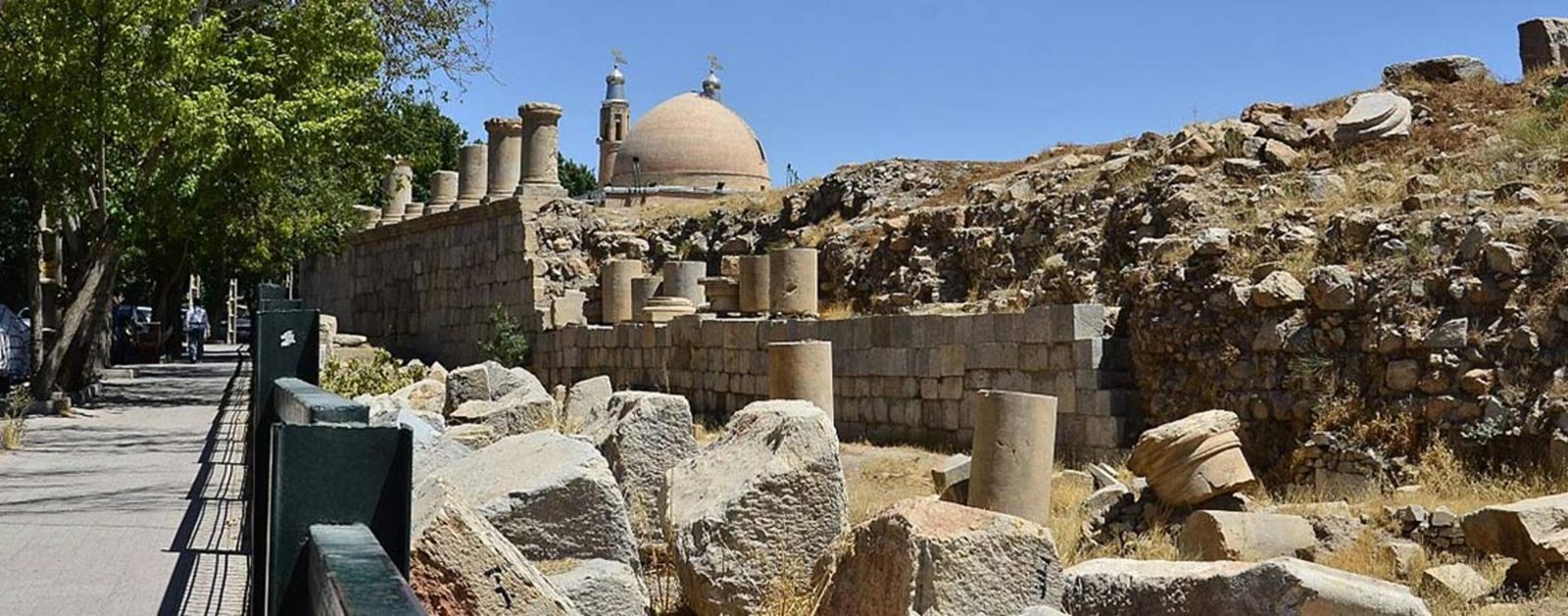
Kerman is the capital of Kerman Province, the largest province in Iran, and it anchors the country's southeast. The city spreads across a high plateau at roughly 1,750 meters above sea level, which is why its summers are less brutal than Yazd's and its winter nights can bite. To the north and northwest rise mountain ridges; to the east and south, the land flattens into the fringes of the Lut Desert. This meeting of mountain and desert is the defining fact of Kerman's climate, and it shapes everything from when you should visit to what you should pack.
The province is vast. It borders Yazd, South Khorasan, Sistan and Baluchestan, Hormozgan, and Fars, which means Kerman is a natural hub for travelers moving between central Iran, the Persian Gulf coast, and the eastern frontier. The city itself is compact enough to explore on foot in its historic core, yet large enough to have a full range of hotels, hospitals, and transport connections.
How to get to Kerman
Kerman is well connected by air, road, and rail, though the distances are real and you should plan your mode around your time budget rather than around price alone.
By air. Kerman International Airport, named for Ayatollah Hashemi Rafsanjani, sits at the end of Boulevard Jomhouri, roughly twenty minutes from the city center. It handles regular domestic flights to and from Tehran, Mashhad, Shiraz, Zahedan, Tabriz, Kish, and several other cities. From Tehran, the flight takes about one hour and thirty minutes, which makes it the obvious choice if you are short on time. The airport is small and easy to navigate; immigration and baggage are quick by international standards. The main gap is international service, which is limited and subject to change, so most foreign visitors arrive via a domestic connection from Tehran. Before you travel, confirm schedules directly, because regional flight availability shifts with seasons and operational decisions.
By train. Kerman sits on Iran's north-south and east-west rail corridors, linking Tehran, Isfahan, Yazd, Hormozgan, and Sistan and Baluchestan. The Kerman railway station is in the southwest of the city, near the Adineh Kariman passenger terminal. The train from Tehran takes roughly fourteen hours, which is comfortable if you book a sleeper but long if you do not. For families and travelers who prefer to see the landscape slide by, the train is a genuinely pleasant option, and it is considerably cheaper than flying. Book early if you are traveling around Nowruz, when trains to Kerman fill up weeks in advance.
By bus. The Adineh terminal is the city's main bus hub, a three-story building with its own hotel and ancillary services. Buses connect Kerman to Tehran, Isfahan, Yazd, Shiraz, Bandar Abbas, Zahedan, and Mashhad, among others. The Tehran to Kerman bus takes around fourteen hours, which is the cheapest way to arrive but also the most tiring. Overnight VIP buses with reclining seats are the sensible middle ground.
By car. If you are driving, the main western approach is the Persian Gulf Freeway from Baghin toward Kerman, and the northern entrance from the Imam Reza highway leads toward Zarand, Ravar, and eventually Mashhad. The southern exit is the primary route toward Mahan, Rayen, Bam, Zahedan, Iranshahr, and Chabahar; from it, the Haft Bagh Alavi tourism highway is the more secure and scenic route to Mahan, passing Shahzadeh Garden. The old Mahan road is the one to take if you are heading to the Shahdad kaluts or the Sirch hot springs.
Once you are in Kerman, open Mehyar and choose Taxi for airport transfers, station pickups, and cross-city rides. The app gives you a clear fare before you get in, which removes the usual negotiation and language friction. For intercity legs, Mehyar Buses and Mehyar Flights let you compare schedules and book in one place, and Mehyar Hotels handles your Kerman base and your Mahan overnight if you decide to stay out near the garden.
A short history of Kerman
Kerman's story runs deep. The city was known as Carmania in the Achaemenid period, became an important provincial capital under the Sassanians, and grew into a major center of Islamic learning and culture after the Arab conquest. The Seljuks, the Ilkhanids, the Safavids, and the Qajars all left their mark, and the city's fortunes rose and fell with the caravan trade that linked the Persian Gulf to Khorasan and Central Asia.
The Safavid era was a particular high point. Ganjali Khan, the governor of Kerman under Shah Abbas, commissioned the civic complex that still carries his name, and the bazaar he integrated into it remains one of the longest covered market streets in Iran. Later, the city endured sieges, earthquakes, and the gradual shift of trade routes, but its historic fabric survived well enough that Kerman is now counted among Iran's five most important historical destinations.
What to see in Kerman
The Ganjali Khan Complex
The Ganjali Khan Complex is the historic heart of Kerman and one of the finest examples of Safavid urban planning in the country. Built in the early seventeenth century, it was designed not as a single monument but as a working civic center where trade, bathing, worship, and administration all happened around a harmonious central square.
The square itself is calm and well-proportioned, and the buildings around it reward slow looking. The bathhouse, or hammam, is now an ethnographic museum with wax figures in traditional dress that show how a Persian bath actually worked; the domes, light wells, and painted scenes make it one of the most beautiful interiors in the city. The bazaar connects the complex to Kerman's wider trading network, the caravanserai once hosted merchants crossing the desert, and the mint and water reservoir remind you that this was an economically organized city, not just a pretty one. The complex is open daily, and the hammam museum has an admission fee that changes over time; treat any figure you read online as indicative and confirm on arrival.
Kerman Grand Bazaar
The bazaar is the spine of the old city, and it is genuinely long, arguably the longest covered bazaar street in Iran. It runs through several distinct sections, including the Arg, Ganjali Khan, Ekhtiari, Sardari, Vakil, Attari, Ghadamgah, and Mozaffari rows. Copper beaters, carpet sellers, spice merchants, and dried-fruit stalls sit side by side, and the vaulted brick ceilings keep the whole thing cool even in summer. This is the place to buy Kerman's famous cumin, pistachios from Rafsanjan, and the local sweets known as kolucheh and qottab. Bring cash in rials, and be ready to bargain politely.
Jameh Mosque and the old mosques
The Jameh Mosque, also known as the Mozaffari Congregational Mosque, is a masterpiece of Islamic art and one of the city's most important religious buildings. Kerman's Malek Mosque is another essential stop: it is the oldest mosque in the city, dating back to the Seljuk period, and it remains an active place of worship. The brick Seljuk tower, the multiple mihrabs, and the four-iwan plan are all worth your time. Dress modestly, and avoid visiting during prayer times if you are there only to look.
Jabaliyeh Dome
The Jabaliyeh Dome is an octagonal structure of uncertain age, possibly a Zoroastrian fire temple repurposed over the centuries. It sits in a small park with mountain views, and the atmosphere at dusk is particularly good. It is a short ride from the center and combines well with a visit to the nearby Kerman cemeteries and the Moayedi Ice House, an ingenious pre-refrigeration structure that once stored winter ice for summer use.
Sanati Contemporary Arts Museum
The Sanati Museum is one of the most valuable collections of contemporary art in Iran after the Tehran Museum of Contemporary Art. It occupies the former home of Ali Akbar Sanati, the father of Iranian sculpture, and holds around 1,200 works, including bronzes, marble pieces, oil paintings, and watercolors by Iranian and international artists. The building itself, with its brick facade and traditional domed roof, is part of the experience. It sits on Shariati Street between Bagh Melli Square and Tahmasbabad crossroads, and it is open in the mornings.
Fathabad Garden
Fathabad Garden is a smaller, easier-to-reach alternative to Shahzadeh Garden, and many travelers actually prefer it. It is at its best at night, when the lighting comes on and the water channels and rose beds take on a different character. If you are staying in Kerman and do not want the drive to Mahan, this is a lovely evening option.
Day trip: Shahzadeh Mahan Garden
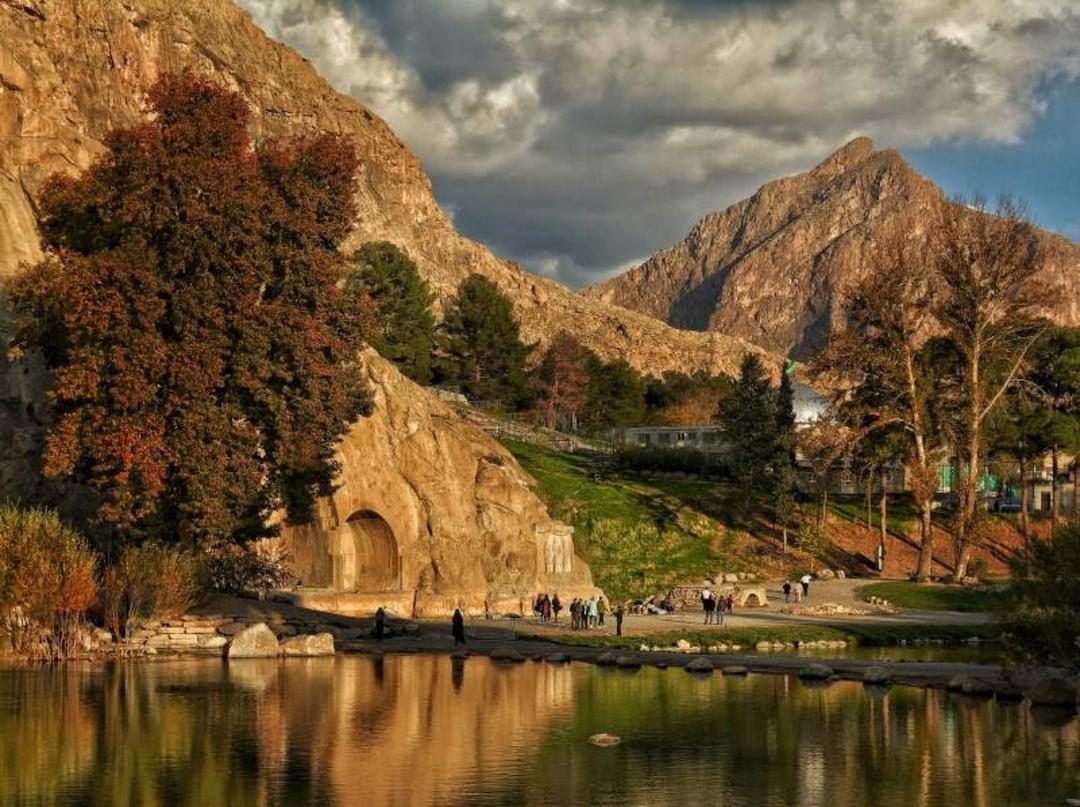
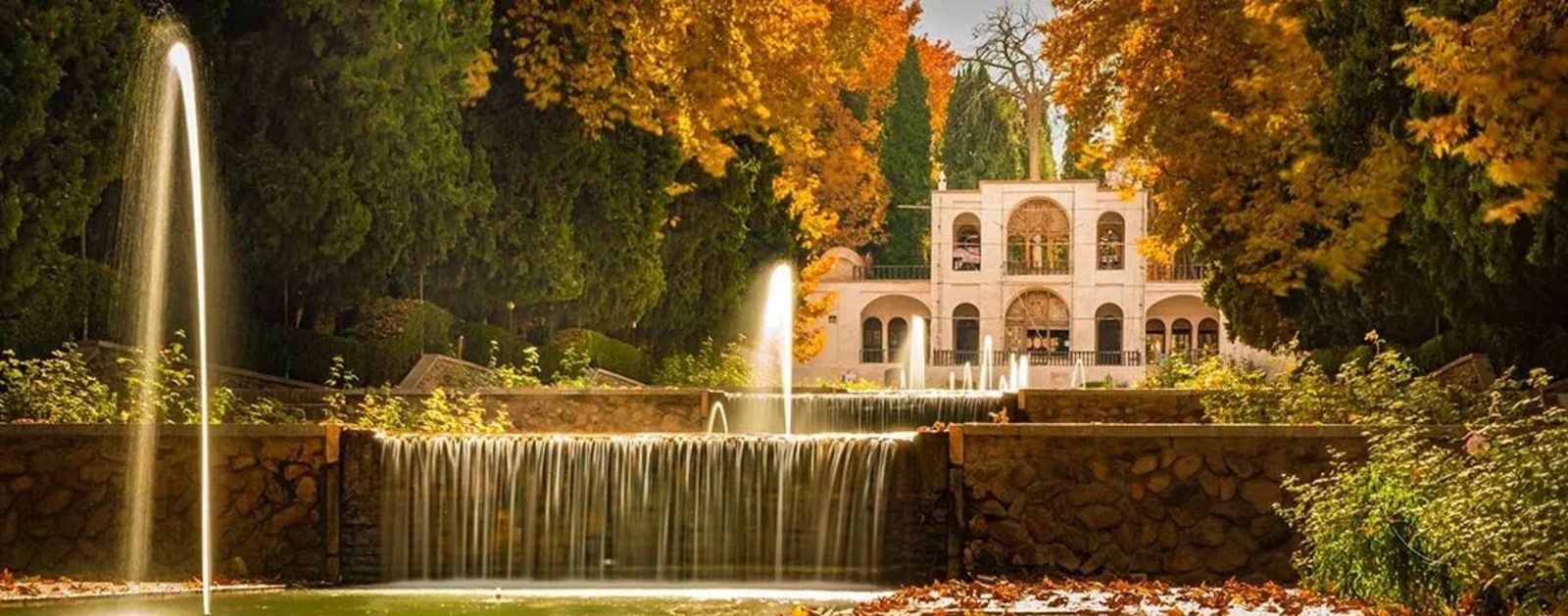
About forty kilometers southeast of Kerman, the town of Mahan holds two of the region's most rewarding sites. The first is the Shahzadeh Garden, a UNESCO-listed Persian garden built in the Qajar era on the slope of the Tigran mountains. The design is a classic example of the Persian garden idea: water channels, cypress avenues, and pavilions arranged to create a paradise in the middle of an arid landscape. The garden is at its most photogenic in spring, when the roses and blossoms are out, and in autumn, when the light softens.
The second is the Shah Nematollah Vali Shrine, the burial place of a revered fifteenth-century Sufi master and poet. The shrine's mosaics, courtyards, and serene gardens make it one of the most spiritually atmospheric sites in Iran, and it is an easy walk from the garden. Together, the two sites make a comfortable half-day or full-day trip from Kerman.
To get there, take the Haft Bagh Alavi highway, which is the safer and more scenic route. Mehyar Taxi can handle the round trip with a wait, or you can book a Mehyar Tour if you prefer a guide. If you are driving yourself, the road is well signposted and the trip takes about forty-five minutes each way.
Day trip: Shahdad and the Kaluts
The Kaluts of Shahdad are the reason many travelers put Kerman on their map in the first place. These are yardangs, massive clay and sand formations carved by wind over millennia, rising up to eighty meters and standing in long corridors that look like the ruins of a city built by weather. They sit inside the Lut Desert, a UNESCO World Heritage site, and the surrounding landscape includes salt flats, sand dunes, and the Shoor River.
Shahdad town is about ninety kilometers from Kerman on a paved road, so getting there is straightforward. The hard part is the last stretch. The track from Shahdad into the kaluts and on to Rig-e Yalan, the deepest dune field in Iran, is roughly forty kilometers of desert that should only be driven with a local four-wheel-drive and a driver who knows the way. Google Maps is not reliable here, and there are stories of vehicles getting stuck in salt crust after following the wrong line. The practical answer is to hire a local guide or join a tour from Kerman. Mehyar can connect you with a licensed operator, and the Shahdad eco-guard post logs your vehicle when you enter, which is a good safety net.
The best season for the kaluts is late autumn through winter, roughly November to February. Summer is a hard no: the Lut holds the record for the hottest ground temperature ever measured on Earth, and the heat is genuinely dangerous. If you go in the shoulder months, start early, carry more water than you think you need, and plan to leave the desert a couple of hours before sunset if you are driving back to Kerman, because darkness and dust can make the track hard to follow. Camping among the kaluts is possible and unforgettable, with zero light pollution and a sky that feels close enough to touch.
Nearby: Rayen, Bam, and Meymand
If you have an extra day, the southeast of Kerman Province is full of remarkable sites. Rayen Castle is a large adobe fortress that survived the earthquakes that damaged Bam, and it gives you a sense of what a desert citadel looked like when it was intact. Bam is about two hundred kilometers from Kerman and is home to the Arg-e Bam, the largest adobe structure in the world and a UNESCO World Heritage site. The 2003 earthquake destroyed much of it, but restoration has been ongoing for two decades and more than ninety percent has been rebuilt or stabilized. The drive takes around two hours each way, so it is a long day trip or a good overnight.
Meymand is a different kind of wonder: a village of cave dwellings carved into a hillside, some of which are still in use. It is a reminder that Kerman's desert edge has been inhabited in creative ways for a very long time.
When to go and what to expect
Kerman's climate is diverse because the province is huge. The city itself is moderate by desert standards, with hot summers and cold winters, while the south and southeast are hotter and more humid, and the mountains are colder. Spring, from March to May, and autumn, from September to November, are the sweet spots, with daytime temperatures around 20 to 25 degrees Celsius and clear skies. Nowruz, in late March, is peak season, so book transport and hotels well in advance. Summer is best avoided unless you are heading to the high villages or the Fosk waterfall. Winter is cold but manageable, and it is actually a good time for the desert if you dress in layers and start early.
Rainfall is low year-round, but winter can bring snow to the mountains and occasional storms to the city. Air quality in Kerman is generally good compared to Iran's larger metropolises.
Money, SIM, and practical notes
Iran operates on a cash-heavy economy for visitors, and Kerman is no exception. The official currency is the rial, though locals often quote prices in toman, which is one-tenth of a rial; always confirm which unit is being used. Foreign debit and credit cards generally do not work in Iran, so you will need to fund your trip through cash or a tourist payment solution. Mehyar Wallet is the cleanest way to handle this: you top up in a supported currency, and you pay in rials at hotels, shops, and taxis that accept it. Keep a cash reserve in rials for small purchases, bazaar stalls, and desert guides, who often prefer cash.
For connectivity, a local SIM is the practical choice. Mehyar SIM, when available, gives you a data plan and a local number without the airport kiosk queue. If you arrive outside business hours, ask your hotel to help you sort out a SIM the next morning, or rely on hotel Wi-Fi for the first night.
Kerman is generally safe for travelers, but the usual precautions apply: keep an eye on your belongings in crowded bazaars, agree on taxi fares before you get in, and avoid walking alone in unfamiliar outskirts after dark. Tap water is chlorinated but most visitors drink bottled water. Pharmacies are widely available, and the city has good hospitals if you need them.
Getting around Kerman
Central Kerman is walkable, and the historic core around the bazaar and Ganjali Khan complex is best explored on foot. For longer hops, the city has an extensive bus network and plenty of shared and metered taxis. The most convenient option for visitors is to use Mehyar Taxi, which lets you book a car to a specific address without needing to explain your destination in Persian. If you prefer to drive yourself, renting a car is possible, but the one-way streets and local driving style make a driver a better choice for most short stays.
Where to stay
The best base for sightseeing is the old bazaar district, where you can walk to the Ganjali Khan complex, the Jameh Mosque, and the bazaar. The area has a mix of budget guesthouses and mid-range hotels, and it is safe and lively. If you prefer more modern comfort, the newer parts of the city have four- and five-star hotels with pools, gyms, and restaurants. For the Mahan and Shahdad trips, some travelers prefer to stay one night in Mahan or camp in the desert, which lets you see the garden at opening time and the kaluts at sunset and sunrise.
Mehyar Hotels lets you filter by location and price and book in advance, which is important during Nowruz and the autumn high season.
A suggested itinerary
With three days, you can see the essentials. On day one, arrive and settle in, then spend the afternoon in the Ganjali Khan complex and the bazaar, finishing with dinner at a traditional restaurant. On day two, take the morning for the Jameh Mosque, the Malek Mosque, the Jabaliyeh Dome, and the Sanati Museum, then drive to Mahan in the afternoon for Shahzadeh Garden and the Shah Nematollah Vali Shrine. On day three, take a full-day tour to Shahdad and the kaluts, leaving early and returning after sunset. If you have a fourth day, add Bam or Rayen, or slow down and spend more time in the bazaar and the gardens.
If you are continuing your Iran trip, Kerman pairs naturally with Yazd to the northwest and Bandar Abbas to the south, and our guides to Yazd and Bandar Abbas cover those legs in detail. For the broader planning context, see paying in Iran, the best time to visit Iran, and your first trip to Iran.
The bottom line
Kerman is one of the most rewarding stops in Iran for travelers who want history, desert, and a working city all in one place. The Ganjali Khan complex and the bazaar give you the urban texture, Mahan gives you the garden and the shrine, and Shahdad gives you the desert on a scale that is hard to describe until you stand in it. Plan around spring or autumn, book your transport and hotels early, sort out your money and SIM before you arrive, and let Mehyar handle the logistics so you can spend your energy on the place itself.