
Rasht is the wettest large city in Iran and, on almost any evening, the best fed. Capital of Gilan on the Caspian coast, it holds a UNESCO Creative City of Gastronomy title and works as a hub rather than a museum town.

Why you stay two nights instead of one
Most travelers cross Gilan on the way to the beach and never stop, which is the mistake: Rasht is the one Iranian city where the food is itself the sight. The bazaar is not a souvenir corridor; it is where the province delivers its harvest every morning.
Weather is the second reason. Rasht is famously rainy, and its building has grown around that fact: covered arcades, verandahed Qajar houses, park kiosks, a cafe culture that treats a grey afternoon as normal. The third is civic pride, running through theatre, Quran recitation and politics, and through the memory of the Jungle Movement, whose leader is buried on a hill inside the city.
Getting to Rasht
By air: Sardar Jangal International Airport
Sardar Jangal Airport, code RAS, sits about 12 kilometers north east of the grid, a 15 to 25 minute drive. It handles the Tehran shuttle plus seasonal Mashhad services, and is useful in one case only: you are crossing Iran and refuse to spend a day on the road. Book on Mehyar Flights and pre-arrange the ride with Mehyar Taxi.
By road and bus from Tehran
The bus is how most visitors arrive, and it is one of Iran's best drives. From Tehran the route runs through Karaj and Qazvin, then down the Sefidrud valley past Rudbar: a little under 350 kilometers in four to five hours. The coast road continues east, so Rasht also works as a stop between Astara and Sari. The main terminal is some 7 kilometers out, linked to Sabzeh Square by municipal lines and a short Mehyar Taxi ride.
By train, and why the station is outside town
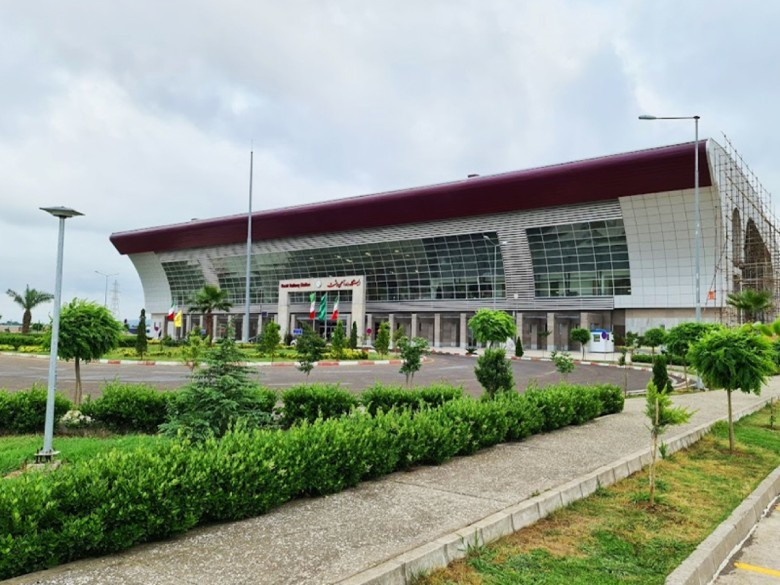
The Qazvin to Rasht line, 164 kilometers with halts at Manjil, Rudbar and Rostamabad, gave the city a railway in 2018 after decades of waiting. Trains from Tehran take five to six hours and arrive at Falakdeh, about 11 kilometers from the centre; services are limited, so check the schedule before building a day around one.
The last mile
Old Rasht is flat and compact, with the bazaar, Sabzeh Square, Bagh-e Ehtesham and the Qajar houses inside a 20 minute circle. Beyond that, Mehyar Taxi decides the afternoon: in this rain a car is the difference between a good day and a wasted one.
The Grand Bazaar, and the hour to go
The Grand Bazaar covers roughly 24 hectares and is unusual in Iran for being largely open to the sky. Safavid in its roots, it spreads around two old squares, Bozorg and Koochak, and links into vaulted caravanserais where merchants once stored silk, rice and fish. There is no entrance and no ticket: you walk off the pavement and the noise changes.
Go between 8 and 11 in the morning, when the produce lands and the wet lanes still reflect the hanging fruit: garlic braids, citrus pyramids, barrels of olives, bottles of pomegranate juice. The bazaar sells the province, and it sells you breakfast.
What to eat, in the order locals eat it
Start with mirza ghasemi, roasted aubergine with eggs, garlic and turmeric: Gilan on a plate, better at a small house restaurant than a hotel. Then baghali qatogh, broad beans simmered with dill and garlic, cheap and often eaten standing. Order zeytoon parvardeh, olives crushed into a paste of walnut, pomegranate molasses and herbs, and expect torshi, the sour pickle that arrives with nearly every Gilani meal.
Then the two famous names. Fesenjan here is dark, sour and made with duck rather than chicken. Akbar jujeh, sour chicken with garlic, tomato and verjuice, comes from Sowme'e Sara east of town. Finish with tea, grown about 100 kilometers down the coast. Bazaar eating costs almost nothing; for a proper sit-down dinner, book a Gilani restaurant through Mehyar instead of walking in blind at 9 pm.
A rainy afternoon: the park and mansion walk
Rasht's answer to bad weather is its gardens. Bagh-e Ehtesham, also called Park Shahr, is the city's oldest public park, laid out in the Qajar period and still its greenest corner. Its plane trees, brick kiosks and reed-thatched shelters look best in rain, exactly when tourists hide.
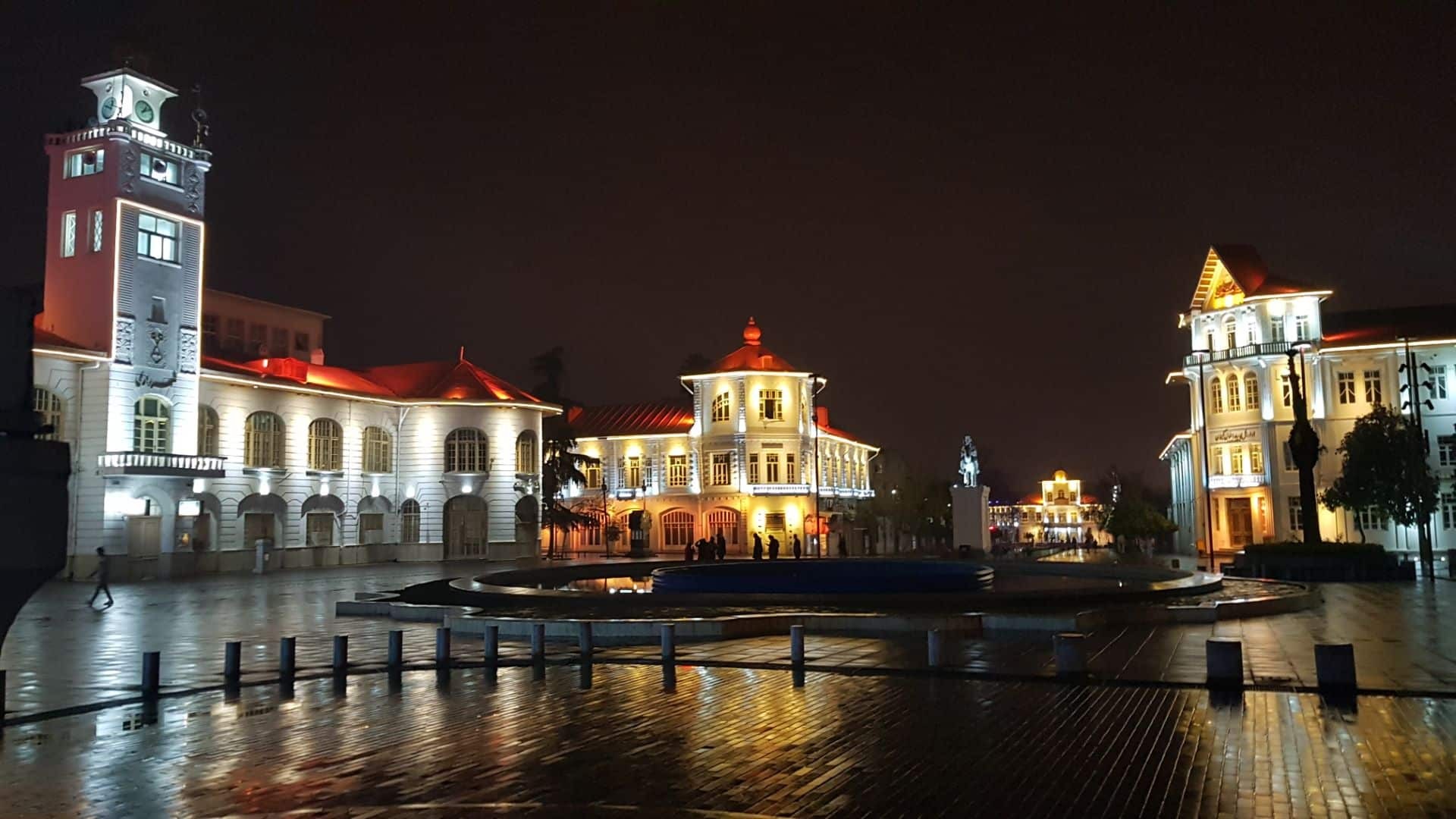
Beside it stands the Kolah Farangi mansion, a four storey Qajar building with a European style dome that once held the governor's office and is now a national monument. Across the way, Sabzeh Square is the living room of the city: 17,500 square meters of pavement, statues of the actor Majid Samiei and the reciter Fazlollah Reza. South of the centre, Mellat Park holds the city aquarium and Iran's first analogical sundial; to the west, Aynak, a 44 hectare wetland the districts have swallowed, works as a ring-side promenade at dusk.
Old Rasht on foot, and the politics on the hill
The Saghesazha quarter, south of the bazaar, is the best surviving piece of old Rasht: the Qajar doorway of the old Haji bathhouse, the blue-tiled Samiei house, the Goldasteh mosque. Golsar avenue, the old tree-lined boulevard heading north, is where the city strolls at sunset.
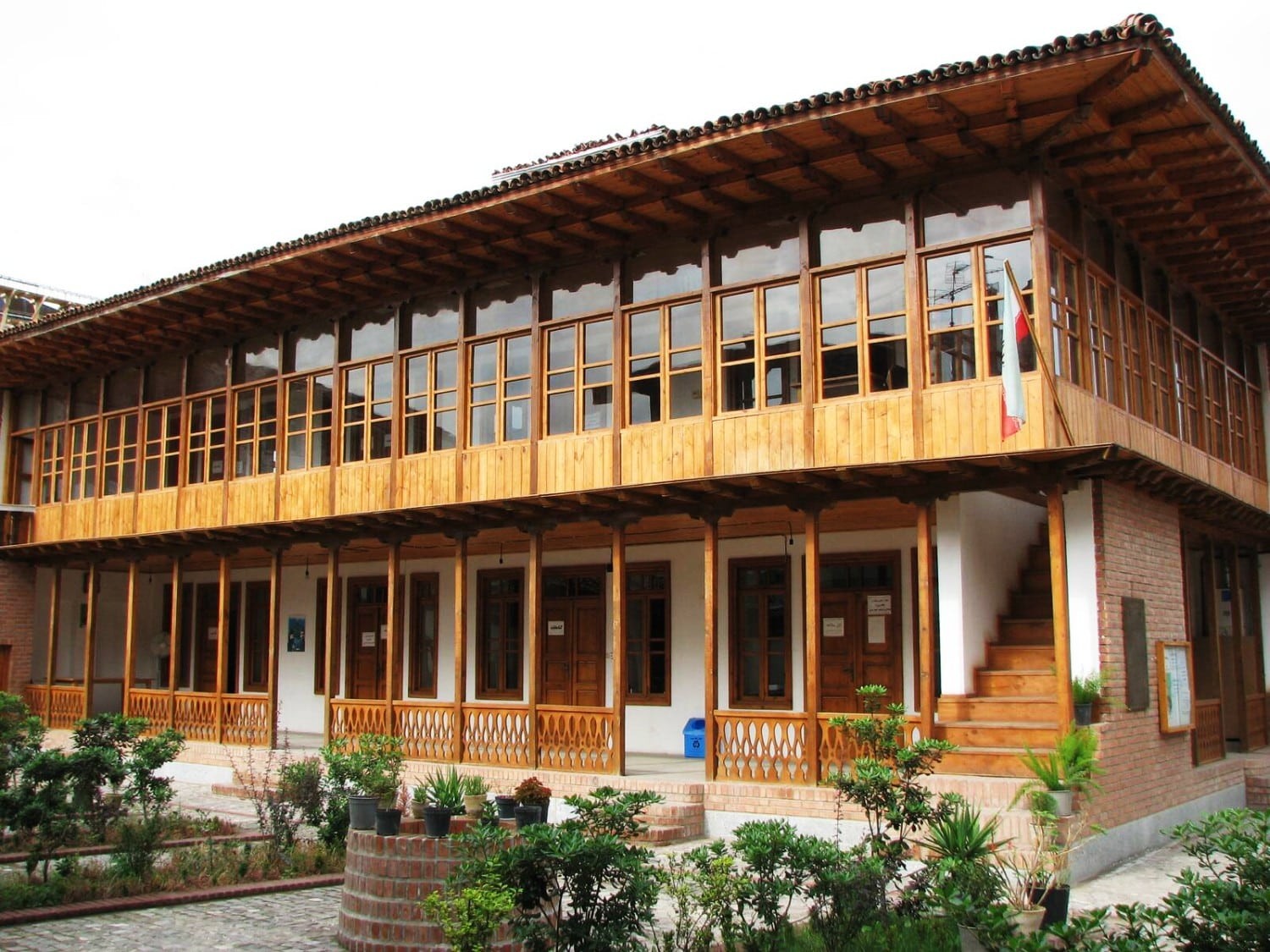
Above town, on the Soleyman Darab heights, stands the octagonal red brick tomb of Mirza Kuchak Khan, leader of the Jungle Movement that declared the Gilan Soviet in 1920 and ended with his death in the forest in 1921. His ancestral house, a two storey all-timber building off Saadi Street ten minutes on foot from Municipality Square, is now a small museum. Rasht argues about him the way other cities argue about poets.
Day trips that actually work
Bandar Anzali and its lagoon lie 20 to 30 minutes north, close enough that locals treat them as a suburb: reed channels, caviar, the old port and a loud fish market. Masouleh, the stepped village, is around 60 kilometers west through Fuman, an hour and a half each way, and better with a driver for the day than a shared car. Rudbar to the south adds olive groves and the hilltop ruins of Rudkhan Castle. Eastward, Sari and the forest roads of Kelardasht are doable but long; sleep over, and use our Mazandaran guide for that half of the loop.

When to go and where to sleep
April to June and September to October are the sweet spots: warm, green, market full, rain manageable. July and August are hot and sticky; winter is grey and genuinely wet. Nowruz and the summer holidays fill the good hotels, so book a month ahead. The five star Grand Kadous on the eastern ring road is Gilan's best-known address, with the Ghadir and apartment hotels near Golsar covering lower budgets; compare them on Mehyar Hotels.
Cash still rules in small shops here; read how to pay in Iran first, and check the best time to visit Iran for the wider calendar. Rasht rewards the traveler who stops: order the mirza ghasemi and let the city become the reason you came to Gilan.