
Standing within steps of the gleaming golden dome of the Fatima Masumeh Shrine, Fayzia School has welcomed seekers of knowledge for nearly five centuries. Known in Persian as Madraseh Feyziyeh, this theological seminary remains one of the most important centers of Shia Islamic learning in the world. For travelers to Iran, a visit here offers a rare window into the spiritual and intellectual traditions that have shaped the city of Qom and the broader region. The courtyard alone, with its soaring iwans and glazed tilework, is worth the journey.
Where Is Fayzia School Located?
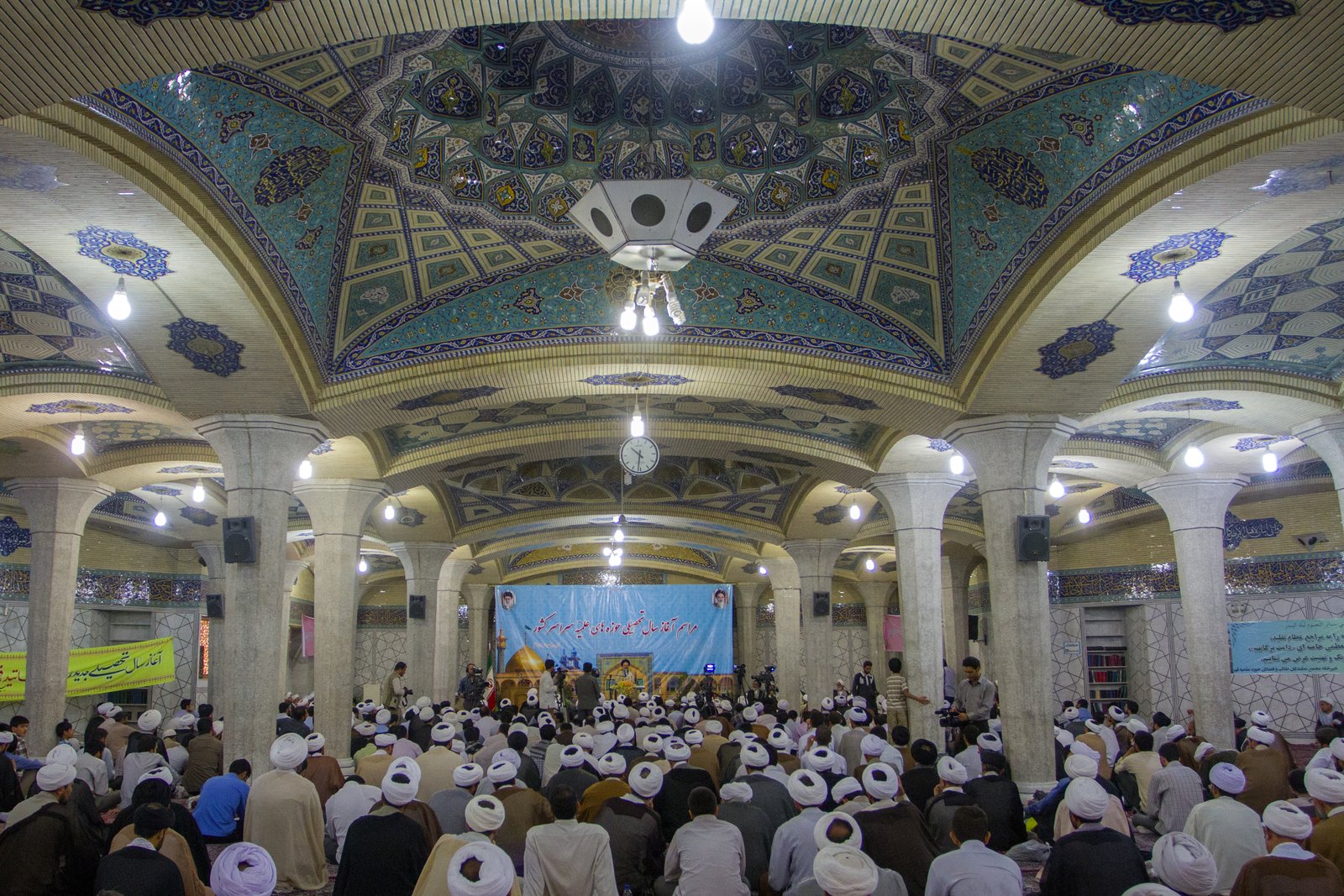
Fayzia School sits directly adjacent to the Fatima Masumeh Shrine in the center of Qom, a major holy city roughly 140 kilometers south of Tehran. The seminary occupies a prominent position on Shahid Beheshti Street, with its main entrance opening onto the shrine complex's western plaza. Qom itself holds deep significance for Shia Muslims worldwide, and the school's location beside the shrine is no accident. The physical proximity reflects the inseparable bond between religious scholarship and devotion that defines the city.
The campus sprawls across a generous footprint, with four iwans opening onto a central courtyard. Each iwan faces a cardinal direction, creating a symmetrical plan that dates back to classical Islamic architectural principles. The southern iwan, the largest and most ornate, faces the qibla and serves as the primary prayer space. Coordinates place the school at approximately 34.64 degrees north latitude and 50.88 degrees east longitude, firmly within Iran's central plateau.

How to Get There from Tehran and Beyond
Reaching Qom is straightforward from virtually anywhere in Iran. Travelers departing from Tehran can board a train from Tehran Railway Station, with the journey taking approximately ninety minutes to two hours depending on the service. Buses depart frequently from Tehran's southern terminals, and the road trip via the freeway takes about an hour and a half in normal traffic.
Once in Qom, reaching Fayzia School is simple. The seminary stands in the immediate vicinity of the Fatima Masumeh Shrine, and most visitors simply walk. Taxis operating through the Mehyar Taxi network can drop you at the shrine's main entrance, from which the school is a short walk away. For those using public transit, Qom's bus routes serve the shrine area with multiple lines, and Mehyar Buses provides convenient schedules and route information for navigating the city.
If you are arriving by car, the city offers several parking facilities near the shrine precinct. However, during major religious observances the surrounding streets become extremely congested, and walking remains the fastest way to reach the school from any point in central Qom.
A Brief History of Fayzia School
The origins of Fayzia School trace back to the early sixteenth century during the Safavid era, when Shah Tahmasp I ordered the construction of a madrasa beside the shrine. The institution was named in honor of the scholar Fayz, from whom the school derives its name. Over the centuries, the school underwent multiple rounds of expansion and renovation, particularly during the Qajar period in the nineteenth century. The Aqa Mohammad Khan Qajar era saw significant restoration work that helped preserve the courtyard arcades we see today.
The school's historical importance extends well beyond theology. During the Constitutional Revolution of the early twentieth century, Fayzia School served as a gathering point for clerics and intellectuals who debated Iran's political future. In the mid-twentieth century, the seminary became closely associated with the teachings of Ayatollah Khomeini, who lectured here before the 1979 revolution. These layers of political and intellectual history make the school far more than an architectural monument. It is a living institution that has shaped the course of Iranian history.
What to See Inside the School
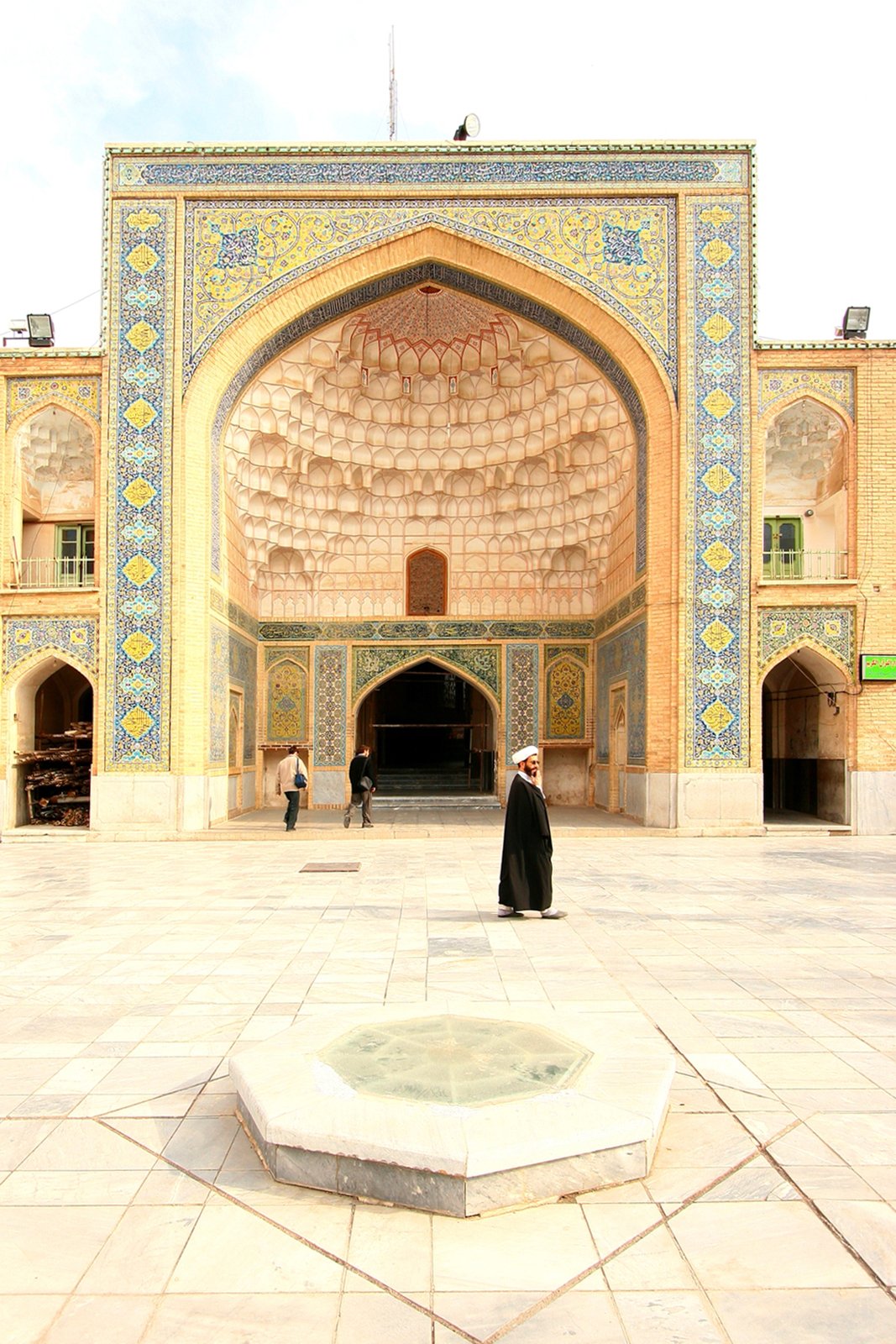
Visitors entering through the main portal find themselves in a spacious courtyard surrounded by two stories of arched alcoves. The courtyard measures roughly fifty meters on each side and is paved with stone. Four grand iwans punctuate the arcades at the center of each side, their facades adorned with glazed tilework in blues, turquoises, and whites.
The tilework represents some of the finest examples of Safavid and Qajar decorative arts. Geometric patterns interweave with floral arabesques and calligraphic panels inscribed with verses from the Quran and Hadith traditions. The upper register of the courtyard walls features muqarnas, the honeycomb-like stalactite vaulting that is a hallmark of Persian Islamic architecture. These intricate three-dimensional compositions catch light in constantly shifting patterns throughout the day.
The student cells, or hujras, line the upper gallery. Each small room once housed a seminary student and contained little more than a niche for books and a sleeping mat. Many of these rooms remain in use today, and visitors should respect the privacy of students who may be studying or praying. The school also contains several underground chambers known as the Sardab, which historically served as cool retreats during Qom's fierce summer heat.
Do not miss the magnificent inscriptions that run along the upper walls of the courtyard. Executed in several styles of Persian calligraphy, including Thuluth and Nasta'liq, these inscriptions provide a visual masterclass in Islamic art. Photography is generally permitted in the courtyard, though visitors should ask permission before photographing individuals.
Best Time to Visit Fayzia School
The ideal time to visit Qom and Fayzia School falls during the spring months of March through May and the autumn months of September through November. During these periods, daytime temperatures range between fifteen and twenty-five degrees Celsius, making walking between the shrine complex and surrounding areas comfortable. Summers in Qom are notoriously hot, with temperatures frequently exceeding forty degrees Celsius. The city's inland, desert-adjacent location means there is little relief from the heat.
Winter visits are possible but bring cold, dry weather. Rainfall is modest throughout the year, though spring occasionally brings brief showers. For those planning a combined visit to the shrine and the school, weekday mornings tend to be quieter and less crowded than evenings or weekends. Religious holidays and mourning ceremonies, particularly during Muharram and Ramadan, draw enormous crowds and create a profoundly atmospheric experience, though navigation through the complex becomes more challenging.
Visiting Hours and Practical Tips
Fayzia School generally follows the opening schedule of the Fatima Masumeh Shrine complex. The school is typically accessible during daylight hours, though exact times can shift with the seasons and religious calendar. There is no entrance fee for visiting the courtyard and public areas of the school, though donations are welcome. Non-Muslim visitors are generally permitted to enter the courtyard and ground-floor areas, though access to prayer halls and upper-level student quarters may be restricted.
Dress modestly at all times. Men should wear long trousers and avoid sleeveless tops. Women must wear a headscarf and loose-fitting clothing that covers the arms and legs. Shoe covers are sometimes provided at the entrance, or you may be asked to remove your shoes before entering certain areas. A small bottle of water is advisable during summer visits, as the courtyard offers limited shade.
Nearby Attractions in Qom
A visit to Fayzia School pairs naturally with the Fatima Masumeh Shrine itself. The shrine's golden dome and mirror-lined interior rank among the most spectacular religious spaces in Iran. Beyond the shrine precinct, Qom offers the Jamkaran Mosque, a modern but spiritually significant site located in the eastern part of the city. The Qom Bazaar, one of Iran's oldest traditional markets, lies within walking distance of the school and provides an excellent opportunity to observe daily commercial life.
For travelers interested in extending their stay, the city of Isfahan lies approximately two hours to the south via the freeway, and the ancient city of Kashan is reachable within a two-hour drive northward. Using Mehyar Buses, you can plan onward travel to these and other destinations with ease. Whether you are a serious student of Islamic architecture, a devotee of calligraphic arts, or simply a curious traveler, Fayzia School offers a deeply rewarding experience in one of Iran's most sacred cities.