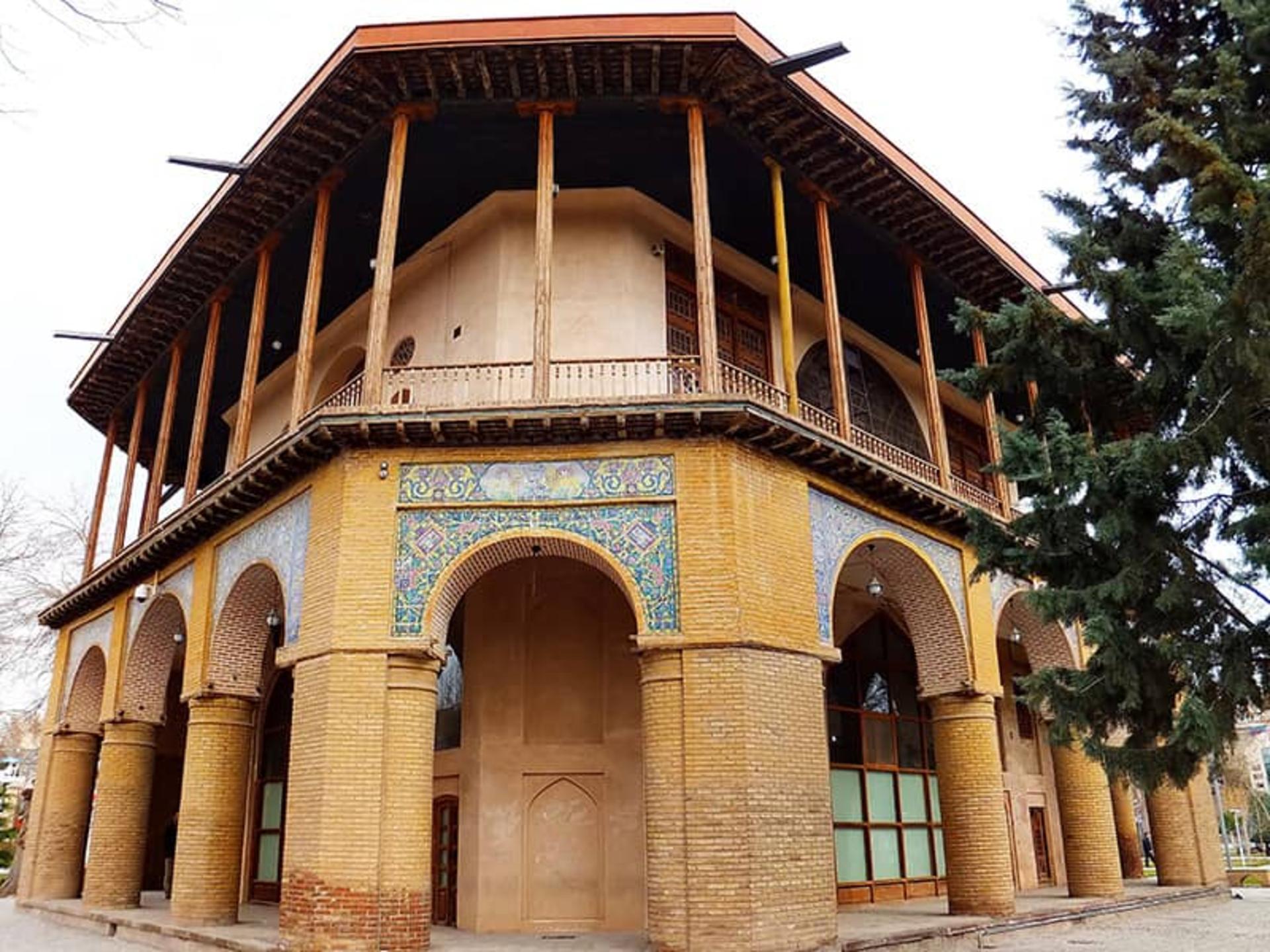
Chehelston Palace in Qazvin is one of the most important surviving structures from the early Safavid period, and the only pavilion remaining from the royal garden complex of Shah Tahmasp. Also known as Kolah Farangi (the "Foreign Hat"), this two-story octagonal building sits in the middle of Sa'adat Garden in the heart of Qazvin, near Azadi Square (Sabzeh Meydan). The palace is remarkable for its wall paintings, which represent some of the finest examples of the Qazvin School of miniature painting, and for housing the Qazvin Calligraphy Museum, one of the richest collections of its kind in Iran. For anyone interested in the artistic legacy of the Safavid dynasty, this compact but extraordinary building is essential visiting.
Where is Chehelston Palace?
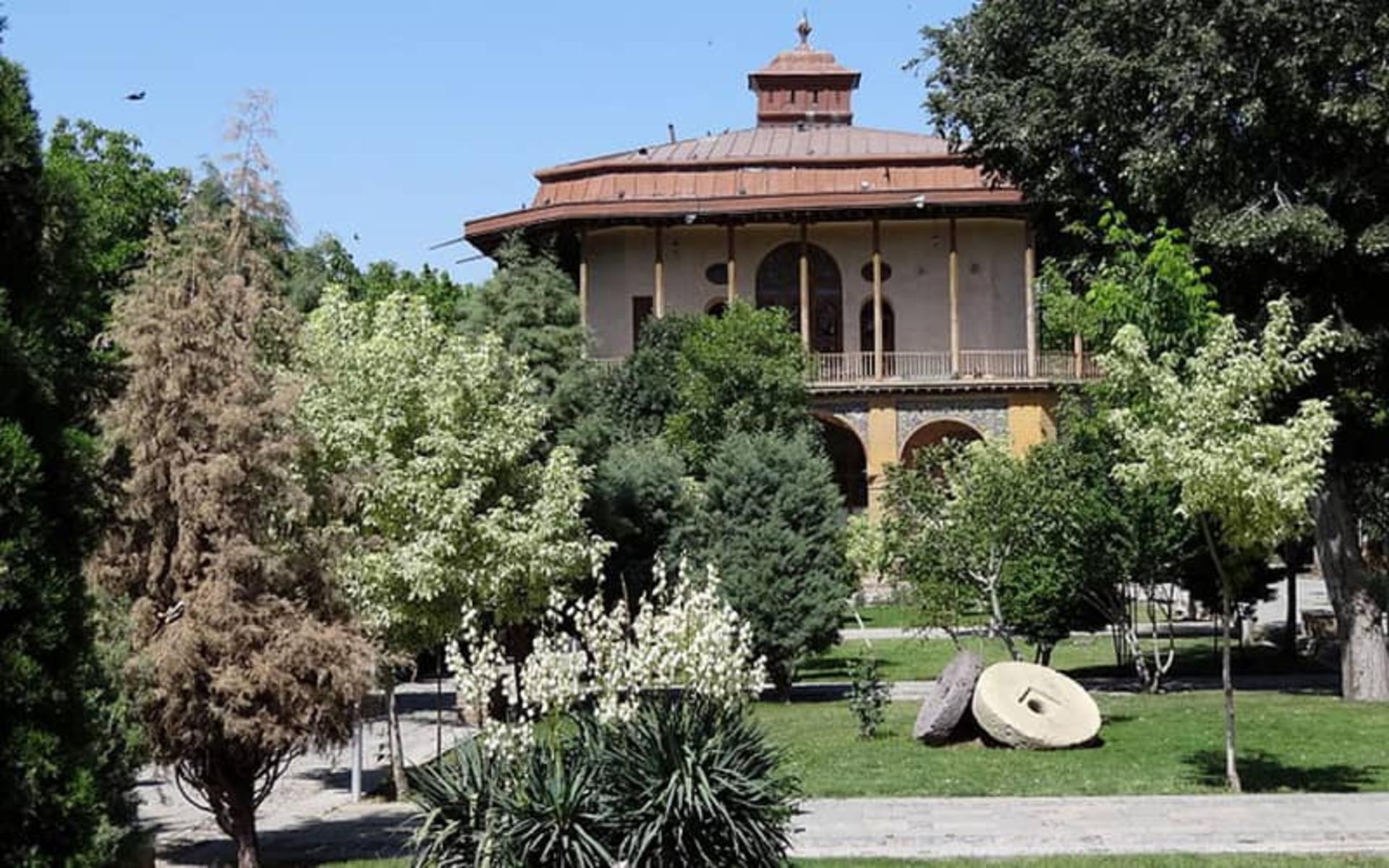
The palace is located in Sa'adat Garden on Azadi Square, commonly known as Sabzeh Meydan (Green Square), in central Qazvin. To reach it, head to Imam Khomeini Street and walk to Sabzeh Meydan. The building occupies the southern side of the square. Its central position makes it easy to combine with other Qazvin landmarks, including the Sardar Mosque and School, the Ali Qapu gatehouse, and the traditional bazaar.
Open Mehyar and use Taxi to reach the palace from any point in Qazvin. The city center is compact, and many of Qazvin's attractions are within comfortable walking distance of one another.
History and origins
The story of Chehelston begins in 1551 CE (951 AH), when Shah Tahmasp, the second Safavid ruler, decided to move the capital from Tabriz to Qazvin due to Ottoman threats. He needed a residence worthy of the king of Iran, so he purchased the Zangiabad lands from Mirza Sharaf Jahan, a prominent Qazvin dignitary, and commissioned architects to build a square garden with magnificent pavilions, halls, arcades, and beautiful pools at its center. The Kolah Farangi pavilion, as it was originally known, was the centerpiece of this royal complex.
Shah Tahmasp was a patron of the arts, and his passion for painting and calligraphy is visible in every detail of the building. The palace took its name "Chehelston" during the Qajar period, when Mohammad Bagher Sa'ad ol-Saltaneh, the governor of Qazvin, restored the building and renamed it in reference to the grand Chehelston of Isfahan. Over the centuries, the building served various purposes, including as a county governor's office during the Pahlavi era. In 1955, the magnificent wall paintings were discovered beneath layers of plaster. After extensive restoration, the palace was converted into the Qazvin Calligraphy Museum in 2004.

Architecture and design
The two-story Chehelston Palace is built on an octagonal plan covering approximately 500 square meters, with a cruciform (cross-shaped) layout that extends outward. Shah Tahmasp based the design on a Turkish architectural model in a chess-pattern arrangement, much smaller than its later Isfahan namesake, with a central hall and small rooms on each floor. A fascinating architectural feature is the network of underground tunnels connecting the pavilion to the broader Safavid government complex. These tunnels extended beyond the city limits and were designed as emergency escape routes during enemy attacks.
The entrance features several brick doorways, each decorated with ceramic tiles in floral and traditional Iranian patterns. On the ground floor, a large hall is surrounded by four rooms of different designs. Four arcades once stood open to allow air to flow through the building, creating natural ventilation. Today they are glazed for preservation. Pools once ran through the center, north, and south of this floor, their flowing water adding coolness and a calming sound to the interior. Only the central and southern pools remain, restored but without running water to protect the structure.
Brick columns with semicircular arches encircle this floor, and beautiful murals adorn nearly every surface, dating from both the Safavid and Qajar periods. The ceiling features exquisite muqarnas (stalactite vaulting) that demonstrates the high craftsmanship of the builders. The floor, originally tiled in brick, has been re-covered with ceramic tile by the Cultural Heritage Organization.
The wall paintings
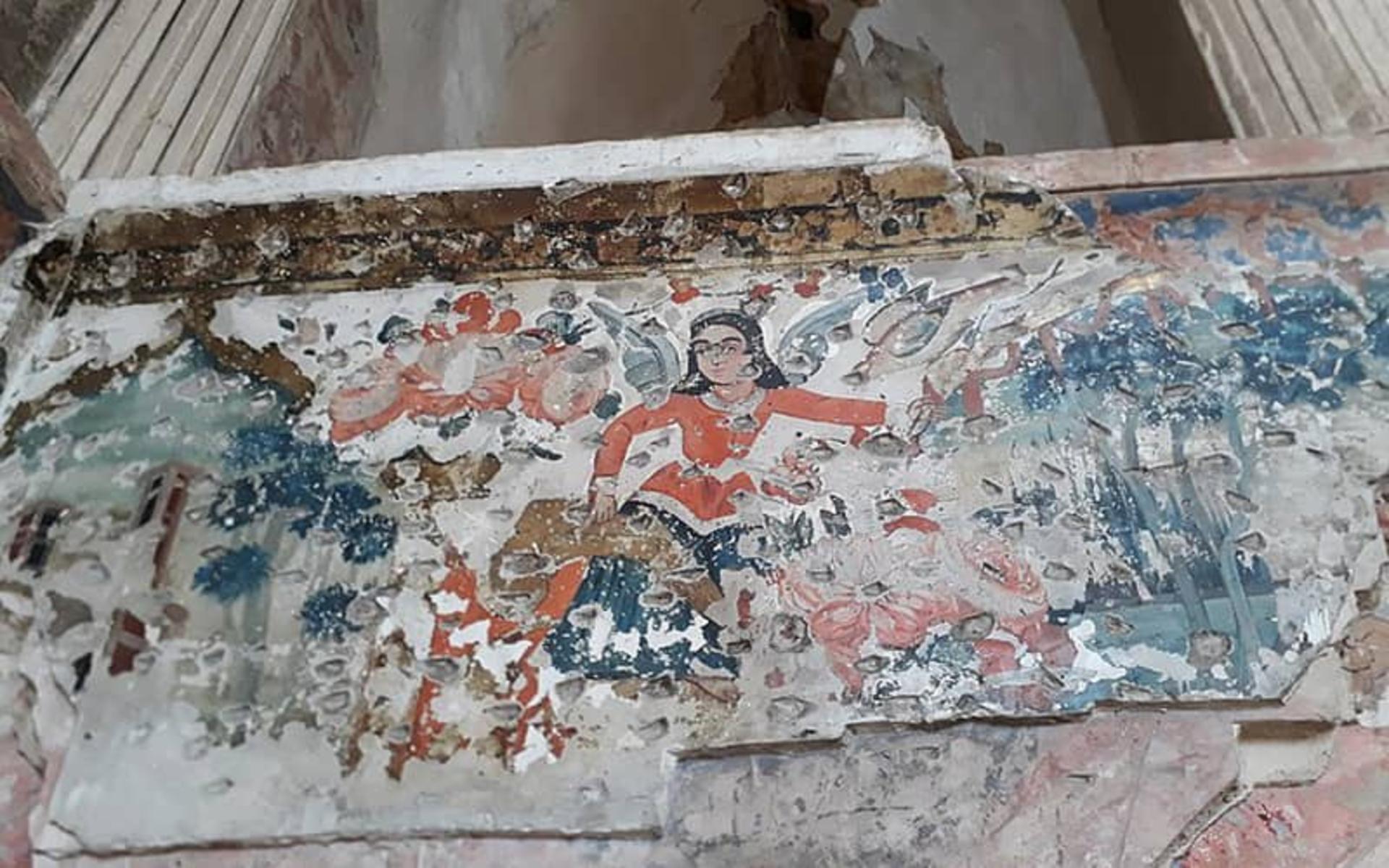
The wall paintings of Chehelston Palace are its greatest artistic treasure. The first-floor murals represent the highest achievement of the Qazvin School of miniature painting. Historians attribute these works to painters including Mirza Ali, Mozaffar Ali, Ali Asgar, Abdoljavvad Estarabadi, and Reza Abbasi, the most celebrated Safavid artist. The paintings were done in watercolor on walls coated with gold water, producing soft, luminous tones.
The scenes include romantic garden settings with flowing streams, flowering trees, and elegantly posed figures. Birds are rendered with extraordinary precision, including robins, sparrows, ducks, and pheasants, whose detail rivals the finest works of Reza Abbasi and Shafi Abbasi. The north wall shows a garden celebration scene, while the east arcade contains some of the most brilliant works in the palace, with gold, blue, and pistachio-green colors and fluid depictions of the human form.
Three layers of painting exist on the walls: the first two from the Safavid period and the third from the Qajar era. Safavid paintings used watercolor with softer tones, while Qajar works employed vegetable-based pigments for more vivid colors. The paintings also reflect contemporary political events, including the arrival of Nader Shah Afshar and the establishment of the Afsharid school.
The second floor underwent significant changes during the Qajar period. Its stained-glass orsi windows, imported from Germany, represent the four seasons through colors: green for spring, red for summer, yellow for autumn, and blue for winter. Quranic verses add spiritual beauty to the colored light that fills the upper hall.
The Calligraphy Museum
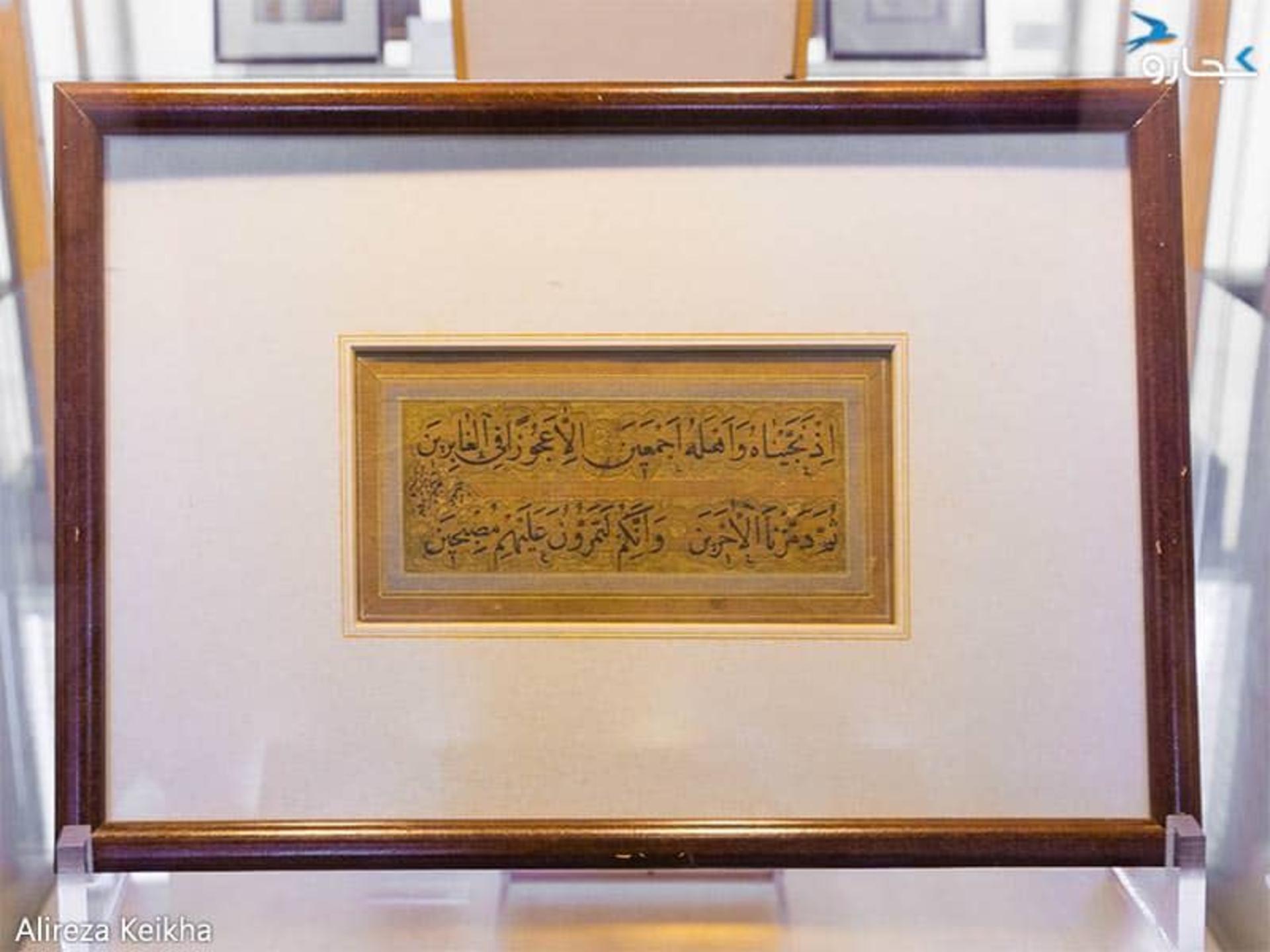
In 2004, Chehelston Palace was transformed into the Qazvin Calligraphy Museum, one of the richest of its kind in Iran. The museum houses works created in various scripts, including Naskh, Thuluth, Talik, Nasta'liq, and Shekasteh Nasta'liq, by master calligraphers from Qazvin and across Iran. Among the featured artists are Mir Emad Qazvini, the most celebrated Nasta'liq master in Persian history, Emad ol-Ketab, Mir Ali Heravi, Darvish Abdolmajid, and Ahmad Nairizi.
The museum's collection was assembled through donations from private collectors in Qazvin and calligraphy masters such as Ostad Mohasses Mostashari, Pileh-Chi, and Ameli, since no suitable works were found in the existing Qazvin Museum and other national museums declined to lend pieces. The collection represents the calligraphic tradition of the Qazvin School, which produced some of the finest Persian script artists in history. Historical artifacts from the palace itself are also on display.
Hours and tickets
Visiting hours are from 09:00 to 18:30. The entrance fee is approximately 40,000 tomans (as of 2022; confirm locally). The palace is not yet fully adapted for visitors with mobility impairments. The steep staircases to the second floor present significant difficulties for elderly visitors or those with walking challenges.
Getting to Qazvin
Qazvin lies approximately 150 kilometers northwest of Tehran, connected by freeway and railway. The drive from Tehran takes about two hours. Mehyar Buses operates routes between Tehran and Qazvin. Once in Qazvin, the city center is walkable, or you can use Mehyar Taxi to reach Chehelston and other sites. The city also serves as a gateway to the Alamut Valley and other mountain destinations to the north.
For more on exploring Qazvin and the wider region, check Mehyar's Qazvin guide for hotels, transport, and other attractions in this fascinating Safavid city.