
In the western reaches of Iran, where the Zagros Mountains unfold in a series of dramatic ridges and fertile valleys, Kermanshah province hides some of the most beautiful natural scenery in the country. Among these hidden treasures, Bil Gardani stands out as a place where the earth reveals its most generous face. A natural spring of extraordinary volume, a waterfall that cascades over limestone rocks, and surroundings rich with vegetation make this destination a favourite for Iranian travellers seeking a retreat into nature, just a short drive from the city of Kermanshah.
Where is Bil Gardani?
Bil Gardani is situated in Kermanshah province in western Iran, in the foothills of the central Zagros range. The site lies within a landscape defined by limestone mountains, oak forests, and seasonal rivers that swell in spring from snowmelt and rainfall. Kermanshah city, the provincial capital with a population of nearly one million, sits roughly to the east, and the journey from the city to Bil Gardani takes you through increasingly green and mountainous terrain.
The broader region around Kermanshah is one of the most geologically active and scenically varied provinces in Iran. The Zagros fold-and-thrust belt, formed by the collision of the Arabian and Eurasian tectonic plates, has created a landscape of sharp ridges, deep valleys, karstic springs, and dramatic waterfalls. Bil Gardani is a product of this geological drama, where underground water channels burst to the surface as a powerful spring, feeding a waterfall that drops over natural rock formations before flowing into the valley below.
The Spring and Waterfall
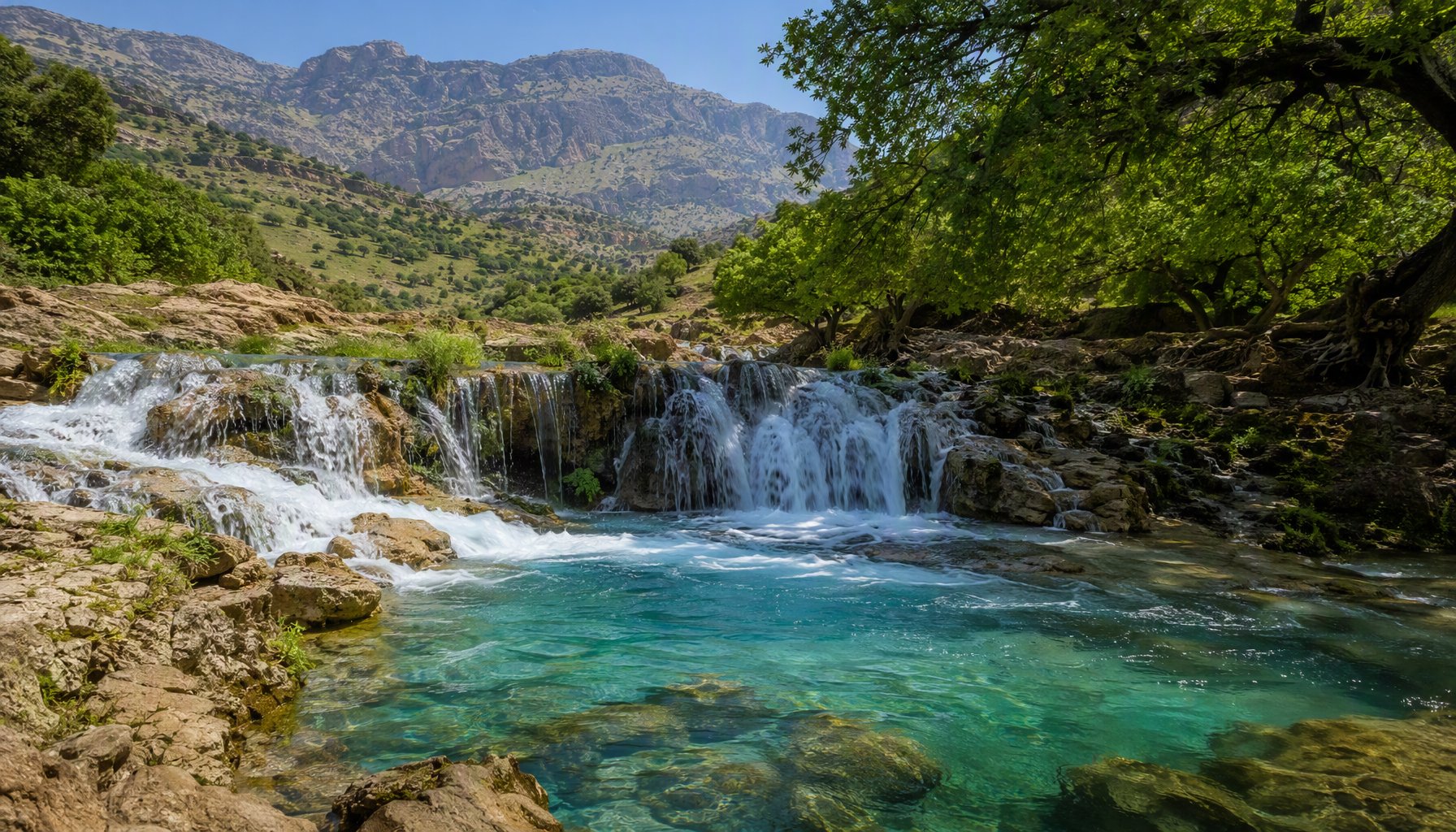
The heart of Bil Gardani is its spring, a natural karstic source that produces a remarkable volume of clear, cold water year-round. Karstic springs form when water dissolves soluble rock, typically limestone, creating underground channels and caverns through which the water flows. When these channels reach the surface at a cliff or steep slope, the water emerges as a spring, often with considerable force.
At Bil Gardani, the spring emerges from the base of a limestone cliff and immediately forms a waterfall that tumbles over natural rock terraces. The water is crystal clear, with a distinctive blue-green colour that comes from dissolved minerals. The sound of rushing water fills the air, creating a natural soundtrack that drowns out any trace of human noise. In spring, when snowmelt feeds the underground channels, the waterfall is at its most powerful, a white curtain of water framed by green vegetation and grey limestone.
The pool at the base of the waterfall is a popular spot for visitors. In the warmer months, the cold water is refreshing, and families gather at the pool's edge for picnics and relaxation. The area around the spring is shaded by native trees, including oaks and walnuts, and the ground is covered with ferns, mosses, and wildflowers in spring and early summer.

The Surrounding Landscape
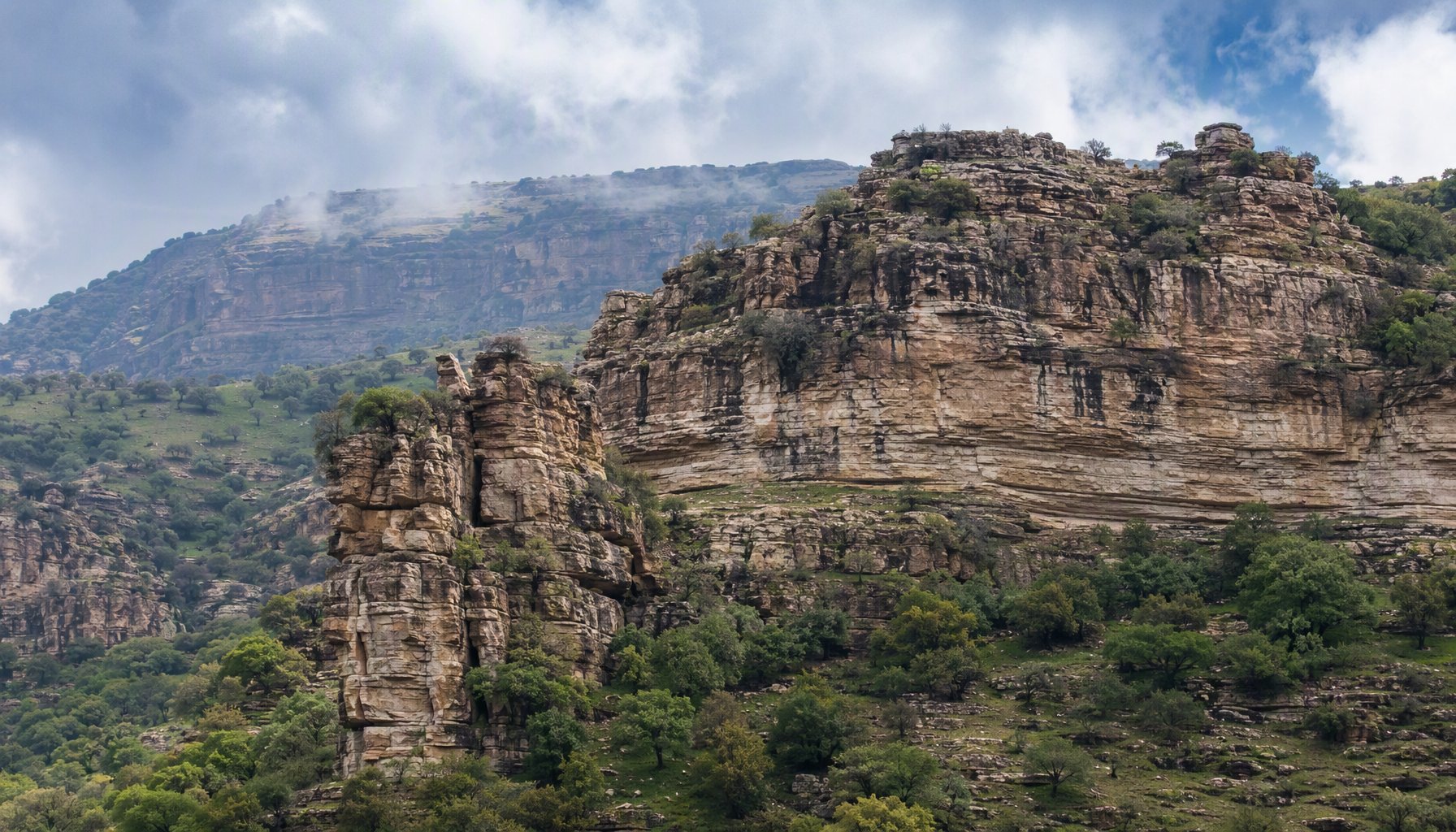
Beyond the spring and waterfall, the landscape around Bil Gardani offers walking trails and scenic viewpoints. The slopes above the spring are covered with oak forest, typical of the central Zagros, and the trails wind through stands of ancient trees that provide shade and shelter for wildlife. Birdwatchers will spot a variety of species in the area, including birds of prey that nest in the cliff faces, songbirds in the undergrowth, and water birds along the stream below the waterfall.
The geological formations around Bil Gardani are themselves worth studying. The limestone cliffs show layers of sediment deposited millions of years ago, when this region was submerged under a shallow sea. Fossils of marine creatures can sometimes be found in the rock faces, remnants of that ancient ocean. The karstic landscape also features sinkholes, caves, and underground rivers, though exploring these requires proper equipment and local guidance.
In the villages surrounding Bil Gardani, traditional Kurdish and Luri communities have lived in harmony with this landscape for centuries. Their stone houses, terraced fields, and irrigation channels reflect a deep understanding of the mountain environment. Visitors to the area may encounter local shepherds tending their flocks on the hillsides, or farmers harvesting walnuts and wild herbs from the forest.
Best Time to Visit
The best time to visit Bil Gardani is from late March through June, when the spring is at its fullest and the surrounding vegetation is at its greenest. April and May are particularly beautiful, with wildflowers blooming on the hillsides and the waterfall fed by both spring rains and snowmelt from the higher Zagros peaks. The temperatures are comfortable, typically between 15 and 25 degrees during the day.
Summer, from July to August, is warm but the area remains cooler than the lowland cities thanks to its elevation and the shade provided by the forest. The waterfall is still flowing, though at reduced volume compared to spring. Early morning visits in summer are the most pleasant, before the midday heat sets in.
Autumn brings golden colours to the oak and walnut forests, and the weather is mild and pleasant for hiking. The waterfall continues to flow, though more gently. Winter is cold, and the area can be icy and slippery. The waterfall partially freezes in the coldest weeks, creating a surreal landscape of ice formations, but access may be difficult and conditions can be dangerous without proper footwear.
How to Get There
Bil Gardani is accessible from Kermanshah city by road. The most practical approach is to use a private car or taxi, as public transport to the immediate area is limited. The drive from Kermanshah takes approximately thirty to forty-five minutes, depending on the exact route and road conditions. The road passes through typical Zagros foothill scenery, with dry farming fields giving way to forested slopes as you approach the site.
By Mehyar Taxi. The most convenient way to reach Bil Gardani is to open Mehyar, choose Taxi, and set your destination. A private car gives you flexibility to stop at viewpoints along the way and wait while you explore the spring and surrounding trails. This is especially useful if you plan to spend several hours at the site.
By private car. If you have rented a car or are driving your own vehicle, follow the signs from Kermanshah toward the western foothills. Local drivers and village residents can provide directions to the spring, as signage in some sections may be limited. Parking is available near the site.
By organised tour. Several tour operators in Kermanshah offer day trips that include Bil Gardani along with other natural and historical attractions in the province, such as the Behistun Inscription and Tagh-e Bostan. These tours typically include transport, a guide, and sometimes a meal.
What to Bring and Practical Tips
Visiting Bil Gardani requires some preparation, particularly if you plan to walk the trails or spend an extended time at the spring. Bring sturdy walking shoes with good grip, as the rocks around the waterfall can be slippery, especially in spring when the water flow is at its strongest. A waterproof jacket is advisable, as the mist from the waterfall can soak you if you approach closely.
For picnics, carry your own food and drinks, as there are limited facilities at the site. Pack out all rubbish to help preserve the natural beauty of the area. A basic first-aid kit, sunscreen, and a hat are useful additions. If you plan to visit in the cooler months, bring warm layers and waterproof footwear.
There are no entrance fees for Bil Gardani, though this may change as local tourism infrastructure develops. The site is generally safe for families, but children should be supervised near the water, as the rocks can be slippery and the current strong in spring. Swimming is possible in the pool below the waterfall during warm weather, but the water is very cold and the depth varies.
Nearby Attractions in Kermanshah Province
A visit to Bil Gardani can be combined with several other attractions in Kermanshah province, making it an excellent base for a day trip or a longer exploration of the region.
The Behistun Inscription, a UNESCO World Heritage Site located approximately 30 kilometres east of Kermanshah, is one of the most important historical monuments in the Middle East. Carved into a cliff face during the reign of Darius the Great in the fifth century BC, the inscription is written in three languages (Old Persian, Elamite, and Babylonian) and was instrumental in the decipherment of cuneiform script, much as the Rosetta Stone was for Egyptian hieroglyphs.
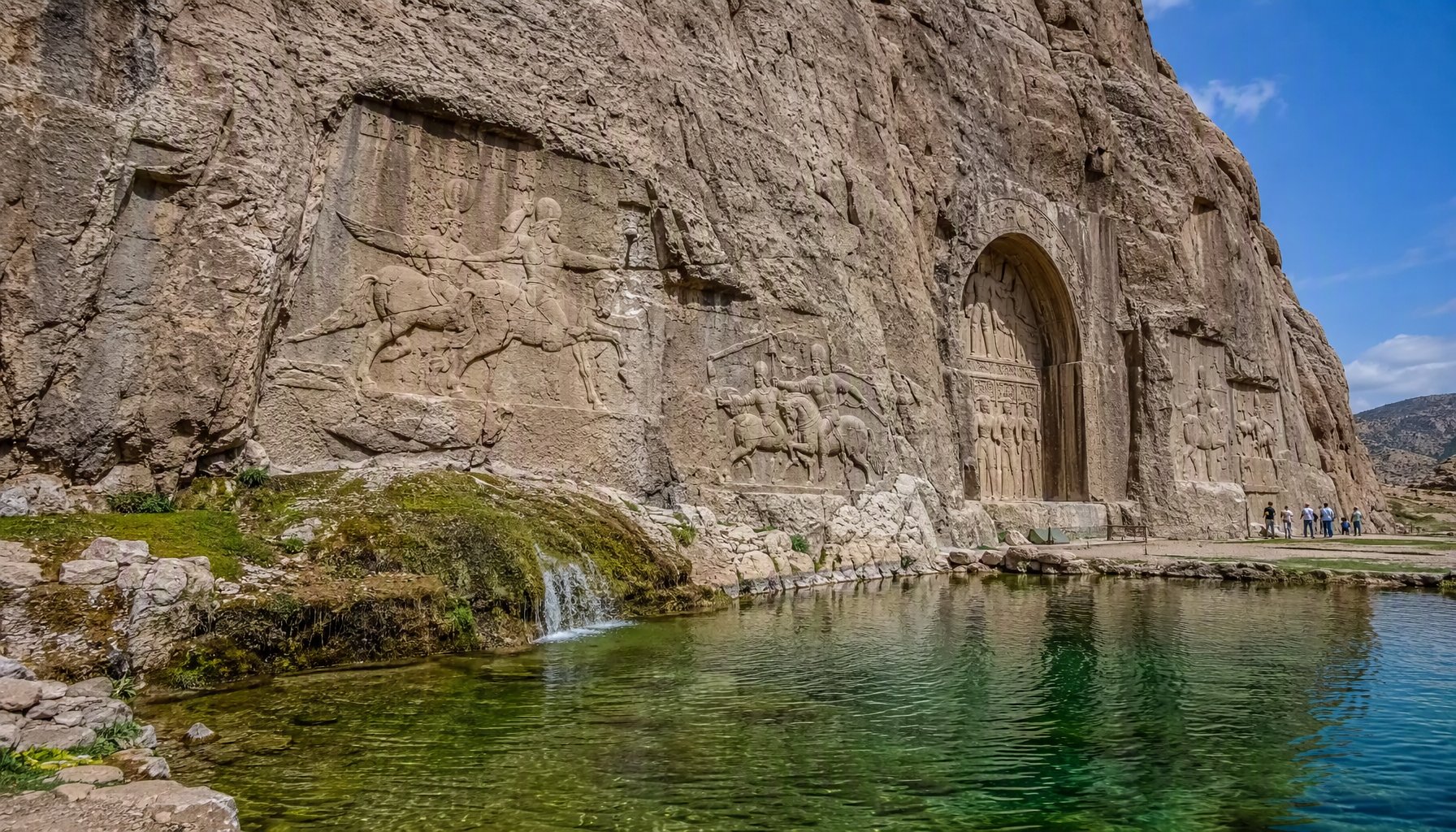
Tagh-e Bostan, another major historical site near Kermanshah, features spectacular Sassanid-era rock reliefs carved into a cliff beside a natural spring. The reliefs, dating to the third to fifth centuries AD, depict royal hunting scenes and investiture ceremonies, and are among the finest examples of Sassanid art in Iran. The site also includes a large rock-cut arch, or iwan, that is one of the most iconic images of pre-Islamic Iran.
The city of Kermanshah itself offers a pleasant base for exploring the province, with good hotels, restaurants serving local Kurdish cuisine, and a lively bazaar. Use Mehyar to find accommodation and arrange transport for your Kermanshah itinerary.
Why Bil Gardani Deserves Your Attention
In a country rich with natural beauty, Bil Gardani offers something special: the combination of a powerful natural spring, a scenic waterfall, lush Zagros forests, and proximity to some of Iran's most important historical sites. It is a place where you can stand beside water that has been flowing for thousands of years, listen to its song against the limestone rocks, and feel the cool mist on your face while the oak trees sway above you.
Unlike many of Iran's more famous natural attractions, Bil Gardani remains relatively undiscovered by international tourists. You will find Iranian families enjoying picnics, local shepherds passing with their flocks, and a sense of peaceful immersion in nature. For travellers who want to experience the real Iran, beyond the well-trodden tourist trail, this spring in the Zagros Mountains is a revelation.
Plan your visit with Mehyar, and combine the natural beauty of Bil Gardani with the ancient history of Behistun and Tagh-e Bostan for a Kermanshah experience that engages both the senses and the mind.