
Gilan has several nicknames, and Lahijan claims the best of them: the bride of Gilan. The city sits where the Caspian lowland begins to fold upward, so that in a single afternoon you can walk a waterfront, climb through terraced tea gardens, stand in a six-hundred-year-old mosque and eat lunch in a mountain village. The air does a great deal of the work. In spring the streets smell of orange blossom, and for most of the year they smell faintly of tea, which is grown here in the same way that olives are grown in the Mediterranean: as the backbone of everything.
Lahijan is also underrated as a historical city. The Caspian coast has its own architectural logic, its own dynastic memory and its own shrines, and Lahijan holds more of it per square kilometre than most visitors expect. Add a cable car that crosses tea terraces, a lake in the middle of the urban grid and two serious wetlands within an hour, and you have a base for three days without ever doubling back.
Where is Lahijan?
Lahijan lies on Iran's Caspian coast in Gilan province, on the road that links Rasht to the Gilan towns further east and to Astara on the Azerbaijani border. It sits between two things it is famous for: the sea, roughly twenty kilometres to the north across rice fields, and the first shoulders of the Alborz to the south, where the tea grows and where the summer crowds escape the humidity.
The practical geography is simple. Rasht, the provincial capital, is about ninety minutes to the west; the coastal strip with its beaches and wetlands is within an hour; and Tehran is a five to six hour drive to the southeast via Qazvin and Rasht, some 380 kilometres. Almost every itinerary along the Iranian Caspian coast begins or ends here, and the town is large enough to be a base rather than a stopover.
How to get to Lahijan
By road from Tehran. The drive takes five to six hours in normal traffic on the Qazvin-Rasht motorway, then the coastal road east. Mehyar Taxi runs the route door to door and is the option to take if you are travelling as a family or arriving with luggage; the fixed-fare booking removes the negotiation at the Rasht bypass, which is where this journey gets exhausting. Mehyar Buses are markedly cheaper and leave Tehran frequently, usually arriving in the small hours, so plan the transfer in advance.
By air. The nearest airport is in Rasht, and flights from Tehran are short. Book the airport transfer at the same time as the ticket through Mehyar Flights, since the ninety-minute road run from the airport to Lahijan is easier to arrange before you land than after.
From Rasht. Shared taxis and intercity buses cover the Rasht-Lahijan road constantly, and the trip is under two hours. Once you are in Lahijan, most sights sit within walking distance of the lake, so you will need a car only for the wetlands and mountain villages. For those, Mehyar Taxi can hold a car for the day, which is cheaper than hiring repeatedly and lets you leave at six in the morning for the migratory birds.
Estakhr Lake and Sheytan Koh
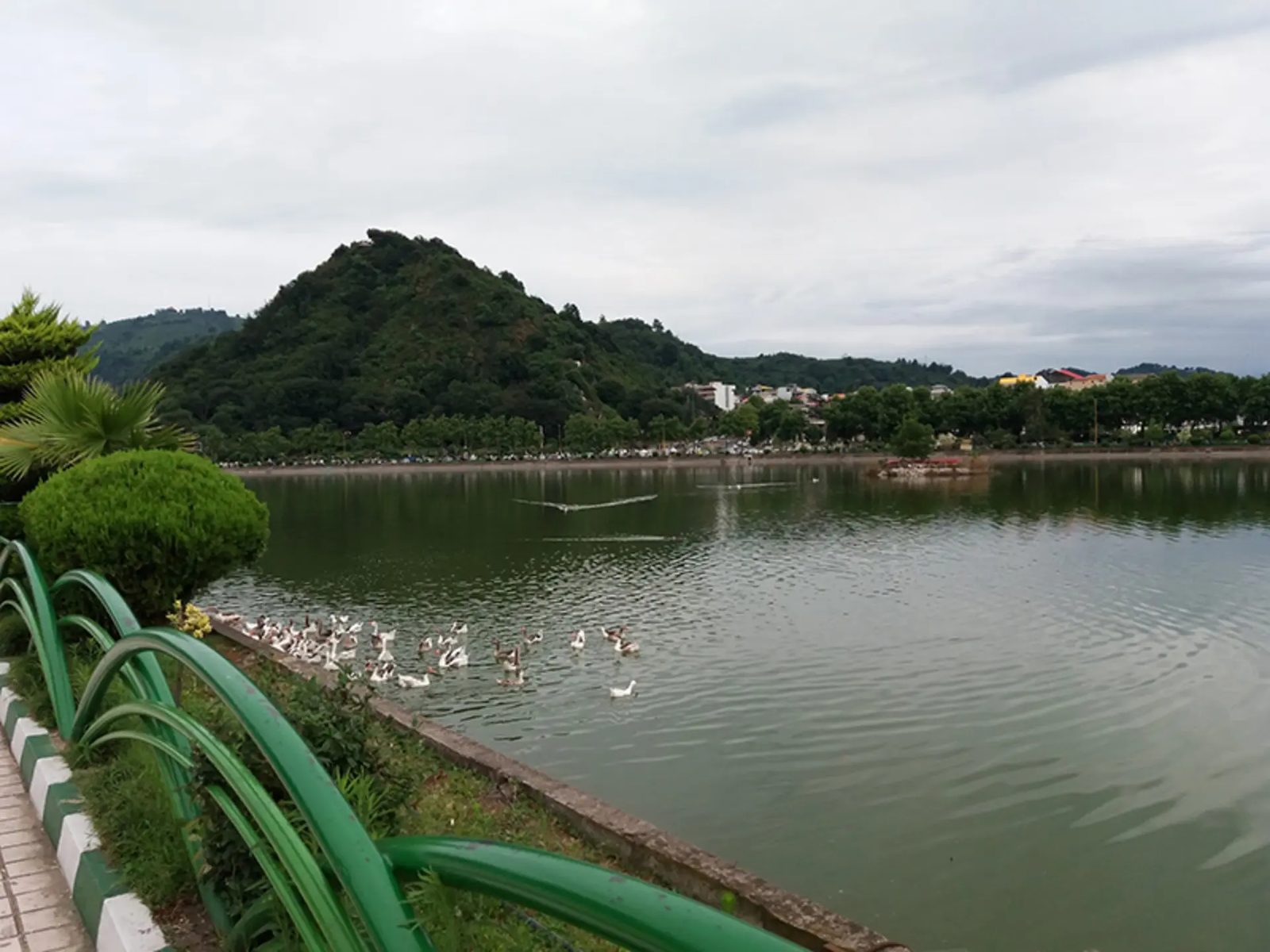
The postcard of Lahijan is Estakhr, a lake of some seventeen hectares lying at the eastern foot of the hill, four metres deep, with a small island in the middle reached by a long concrete bridge. The name means "pool", and the name is honest: it was made as a reservoir to water the rice paddies below, and tradition attributes the laying-out of the site to the Safavid period. Today it is the city's promenade, ringed with benches, cafés and rowing boats, and it is at its best in the hour after dawn when the mist is still on the water.
Behind it rises Sheytan Koh, a name that sounds more alarming than the hill is. It was formerly called Shah-Neshin, the seat of the king, and the rectangular water in front of it, some seventy by two hundred metres, is what became Estakhr. An artificial waterfall pours from the lake into the channel below, and about seventy steps lead to the top, where the district called Bam-e Sabz, the green rooftop of the city, looks back over the whole town and out to the sea. The stair is an easy climb, and sunset up there is the thing locals would show you first if you asked.
The cable car over the tea gardens
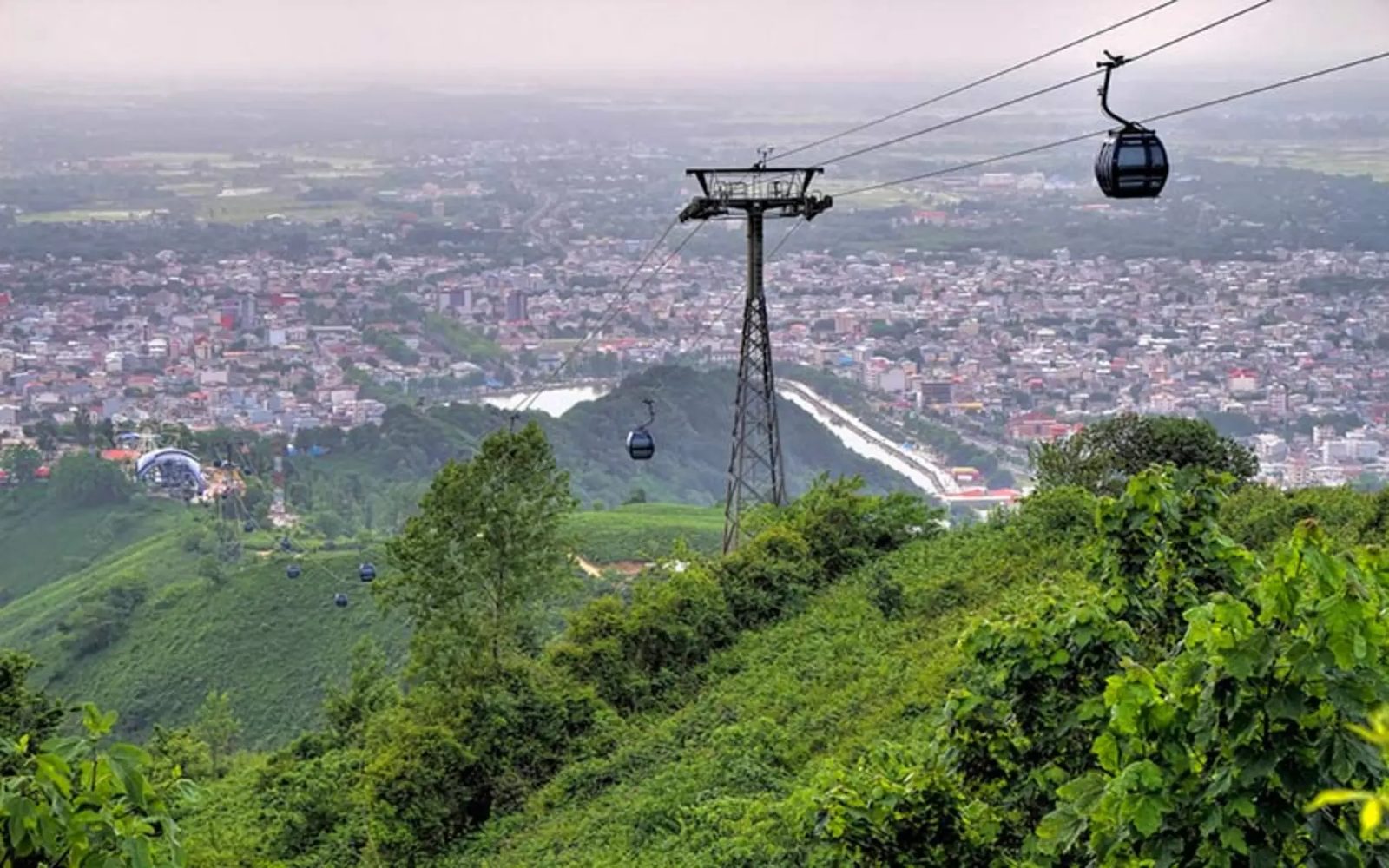
Lahijan's most unlikely piece of infrastructure is its cable car, built in 2005 to lift visitors from the city up to the hills. It has two stations, five pylons and thirty-three cabins, and the upper terminuses are named Bam-e Sabz at 123 metres and Taj Khorous at 313 metres. What you get for the fare is the view: below the cabin the ground is given over to tea in long, close-cut terraces, and beyond them the rooftops of Lahijan and a line of sea. At the top are handicraft stalls and cafés, and in clear weather the Alborz snows are visible to the south.
The cabins run from nine in the morning until nine at night. As a guide to current pricing, adult tickets in the 2025-26 season were around 400,000 tomans, with children between two and five at roughly 250,000; rates move each year, so treat these as a budgeting figure rather than a quote. Go early, because the queue lengthens by late morning and tea-garden light is better before noon.
Tea, properly explained
Every Iranian drinks tea, and almost nobody knows where the plant came from. The answer is worth an hour in Lahijan, at the Tea History Museum, which occupies the mausoleum of Mohammad Mirza Qajar Qavanlou, known as Kashef al-Soltaneh and as the father of Iranian tea. He was the son of Asadollah Mirza, Naeb al-Soltaneh, a Qajar prince, and he is credited with being the first to popularise tea cultivation in Iran, having brought seed and processing equipment from India when the country was still buying its tea from abroad.
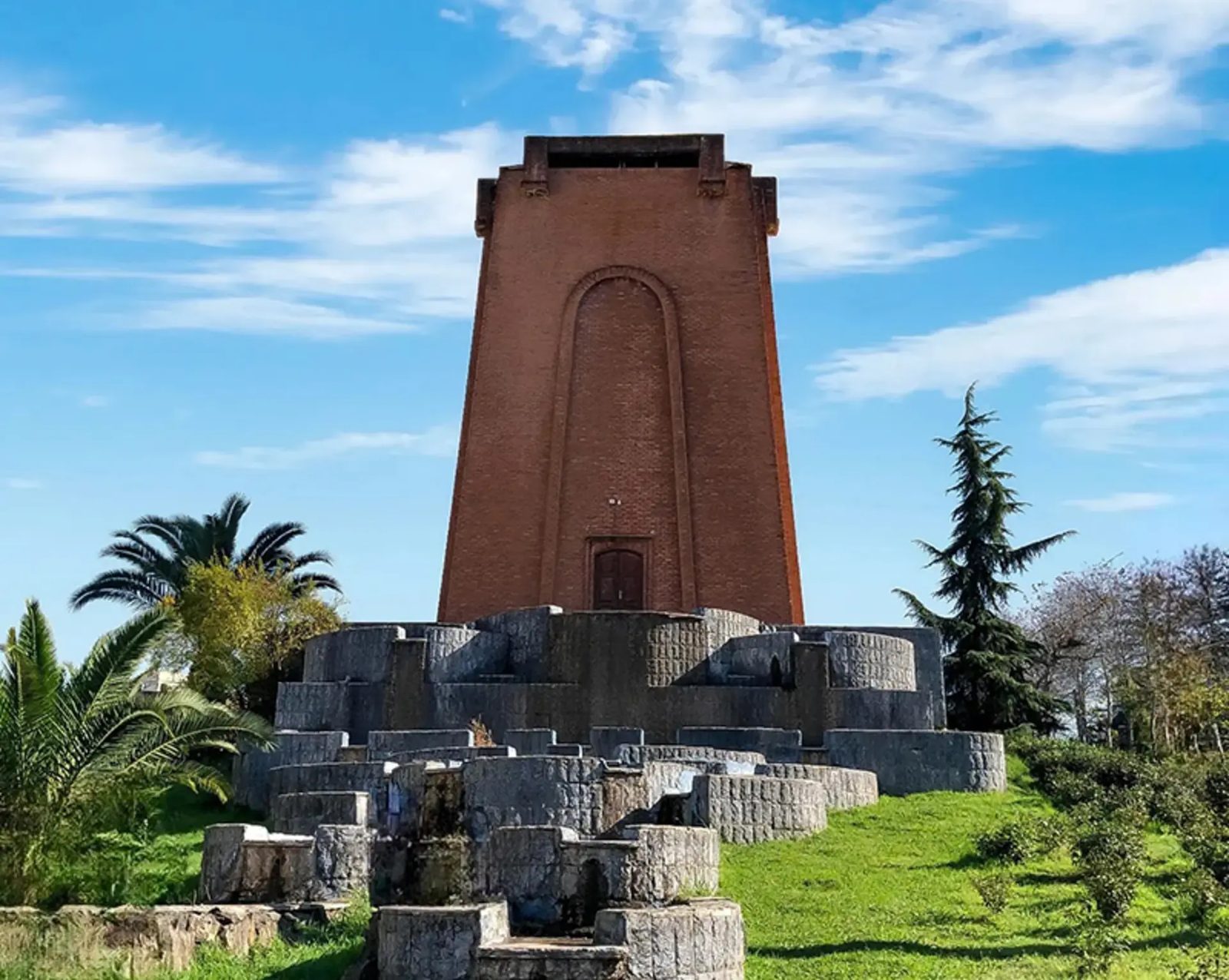
The tomb itself went up in 1976 in a deliberately Western idiom, five hundred and twelve square metres of grey chiselled stone with a tall tower, and the museum was added inside it in 1992. The ground floor holds documents, tools and the full kit of tea processing; the upper floor is given to anthropological displays about the women's work in the gardens, which is where most of the labour actually sat. Opening hours are eight in the morning until six in the evening. Entry is modest, in the region of 30,000 tomans in the 2025-26 season.
Afterwards buy tea properly. The traditional bazaar around Vahdat square, on Kashf Sharqi street, is open from roughly nine until ten at night and sells loose leaf by weight alongside local food stalls, and it is where Lahijan actually conducts its evenings. If you prefer an indoor mall, Valiasr, Jazireh Majnoon on Shohada street and Naderi Tower on Imam Reza boulevard all cover the basics.
Old Lahijan on foot

The Akbariyeh Mosque, in the southwest of the city, is the building that specialists talk about. A marble inscription dates it to 1239 AH, in the reign of Fath Ali Shah, and it was built by a local patron named Haj Ali-Akbar Lahijani. It was never finished as designed. What exists now reads as two mosques, the Old Mosque and the New Mosque, roughly a century apart in age and joined by one enormous door, and experts have compared the spatial handling to Hagia Sophia, which is a claim you should test for yourself rather than accept.
The Lahijan Grand Mosque is older still, founded in 893 AH on the order of a Kiai sultan, next to the shrine of Chahar Padishahan, and local tradition places it on the site of a Zoroastrian fire temple. It has been restored twice in the modern period and remains in devotional use. Inside the precinct is a well from which Imam Hassan is traditionally said to have drawn water for ablution, and visitors still tie cloth and drop coins at it; the custom is old and nobody seems embarrassed by it.
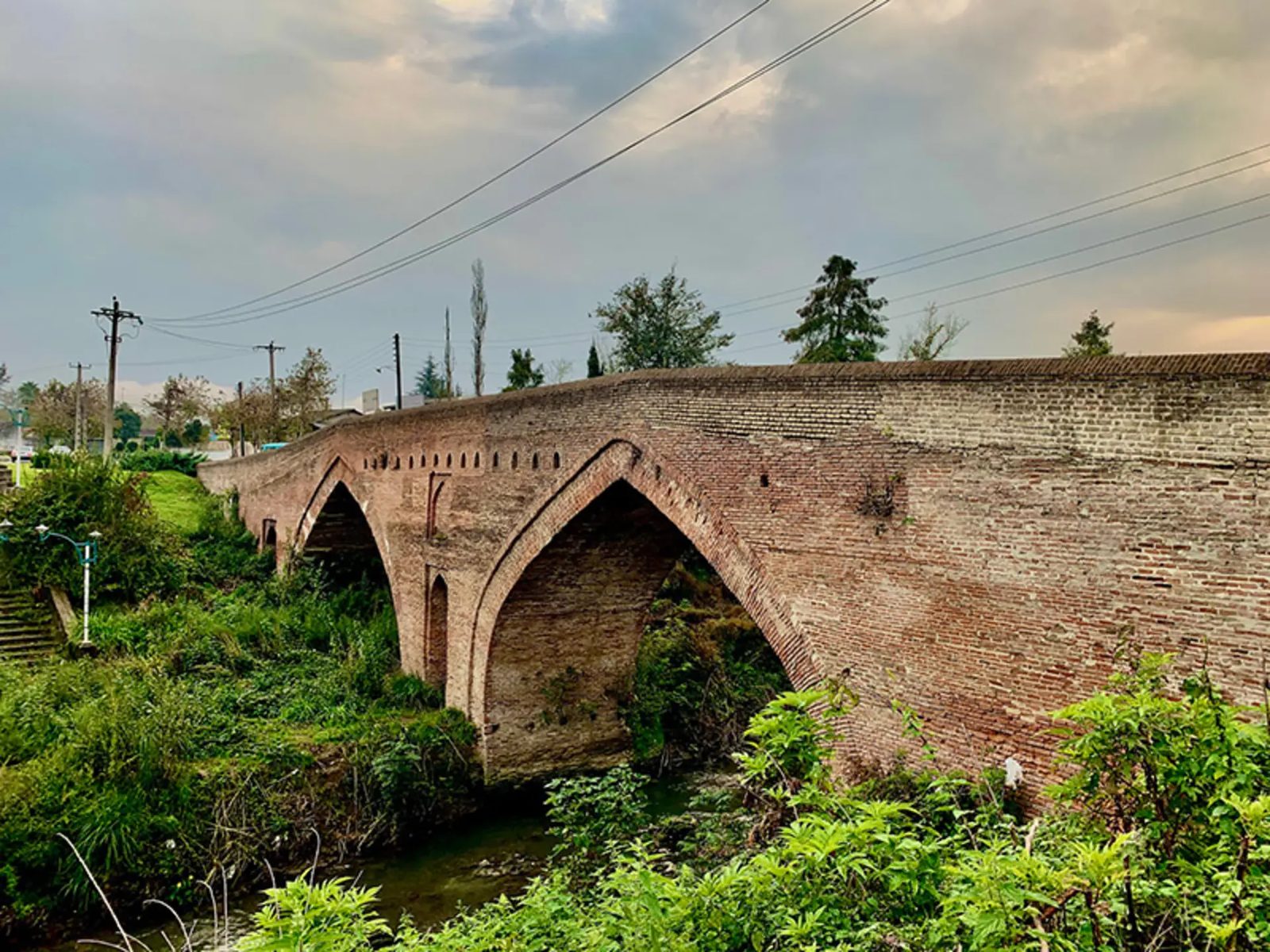
At the western edge of town, in the Pardeh Sar quarter, stands the Kheshti Bridge, the Brick Bridge. Its origin belongs to the Kiai period and it is cited by the historian Mir Zahir al-Din Marashi; in the early Qajar years a benefactor called Haj Jafar Kashani replaced an earlier stone structure with brick, and the restoration of 1271 AH gave it the form you see now. It is fifty metres long, four and a half wide and about eleven metres high, built of red brick with lime and saruj, the traditional water-resistant mortar. It carries water over a small valley on a lane that most visitors never find, which is precisely why it is worth finding.
Wetlands and shrines within an hour
Shaleh Kol, the Amir Kelayeh international wetland, lies forty kilometres away, about an hour on the Amolabad-Chamkhaleh coastal road. It covers twelve hundred and thirty hectares at an average depth of barely two metres, and it is rare in the plain sense of the word: a freshwater wetland this close to the sea. Sea-pistachio grows at its margins along with marsh tulip, the white water lily covers open water in summer, eleven fish species live in it, and in winter it is passage ground for thousands of migratory birds. Go at dawn with the longest lens you own, and go in a season when the birds are there.
Closer, five kilometres and fifteen minutes away in the Lileh district, Sowstan is a small wetland two kilometres east of the village of the same name. In autumn and winter it fills with fresh water among big trees, reed beds and marsh plants, and the approach road through the fields is a fine walk at any point in the year.
For the great shrine of the region, drive to Shekhanvar, five kilometres out on the Lahijan-Langerud road, where the mountains start. This is the burial place of Sheikh Taj al-Din Ebrahim, known as Sheykh Zahed Gilani, the fourteenth-century mystic whose disciple and son-in-law, Sheikh Safi al-Din Ardabili, founded the Safavid order. The sheikh died in 711 AH, and the tomb standing today was raised on the order of Sultan Heydar Safavi in 892 AH, said to have been begun after a dream. Its two chambers are crowned by a steep octagonal pyramidal cone in yellow-and-blue and white-and-black tilework, with floral detailing and terracotta courses, and the village around it has been a place of pilgrimage since Safavid times. Above the village are giant boulders at a spot called Shah Khani Var, or Omr Sang, traditionally described as an old parade ground.
When is the best time to visit Lahijan?
Spring, without argument. The tea gardens put on their second flush, orange blossom comes through the streets, and the air is mild without being sticky. Late April through early June combines the best weather with the fullest water in the wetlands.
Summer is warm and humid, which is exactly when Lahijan's altitude saves it: the tea gardens on the southern slopes are shaded and cooler, the lake is livelier after dark, and the mountain villages fill with families from hotter parts of the coast. Autumn brings thinner crowds, persistent rain and the best light on the wetlands. Winter is grey, mild and damp, and it is the season when the migratory birds are at Shaleh Kol, so it has its devotees.
Where to stay in Lahijan
Stay in the city rather than on the coast, and stay near Estakhr if you want to walk everywhere. Hotels in Lahijan skew small and family-run, which is good value but means the best ones sell out in spring and Nowruz. Book through Mehyar Hotels rather than turning up, particularly if your dates fall on an Iranian holiday weekend, and look for a room facing the lake or the hill, because the difference in your morning is substantial.
Plan three days if you can. The first is the city: Estakhr at dawn, the stair to Sheytan Koh, Akbariyeh Mosque, the Grand Mosque and the bazaar in the evening. The second is tea and height: the Tea History Museum, the cable car early, and the Kheshti Bridge on the way back. The third is the ring of villages and water: Shekhanvar and the shrine of Sheykh Zahed Gilani, then Sowstan or Shaleh Kol depending on the season and the birds. Pair it with Rasht to the west for the bazars and the food, and with Tehran at either end of the road run.