
Kashan is the oldest settlement in this part of Iran and the least changed. Archaeological evidence makes it one of the earliest places where people here lived in numbers, and the city has kept most of that fabric: brick, wind, garden and water channel, arranged for a desert that punishes poor planning. The classic sightseer comes for the great merchant houses of the Qajar period. The better trip adds the Seljuq mosque, the pre-Islamic highlands around Niasar, and the rose villages, and it takes two days rather than an afternoon.

How do you get to Kashan?
Kashan sits on the Tehran-to-Isfahan corridor a little over two hours from the capital and about an hour short of Isfahan. Mehyar Buses run the route all day and stop within walking distance of the historic core; Mehyar Flights into Isfahan and then a Mehyar Taxi north is the faster combination if you are coming from further away. Inside the city everything between the bazaar, Agha Bozorg and the Borujerdi house is walkable, so keep the car for Niasar, Qamsar and Nooshabad, and book those days through Mehyar Taxi with a driver who knows the mountain roads.
What is the one thing not to miss?
Fin Garden, at the end of Amir Kabir Boulevard off Shahid Ardehal Square, open 9 to 17, entry around 30,000 tomans. It is the complete statement of the Persian garden: enclosure, fourfold plan, water moving in open channels, cypress and plane, and a pavilion at the crossing point. The oldest source available, the History of Qum, states flatly that the buildings and the channel of Fin were raised by order of Jamshid, which is legend rather than archaeology but tells you how long people have been claiming this place. What is documented is that kings kept returning to it, and that it was enlarged under the Buyids and the Ilkhanids and restored again after them.
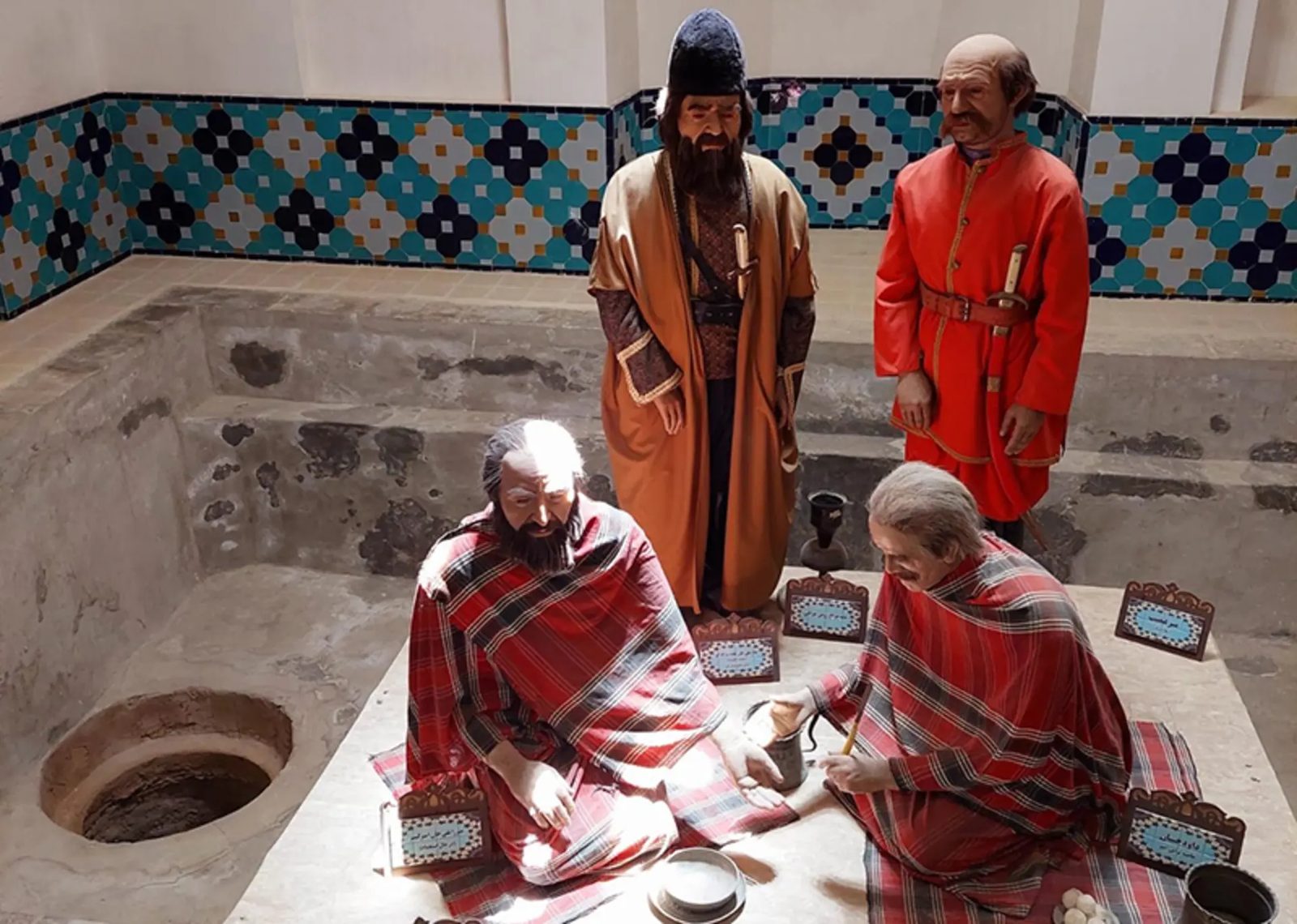
The Fin Bath stands in the southern part of the garden, and its ticket is included with the garden. There are two: the large royal bath built by order of Fath Ali Shah Qajar, and the smaller servants' bath, Safavid and older. In the smaller one the Qajar grand vizier Amir Kabir was killed, and the diorama of costumed figures that marks the spot is the reason many Iranian visitors come at all. It is a strange thing to be remembered for the room where you died.
Which mosques define the city?
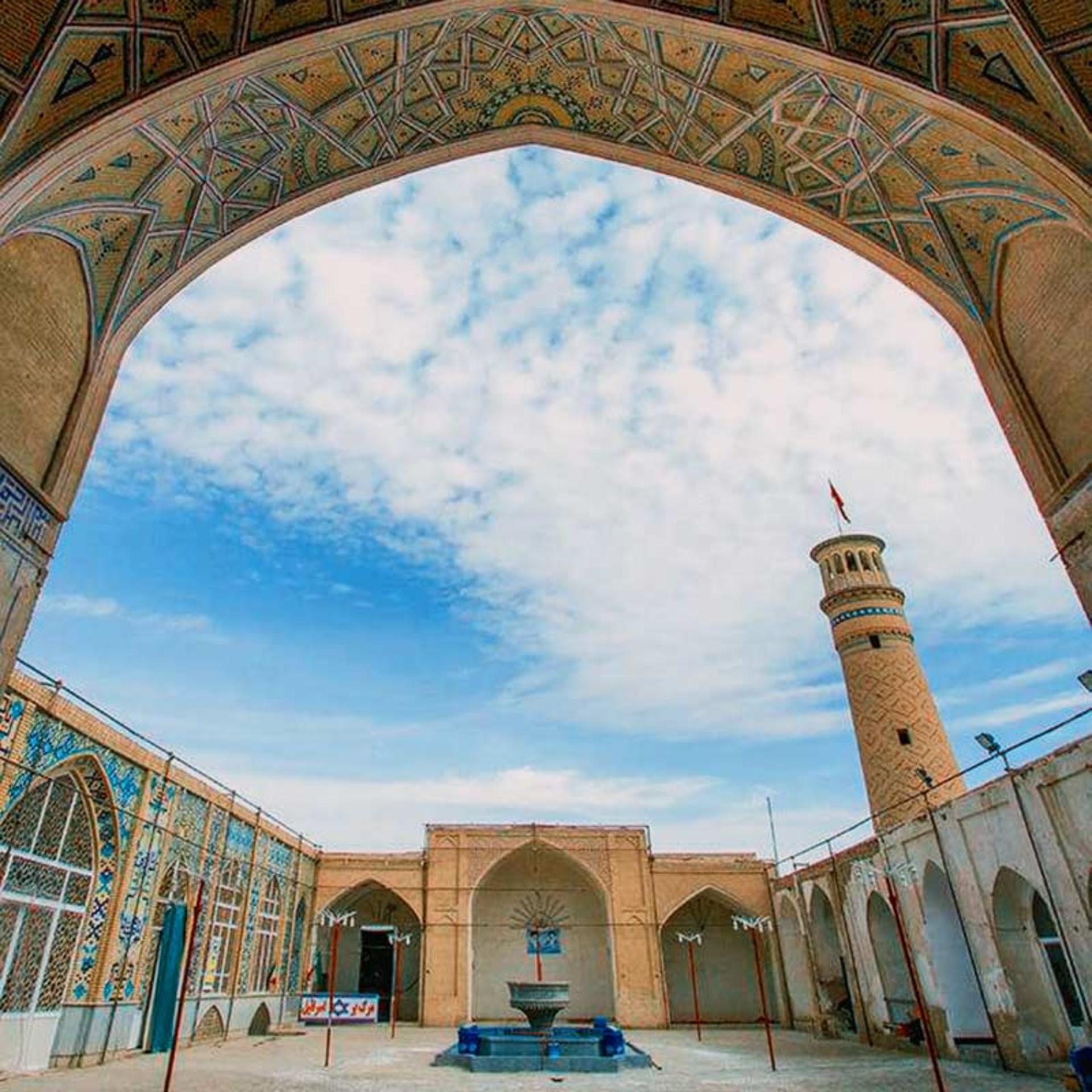
The Jameh Mosque of Kashan is the oldest standing monument in the centre, Seljuq in origin and built through Safiya Khatun, daughter of Malik Ashtar, which makes it one of the rare Iranian mosques with a named woman behind the commission. Repairs followed under Karim Khan Zand and under Abdorrazzaq Khan, governor of Kashan. Look up at the wall inscriptions by the calligraphers Abdolkarim and Ibn Mohammad Hossein Mohammad Kazem Esfahani. Open 8 to 20, on Baba Afzal Street just before Kamal Molk Square.
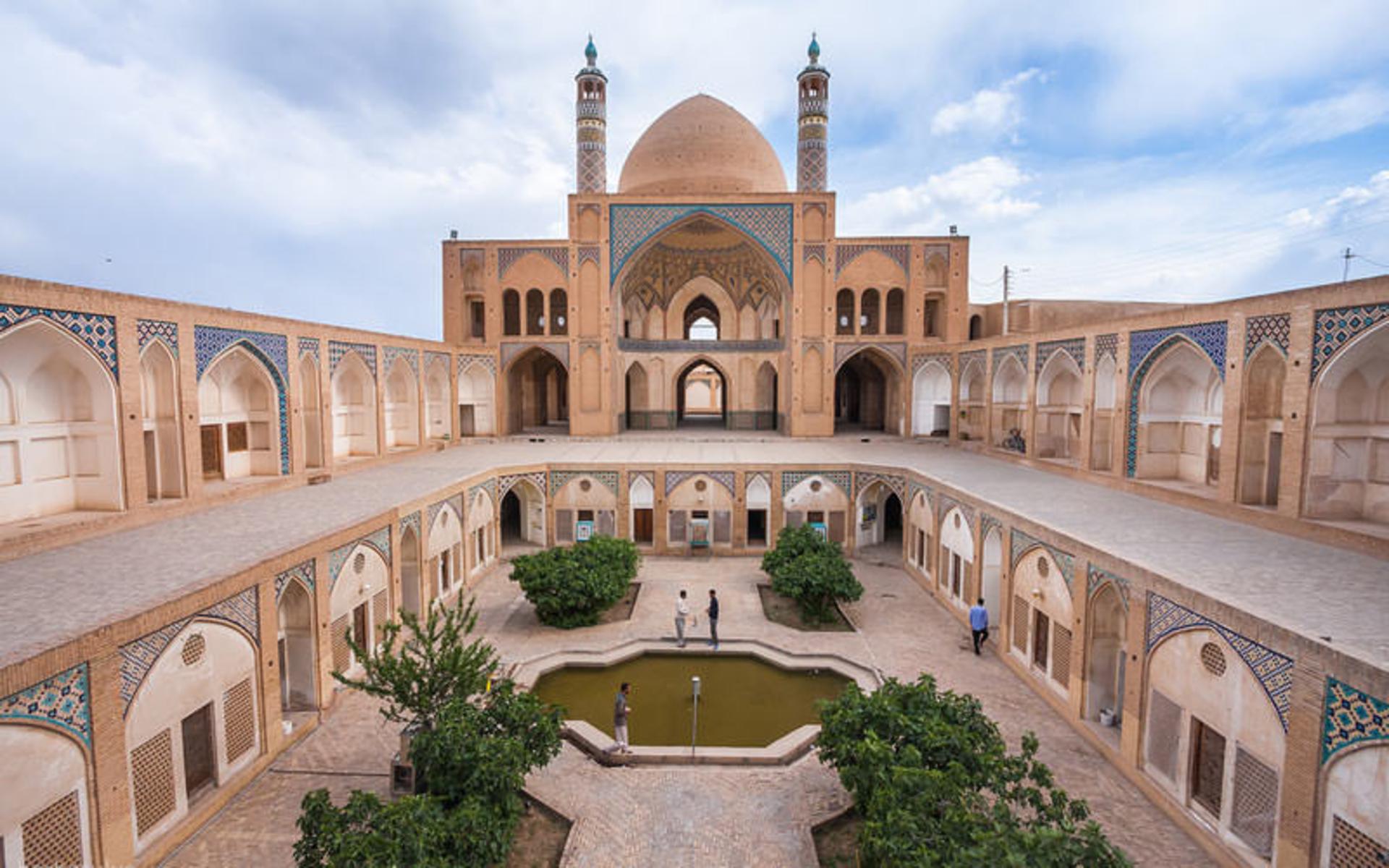
Agha Bozorg Mosque and School, on Fazil Naraki Street off Kamal Molk Square, open 9 to 18, is the youngest of the great ones and the most photogenic: a Qajar building funded by Haj Mohammad Taghi Khanban and finished under Naser al-Din Shah. Its brick dome is the argument for visiting, an unusual construction for its time that carries the eye upward through a courtyard of two minarets and a green pool.
What do I do with an afternoon in the old town?
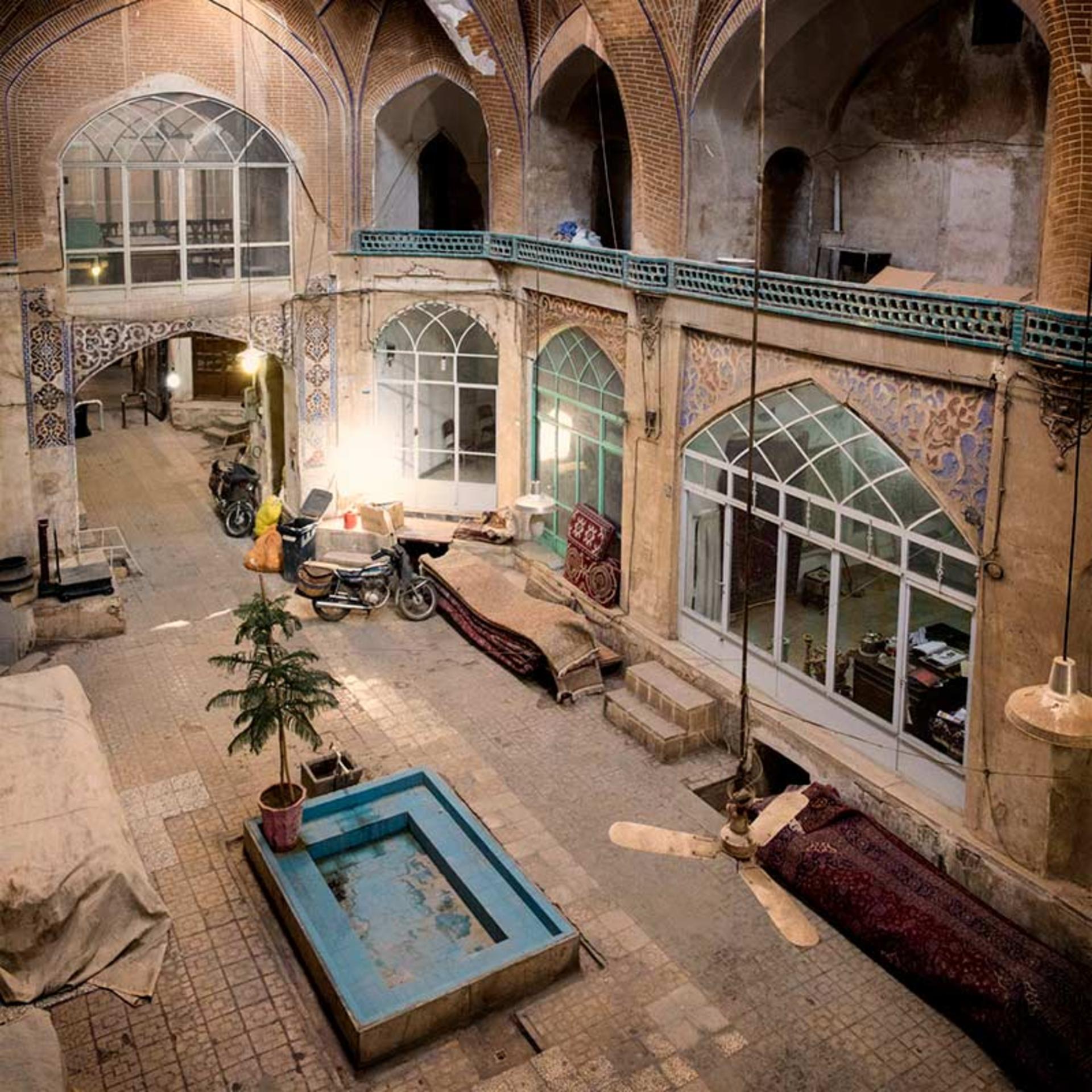
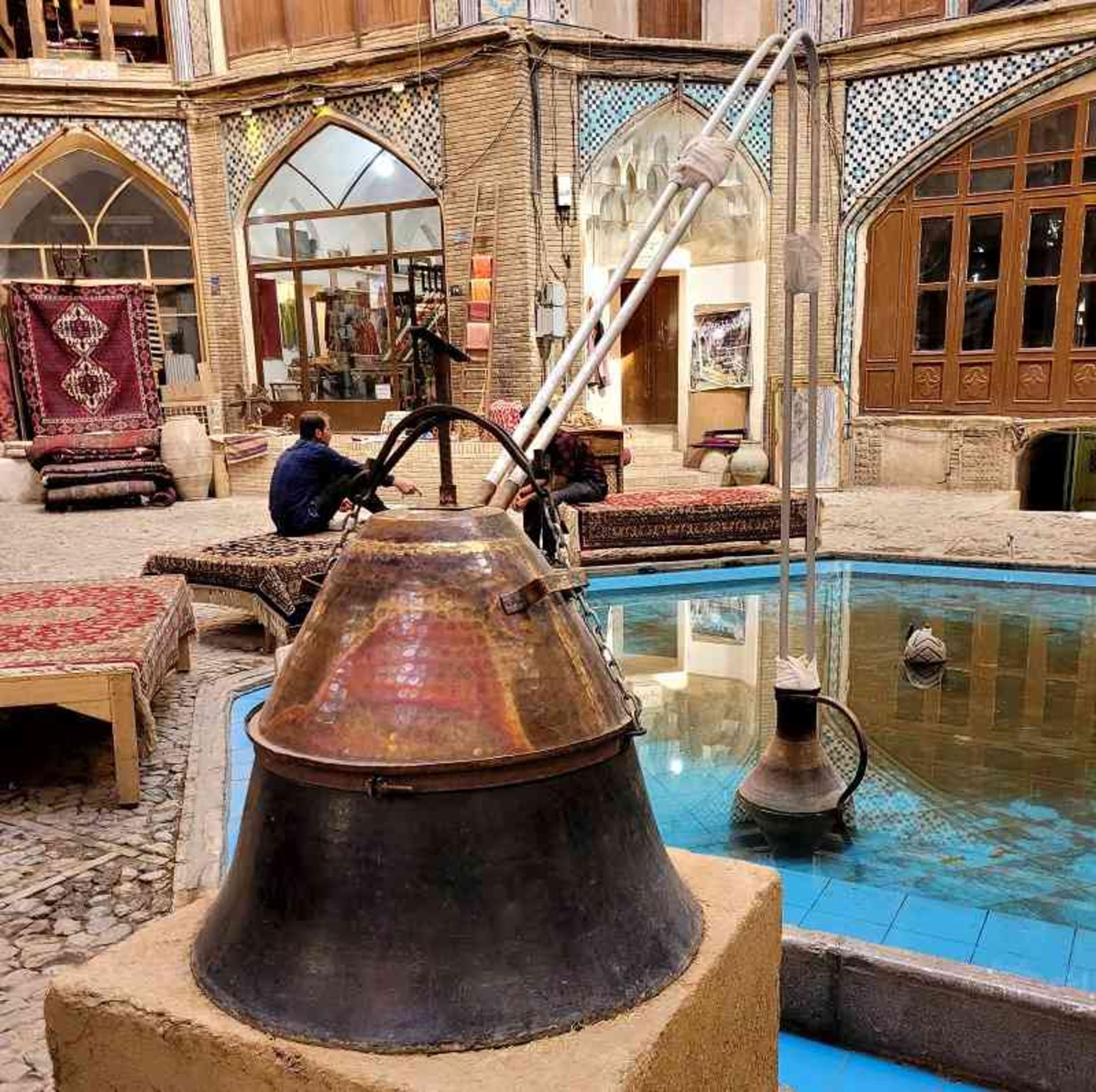
Start in the bazaar, at the head of Baba Afzal Street, open Saturday to Thursday from 9:30 until about 20:30. Kashan's market was famous enough that both Persian chroniclers and European travellers wrote it down: the historian of Zayn al-Majalis claimed no bazaar like it existed anywhere in the world and gave it two thousand paces of length, and the French traveller Tavernier, visiting in Safavid times, praised its covered rooms and its large and comfortable caravanserais, one beside the government's garden. The fabric is older than either account, Buyid and Seljuq underneath, Safavid at its height under Shah Abbas I. A severe earthquake in 1192 AH destroyed it, and what you walk today is the Qajar rebuilding on those remains, which is why the brickwork reads so confidently.
Enter at Darvazeh Dowlat, today's municipality square, and follow the No Bazaar, the coppersmiths' row rebuilt by Farrokh Khan Amin al-Dowla Qaffari, whose design has no copy elsewhere in Iran: more than 120 shops, large and small, each with a front iwan and an upper room, running to Feyz Square. Between them, caravanserais face one another across tall cross-vaulted ceilings, and the back of every shop opens onto a caravan courtyard with its own doors and light-shafts.
Then the houses. Kashan's merchant mansions are the reason the phrase "living museum" gets used for this city, and the Borujerdi House on Alavi Street in the Sultan Amir Ahmad quarter is the one that taught the style. Its foundation inscription dates it to 1194 AH; it was built for a family trading goods with Borujerd, and its two crescent-shaped, perfectly matched windcatchers above the hall and the kolah farangi are the signature. The house matters because it uses every technique of traditional Iranian domestic architecture at once, with a covered outer courtyard solved better here than anywhere, which is why it is treated as the type specimen of the Iranian dwelling. Open 9 to 17, around 30,000 tomans.
What is older than all of that?
The Sialk Hills, south of the city on the Amir Kabir boulevard, open 9 to 16 for about 25,000 tomans, are the reason Kashan claims such deep roots. The two cemetery fields, A and B, belong to 3500 and 3000 BC, and the clay-and-mud ziggurat of Sialk stayed buried and unknown until a flood exposed it some eighty years ago. It is an unglamorous site of baked earth, and for anyone interested in how settlement began in Iran it is the most important thing within a day of Isfahan.
Literary pilgrims take the road west instead: the village of Mashhad Ardehal, some 40 kilometres along the Kashan-Delian road, where the poet and painter Sohrab Sepehri is buried in the courtyard of the Imamzadeh Sultan Ali ibn Mohammad Baqer, a Shia shrine rather than a tombstone, which is how Iranians memorialise their poets.
Which day trips are worth the fuel?
Niasar, 35 kilometres and half an hour away, holds three stops in one town. The Sassanid fire temple on the western heights is a chahar taqi, a four-arch hall also called Chahar Qapu, and archaeologists place it among the oldest and largest surviving examples of the type and among the least damaged. Below it, the Niasar waterfall runs through twisting cut-stone tunnels, its water rising from the Talar spring beside the fire temple itself: two thirds of that water goes over the fall and out to the Niasar plains, one third into the Now quarter. Third, in the same hills, the Cave of Rais is not a natural cave at all but a chamber roughly 2,000 years old carved by hand, most probably for ritual, and the water in the Mithras cult, with its washings and its sunken floors over springs, is the likeliest explanation for it.
Qamsar, 33 kilometres and 35 minutes away, is the rosewater town. It is a slope of Mohammadi roses that turns into somewhere else in mid-spring, and the distillation ritual itself, the golab-giri, is the event visitors plan around.
Nooshabad, only 10 kilometres and 15 minutes away, is the surprise: an underground town, the Ouyi complex, dug entirely by hand to depths between four and 18 metres, with three storeys of rooms, corridors, channels and wells, the floors joined by vertical shafts. Open 8 to 18, around 70,000 tomans.
For one more village, Abyaneh is 80 kilometres away, a little over an hour by car, in the Barzrud valley above Natanz. Its houses climb a steep northern river slope in terraces of red earth and wooden bay windows, and it is among the highest continuously inhabited villages in Iran.
When should you go, and where do you stay?
Mid-April to mid-May is the answer for most people: the roses of Qamsar, the harvest, the distilleries working, and desert temperatures still kind. Nowruz is when Iranians come, and Kashan's houses are decorated for it, so book early through Mehyar Hotels. Summer is for the shaded courtyards and the high villages of Niasar and Abyaneh; July afternoons in the city itself are hard. Autumn is the quiet season, with the Fin garden at its best in November colour. Winter brings cold and occasionally snow to the desert edge, and empty, cheap rooms. Two full days covers the city and one of the day trips; add a third for Qamsar in rose season. Bazaar-side accommodation puts you inside the old town, and the Mehyar app covers the bus, the driver and the room in one booking.