
In the Cherkhab neighborhood of Ardakan, one of the oldest residential quarters in Yazd Province, stands a house that tells the story of a family, a neighborhood, and a region. The childhood home of Ayatollah Khatami, a prominent religious figure from Ardakan, has been transformed into the Museum of Honors, a cultural site that preserves both the architectural heritage of the Qajar period and the personal history of one of the most influential families in the city. Registered as a national heritage site, the building is recognized not only for its historical significance but also for its outstanding example of traditional desert domestic architecture, with a central courtyard, windcatchers, underground passages, and rooms arranged to maximize comfort in one of the hottest climates on Earth.
The House and Its Architecture
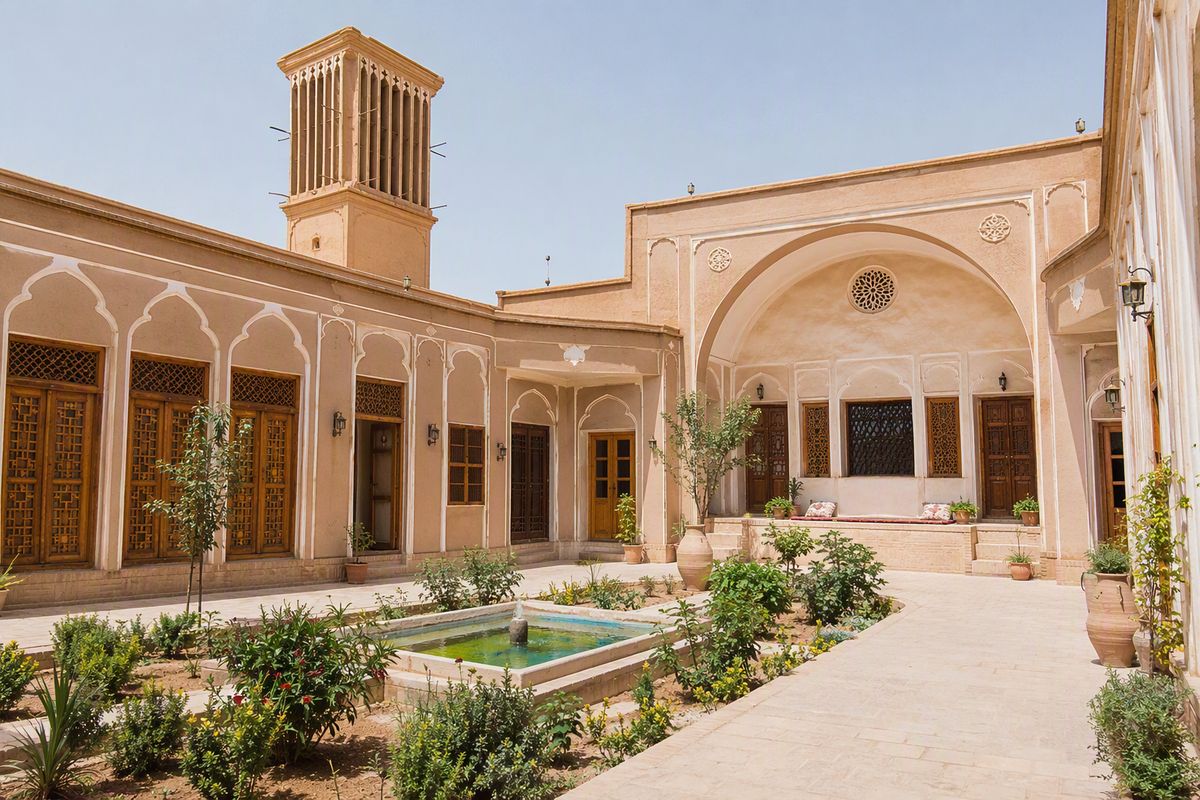
The Ayatollah Khatami House dates to the Qajar period, the era when Ardakan was a prosperous center of trade and religious scholarship in the Yazd region. Like the finest houses of the period, it was designed to provide shelter and comfort despite the extreme desert climate. The key element is the central courtyard, an open space surrounded by rooms on all four sides. This layout, known in Persian as the hayati plan, creates a microclimate within the house. The courtyard draws cool air downward, while the surrounding walls provide shade throughout the day. In winter, the low-angle sun penetrates the courtyard, warming the rooms that open onto it.
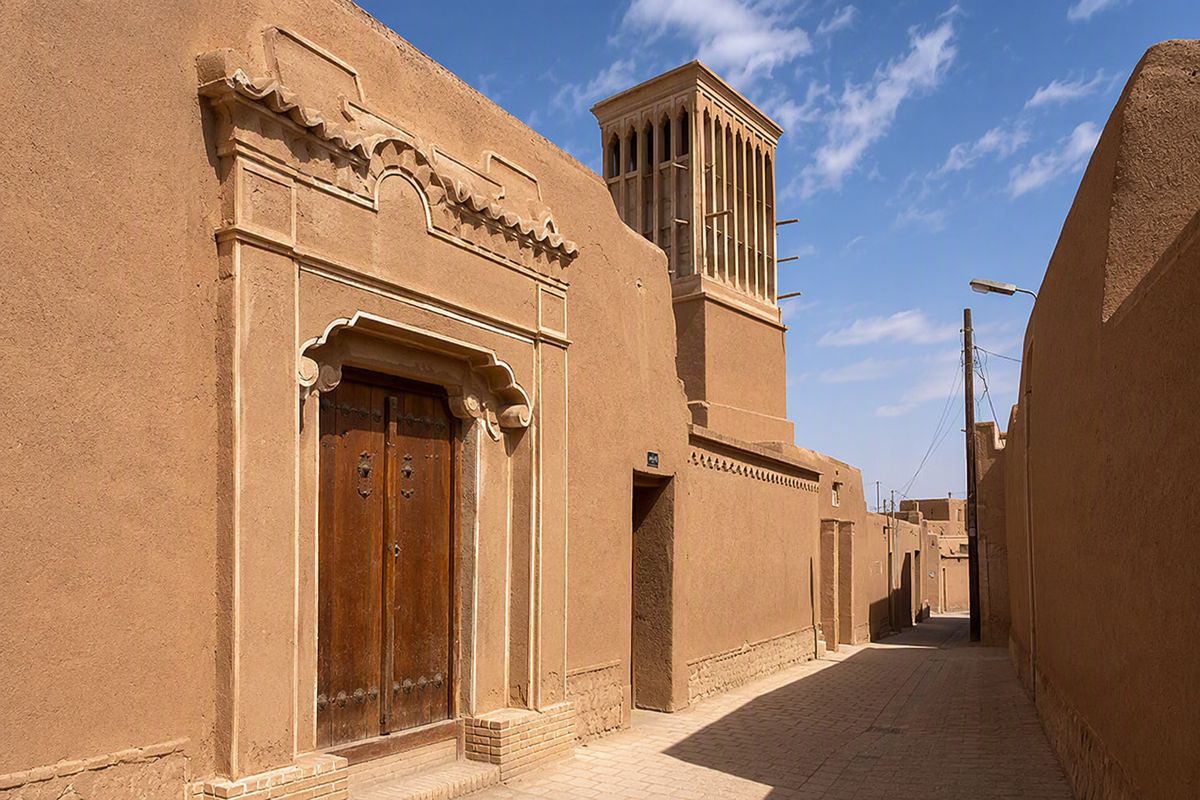
The windcatcher, or badgir, is perhaps the most iconic feature of the house. Rising above the roofline, it captures whatever breeze stirs in the desert air and channels it down into the living spaces below. The temperature difference between the exterior and the interior of a well-designed windcatcher can be dramatic, and on hot summer days the rooms beneath the badgir offer a welcome retreat from the heat. The house features a tall, well-proportioned windcatcher that remains functional to this day, a testament to the engineering skills of the builders who constructed it more than a century ago.
Another remarkable feature is the underground passage that connects the house to the neighborhood mosque. This subterranean corridor, carved through the earth beneath the streets of Cherkhab, served a practical purpose: it allowed the family to reach the mosque for prayers without crossing the exposed streets in the heat of the day. Visitors to the museum can walk through a section of this passage, experiencing firsthand the cool, dimly lit space that once served as a daily link between home and place of worship. The passage is one of the most atmospheric features of the house and a reminder of how architecture in desert environments adapts not just for comfort but for the rhythms of religious and social life.
The rooms of the house are arranged around the courtyard in a pattern typical of Qajar-era domestic architecture. The main reception hall, or talar, faces the courtyard and is decorated with plasterwork and wooden latticework. Adjacent rooms, known as seh-dari, or three-door rooms, have openings on three sides that allow air to circulate freely. These rooms were used for different purposes depending on the season, with the family moving between them to follow the sun and the wind. The walls are thick clay, sometimes more than half a meter deep, providing insulation against both the summer heat and the winter cold.
The Museum of Honors: Exhibits and Memorabilia
The transformation of the house into a museum of honors reflects the desire to preserve not only the building but also the memory of the people who shaped the cultural and religious life of Ardakan. The rooms display personal items, manuscripts, photographs, and documents related to Ayatollah Khatami and other notable figures from the city and the wider Yazd Province. These exhibits trace the intellectual and spiritual lineage of the region, highlighting the role that Ardakan has played as a center of religious scholarship for centuries.
The manuscripts on display include religious texts, correspondence between scholars, and records of local governance that shed light on the intersection of faith and civic life in the Qajar period. Photographs show the house and its inhabitants across the decades, providing a visual record of how the building and the neighborhood have evolved. Personal items, from writing implements to household objects, give the exhibits an intimate quality, connecting visitors to the daily lives of the people who once inhabited these rooms.
The museum also serves as a showcase for the broader cultural heritage of Ardakan. While the focus is on the Khatami family and their contributions, the exhibits extend to include information about the neighborhood of Cherkhab, its mosque, its qanat system, and the social structures that governed community life in a traditional desert city. Visitors gain insight into how a religious household operated within the context of a close-knit neighborhood, where the boundaries between private and public life were fluid and where the mosque, the bazaar, and the home formed an integrated social landscape.
Exploring the Cherkhab Neighborhood
A visit to the Museum of Honors is inseparable from a walk through the Cherkhab neighborhood itself. One of Ardakan's oldest quarters, Cherkhab retains much of its traditional character, with narrow lanes, high clay walls, and heavy wooden doors that open onto hidden courtyards. The neighborhood mosque, connected to the house by the underground passage, is a focal point of community life and an example of vernacular religious architecture at its most authentic. Its simple dome and tiled entrance reflect the aesthetic of the region, where beauty is expressed through proportion and craft rather than ostentation.
The lanes of Cherkhab follow a pattern that has changed little over the centuries. Houses cluster closely together, providing mutual shade and protection from sandstorms. The design reflects the practical wisdom of desert living, where every element of the built environment serves multiple purposes. Walking these lanes, visitors encounter the same sequence of enclosed spaces and sudden openings that has defined the experience of the neighborhood for generations, from the heavy door of the Khatami House to the small Imamzadeh that marks a sacred spot along the path.
The Carpet Museum, located in the same neighborhood, shares the Museum of Honors' commitment to preserving the heritage of Ardakan. Together, the two sites offer a comprehensive view of the cultural life of Cherkhab, from the textile traditions displayed in the carpet collection to the religious and intellectual history honored in the Khatami House. The Anthropology Museum, on Khamenei Boulevard, extends the story further, documenting the everyday tools, costumes, and practices that shaped life in the wider Ardakan region.
Practical Information for Your Visit
Getting There
Ardakan is approximately 60 kilometers northeast of Yazd. Regular buses and shared taxis run between the two cities throughout the day, with the journey taking about 45 minutes. From Tehran, overnight buses and trains connect to Yazd, from where Ardakan is easily accessible. A private transfer from Yazd offers the most flexibility, allowing you to combine the Museum of Honors with other Ardakan attractions in a single day.
Opening Hours and Tickets
The museum is typically open daily, with free or nominal entry. Hours follow the standard pattern for Iranian cultural sites, opening in the morning and closing in the early evening. Arrive before late afternoon to ensure a full visit, especially during the shorter winter days. Allow one to two hours for a thorough exploration of the house and its exhibits.
Best Time to Visit
October through April offers the most comfortable weather for visiting Ardakan and exploring the Cherkhab neighborhood on foot. The underground passages and windcatchers provide natural cooling during the summer months, but outdoor movement through the lanes is difficult during July and August when temperatures regularly exceed 40 degrees Celsius. Spring visits, in March and April, coincide with wildflowers in the surrounding countryside and mild temperatures ideal for combining indoor museum visits with walks in the old town.
Tips for Visitors
The house is best explored at a leisurely pace, taking time to appreciate the architectural details as well as the exhibits. The underground passage is a highlight and should not be missed. Photography is generally permitted. If you are visiting multiple museums in Ardakan, plan your route to include the Carpet Museum and the Anthropology Museum, all within the same neighborhood and easily accessible on foot.

The Museum of Honors in Ardakan is a place where architecture, history, and personal memory converge. The Qajar-era house of the Khatami family, with its courtyard, windcatcher, and subterranean passage, stands as a monument to the ingenuity of desert architecture and the enduring importance of family and faith in the cultural life of Ardakan. For visitors to Yazd Province, it offers an intimate and atmospheric encounter with the past, set within one of the finest examples of traditional domestic architecture in the region.