
Yazd does not pretend to be easy in summer. The thermometer climbs past forty degrees by mid morning and the desert sun bleaches every shadow into a sliver. Visitors who arrive in July or August quickly learn that this is a city of early starts, cool interiors, and slow walks through narrow lanes where the walls block the worst of the light. Yet there is a compensation that no other season can offer. The streets are quiet. The tourists are thin on the ground. The light turns the mud brick of the old city to gold, and the sky overhead is a blue so clean and deep that it makes the heat almost worth enduring. At the center of all this stands Sabzeh Meydan, one of the oldest squares in Yazd, a place where the city has gathered for centuries and where the essence of desert life is still on display.
Sabzeh Meydan sits in the historic core of Yazd, within easy walking distance of the Jameh Mosque and the old bazaar. It is not a grand plaza in the Isfahani sense. There are no monumental frescoes or towering portals of polished tile. What it offers instead is the texture of an Iranian city that has adapted, over a thousand years or more, to one of the harshest climates on earth. The square itself is an open rectangle of packed earth and stone, surrounded by low buildings with the thick walls and small windows that desert architecture demands. In summer the square comes alive in the early morning and again after sunset, when the heat retreats just enough for the neighborhood to breathe.
A brief history of Sabzeh Meydan
The name Sabzeh Meydan translates as "Green Square," though the greenery in question is modest by the standards of a Persian garden. Historically the square served as a gathering place for the old city, a node where the lanes converging from different quarters met and where commerce, social life, and religious observance overlapped. Its proximity to the Jameh Mosque of Yazd, one of the most important architectural landmarks in the city and a masterpiece of Persian tilework, made the square a natural extension of the mosque's public functions. Before the expansion of modern streets and the shift of commercial life toward the newer parts of the city, Sabzeh Meydan was where Yazd did its daily business.
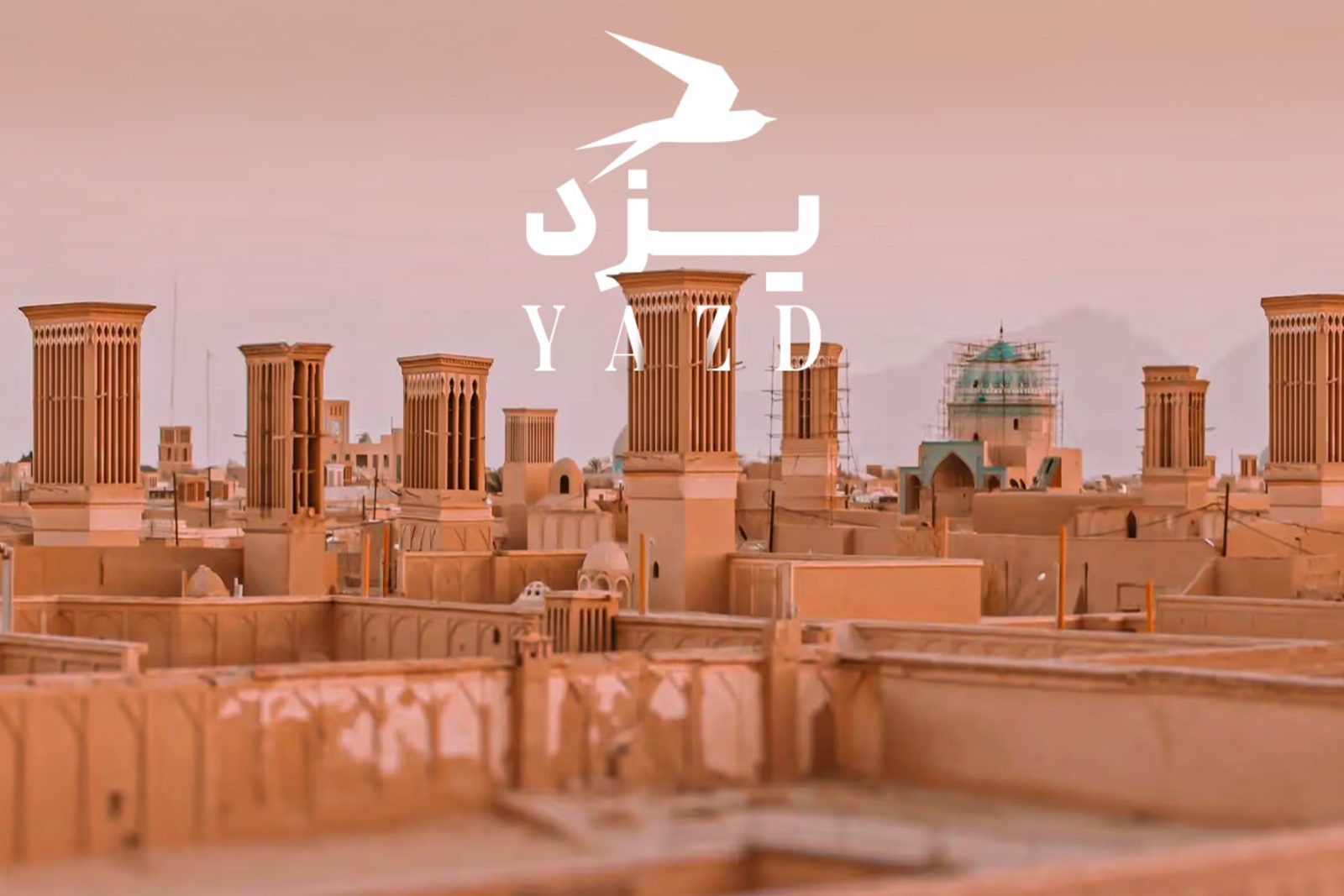
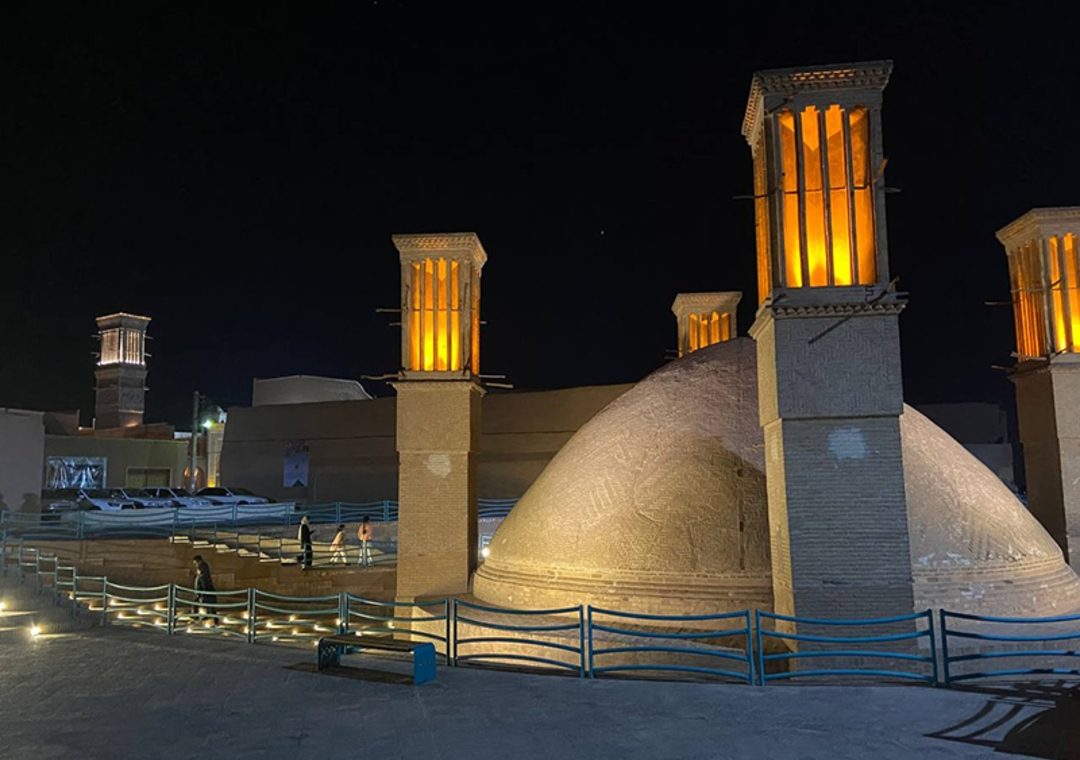
The square has witnessed the full sweep of Yazd's history. The city was already an important center under the Seljuks, and it flourished under the Safavids as a waypoint on the trade routes linking the Persian Gulf to Central Asia. The mud brick construction that defines the old quarters, including the buildings around Sabzeh Meydan, was not a choice of poverty but a rational response to climate. Thick earth walls absorb the heat of the day and release it slowly at night, keeping interiors cool without mechanical aid. The badgirs, or windcatchers, that rise above the rooftops of Yazd are the most visible expression of this tradition, but the principle extends to every wall, every narrow lane, and every covered passage in the old city.
Walking through Sabzeh Meydan in summer, you feel this accumulated intelligence in your bones. The square is oriented to catch whatever breeze the desert offers. The surrounding buildings shade each other in sequence as the sun moves across the sky. And the heavy walls, some of them centuries old, hold the cool of the night long into the afternoon. This is architecture that works with its environment rather than against it, and standing in the square at midday you understand why Yazd was built this way and why it has endured.
What to see in and around Sabzeh Meydan
The square itself is best understood as an open room in a much larger architectural complex. Walk its perimeter and you will notice the proportions of the surrounding buildings, the way the facades step back to allow light into the lane, the small niches and doorways that hint at the courtyards hidden behind the plain outer walls. In the early morning, before the heat becomes serious, this is one of the most atmospheric walks in Yazd. The light falls at a low angle, the brickwork glows, and the silence is broken only by the call to prayer from the Jameh Mosque nearby.
The Jameh Mosque is the obvious centerpiece. Its entrance portal rises over forty meters, covered in a blaze of turquoise and blue tilework that is among the finest in Iran. The prayer hall beneath the dome is cool and dark, a perfect retreat from the summer sun. The mosque has been expanded and restored over many centuries, and the layers of decoration tell the story of Yazd's continuing investment in its civic and religious identity. Entry is free, though visitors should dress modestly and be respectful of worshippers. Non Muslim visitors are welcome outside prayer times, and the guards are usually happy to explain the features of the tilework and the history of the building.
A few minutes' walk from the square in any direction takes you into the fabric of the old city. The old bazaar of Yazd extends to the north, a labyrinth of covered passages and small courtyards where merchants sell everything from termeh cloth and handicrafts to spices and sweets. The bazaar is cooler than the open streets thanks to its high ceilings and shaded passages, and it is a natural destination on a summer morning before the heat forces everyone indoors. South and east of the square, the residential quarters of Fahadan offer some of the best preserved traditional houses in Iran, many of them now converted into boutique guesthouses, restaurants, and small museums. The Amir Chakhmaq complex, with its iconic row of arched alcoves, lies within walking distance to the east and is especially impressive at dusk when the tiles catch the last light of the day.
How to handle the summer heat
Yazd in summer is not a city for the unprepared. Daytime temperatures regularly exceed forty degrees Celsius in July and August, and the sun is intense at an elevation of roughly 1,200 meters above sea level. The first rule is to plan your day around the heat. Start your sightseeing by seven or eight in the morning, when the air is still bearable and the light is beautiful. By mid morning, retreat to a shaded cafe, a museum, or your hotel courtyard. Resume your exploration in the late afternoon, once the sun has dropped low enough to cast shadows again. After dark, the old city comes alive in a different way. Families gather in the squares, the mosques are lit, and the temperature drops to something approaching comfortable.
Hydration is essential. Carry water at all times, and drink more than you think you need. The air is dry, and the desert climate dehydrates you faster than you might expect. A hat, sunscreen, and light but covering clothing are all necessary. The local custom of dressing modestly actually helps, since loose, light colored, full length clothing protects against both sun and heat more effectively than shorts and a t shirt. Yazd's old city, with its narrow lanes and thick walls, provides considerably more shade than the modern grid of wider streets to the north, which is another reason to spend your summer hours in the old quarters around Sabzeh Meydan and the bazaar.
Where to eat and rest
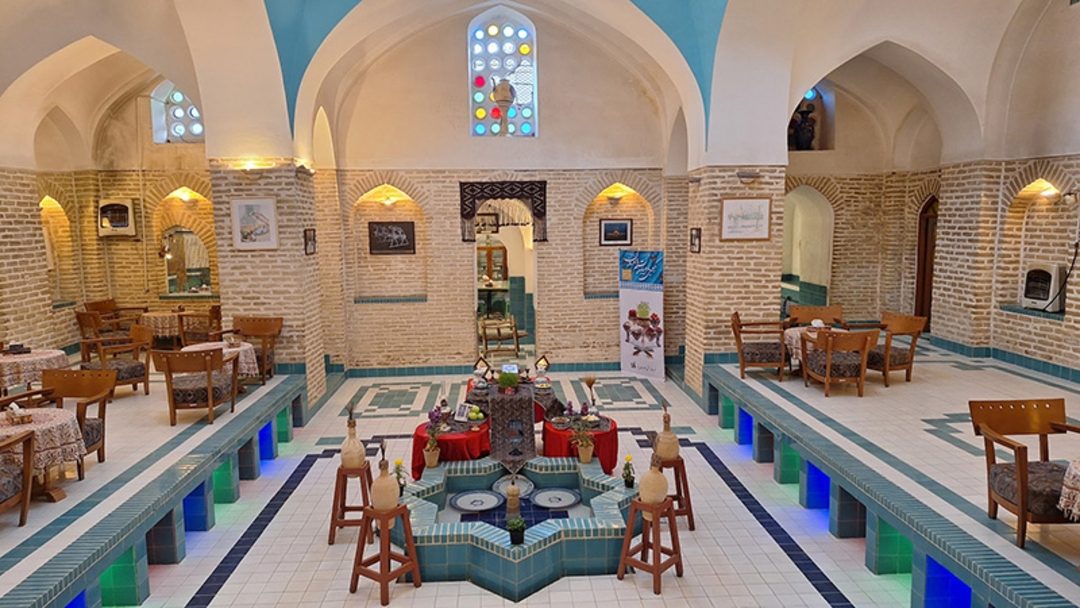
Yazd is a serious food city, and the streets around Sabzeh Meydan offer some of the best examples. The traditional restaurants of the Fahadan quarter serve dishes that have been refined over generations in this climate. Qeimeh, a split pea and meat stew topped with potato crisps, is a Yazd specialty. Sohan is a sweet, brittle confection made from almonds and saffron that locals eat with tea. The restaurants in the restored houses around the square often have courtyards with pools and shade trees, creating a microclimate several degrees cooler than the street outside. In summer, these courtyards are the best places to eat lunch, and booking a table in advance is wise since the better venues fill up quickly at dinner time.
For a lighter option, the juice shops and traditional tea houses scattered through the old city serve fresh pomegranate juice, doogh, a salted yogurt drink that is excellent in hot weather, and a range of herbal infusions. Sitting in a tea house in the old bazaar, watching the light filter through the ceiling openings onto the stone floor, is one of the quiet pleasures of a Yazd summer afternoon.
Practical tips for a summer visit
Sabzeh Meydan and the surrounding old city are open at all times, and there is no entrance fee for walking the streets. The Jameh Mosque is also free to enter, though donations are appreciated. The best time to visit the square itself is early morning, before ten, or after six in the evening. Midday in July and August is genuinely unpleasant, and there is little shade in the square itself.
Getting to Yazd is straightforward. The city has an airport with regular flights from Tehran, Isfahan, and a handful of other Iranian cities. The train station connects Yazd to Tehran, Mashhad, Isfahan, and Shiraz, though journey times are long. Buses run frequently from most major cities. Once in Yazd, the old city is compact and walkable, and taxis are plentiful for longer journeys. For visitors who prefer the comfort of an air conditioned car, booking a Mehyar taxi on arrival is the most convenient way to reach the city from the airport or station and to make day trips to nearby sites such as Chak Chak or the towers of silence.
Accommodation in Yazd ranges from international hotels to traditional guesthouses in the old quarters. For a summer visit, a guesthouse in the Fahadan neighborhood puts you within walking distance of Sabzeh Meydan and the Jameh Mosque, and many of these restored houses have deep courtyards, windcatchers, and underground spaces that stay cool naturally. The experience of sleeping in a room cooled by a badgir, with the sound of a fountain in the courtyard, is one of the distinctive pleasures of Yazd, and it costs considerably less than a conventional hotel room in the newer parts of town.
Day trips from Yazd in summer
If you are spending several days in Yazd to acclimatize to the summer heat at a relaxed pace, the surrounding region offers rewarding day trips. Chak Chak, the Zoroastrian pilgrimage site perched on a cliff face about sixty kilometers to the east, is best visited very early in the morning. The natural silence of the desert landscape, the dramatic setting of the shrine, and the panoramic views over the plain make the early start worthwhile. The Towers of Silence, on a hill to the southeast of the city, are another Zoroastrian heritage site worth visiting at dawn or dusk when the temperature is manageable. The town of Mehriz, to the south, sits at a slightly higher elevation and is noticeably cooler than Yazd in summer, with a beautiful Persian garden and a historic caravanserai that make it a refreshing half day excursion. These trips are easily arranged through Mehyar, either as a private car or a day tour with a guide.
Why summer can still be worth it
It would be easy to say that Yazd is best visited in spring or autumn, and in purely climatic terms that is true. But summer has its own rewards for the traveler willing to adapt. The crowds are small. The light is extraordinary. The pace of life in the old quarters slows to match the rhythm of the heat, and there is a quality of stillness in the lanes around Sabzeh Meydan at dawn that you will not find at any other time of year. The city's architecture, designed over centuries to manage this exact climate, works exactly as it was meant to, and experiencing it in the season for which it was built gives you a deeper understanding of why Yazd looks the way it does. Bring water, start early, embrace the midday rest, and let the desert city show you what it can do.