
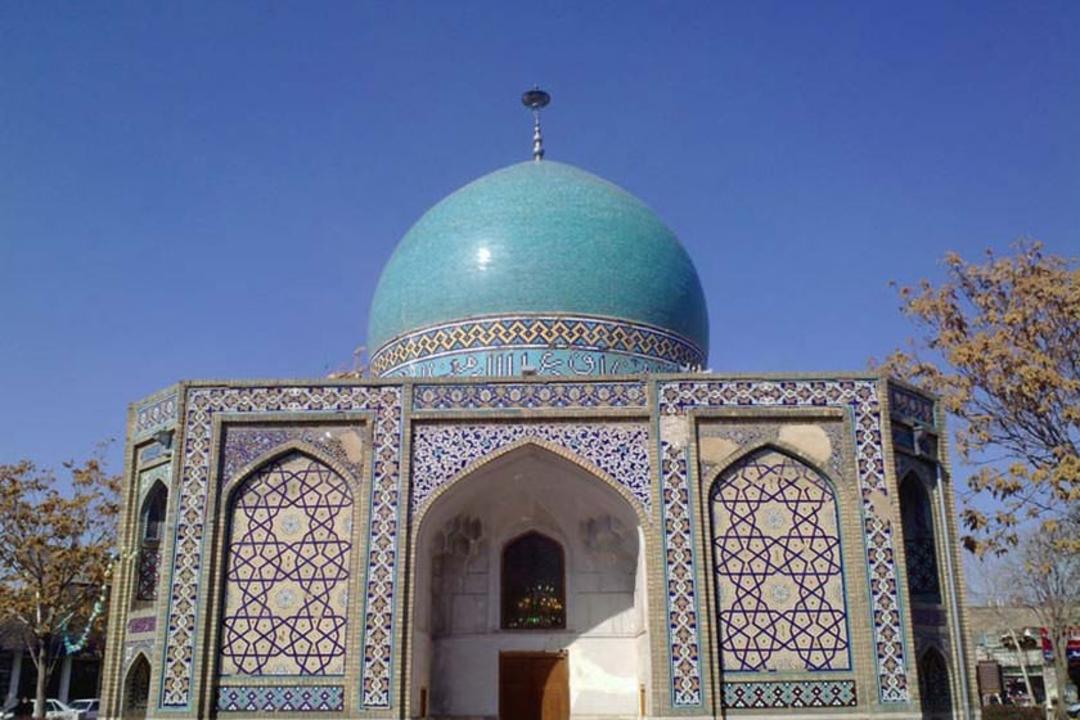
Amid the bustling streets of Mashhad, far from the overwhelming grandeur of the Imam Reza Shrine yet within the spiritual orbit of the holy city, stands a small but exquisite monument from the Safavid period. The Green Dome of Mashhad, known in Persian as Gonbad-e Sabz, is the tomb of Sheikh Momen Estarabadi, a revered scholar and cleric of the seventeenth century. Registered as a national heritage site of Iran in 1977, this elegant structure draws its name from the turquoise-green tilework that adorns its dome, a palette of faience that glows softly in the Khorasan sunlight. For visitors to Mashhad who wish to look beyond the main shrine and discover the city's layered history, the Green Dome offers a quiet, contemplative space that speaks volumes about the intellectual and spiritual life of Safavid-era Khorasan.
Sheikh Momen Estarabadi
Sheikh Momen Estarabadi was a prominent religious scholar and jurist of the late Safavid period. His origins trace to the town of Astarabad (modern Gorgan) in the Caspian region, though his scholarly reputation brought him to Mashhad, where he spent his later years and earned the deep respect of the local community. The exact dates of his life are debated among historians, but his tomb became a place of pilgrimage and veneration soon after his death, reflecting the high regard in which he was held by both the religious establishment and ordinary people.
The construction of the tomb building dates to the Safavid era, a period when Mashhad experienced significant architectural growth as a center of Shia learning and devotion. The Safavid dynasty, which ruled Iran from 1501 to 1736, promoted Twelver Shiism as the state religion and invested heavily in the religious infrastructure of Mashhad, Qom, and other holy sites. The Green Dome belongs to this broader tradition of patronage, though on a more intimate scale than the vast shrine complexes nearby.
Architectural Details
The building's plan is octagonal, with four iwans arranged around a central axis. Each iwani features decorative arches and panels of tilework that demonstrate the refined craftsmanship of the period. The dome itself rises above the main chamber, its exterior clad in turquoise faience tiles that give the structure its characteristic green hue. The tiles are arranged in geometric patterns, with bands of calligraphic inscription running around the base of the dome and along the iwani.
Inside, the chamber is spare and dignified, with the cenotaph of Sheikh Momen at its center. Light enters through openings in the upper walls and through the iwani on each side, creating a soft, meditative atmosphere. The interior plasterwork includes some painted decoration, though the overall aesthetic is one of simplicity and restraint, appropriate for a scholar's tomb.
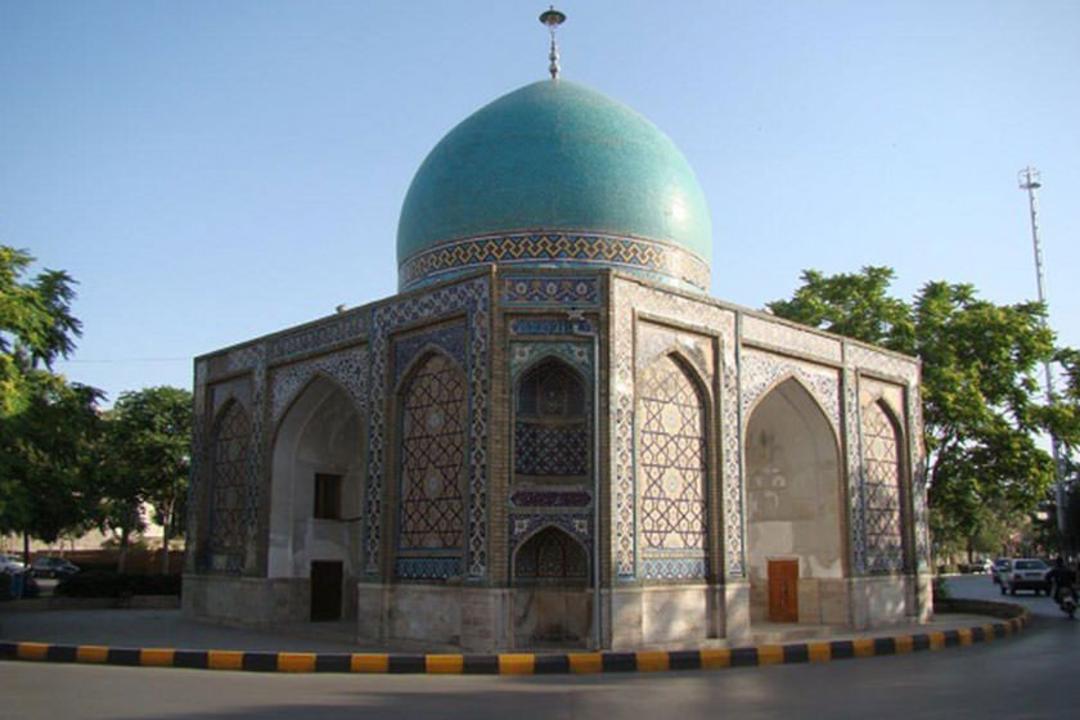
The octagonal plan is significant in Islamic funerary architecture. The eight sides symbolize the eight gates of paradise in Islamic tradition, and the form was commonly used for tombs of high-ranking religious figures throughout the Safavid and later periods. The four iwani, oriented toward the cardinal points, create a balanced and harmonious composition that draws the eye upward toward the dome.
National Heritage Registration
The Green Dome was officially inscribed on Iran's National Heritage List on May 5, 1977, under registration number 1370. This designation recognizes the building's architectural and historical importance and ensures its protection under Iranian law. The registration came at a time when awareness of Iran's Safavid heritage was growing, and it helped secure resources for conservation work on the structure.
Despite its protected status, the Green Dome remains one of the less visited monuments in Mashhad. Most pilgrims and tourists focus on the Imam Reza Shrine, leaving the Green Dome to those with a deeper interest in the city's cultural history. This relative obscurity is, paradoxically, one of its charms. Visitors who make the journey find a peaceful space free from crowds, where they can appreciate Safavid architecture and reflect on the scholarly traditions that shaped the city.
How to Get There
The Green Dome sits on Akhund Khorasani Street, in a square named after the monument itself. This location places it in the central part of Mashhad, within reasonable distance of the Imam Reza Shrine and other major landmarks. From the shrine, the Green Dome is roughly a ten-minute drive by car or taxi. Mehyar Taxi services operate throughout Mashhad and can take visitors directly to the site.
Mashhad is served by an international airport with connections to Tehran, Isfahan, Shiraz, and several regional destinations. The city also has a railway station with routes to Tehran, Gorgan, and other major cities. Long-distance buses connect Mashhad to virtually every corner of Iran.
Hours and Tickets
The Green Dome is generally accessible during daylight hours. There is no formal entrance fee, though donations for maintenance are welcome. The site is managed by Iran's Cultural Heritage organization, and visitors should treat the space with the respect due to a historical monument and a place of spiritual significance.
Nearby Attractions
Mashhad offers an extraordinary density of cultural and religious sites. The Imam Reza Shrine, the city's spiritual center, dominates the urban landscape and draws millions of pilgrims each year. Its vast courtyards, golden iwani, and museums of carpets and gifts are essential visits. Beyond the shrine, the Naderi Museum, dedicated to the memory of Nader Shah Afshar, provides insight into the military history of eighteenth-century Iran. The Kooh Sangi Park, at the foot of the Binalud Mountains, offers green space and hiking trails for those seeking relief from the urban environment.
For travelers exploring Mashhad, Mehyar Hotels provides comfortable accommodation options near the shrine and throughout the city. Mehyar Wallet makes currency exchange and payments straightforward during your stay. The Green Dome may be a small monument, but it opens a window onto the rich intellectual and artistic heritage of Safavid Khorasan, a heritage that shaped the spiritual identity of Iran for centuries to come.