
To speak of Iranian culture is to speak of one of the oldest and most continuous civilisations on earth. The cultural traditions of the Iranian plateau stretch back thousands of years, encompassing an extraordinary range of artistic expressions, ceremonial practices, philosophical traditions, and social customs that have evolved, adapted, and endured through the rise and fall of empires, the arrival and departure of conquerors, and the constant dialogue between tradition and modernity. For visitors to Iran, understanding the cultural context of what they encounter transforms a journey of sightseeing into a voyage of genuine discovery, revealing layers of meaning that would otherwise remain hidden.
The Mirror Work Tradition: Ayeneh-kari
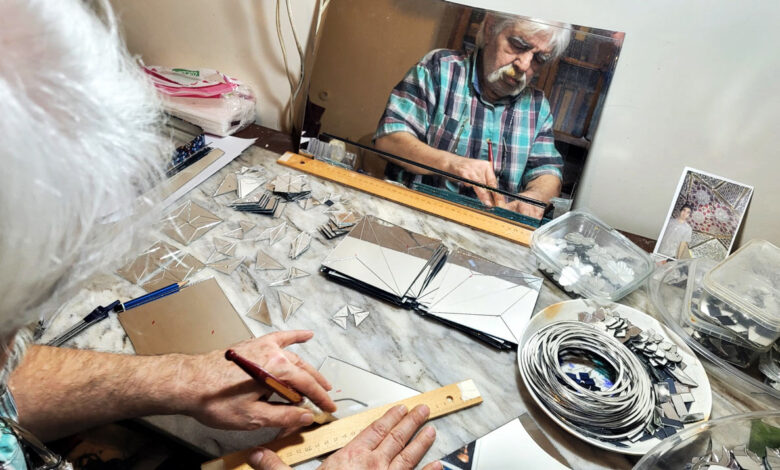
Among the most visually stunning of all Iranian art forms is Ayeneh-kari, the tradition of mirror mosaic work that adorns some of the country's most magnificent interiors. This intricate craft involves cutting mirrors into small geometric pieces and arranging them in elaborate patterns across walls, ceilings, and architectural features, creating environments that shimmer with reflected light and seem to dissolve the boundaries between solid architecture and infinite space. The tradition has its roots in the Islamic prohibition against figurative representation, which drove artists toward increasingly sophisticated forms of geometric and abstract decoration. The finest examples of Ayeneh-kari can be found in the palaces and shrines of Isfahan, Shiraz, and Tehran, where entire rooms seem to have been constructed from light itself.
The craft requires extraordinary precision and patience. Artisans spend years mastering the techniques of cutting, grinding, and setting mirror pieces, and the work demands not only manual skill but an intuitive understanding of how light will interact with the finished surface. The tradition has been recognised by UNESCO for its cultural significance, and contemporary practitioners continue to produce works that honour the classical heritage while exploring new possibilities within the form.
Yalda Night: The Victory of Light Over Darkness
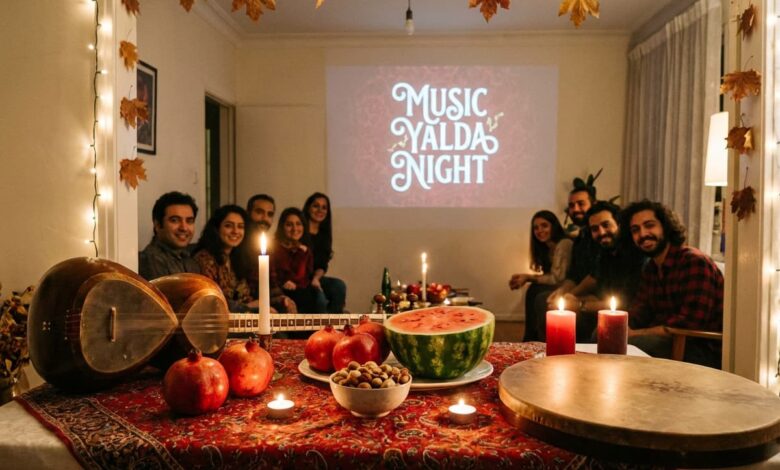
Shab-e Yalda, or Yalda Night, is perhaps the most beloved of all Iranian celebrations, marking the winter solstice as the longest night of the year and symbolically celebrating the triumph of light over darkness. The tradition has pre-Islamic roots reaching back to Zoroastrian times, when the ancient Iranians understood the solstice as a moment of cosmic significance, a turning point in the eternal struggle between light and dark. Families gather on this night to stay awake well past midnight, sharing a feast of symbolic foods that carry deep cultural meaning.
The pomegranate, with its brilliant red seeds hidden beneath a tough exterior, represents the dawn breaking through the darkness. Watermelons, with their cool sweetness, symbolise the protection of health and wellbeing during the winter months. Nuts, dried fruits, and sweets are shared among family members, and the evening is traditionally filled with poetry recitation, particularly the verses of Hafez, whose divan is consulted for auguries on this special night. The celebration continues until the first light of dawn, when the longest night has been defeated and the days begin their gradual lengthening toward spring.
The Persian Musical Tradition
Iranian music encompasses one of the world's great classical musical traditions, a system of modal melodies known as the radif that has been transmitted orally from master to student for generations. The radif comprises hundreds of pieces organised into twelve modes, or dastgahs, each with its own character, emotional range, and repertoire of melodic figures. Traditional instruments such as the tar, the setar, the kamancheh, and the tombak (a goblet drum) create textures of extraordinary subtlety and beauty.
One of the most remarkable intersections of music and place in Iran occurred when the Armenian Philharmonic Orchestra performed at the ancient ruins of Persepolis, demonstrating the country's capacity to blend ancient heritage with living artistic expression. Iran's musical landscape also encompasses regional folk traditions, Sufi ceremonial music, and contemporary fusion that draws on both Iranian and Western influences, creating a vibrant and constantly evolving scene.
Culinary Culture and the Art of Iranian Hospitality
Food in Iran is far more than mere sustenance. It is an expression of hospitality, a marker of identity, and an art form that reflects the country's geographic diversity and historical complexity. Iranian cuisine is built on a foundation of rice, bread, herbs, and meats prepared with subtle blends of saffron, turmeric, cinnamon, and dried limes. The national dish, chelo kabab, is a study in refined simplicity, while stews such as ghormeh sabzi and fesenjan demonstrate the Iranian mastery of slow-cooked flavour development.
The ritual of tea drinking, or chay, is perhaps the most universal expression of Iranian hospitality. Tea is brewed strong and served throughout the day, accompanied by sugar cubes held between the teeth and sipped through the liquid. To be offered tea in an Iranian home is to be welcomed as a guest, and the refusal of tea requires delicate handling to avoid giving offence. The tradition of mehman-navazi, or hospitality, is woven into the fabric of Iranian social life and extends to visitors from abroad with a generosity that consistently astonishes travellers.
Archaeological Heritage and the Depth of Iranian History
Iran's cultural landscape is enriched by an archaeological heritage that spans from the earliest human settlements to the splendours of the Islamic period. The excavations at Susa, where French archaeologists including the Dieulafoy couple conducted pioneering work in the late nineteenth century, revealed one of the oldest continuously inhabited settlements in the world, with occupation layers reaching back more than 7,000 years. The sites of Persepolis, Pasargadae, Naqsh-e Rostam, and Chogha Zanbil offer windows into the imperial grandeur of the Achaemenid and Elamite civilisations.
This archaeological wealth is not confined to museums and protected sites. It forms a living part of the landscape through which travellers move, with ancient ruins and historical monuments appearing regularly along roads and in villages throughout the country. The island of Hormuz, with its extraordinary geological formations and red soil, represents another dimension of Iran's cultural landscape, where natural wonder and human history merge in a setting of almost surreal beauty.
A Living Culture
What distinguishes Iranian culture from the heritage of many other ancient civilisations is its vitality. These are not museum exhibits or historical curiosities. The traditions described here are practised daily by millions of Iranians, woven into the rhythms of ordinary life, and passed from generation to generation with a combination of reverence and adaptation that keeps them alive and relevant. For visitors to Iran, engaging with this living culture is the most rewarding aspect of travel, offering connections and insights that no guidebook can fully convey.