
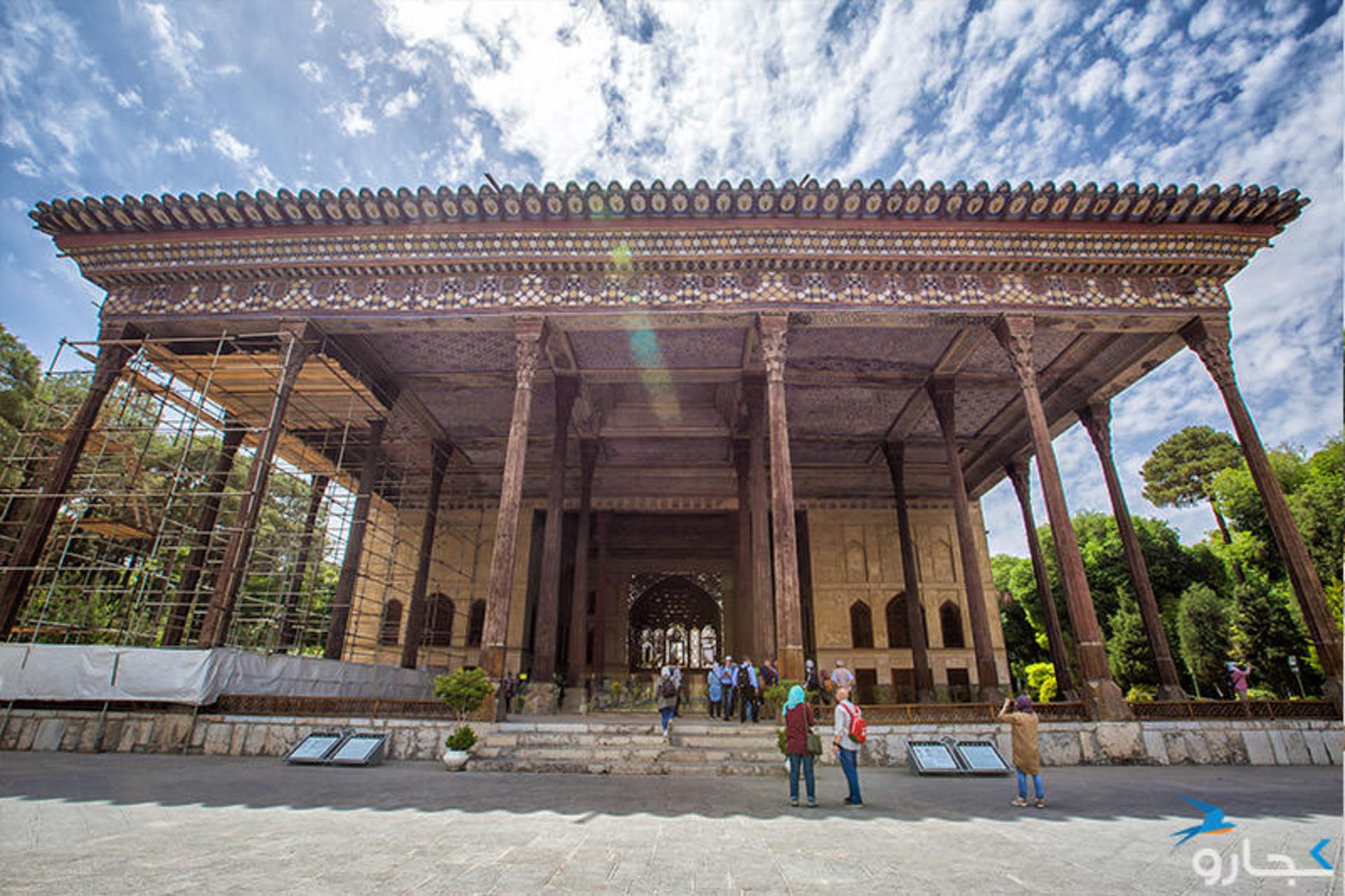
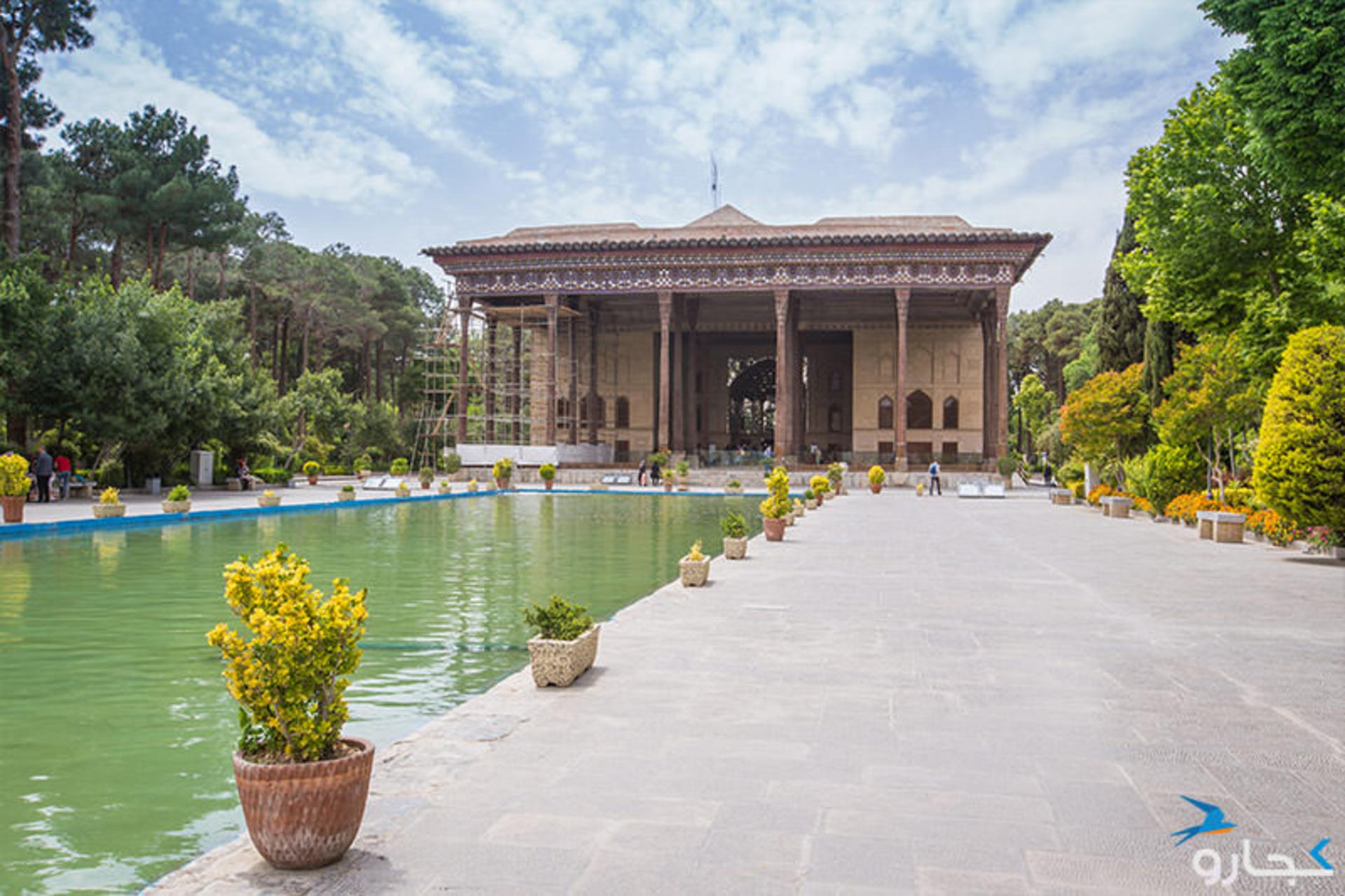
Chehelston Palace is one of Isfahan's most elegant surviving monuments from the Safavid era, a period when the city served as one of the grandest capitals in the world. Known also as the Chehelston Garden Museum, the palace sits within a walled garden in the center of Isfahan, within walking distance of Naqsh-e Jahan Square. Its name, meaning "Forty Columns," comes from the twenty slender timber columns that support the main portico, whose reflection in the large front pool doubles the number visually. The number forty carries symbolic weight in Persian literature, where it denotes multiplicity and grandeur. This garden-palace was a place of royal reception, festivity, and diplomacy, and its walls still carry the stories of the kings and ambassadors who once walked through it.
Where is Chehelston Palace?
The palace is located on the east side of Chaharbagh-e Pa'in Street, south of Sepah Street and west of Naqsh-e Jahan Square, in the heart of Isfahan. Its address is Imam Hossein Square, Ostandari Street. The central location means you can reach it on foot from Naqsh-e Jahan Square in about ten minutes. The nearest metro station is Imam Hossein Square, and several bus lines stop nearby. If you are driving, public parking lots on the surrounding streets offer convenient access.
Open Mehyar and choose Taxi for a quick ride from any point in Isfahan. The palace is easy to combine with a visit to Naqsh-e Jahan Square, the Ali Qapu Palace, and the historic Chaharbagh Avenue, all within a compact walking radius.
History and origins
The garden that became Chehelston was originally part of the vast Jahan-Nama Garden, laid out by Shah Abbas I after he chose Isfahan as the Safavid capital in 1598. Shah Abbas built a small pavilion in the garden, forming the nucleus of what would become the palace. The main structure as it stands today was expanded and completed under Shah Abbas II, the seventh Safavid ruler, with construction finishing in 1647 CE (1057 AH). Inscriptions discovered beneath plaster in the palace hall confirm this date through poems composed by Saib Tabrizi, the court poet laureate, who celebrated the completion with the verse: "May this place forever be the qibla of the crowned ones."
The palace suffered a severe fire during the twelfth year of Shah Sultan Hossein's reign, and later experienced damage during the governorship of Zell ol-Soltan in the late Qajar period. Despite these setbacks, the building has retained much of its original character and decorative splendor.
Architecture and design
The palace is a masterwork of Safavid architecture, blending Persian, Chinese, and European influences into a harmonious whole. The main portico stretches 38 meters long, 17 meters wide, and rises 14 meters high, supported by octagonal timber columns made of plane and pine wood. The four central columns stand on carved stone lions that once functioned as water spouts, feeding a marble pool in the hall.
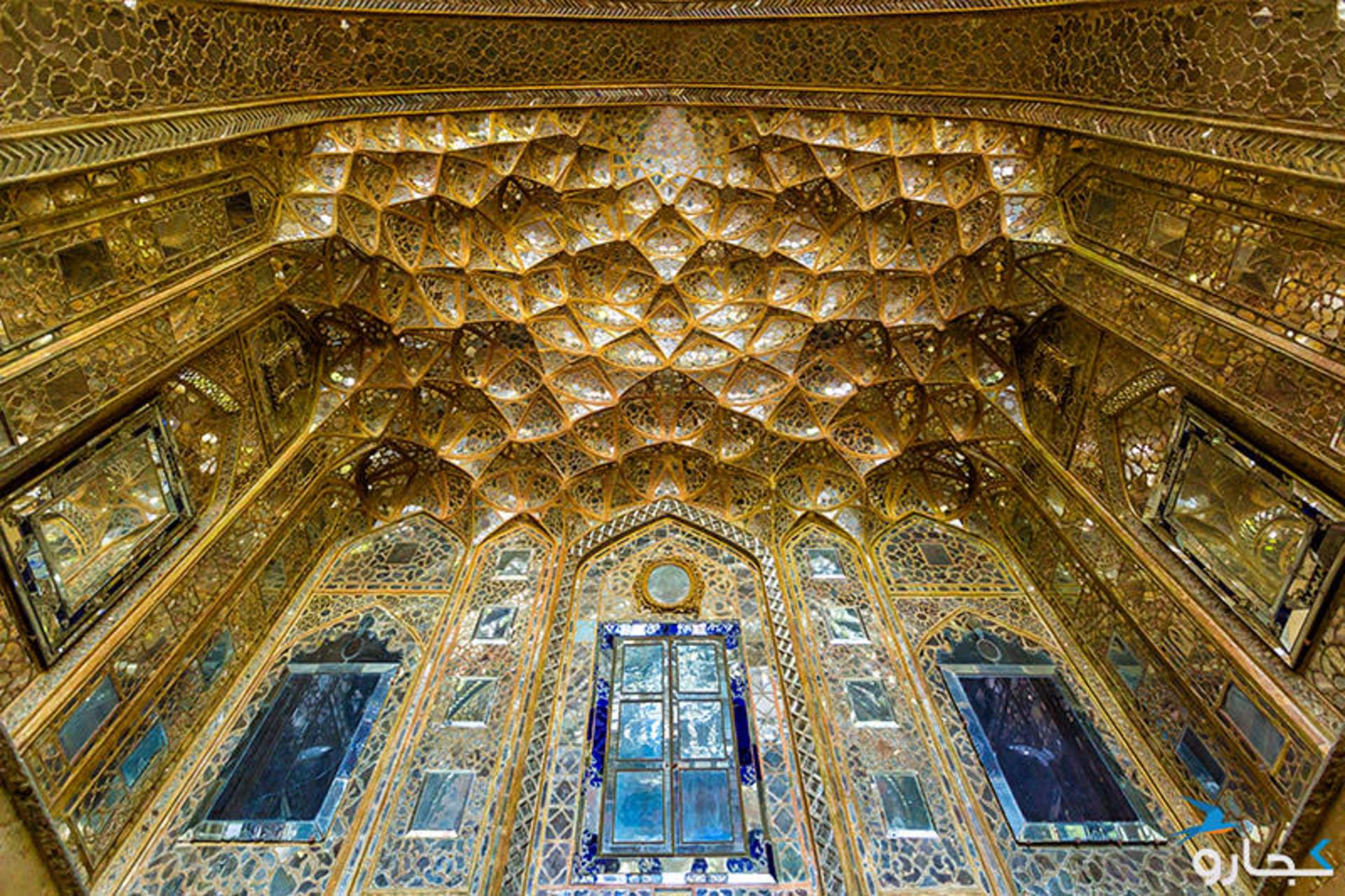
The interior is where the palace truly transcends. The Mirror Hall, or Talar-e Ayneh, dazzles with intricate mirror-work set into geometric wooden ceiling frames. Small and large mirrors are arranged in mosaic patterns alongside painted and tiled surfaces. The ceiling features wooden frames in varied geometric shapes, and the reflection of the marble pool in the center of the portico appears mirrored in the ceiling decoration, creating a symmetry that echoes the design of Ali Qapu.
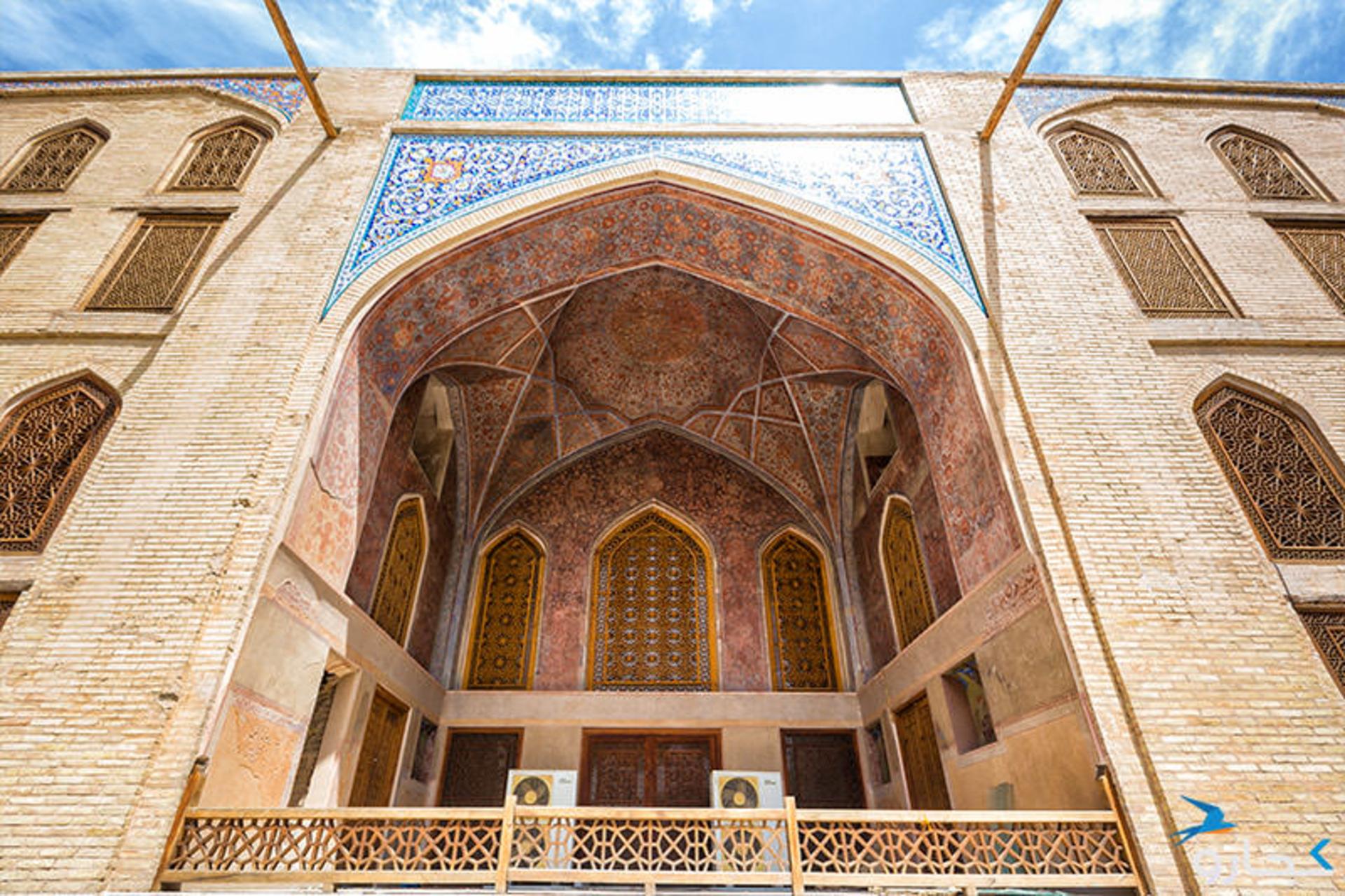
The garden itself follows the classic Persian chahar bagh (four-fold garden) layout. The main axis leads from the eastern gate through tree-lined pathways directly to the palace facade. The original water supply came from the Fadjan stream, which flowed through the garden and continued into Naqsh-e Jahan Square. Today, a deep well maintains the pool. The garden's plantings include Iranian pine, elm, black maple, plane, and juniper trees, with seasonal flowers grown in a greenhouse to the south.
The murals and paintings
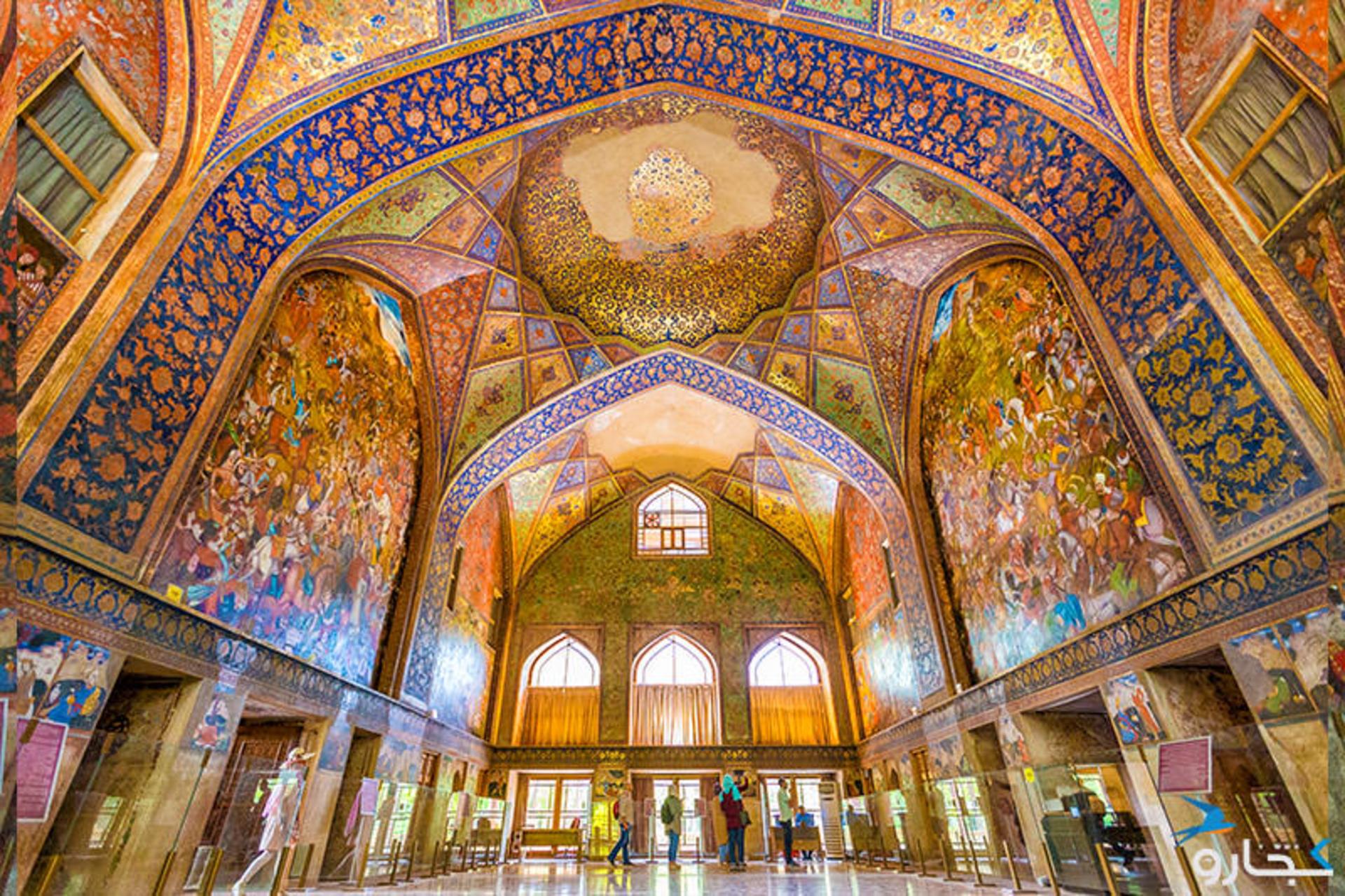
The central hall of the palace was reserved for receiving foreign ambassadors and distinguished guests, and its walls carry some of the most important historical paintings in Iran. The murals depict scenes from Safavid history, including Shah Abbas I and II receiving dignitaries from Turkestan, the Mughal emperor Humayun, and Shah Esmail I battling the Uzbeks. Two additional paintings show the Battle of Chaldiran during Shah Esmail's reign and Nader Shah's campaign at the Battle of Karnal. These last two were added in the early Qajar period.
On either side of the columned hall, rooms now used for seasonal exhibitions contain paintings that rank among the finest achievements of Safavid art. Many of these were hidden beneath layers of plaster during Zell ol-Soltan's governorship and were painstakingly restored by specialists. Two Dutch painters, Angel and Leuker, contributed portraits of European visitors present in Isfahan during the Safavid era. The treasury room holds a miniature portrait of Shah Abbas I in his distinctive crown, and the royal hall displays large paintings of Safavid monarchs.
Hours and tickets
The palace is open daily except on Tasua, Ashura, the demise of the Prophet Muhammad, the demise of Imam Khomeini, and the martyrdom of Imam Ja'far al-Sadiq and Imam Ali. Visiting hours run from 09:00 to 17:00. The entrance fee for domestic visitors is approximately 50,000 tomans, and for foreign visitors approximately 500,000 tomans (prices subject to change; confirm locally). Allow one to two hours for a thorough visit of the palace, garden, and exhibition rooms.
Best time to visit
Spring, particularly the month of Ordibehesht (late April to late May), offers the most delightful conditions. The garden is at its greenest, the air is mild, and the flowers around the palace beds are in full bloom. Summer evenings are also popular, as the garden provides welcome coolness after the heat of the day. For photography, the palace facade faces east, and morning light between 09:00 and 11:00 gives the best results. The palace takes on a different character after dark, when the nighttime illumination casts it in a warm glow against the garden's shadows.
Nearby attractions
Chehelston's central position makes it an ideal starting or ending point for exploring Isfahan's historic core. Naqsh-e Jahan Square is a short walk to the east, where you can visit the Imam Mosque, Sheikh Lotfollah Mosque, and the bazaars that ring the square. The Ali Qapu Palace, with its famous music room, overlooks the square from the west. Chaharbagh Avenue, the grand processional boulevard of the Safavids, runs south from the square and passes several other historic gardens and madrasas.
For travelers building a fuller Isfahan itinerary, the city offers dozens of other Safavid, Seljuk, and modern attractions. Explore Mehyar's Isfahan guide for a complete overview of the city's monuments, and use Mehyar to book your hotels, taxis, and buses for a seamless trip.
On the map
Chehelston Palace sits at approximately 32.65° N, 51.67° E in central Isfahan. The palace is fully wheelchair-accessible on the ground floor, though the upper areas and some garden paths may present difficulties. Staff at the entrance can provide guidance on accessible routes.
Whether you are a first-time visitor to Isfahan or returning to explore its quieter corners, Chehelston Palace offers a concentrated encounter with the sophistication and artistic ambition of the Safavid age. The interplay of columns, water, mirrors, and murals creates an atmosphere that no photograph quite captures. You have to stand in the garden, hear the water, and let the reflections do their work.