
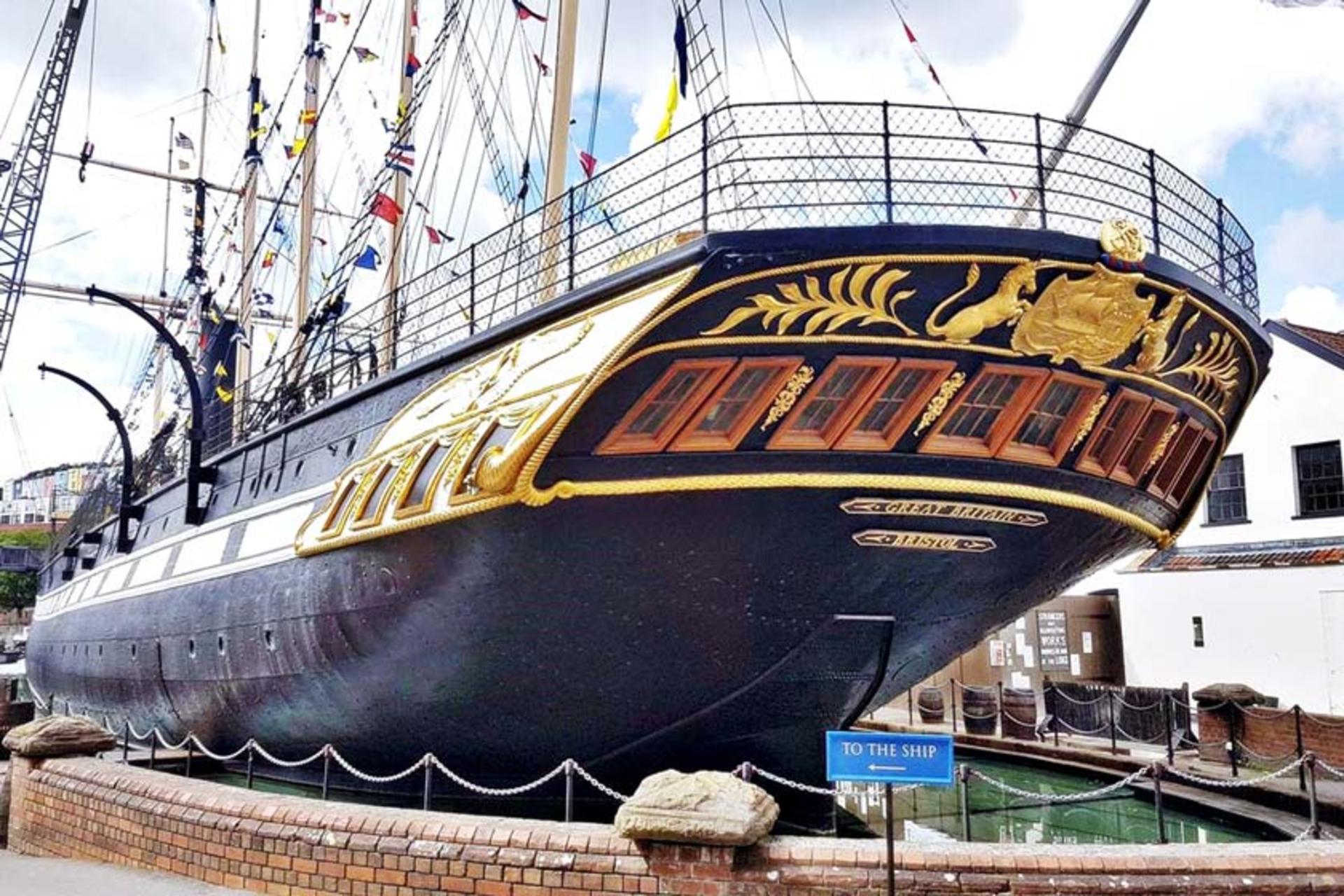
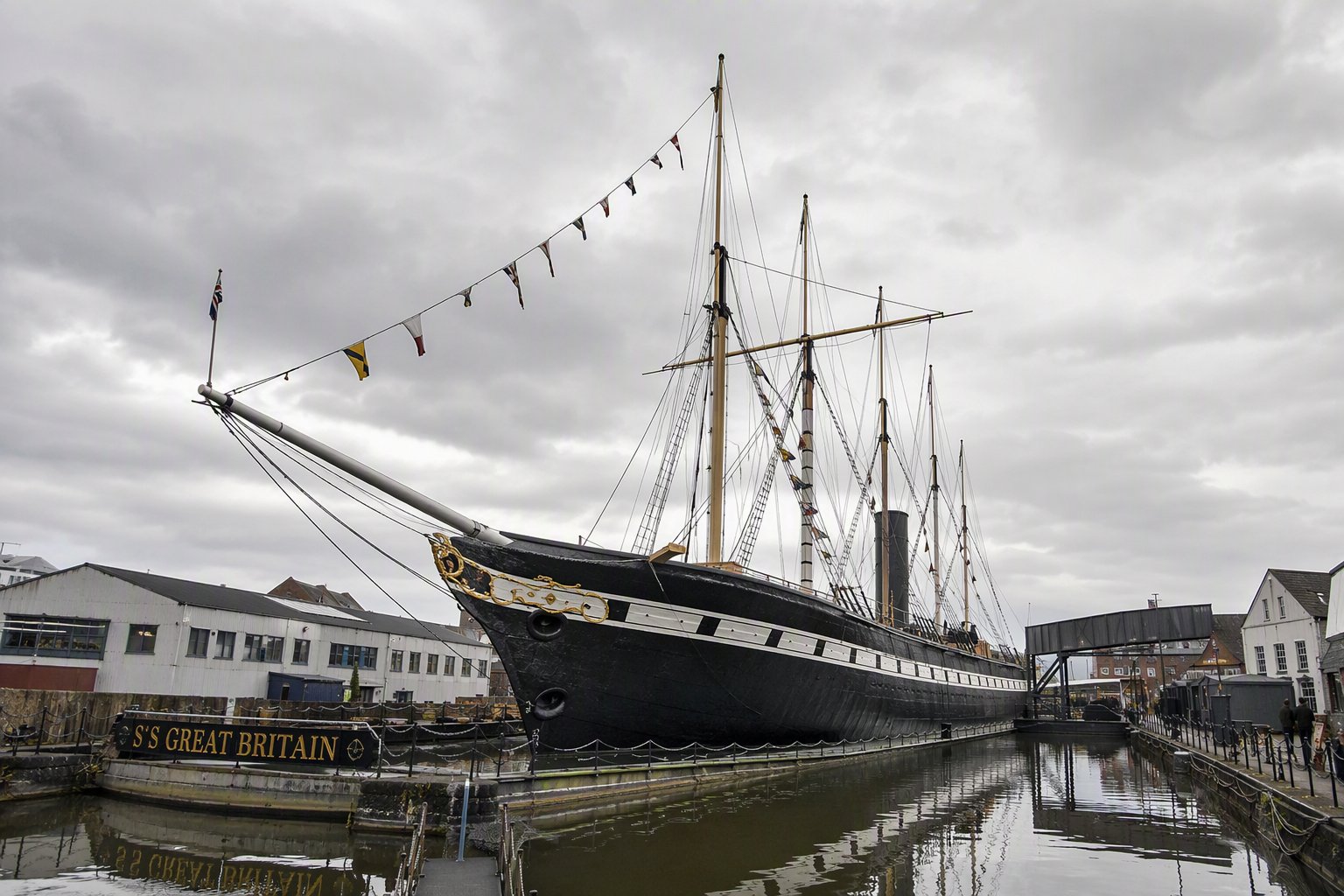
In the harborside city of Bristol in southwest England, a vessel sits in the very dry dock where she was built over 180 years ago. The SS Great Britain, designed by the legendary engineer Isambard Kingdom Brunel, was when launched in 1843 the largest and most advanced ship in the world. She was the first iron-hulled, screw-propelled vessel to cross the Atlantic Ocean, and her construction marked a decisive break from the wooden sailing ships that had dominated maritime travel for centuries.
Today, the SS Great Britain operates as one of the most engaging industrial heritage attractions in the United Kingdom, welcoming visitors aboard to explore her decks, engine rooms, and below-decks quarters. The museum ship tells the story of Victorian engineering ambition, global migration, and the transformative impact of steam technology on how humans move across the planet. For travelers interested in engineering history, maritime heritage, or simply extraordinary human achievements, Brunel's ship offers a full day of discovery.

The Vision of Isambard Kingdom Brunel
Isambard Kingdom Brunel was one of the most prolific and innovative engineers of the nineteenth century. Born in 1806 in Portsmouth, England, Brunel went on to design bridges, tunnels, railways, stations, and ships that fundamentally reshaped British infrastructure. His Great Western Railway connected London to Bristol, and to make that railway commercially viable, he proposed extending the service across the Atlantic with a steamship service to New York.
The Great Western Steamship Company commissioned Brunel to design a vessel for this route. His first ship, the SS Great Western, was a successful wooden paddle steamer that began transatlantic service in 1838. But Brunel was not content with existing technology. He recognized that paddle wheels became increasingly inefficient as ships grew larger, and that wooden hulls imposed practical limits on vessel size. His solution was radical: build the next ship from iron and use a screw propeller instead of paddle wheels.
A Ship of Firsts
When the SS Great Britain was launched on July 19, 1843, she represented a concentration of technological firsts. She was the first large ocean-going ship to have an iron hull, a material that was stronger than wood and could be formed into shapes that allowed more efficient hydrodynamic design. She was the first large vessel to use a screw propeller for primary propulsion, a technology that was still experimental at the scale Brunel envisioned.
At 322 feet in length and measuring 3,674 tons, the SS Great Britain was by far the largest ship afloat. Her six decks could carry over 120 crew members and 360 passengers, along with substantial cargo. The engines, producing 1,000 horsepower, drove the ship at speeds that made the transatlantic crossing in roughly fourteen days, a remarkable achievement for the era.
The iron hull was not without its critics. Many in the maritime establishment believed that an iron ship would sink if damaged, that iron would corrode rapidly in saltwater, and that the magnetic properties of iron would interfere with compass navigation. Brunel addressed each concern through careful engineering, and the ship's long career proved his critics wrong.
Life Aboard the SS Great Britain
Visiting the ship today, you can experience something of what life aboard was like for passengers and crew across different classes. The first-class saloons featured elaborate decorative schemes designed to attract wealthy passengers who might otherwise have been reluctant to trust their lives to an experimental iron vessel. Ornate furnishings, fine dining, and comfortable cabins were intended to make the ocean crossing feel more like a floating hotel than a feat of engineering.
Below decks, conditions were considerably different. Steerage passengers, many of them emigrants seeking new lives in Australia and the Americas, occupied basic shared dormitories with minimal facilities. The museum has reconstructed these spaces with attention to historical accuracy, and they convey the cramped and often difficult conditions that millions of nineteenth-century emigrants endured during their ocean voyages.
The engine room, with its massive machinery and complex systems of pipes, valves, and gauges, gives visitors a sense of the industrial power that drove the ship. Standing among the machinery, surrounded by the sound of steam and the smell of oil, you can appreciate the boldness of Brunel's vision in placing such complex mechanical systems at the heart of an ocean-going vessel.
A Remarkable Career
The operational life of the SS Great Britain spanned over four decades and took her around the world. After her initial transatlantic service, she was adapted for the emigrant trade between Britain and Australia, carrying thousands of passengers to new lives on the other side of the planet. She survived grounding on the Irish coast, storms in the Southern Ocean, and the gradual transition from sail to steam that rendered many of her contemporaries obsolete.
Eventually converted to a sailing cargo vessel and later to a coal hulk, the ship's fortunes declined. She was towed to the Falkland Islands, where she served as a stationary storage vessel until 1937, when she was scuttled in shallow water. For decades, she lay forgotten beneath the waves.
Rescue and Restoration
In 1970, a remarkable salvage operation recovered the SS Great Britain from the waters of Sparrow Cove in the Falkland Islands. She was towed back to Bristol on a massive floating pontoon, retracing the route she had first sailed over a century earlier. The return of the ship was a national event, celebrated by millions who recognized the significance of recovering one of Britain's greatest industrial artifacts.
Since her return, the SS Great Britain has undergone extensive conservation and restoration work. The dry dock in which she was originally built has been fitted with a glass ceiling at water level, creating a visual effect that allows visitors to see the ship's hull from below. This innovative installation, along with careful restoration of the ship's interiors, makes the museum experience both educational and visually striking.
Visiting the Museum Ship
The SS Great Britain museum is located at Great Western Dockyard, Gas Ferry Road, in Bristol's harbourside area. The museum is open year-round, with extended hours during the British summer season. Allow at least two to three hours for a thorough visit, though enthusiasts of maritime history could easily spend a full day exploring every deck and reading every display panel.
The museum is highly interactive, with costumed guides, hands-on exhibits, and audio-visual presentations that bring the Victorian-era experience to life. Children particularly enjoy exploring the lower decks and climbing through the engine room. The surrounding harbourside area offers additional attractions including other historic vessels, waterside restaurants, and the excellent M Shed museum of Bristol's history.
Bristol is well connected by train from London Paddington in approximately 90 minutes, making the SS Great Britain accessible for a day trip from the capital. Mehyar's international travel services can assist with arranging transport and accommodation for visitors planning to include this extraordinary museum in their United Kingdom itinerary.
The SS Great Britain stands as a monument to the power of human ingenuity. Brunel's willingness to challenge conventional thinking, to embrace new materials and new technologies, produced a vessel that changed the course of maritime history. Walking her decks today, surrounded by the evidence of Victorian engineering skill, visitors gain not just historical knowledge but a sense of what becomes possible when vision meets determination.