
A Country Built for the Camera
Iran sits at the crossroads of ancient civilizations, dramatic geology, and living culture. For photographers, the rewards are extraordinary. Every province offers a different palette. The turquoise tilework of Safavid mosques catches the morning light in Isfahan. The Lut Desert stretches into silence under a sky that shifts from copper to violet. The narrow corridors of the Grand Bazaar channel shafts of golden sunlight onto stacked carpets. And along the Caspian coast, fishing villages and emerald rice paddies feel like a different continent entirely.
Mehyar was built with travelers like you in mind. Whether you are chasing the perfect golden-hour frame or documenting everyday life in a Kurdish mountain village, this guide maps out the locations where Iran delivers its most compelling images.
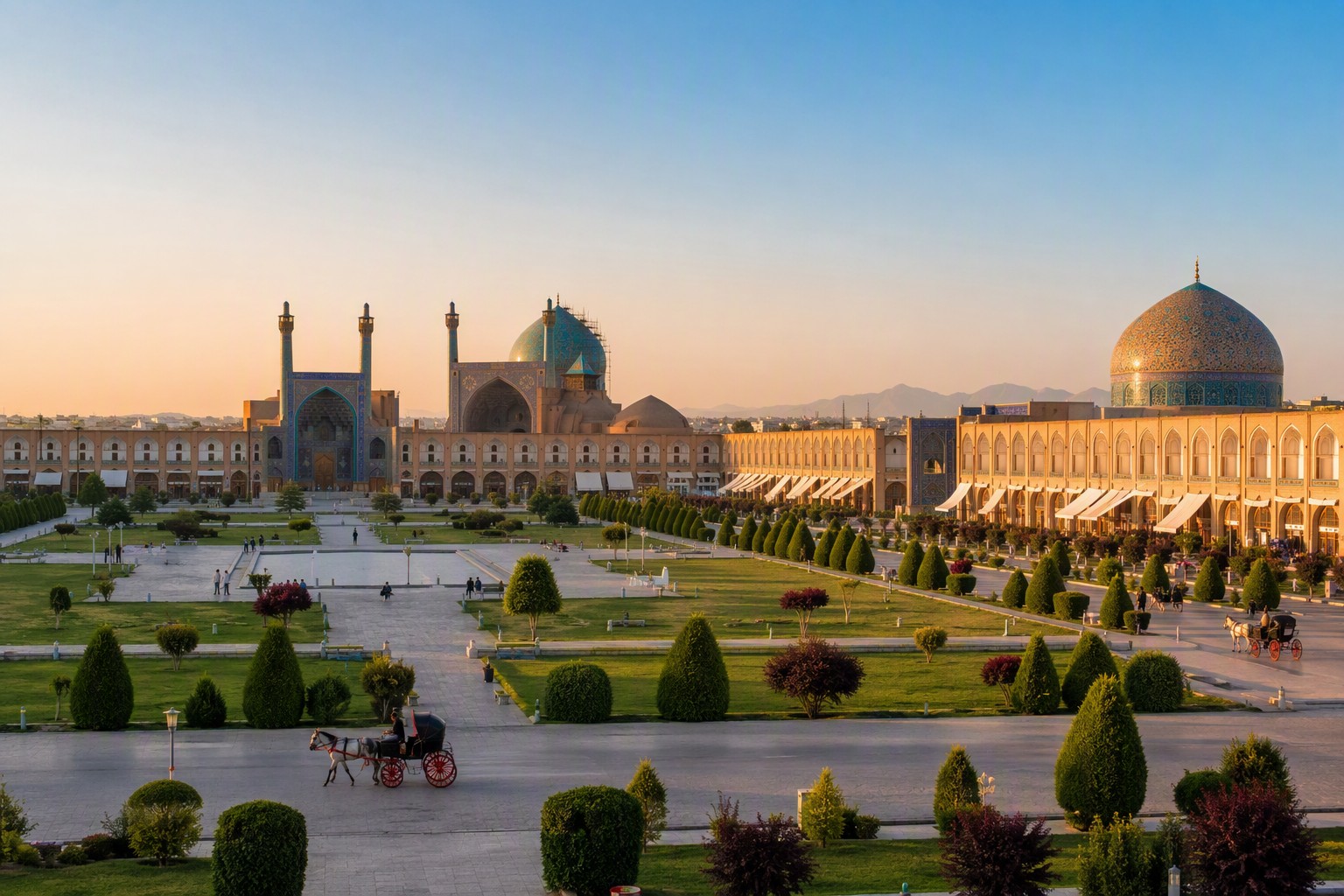
Isfahan: The City of Turquoise Light
No photography itinerary in Iran is complete without Isfahan. The city earned the nickname Nesf-e Jahan, meaning Half the World, for good reason. Naqsh-e Jahan Square, one of the largest public squares on Earth, gives you an enormous frame of Safavid architecture, horse-drawn carriages, and fountains. The Sheikh Lotfollah Mosque on the eastern side wears a cream-and-gold dome that changes hue with the sun. At dawn, before the crowds arrive, the square belongs entirely to photographers.
Across the river, the Khaju Bridge offers one of the most iconic night scenes in the country. Locals gather beneath the arches to sing traditional songs. The reflections of lanterns on the dark water create layers of warm light against cool shadows. For architecture lovers, the Ali Qapu Palace on the western edge of the square provides sweeping views over the city from its music-room terrace, where delicate stucco cutouts frame the skyline.
Best shooting window: October through April for softer light and thinner crowds. Dawn is essential for the square. Night photography at Khaju Bridge works best on weekends when musicians perform.
The Lut Desert: Alien Geometry
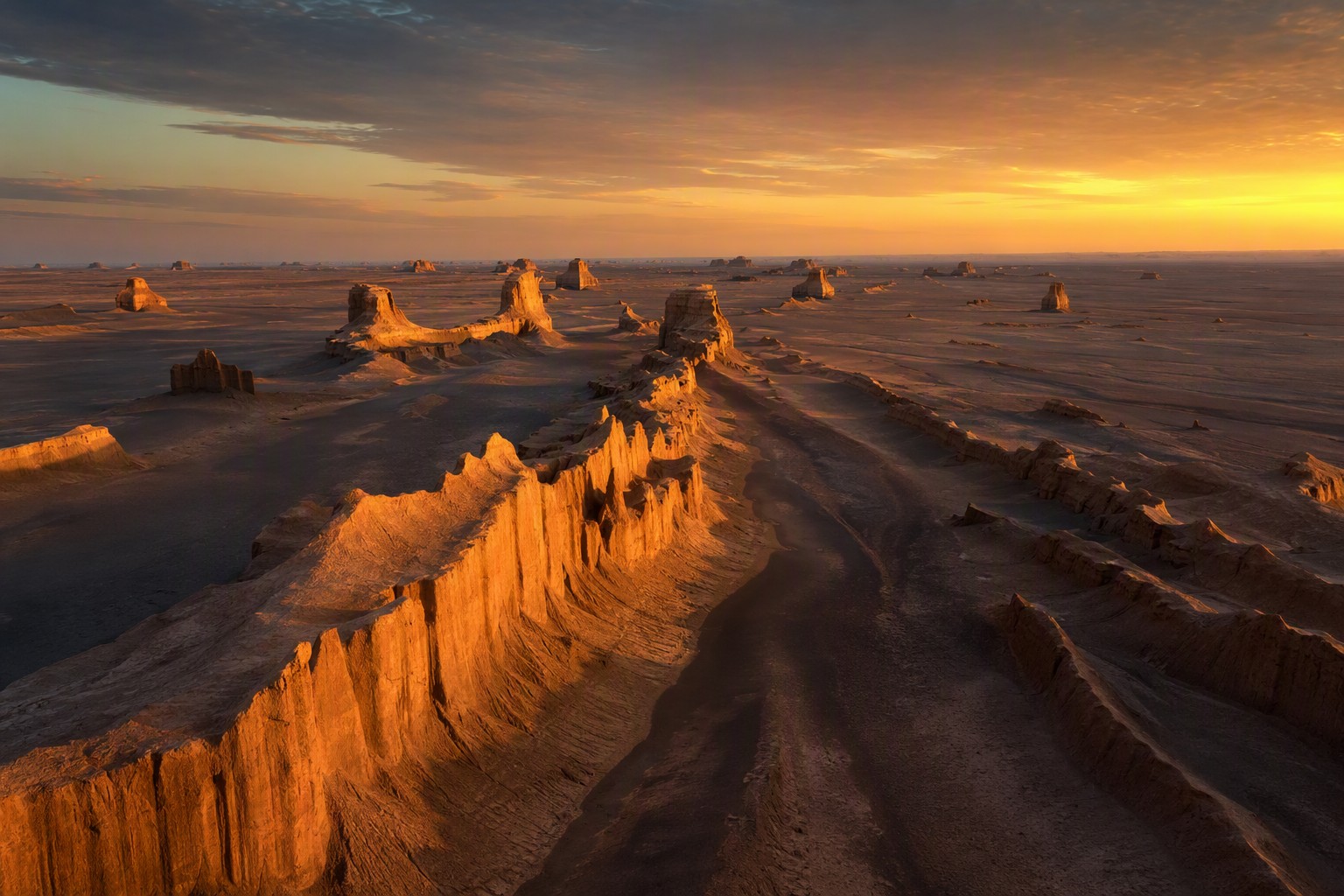
The Dasht-e Lut, or Lut Desert, is a UNESCO World Heritage Site and one of the hottest places on Earth. For photographers, it is also one of the most visually arresting landscapes you will ever encounter. The Gandom Beryan, or "roasted wheat," is a vast plateau of dark lava rock that stretches to the horizon. Beyond it, the Kaluts, colossal sand ridges carved by wind over millennia, rise like the ruins of an ancient city.
The yardang formations in the central Lut are the star attraction. These streamlined ridges, some reaching 80 meters tall, glow in shades of ochre, rust, and gold as the sun moves across them. Shadows deepen in the grooves between each ridge, creating a rhythm of light and dark that changes by the minute. Photographers often camp overnight to capture the pre-dawn stillness when the sand surface is unmarked and the sky turns from indigo to pale rose.
Stargazing here is exceptional. With no light pollution for hundreds of kilometers, the Milky Way arches overhead with a clarity that is hard to match anywhere else. Bring a wide-angle lens and a sturdy tripod.
Yazd: Adobe Silhouettes and Wind Towers
Yazd, another UNESCO-listed city, is a photographer's dream in warm earth tones. The old quarter is a maze of mud-brick walls, narrow alleys, and towering badgirs, the wind-catching towers that served as ancient air conditioning. At sunset, the rooftops glow amber and the silhouettes of the wind towers stand sharp against the sky.
The Jameh Mosque of Yazd features the tallest minarets in Iran, crowned with exquisite tilework in deep cobalt and turquoise. The entrance portal is a masterclass in Persian geometric pattern, and photographers who arrive early can frame the facade in quiet morning light. Nearby, the Dolatabad Garden houses the tallest wind tower in the country, rising 33.8 meters. Its interior creates a dramatic vertical shaft of light from the rooftop vents down to the pool below.
Just outside the city, the Chak Chak shrine clings to the face of a cliff in the desert mountains. The contrast of the white marble pilgrimage site against the barren brown rock is stunning, and the wide panoramic view from the terrace stretches across a vast plain.
Tehran: Layers of Modernity and Tradition
Tehran is not an obvious photography destination, but it rewards those who look closely. The Grand Bazaar, a sprawling labyrinth that has operated for centuries, is one of the most atmospheric interiors you will ever shoot. Shafts of sunlight filter through the high vaulted ceilings, illuminating dust motes and the vibrant colors of spice pyramids, handwoven textiles, and brass lanterns.
The Azadi Tower, built in 1971 to mark the 2,500th anniversary of the Persian Empire, is an icon of pre-revolutionary Iranian design. Its white marble surfaces and inverted-Y geometry photograph beautifully at different times of day, particularly in the soft light of late afternoon when the surrounding park turns golden.
For street photography, the neighborhoods along Valiasr Street, with its towering plane trees forming a green tunnel, offer a uniquely Tehran atmosphere. The Enghelab Square area buzzes with students, vendors, and musicians. In the north of the city, the Tabi'at Bridge, a multi-level pedestrian bridge designed by an Iranian architect, sweeps gracefully across a highway and provides excellent elevated perspectives of the Alborz mountains beyond.

Shiraz and Persepolis: Classical Persia
Shiraz, the city of poets and gardens, offers softer photographic opportunities. The Nasir al-Molk Mosque, known as the Pink Mosque, is famous for the kaleidoscope of colored light that streams through its stained-glass windows each morning. Arriving before 08:00 is essential, as the light effect fades by mid-morning. The Eram Garden, a UNESCO-listed Persian garden, provides formal symmetry, cypress-lined paths, and a grand Qajar-era palace reflected in its central pool.
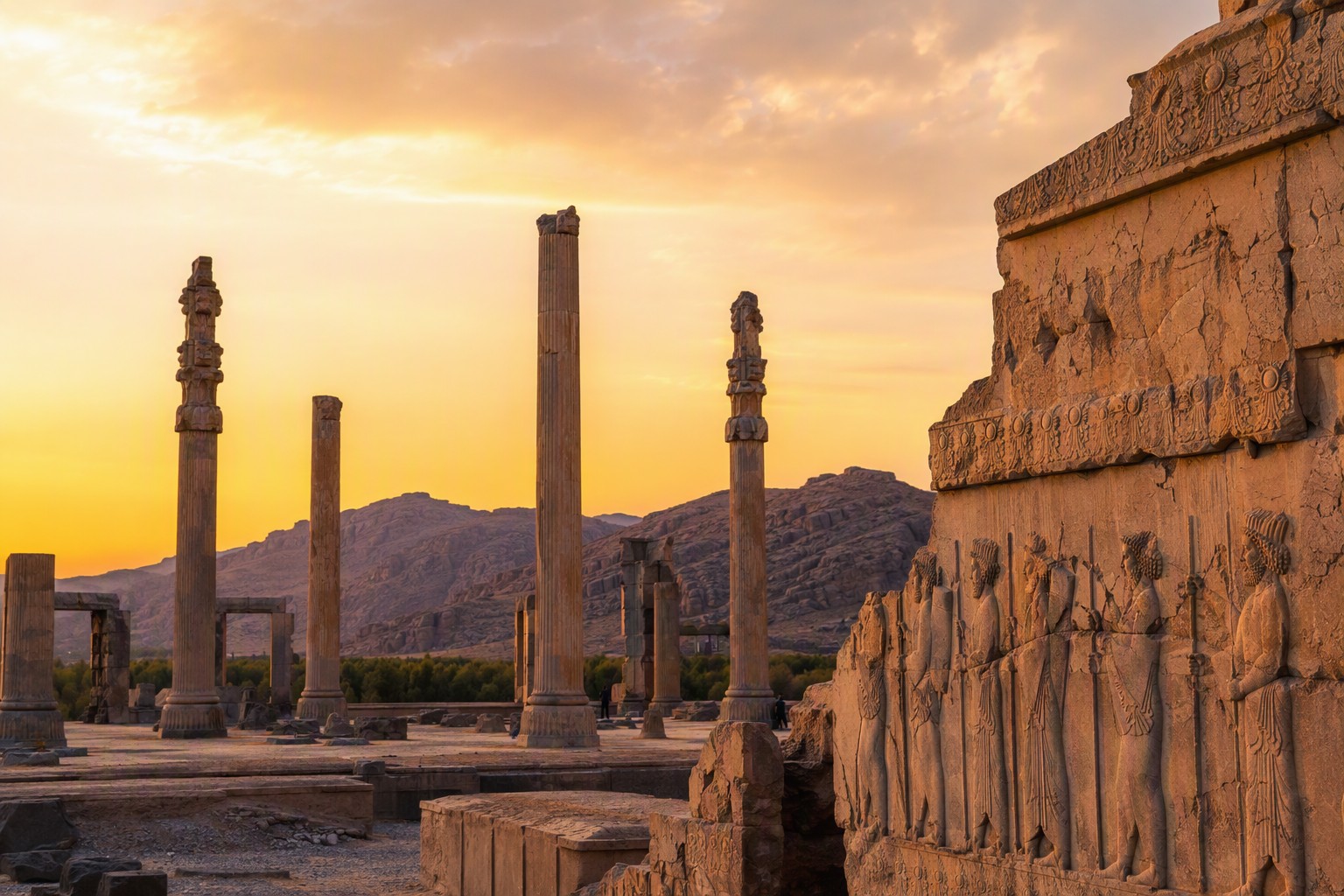
About 60 kilometers northeast of Shiraz, Persepolis is one of the most important archaeological sites in the world. The colossal stone columns, carved reliefs of tribute bearers, and the monumental Gate of All Nations offer endless compositional opportunities. The ruins sit on a vast raised platform with the Marvdasht plain spreading below and the Zagros mountains in the background. Early morning and late afternoon are the best times, when the low sun casts long shadows across the carved reliefs and the stone takes on a warm, honeyed tone.
The Caspian Coast: Green North
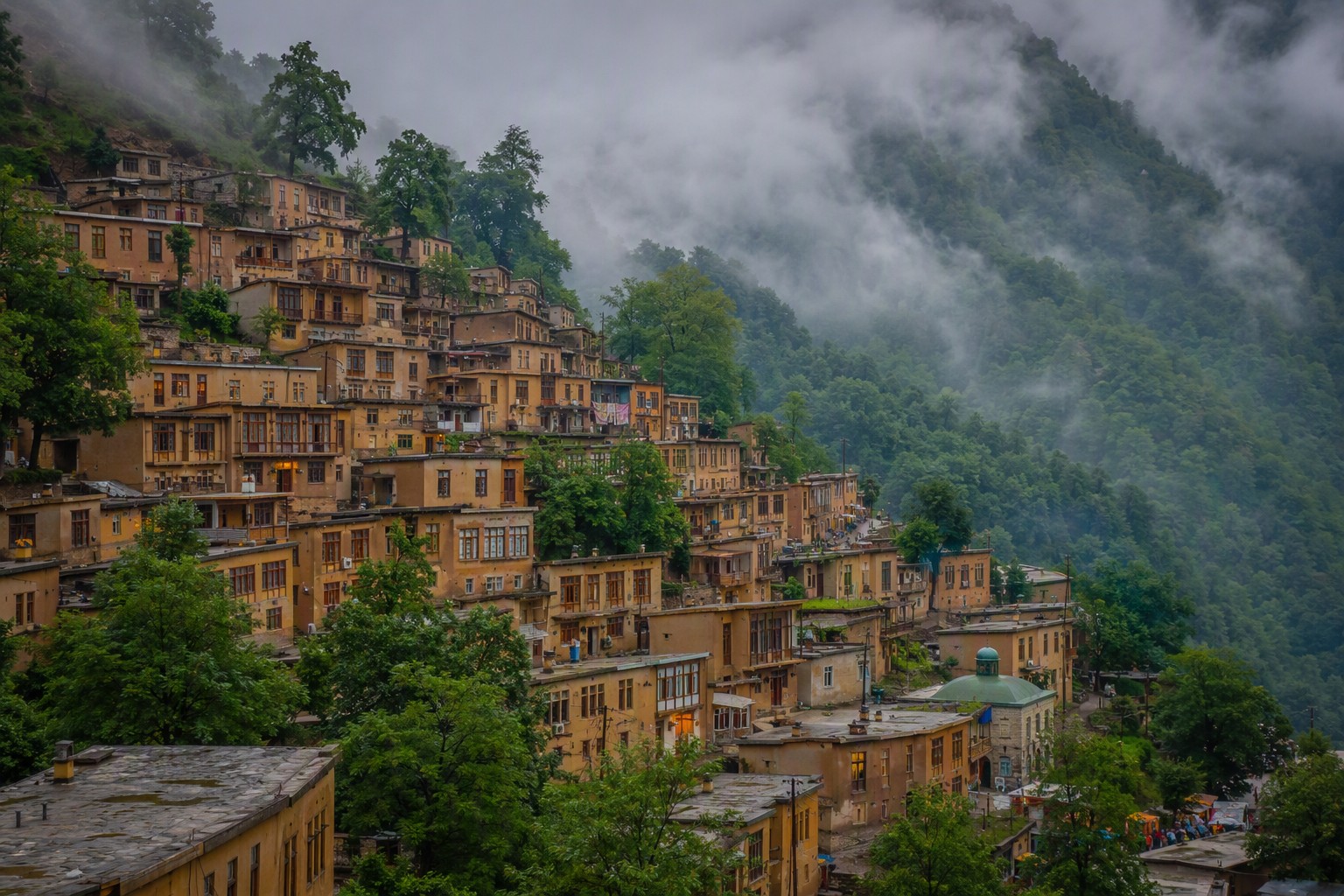
Northern Iran, along the shores of the Caspian Sea, feels utterly different from the arid center of the country. The provinces of Gilan and Mazandaran are blanketed in dense forest, rice paddies, and tea plantations. Villages with red-tiled roofs and wooden balconies cling to hillsides above misty valleys.
Masuleh, a terraced village in the Alborz foothills, is one of the most photogenic settlements in Iran. The roofs of the upper houses serve as the streets for the ones below, creating a cascading effect of earthy tones and greenery. Fog rolls through regularly, softening backgrounds and adding atmosphere.
The fishing villages along the Caspian shore offer scenes of boats, nets, and weathered faces. The Anzali Lagoon near Bandar-e Anzali is a Ramsar wetland site where lotus flowers bloom in summer and migratory birds fill the skies in autumn. For seascape photographers, the Caspian shoreline at Ramsar provides wide open horizons and dramatic cloud formations.
Street Photography Across Iran
Beyond specific monuments, the people of Iran are among the most photogenic subjects you will find. Iranians are famously hospitable and curious. In bazaars, teahouses, and on village roads, you will be invited to share tea, take photos, and linger. The key is to ask permission, smile, and engage genuinely.
The covered bazaars of Isfahan and Kashan, the lively streets of Shiraz, and the Kurdish towns of the west are all excellent for candid portraits. In Kurdish towns like Sanandaj and Palangan, the traditional dress, music, and mountain settings create powerful frames. Qeshm Island in the Persian Gulf offers the chance to photograph Bandari women in their colorful chadors and the extraordinary landscapes of the Valley of Stars, where wind-eroded sandstone pillars rise from a barren plain.
When photographing people in Iran, always carry a small print or share images on your screen as a friendly exchange. It transforms the interaction from observation to connection.
Practical Tips for Photographers in Iran
Lighting varies dramatically by region. The central plateau is harsh in summer, with midday sun flattening textures. Spring and autumn offer the best angles and warmest tones. The north is most photogenic in misty mornings or after rain.
Bring a versatile kit. A wide-angle lens handles architecture and landscapes. A fast prime, such as a 35mm or 50mm, excels in bazaar interiors and low-light situations. A telephoto compresses the patterns of desert dunes and the faces in a crowd. A sturdy tripod is essential for night scenes at bridges and for star photography in the desert.
Memory cards and batteries should be sufficient for your entire trip, as camera equipment shops outside Tehran are limited. Solar charging works well in the desert. Respect local customs. Photography is generally unrestricted at historical sites and in public spaces, but always ask before photographing inside mosques, government buildings, or military-adjacent areas. Women in chadors may prefer not to be photographed, so respect that choice.
Mehyar can help you plan logistics across all these locations. Use the app to find hotels near your chosen shooting spots, book intercity buses or flights, and arrange taxis from the nearest hub to remote locations like the Lut Desert or Masuleh. With Mehyar, you spend less time on logistics and more time behind the lens.
Final Frame
Iran is a country where every turn reveals a composition waiting to be made. From the turquoise domes of Isfahan and the alien ridges of the Lut Desert to the foggy terraces of Masuleh and the colorful chaos of the Grand Bazaar, the frames are endless. Bring your camera, bring patience, and let Mehyar handle the rest. Iran rewards those who look, wait, and engage.