
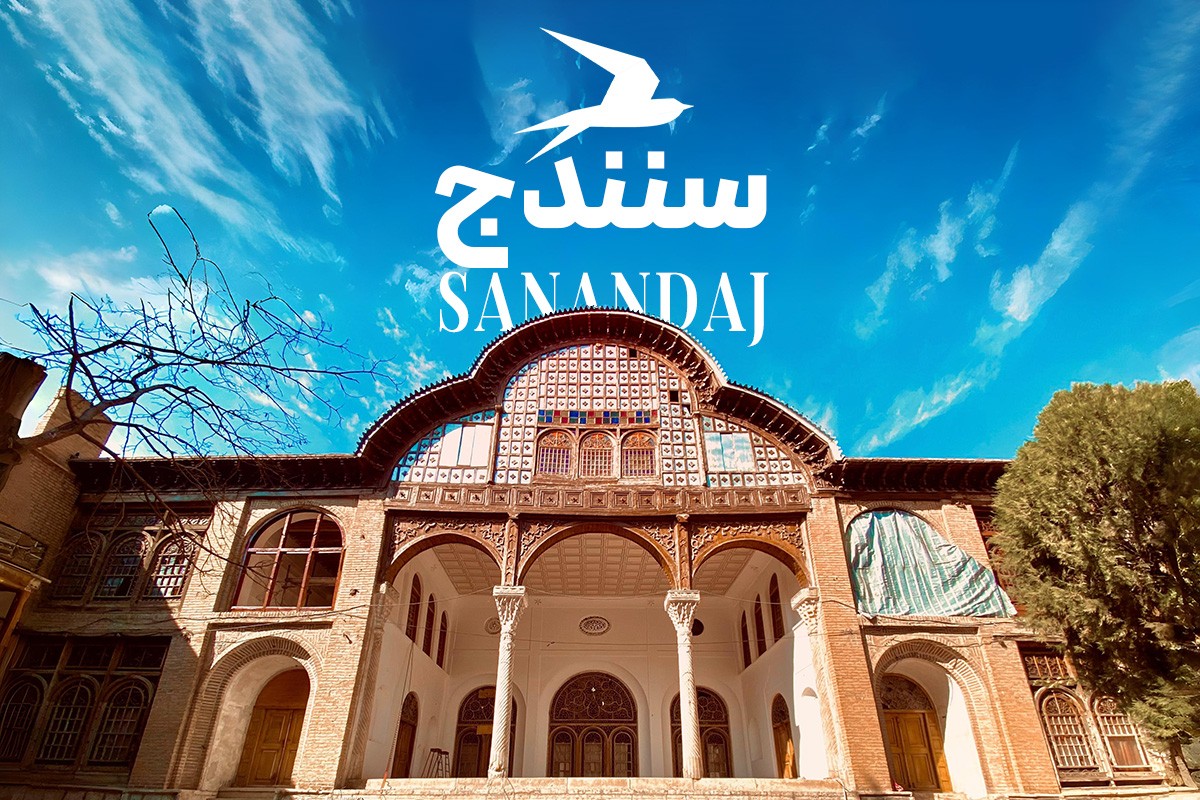
Sanandaj is the cultural capital of Iranian Kurdistan, a city where the Ardalan dynasty built stone mansions around tree-lined boulevards and Kurdish music drifted through every quarter. Founded in the mid-seventeenth century during the reign of Shah Safi, the city keeps one of the richest collections of Qajar and Safavid architecture in western Iran, set against the rugged Zagros range. This guide covers the key sights, the best time to visit, and how to reach Sanandaj with Mehyar services at every step.
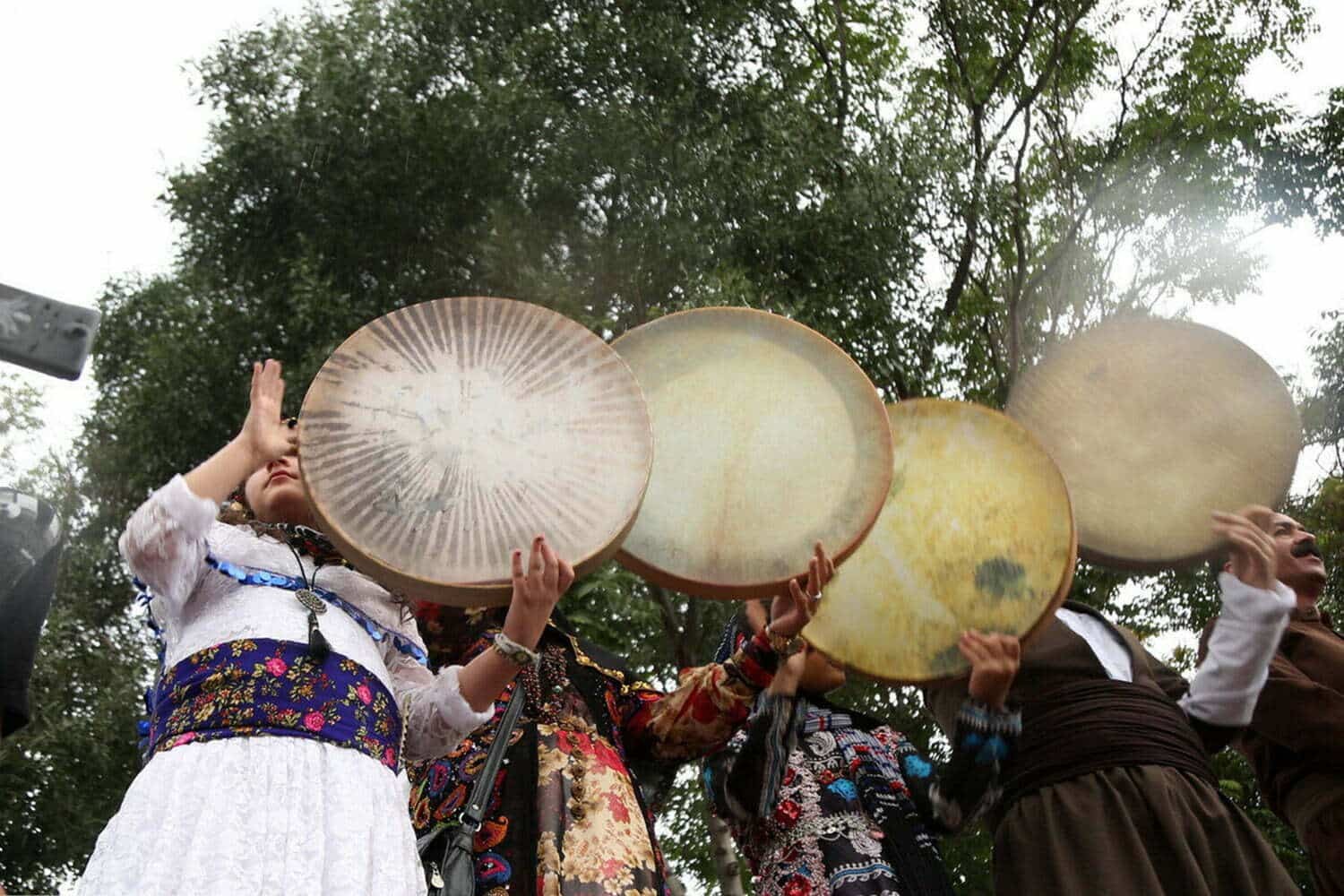
Where is Sanandaj?
Sanandaj is the capital of Kurdistan Province in western Iran, set in a high valley of the Zagros Mountains at roughly 1,500 metres above sea level. It sits about 510 kilometres west of Tehran by road, reachable in seven to eight hours on the Kermanshah highway, and serves as the gateway to the wider Kurdish region that stretches toward the Iraqi border. The province is one of Iran's most culturally distinct corners, and the city itself mixes Ottoman-era stone houses with modern boulevards, a living bazaar and a university crowd that keeps the streets lively after dark.
How to get to Sanandaj and getting around
Mehyar Buses operates scheduled services from Tehran, Kermanshah and Tabriz to the Sanandaj bus terminal, a straightforward option for travellers on a budget. The road from Tehran via Kermanshah is well-paved and passes through attractive mountain scenery, especially on the final stretch into Kurdistan. Mehyar Flights connects Sanandaj Airport to Tehran on a regular schedule, cutting the journey to under an hour for those who prefer to skip the drive.
Once you arrive, Mehyar Taxi is the simplest way to reach your hotel and move between sights, since the key monuments are spread across the central quarters rather than clustered in a single pedestrian zone. Inside the core, the bazaar, the Grand Mosque, Asaf Khan House and Hammam Khan are close enough to combine on a single walking route, with a short taxi hop out to Khosroabad and Abidar beyond.
The Grand Mosque and Asaf Khan House
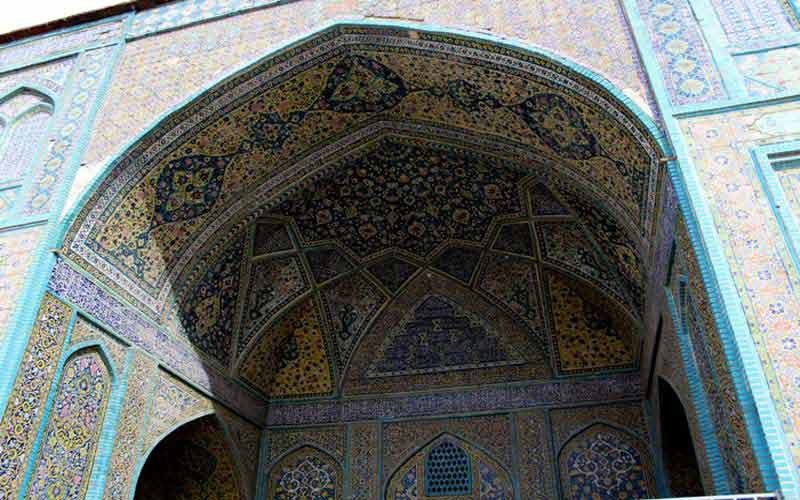
The Grand Mosque of Sanandaj, also known as Dar al-Ehsan, is one of the oldest religious buildings in the city. Historical records place its construction in 1228 AH during the Qajar period, commissioned by Amanollah Khan, the governor of Kurdistan. The mosque is built around a central courtyard with twelve student rooms, two iwans, and a prayer hall supported by twenty-four marble columns. Seven-colour tilework and marble facing on the lower walls mark it as one of the finest Qajar mosques in western Iran.
A few steps away stands the Asaf Khan Vizieri House, better known among locals as the Kurdish House. This Safavid-era mansion was expanded during the Qajar and early Pahlavi periods and covers more than 4,500 square metres. The entrance is a half-octagonal vestibule, and inside you find a ceremonial hall, a columned iwan, stained-glass orsi windows, a private bathhouse, a qanat channel running beneath the courtyard, and separate quarters for the household and the servants. The mansion has recently been converted into a museum, and the stucco work and mirror ornament inside are among the finest examples of Kurdish aristocratic taste.
Hammam Khan and the old bazaar
Hammam Khan is one of the most ornate historical baths remaining in Iran, built during the rule of Amanollah Khan Ardalan in the heart of old Sanandaj. The plan follows the classic Persian bath layout: an entrance portal, a hexagonal vestibule, cold and warm rooms with floor fountains, all decorated with dense lime-plaster reliefs and seven-colour tile panels. The floor fountains are an unusual feature, and the plasterwork is among the densest in the country. Today Hammam Khan operates as a traditional restaurant, so you can dine among the arched ceilings after your visit.
The old bazaar of Sanandaj was founded in 1046 SH by Soleiman Khan Ardalan on the orders of Shah Safi, and unlike most Iranian bazaars it was laid out on a rectangular plan said to be modelled on the square of Isfahan. A central avenue cut through the complex in later decades, splitting it into two sections, but three original gateways survive, and trade still moves through the covered lanes just as it has for four centuries. The bazaar was registered as a national heritage site in 1375 SH.
Khosroabad Mansion and Abidar Park
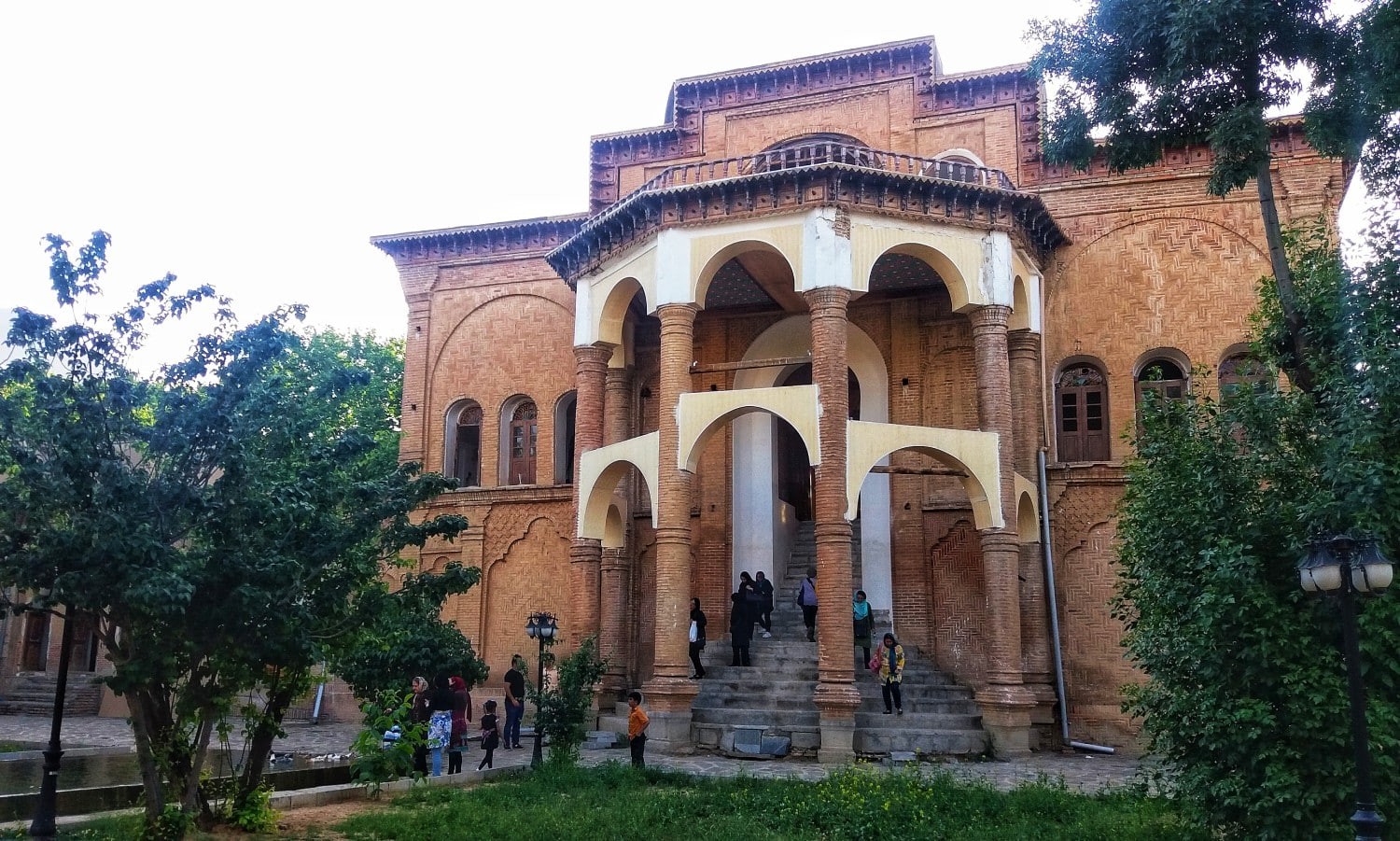
Khosroabad Mansion is one of the grandest Qajar palaces in Kurdistan, set inside a large, well-kept garden on the western edge of the city. The central hall rises to a tall iwan, and the exterior carries fine brickwork and stucco ornament typical of the nineteenth-century Kurdish governor's court. The mansion served as a residence for the Ardalan rulers and a venue for official ceremonies, and today it stands as one of the most visited historical sites in Sanandaj.
Abidar Park, the mountain recreational area that gives the city its skyline, climbs the slopes of Great and Little Abidar to the west of town. The name Abidar means "the place from which much water flows," a reference to the springs that seep from the rock and keep the slopes green through the summer. The park offers panoramic views over Sanandaj from several lookouts, paved walking paths, cafés and open lawns, and it draws families and visitors in almost every season. The peaks of Great Abidar and Little Abidar reach roughly 2,250 and 2,350 metres respectively, and on a clear afternoon the view extends across the entire Kurdish valley.
Sacred sites and the museum
The Imamzadeh Pir Omar is the tomb of a son of Imam Ali, known locally as Seyyed Abdolsamad, and the structure dates to 1046 SH and the reign of Soleiman Khan Ardalan. The complex includes three domed chambers with fine brickwork, mirror ornament and orsi windows. Nearby, the Imamzadeh Hajer Khatun is said to honour a sister of Imam Reza who died on the road to Khorasan.
The Museum of Sanandaj is housed in the Salar Sa'id House, a Qajar mansion built during the reign of Naser al-Din Shah. The museum holds galleries of prehistoric finds, Islamic-era objects and temporary exhibitions, open Saturday through Thursday mornings.
Best time to visit Sanandaj
Sanandaj's altitude gives it a mountain climate: summers are pleasantly cool by Iranian standards, and winters bring snow to the valley and to the peaks of Abidar. The most rewarding window runs from late March through May, when the hills are green, the gardens around Khosroabad are in bloom and the bazaar is at its most active. Autumn, from September to early November, offers clear skies and golden light on the Zagros slopes, ideal for photography. Winter suits travellers who enjoy snow-covered mountains and quiet streets, though some outlying sights may close on cold days.
Where to stay in Sanandaj
Sanandaj is a working provincial capital with hotels clustered near the central avenues and the university district. Most visitors book within walking distance of the bazaar and the Grand Mosque, and Mehyar Hotels lists vetted options from budget guesthouses to business-class properties. If you want to stay close to the evening atmosphere of Abidar, look for accommodation along the western ring road.
Mehyar services in Sanandaj
Mehyar covers every stage of a Sanandaj visit. Mehyar Flights books the Tehran route, Mehyar Buses runs scheduled coaches from the major western cities, Mehyar Taxi handles airport transfers and trips between sights, and Mehyar Hotels keeps a current list of properties in the city centre. For onward travel to Kermanshah or Marivan, Mehyar Buses and Mehyar Taxi both offer connections that keep your itinerary moving.