
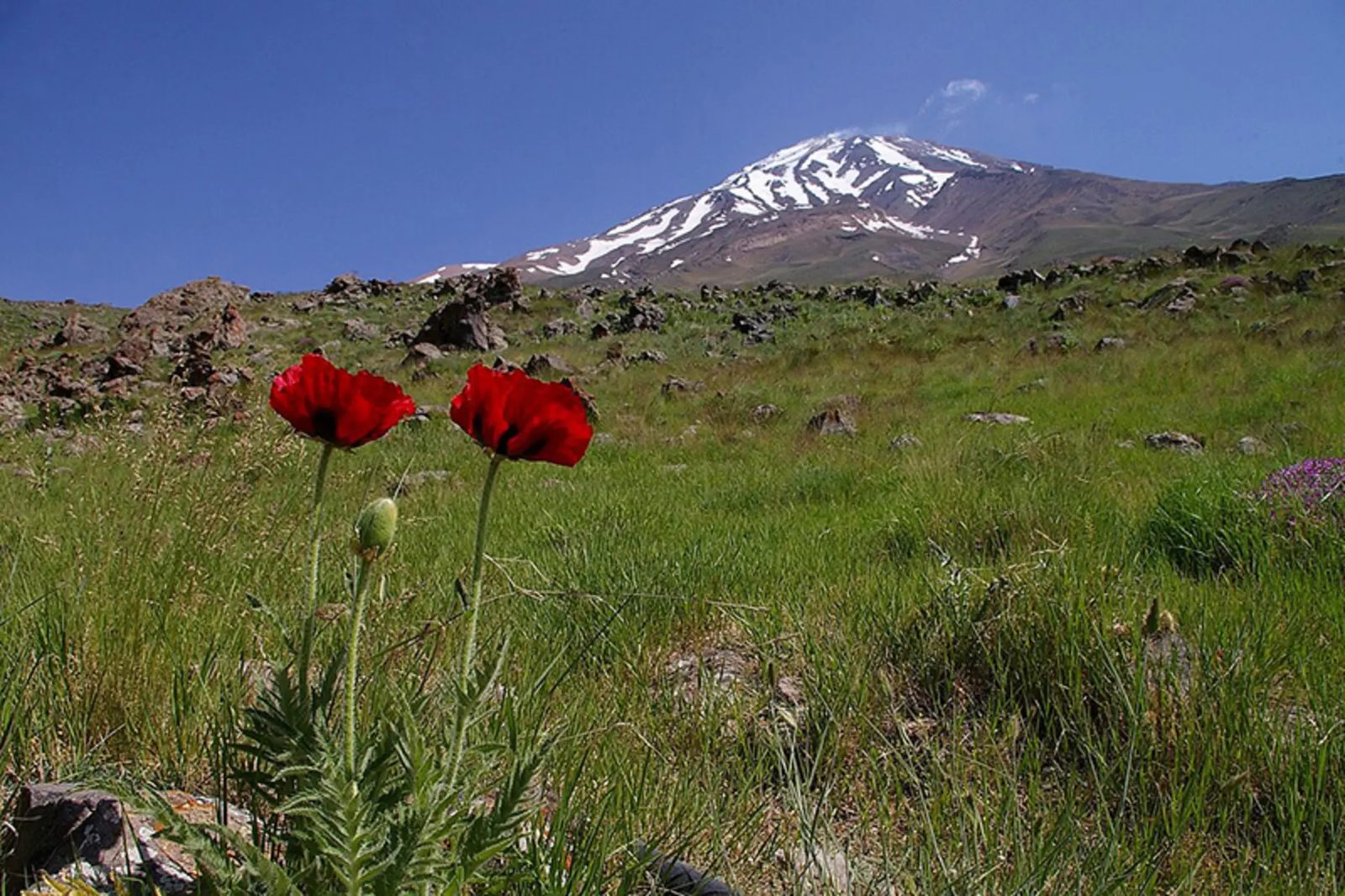
The town of Damavand carries the name of the mountain that looms over it, and the mountain carries the memory of a nation. At 5,600 metres, Damavand is the highest peak in Iran and the tallest volcano in Asia, a snow-capped presence in Persian myth and poetry, and for many Iranians a standing symbol of endurance. You do not have to climb it to feel it. On the cool plateau of the town, an hour and a half up the Haraz Road from Tehran, the peak fills the horizon to the north, and around you spreads a country of alpine lakes, hidden caves, high springs and waterfalls that reward a slow, deliberate visit.
Damavand is officially a model tourism region of Tehran province, and it earns the title. It is a place for nature lovers and hikers, for weekend escapes from the capital's heat, and for travellers who want altitude and clean air without a long haul across the country.
Where is Damavand?
Damavand town lies in the east of Tehran province in northern Iran, on the southern flank of the Alborz range, near where the mountains give way to the high plateau. The Haraz Road, the old route from Tehran to the Caspian, runs past it, and from here the country climbs toward the mountain massif that shares its name. The town sits at a brisk elevation, so even summer nights are cool, and the surrounding villages cling to the foothills at still higher ground.
How to get to Damavand from Tehran
Damavand is one of the easiest mountain escapes from the capital, roughly 75 kilometres to the town via the Haraz Road.
By Mehyar Taxi or private car. The cleanest option is a private car through Mehyar, joining the Haraz Road out of Tehran and driving past the Abali ski resort toward Damavand. In clear weather the town is about an hour and a half away, but the region's lakes and villages add another hour or two each way, and some need a capable car, so a driver you hire for the day is the practical choice for the higher sights.
By Mehyar Buses. Intercity buses and shared cars run the Haraz corridor between Tehran and Damavand and onward to Amol. This is the budget route, and it gets you to town, but not to Tar Lake or the caves, where there is no public transport and you will need a local taxi or your own car for the last leg.
By organised tour. Day and weekend tours from Tehran combine the Damavand foothills, the Lar plains and one of the lakes, and they handle the mountain roads for you. Confirm what transport and guiding are included, and whether the climb to Damavand itself is on offer only with an experienced guide and proper equipment.
The mountain and the Lar region

The Damavand slope. The most popular way to meet the mountain is to drive up the Haraz Road, pass Abali and enter the Polour turnoff, where the Lar plain unfolds beneath the great cone. This is the classic view of Damavand, and the foothill meadows make an easy weekend for families from Tehran.
The Lar region. Lar is a vast protected area of about 73,500 hectares, given protected status in 1982, bounded on the east and north by the mountain itself and on the south by Afjeh and Lavasan. Within it lies Barf Tangeh waterfall, about two kilometres east of Lar, a secluded spot for a picnic at the foot of the peak. The dam lake at Lar is a natural magnet in warm months.
Lakes, caves and springs

Tar Lake. Some thirty kilometres east of the town, Tar is a freshwater lake at about 2,900 metres, roughly 3.1 kilometres long and 400 metres wide, its surface shrinking and swelling through the year. Unusually for a high lake here, it is good for swimming, rowing and fishing, and the water comes up from the springs of the Qareh Dagh, Siah Chal and Shah-Neshin ranges to the north.
Hoyir Lake. Only about 500 metres from Tar, tucked in the same Qareh Dagh ridge, Hoyir is a smaller lake some 900 by 150 metres, usually visited together with Tar on the same outing.
Rud Afshan Cave. Near the town of Rud Afshan, this cave sits at 1,945 metres, with a twenty-metre mouth and a twenty-nine-metre passage lined with stalactites and stalagmites. Formed in the Cretaceous and studied by geologists, the approach is a hard 800-metre climb that needs mountaineering gear and a light source; go only if you are fit and properly equipped.
Bornik Cave. Off the Damavand-to-Firozkouh road at Harandeh village, Bornik rewards a two-hour walk from the village with very cool, pleasant air inside, which makes it a favourite summer retreat for experienced hikers.
The springs. The region is famous for its waters. A'la spring rises in the high valleys northwest of town and is one of Damavand's vital sources, sweet and clear. Tiz Ab, about five kilometres north in Dasht-e Mazar, is a strong, sharp, astringent water locals use for skin and stomach complaints, reached by a rough path that calls for climbing equipment and is dangerous without it. Siah Sang spring, near Masha, is ringed by barberry, wild rose, yarrow and cornflower, though its water has clouded since the Masha tunnel diverted the flow. Div Asiyab, off the Polour road toward the Lar dam, is a broad, deep, sulphurous pool whose salty, mineral water smells strongly of sulphur.
Waterfalls

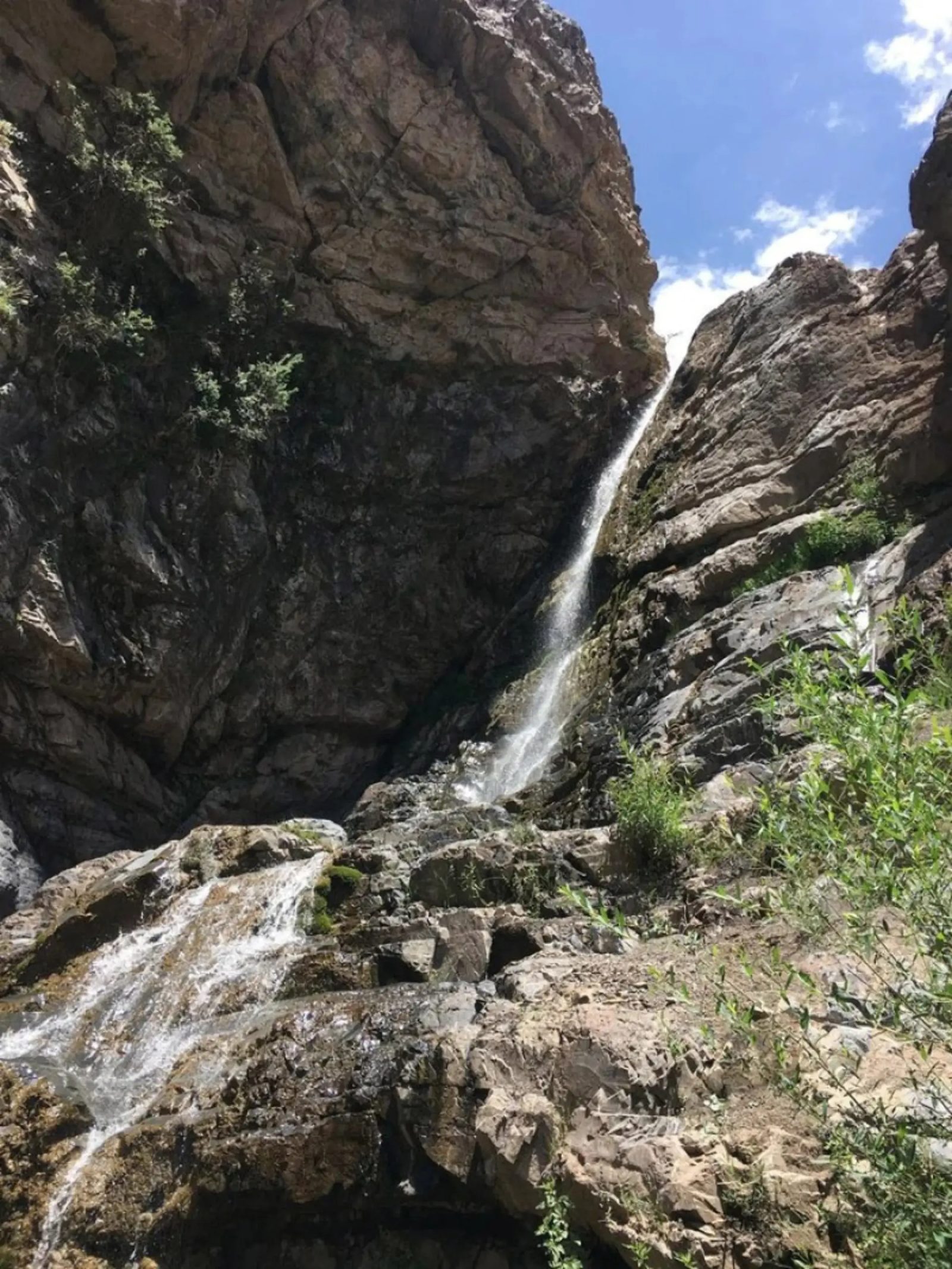
Jangelak Waterfall. Seven kilometres east of town in the Rouhafza quarter, deep in the Grobar valley, Jangelak drops about 35 metres from an altitude of 2,320 metres, set among juniper and walnut trees that keep the air cool. The Grobar valley itself holds two other falls, Ayineh Rud and Grobar.
Grobar Waterfall. Also in Rouhafza, Grobar is a 20-metre fall beneath very old trees, some plane trees with trunks said to reach fourteen metres in girth, and a pleasant, shaded walk.
Villages worth the detour
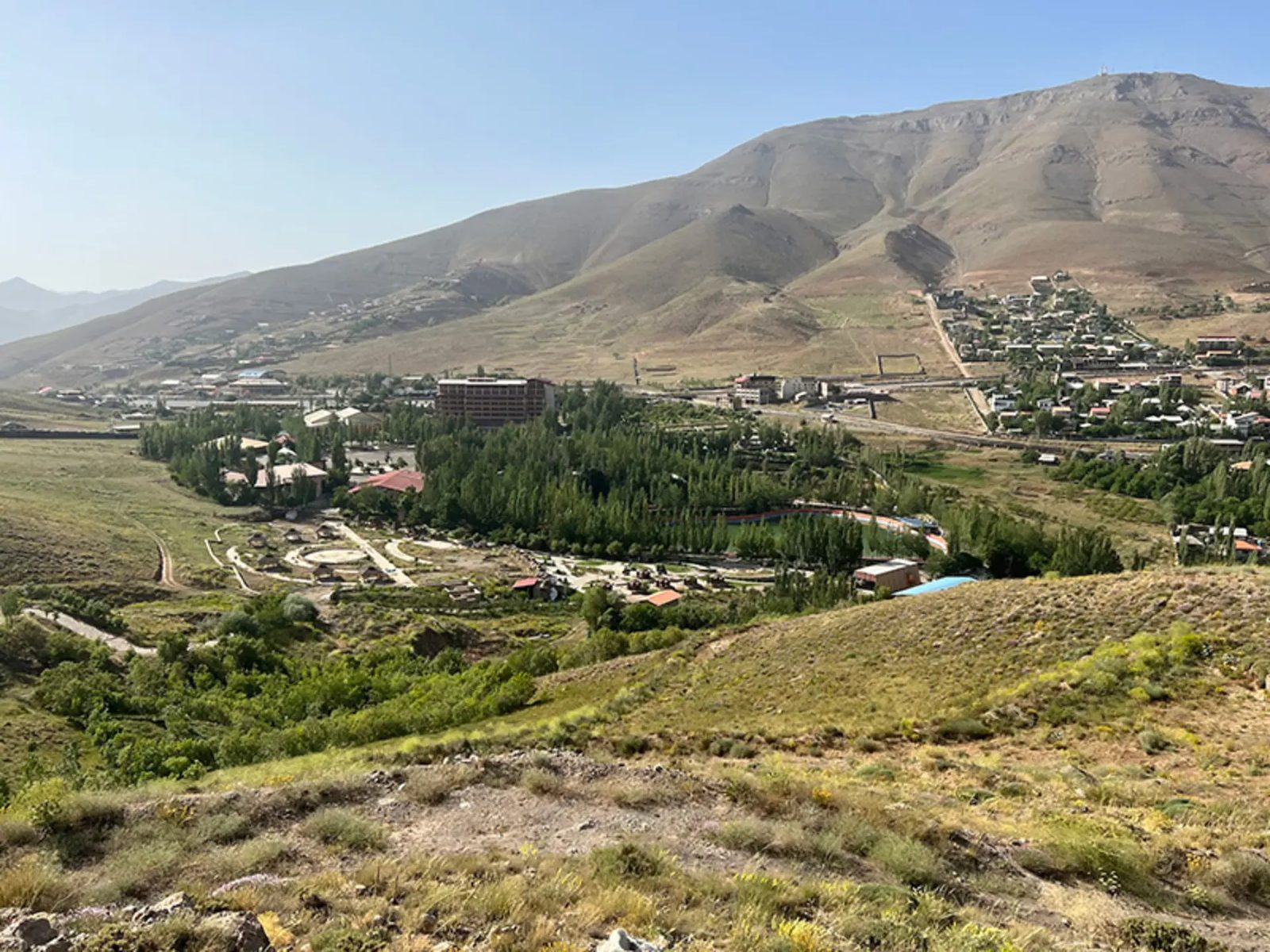
Masha. On the Haraz Road near Roudehan, Masha is a green village of orchards and a seasonal river and hill views, known for its summer villas and its closeness to hiking trails and the Abali ski resort.
Jabban. An old settlement on the southern Alborz near the Firozkouh road, Jabban matters culturally for its historical mounds and sits on the Tehran-to-north route, its meadows and gentle heights turning lush in spring and summer.
Absard. The best-known village in the county, Absard combines year-round residents with tourists drawn by cool air, orchards and proximity to the mountain, and it has real services and easy road access, making it a busy base for both Tehran weekenders and hikers.
Where to stay and when to go
For a first visit, sleep in Damavand town or Absard, where you have hotels, restaurants and shops, or rent a villa in the Lar and Masha foothills for quiet and a view of the peak. The Abali ski resort, close to the town, draws winter visitors. Book through Mehyar Hotels for the weekend crowds, and keep your car or driver booked for the mornings you plan to reach the lakes before the weather turns.
Season matters more here than anywhere near Tehran. Spring is when the snowmelt feeds every waterfall and the meadows green up, and it is the safest window for the high valleys. Summer brings relief from the capital's heat and the best weather for the lakes, though afternoon cloud and storms can build over the peaks. Autumn is golden and misty and excellent for photography and short trips. Winter is cold and heavily snowy, beautiful for Damavand's white face and for Abali, but many tracks to the lakes and caves close under snow, and the passes demand winter tyres and local knowledge.
Practical notes
Altitude is the main thing to respect: the town is high and the lakes higher, so move gently on the first day and carry water. Card payment is thin in the villages and at the trailheads, so keep cash from your Mehyar wallet before you leave town. Some sites, the caves and Tiz Ab above all, require real equipment and a guide; do not attempt them casually. For the day trips out to Tar, Hoyir and the falls, a car arranged through Mehyar Taxi saves the most time, because the mountain roads are long and public transport stops at the town.