
Bojnurd sits in a green fold of North Khorasan, a provincial capital most travelers pass between Mashhad and the Caspian coast and never stop in. That is their loss. The city keeps a rich collection of sights within a short radius: a forest park studded with four-century-old plane trees, a sacred spring complex named for five legendary brothers, two Qajar-era mansions clad in seven-color tilework, a Hussainiya crowned with earthen domes, a mountain village that turns gold in late spring, and a limestone cave you enter down a stone shaft. Add a quiet provincial bazaar and the open-air chess tables of the City Park, and Bojnurd rewards the traveler who slows down. This guide covers what to see, when to go, where to stay and how to arrive, with Mehyar's local services close at hand.

Where is Bojnurd?
Bojnurd is the capital of North Khorasan Province in northeastern Iran, set among foothills, orchards and the greener reaches of the Aladagh range. It lies roughly midway between Mashhad to the east and the Caspian coast to the north, a natural overnight stop on a northern loop rather than a detour. The province it governs is one of Iran's least-visited and, for that reason, one of its most rewarding: Turkmen weavers, Kurdish villages, walnut groves and deep valleys that see few foreign faces.
Getting to Bojnurd and getting around
The nearest major hub is Mashhad, about 180 kilometers east by road, reached in two to three hours on good highway. Mehyar Buses run scheduled services between the two cities, an easy option if you would rather not drive, and the coach station in Bojnurd connects onward to Esfarayen, Gaz and the provincial towns. Travelers flying in land at Mashhad Airport, served from Tehran by Mehyar Flights.
A private car lets you reach outlying sights such as Siasab village and Bidak Cave, which sit beyond walking distance, and Mehyar Taxi covers transfers between the terminal, your hotel and individual attractions. Inside the city, the mansions, the bazaar and the City Park are close enough to combine on a walkable morning, with short taxi hops to Baba Aman and the shrine.
Baba Aman: the forest at the edge of town
Baba Aman is one of the oldest and most pleasant woodland parks in the country, and it explains why locals are quietly proud of their city. The grounds hold some four hundred thousand trees: acacia, plane, hawthorn, apricot and wild spindle, and stands of enormous plane trees said to be four centuries old. Springs rise at its heart and scatter around its edges, so the green never dries even in summer.
A small shrine attributed to Baba Aman, a descendant honored in the tradition of the Imamzadeh, gives the park its name. To the west, across some 250 hectares, a wildlife garden reproduces the plant and animal life of North Khorasan, worth a slow stroll with children. On a hot afternoon, the plane-tree alleys of Baba Aman are the coolest place in Bojnurd.
Bash Qardash and the five brothers

About ten kilometers from Bojnurd, at the start of the road toward Esfarayen, lies Bash Qardash, at once natural and sacred. The name is Turkish for "five brothers," from a local legend: five siblings fleeing a tyrant's soldiers prayed for refuge, five openings appeared in the rock, and water gushed out. Even today the spring water is said to ease skin and joint complaints, and the caves and running water have drawn veneration since Parthian and Sasanian times, when the mountain housed Zoroastrian priests. Bash Qardash is registered as a national heritage site, and the walk from the spring up to the caves takes well under an hour.
The Mofakham and Ayineh Khaneh mansions
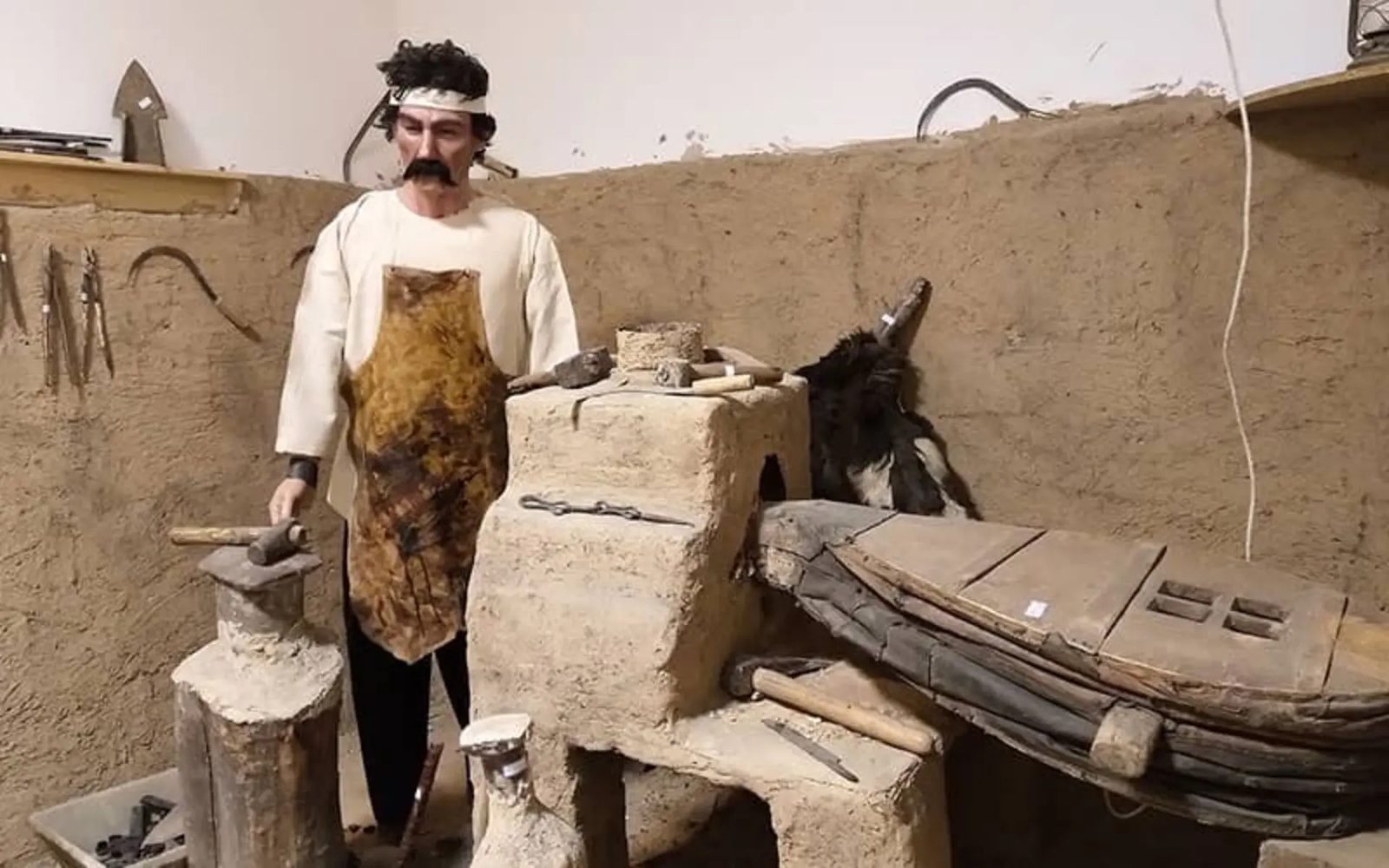
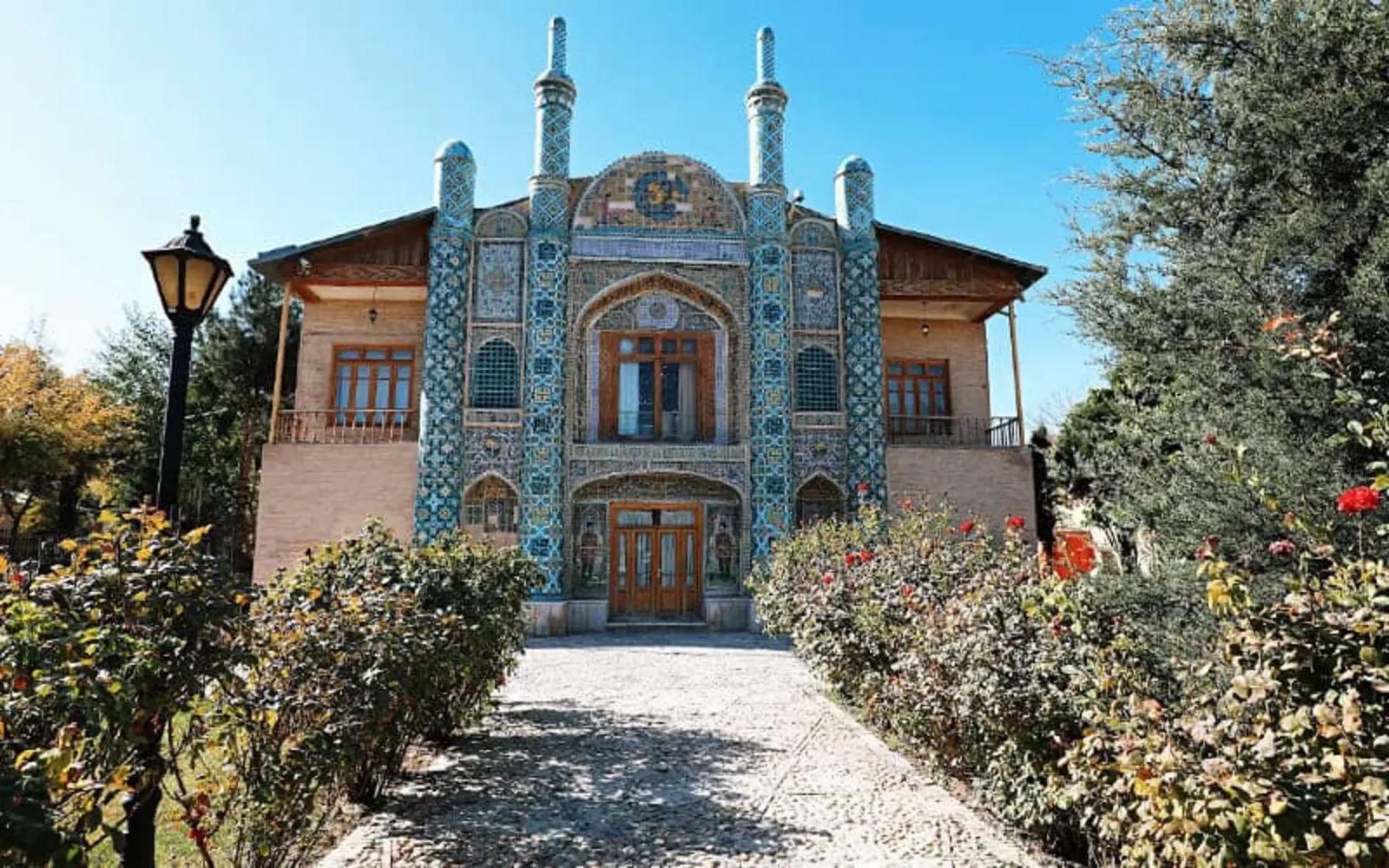
Bojnurd's architectural pride is the Mofakham complex, built in the early 13th century of the Islamic calendar on the orders of Yar Mohammad Khan Shadlu, the local ruler known as Sardar Mofakham. The main mansion holds thirty-four rooms around two great halls, each floor opening onto a north and a south veranda. The facade is tiled throughout in seven-color Qajar work, turquoise, yellow, pink, violet, white, green, red and black, with every column carrying its own pattern, tall verandas resting on round tiled columns, and mirror-work and molded-plaster ceilings. Exterior panels depict winged angels, human faces, flowers and geometric motifs in the taste of the 1200s AH. After restoration the mansion became the provincial museum of archaeology and anthropology.
At the end of Shariati Street stands its companion, the Ayineh Khaneh, or "Mirror House," once the reception wing of the same Dar ol-Hokume complex. Built under Naser al-Din Shah and designed by Mirza Mohammad Khan Motemad ol-Dowleh, the first Iranian architect trained at the Ecole des Beaux-Arts in Paris, the two-story building holds nine rooms; the upper hall gives the house its name, every wall and the ceiling worked in shimmering mirror mosaic. Four minaret-like towers flank the entrance, two inscribed with "Mohammad" twelve times in open brickwork, and since 1379 SH it has served as a museum of documents and manuscripts.
Sacred Bojnurd: the shrine and the Hussainiya
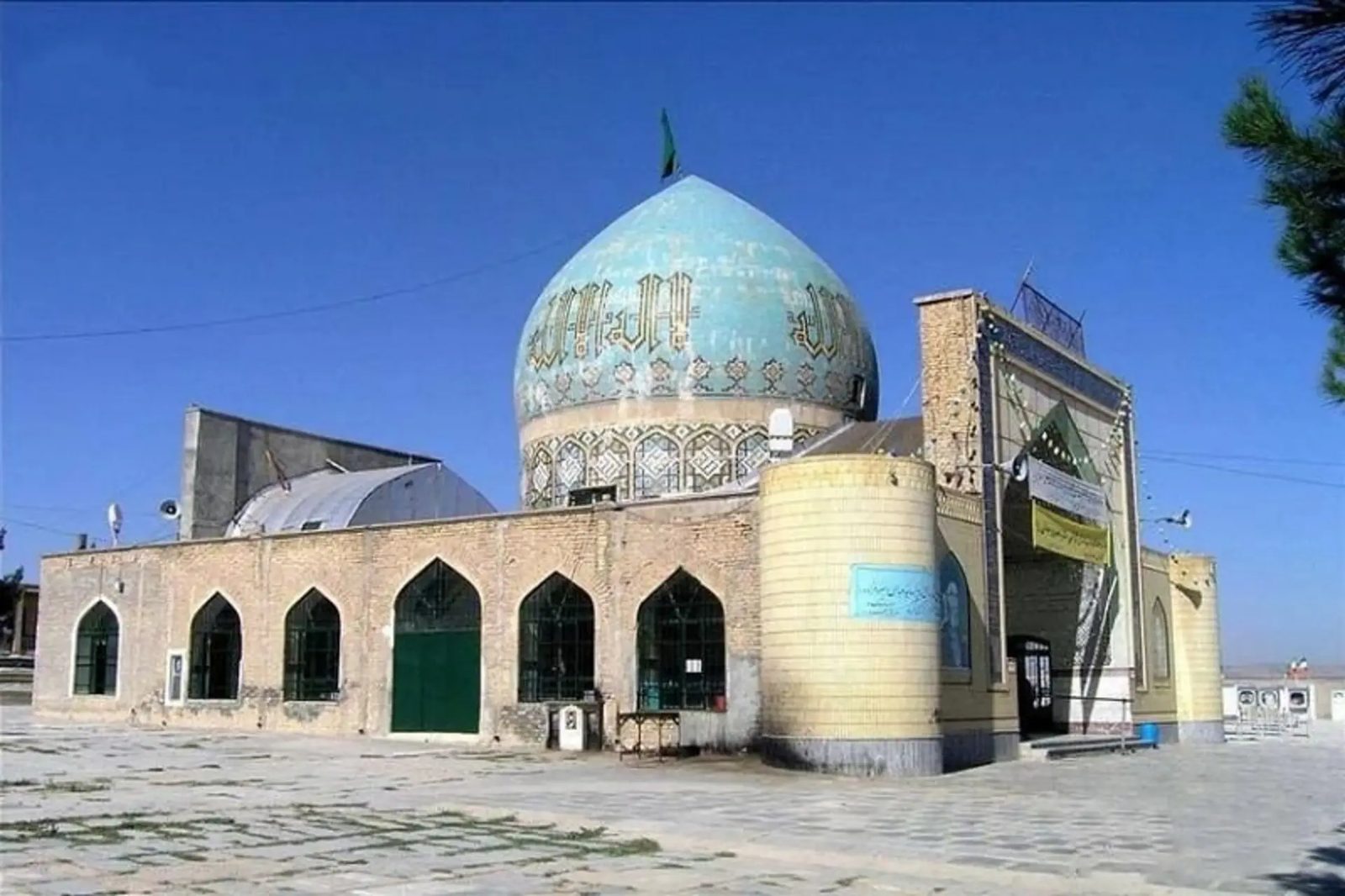
On the southern hills above the city, the Imamzadeh Sultan Seyyed Abbas marks the burial place of a son of Imam Musa al-Kazem who, tradition says, left Medina for Khorasan in the Abbasid period. The core of the Haram is an octagonal hall with an entrance on each side and a dome sheathed in turquoise tile bearing the declaration of faith in lapis blue; the surrounding Masoomzadeh is the city's cemetery and the resting place of local martyrs.
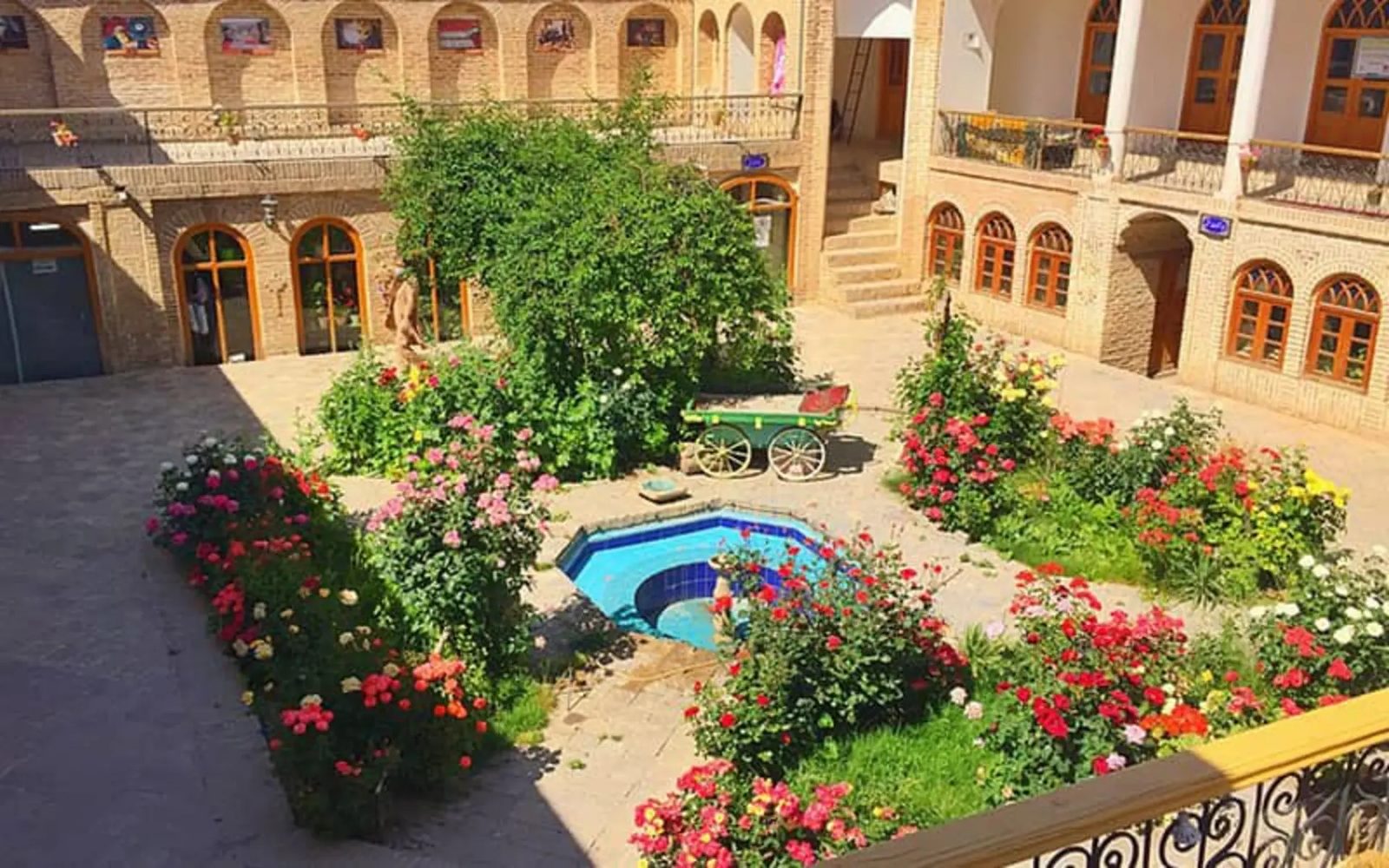
In the old quarter, the Hussainiya of the Hajajermiha family is a masterwork of Qajar religious architecture, built in 1325 AH by Ostad Gholamreza Bana Yazdi. It follows the introverted courtyard plan, with doors and light openings facing inward onto a central court around which some 600 square meters of two-story rooms are arranged, the lower chambers covered in keel-shaped arches and decorated with brickwork, plaster relief and muqarnas. Across the eastern veranda runs a Nastaliq frieze carrying verses from Mohtesham Kashani's lament for the martyrs of Karbala, a text chosen for a hall built to mourn the family of Imam Hussein. It is registered as a national monument. A short walk away, the Bank Melli house blends traditional and European Pahlavi design in its arched windows, tiled frames, pitched "French-hat" roof and Corinthian column heads, and is still used as an office building.
Out of the city: Bagh Darreh, Siasab, Abdolabad and Bidak Cave
North of Bojnurd, the valley known as Bagh Darreh, "garden valley," is one of the most untouched landscapes in North Khorasan. Deep cuts filled with green trees meet sheer rock walls that look almost carved by hand, and along the stream grow catmint, thyme and pennyroyal among sturdy junipers and wild mushrooms.
The village of Siasab, in the warm Garmkhan district, is reached by a road of many bends and is beautiful in every season, at its best in late April and May when good rains turn it into a garden and three neighboring hills each show a different color. Near Abdolabad, an earthen dam fills from the surrounding rivers in winter and releases water to the fields in the dry months. For something quieter, Bidak Cave lies about four kilometers southeast of the village of Bidak: its entrance is a plain stone shaft with no outward sign of a cavern, the cave runs some eighty meters in total with twenty straight down, and its stalactites and stalagmites reward a careful, well-lit visit with a local guide.
The best time to visit Bojnurd
The cold months bring snow to the hills, lovely for photography and harsh for open-air sightseeing. The sweet window runs from late April through early summer, when Baba Aman is at its greenest and Siasab peaks, and again through autumn, when the plane and acacia trees color. Summers are mild by Iranian standards and good for the valley walks; if you combine Bojnurd with Mashhad on a pilgrimage, spring and autumn also make the drive comfortable.
Where to stay in Bojnurd
Bojnurd is a working provincial capital, so accommodation is practical and central. The City Park sits near Independence Street in the middle of town, with chess tables, flower beds and space to pitch a tent, a convenient low-cost anchor for a visit. Most first-time visitors book a hotel near the central avenues so the mansions, the bazaar and the Hussainiya are a short taxi apart, and Mehyar Hotels lists vetted properties for one-night stops and longer stays. If you are basing yourself for the natural sights, choose a place with early access to the Garmkhan road to reach Siasab or Bagh Darreh while the day is young.
Travel notes for Bojnurd
North Khorasan is conservative and warm to visitors; modest dress is expected, especially at the shrine and in the villages. The outlying attractions are thinly signed, so arrange transport in advance rather than flagging a car on a rural road, and keep cash for the villages, where card terminals are rare. To pair Bojnurd with the coast, the route north through the Aladagh passes toward the Caspian is one of the most scenic drives in the northeast.
Bojnurd does not shout. It asks for a day and repays it with shade, tile, spring water and the curiosity of people glad to see a traveler stop.