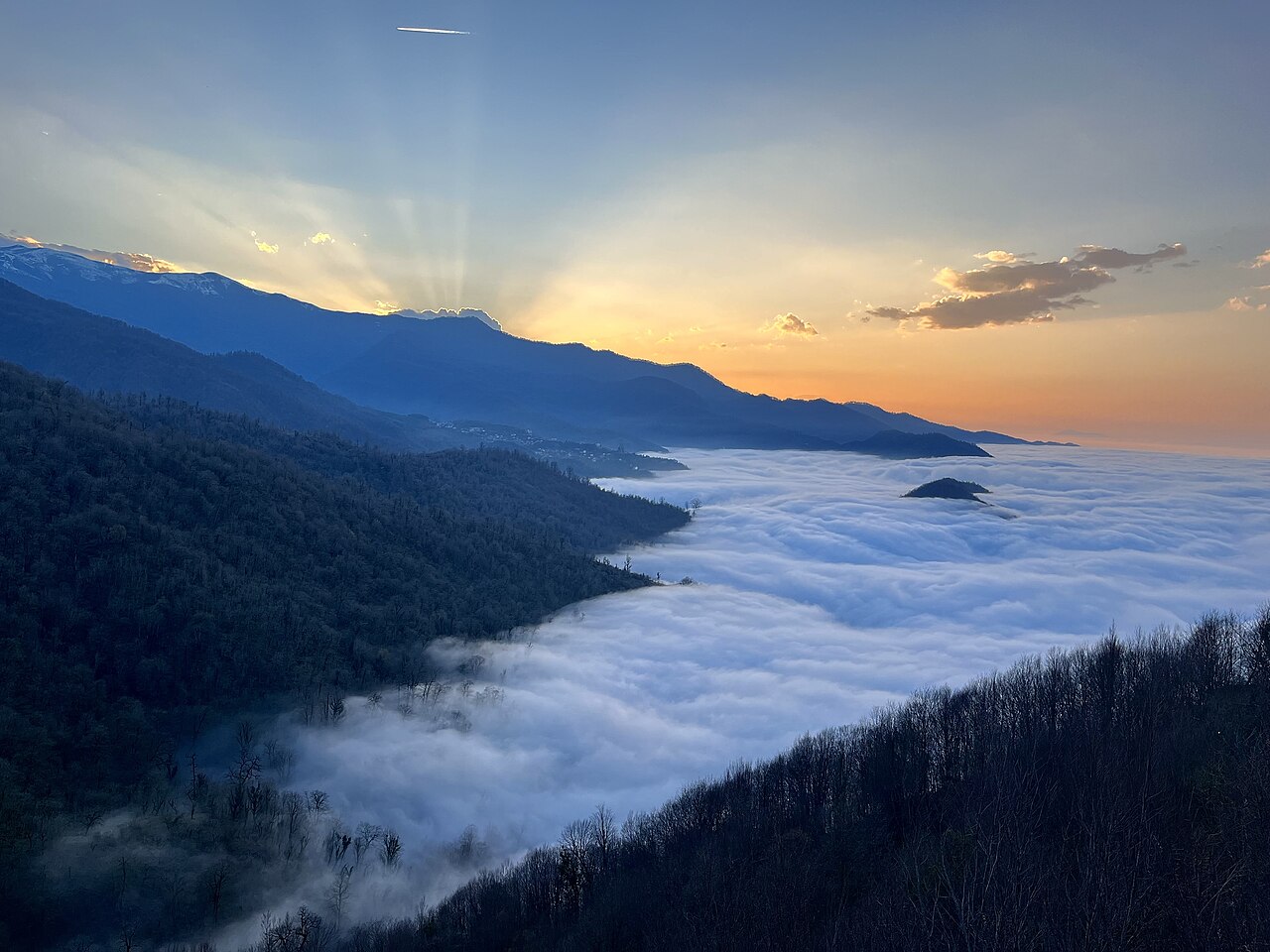
Ramsar sits where the Alborz Mountains plunge into the Caspian Sea, and the narrow strip of land between the peaks and the water is some of the greenest, most subtropical country in Iran. Rain falls here in quantities that would seem miraculous a few hundred kilometres to the south, on the central plateau. Hyrcanian forests, the ancient deciduous woodlands that predate the last ice age, cloak the mountainsides in a dense canopy of oak, hornbeam, chestnut, and wild shrubs. And eight kilometres inland from the Ramsar coast road, rising into the foothills at roughly 500 metres above sea level, you will find the village of Arbakaleh, a small and enchanting settlement whose name means "place of persimmons" and whose setting captures everything that makes the Caspian littoral so distinctive.
The village takes its name from the wild persimmon trees that grow in profusion on the hillsides around it. In autumn, when the fruit ripens to a deep orange, the trees are spectacular, and the local tradition of harvesting wild persimmons continues to this day. But the persimmons are only part of the appeal. Arbakaleh sits at the transition zone between the coastal lowlands and the Alborz highlands, and the surrounding landscape offers a mix of dense forest, open meadow, mountain spring, and panoramic views back toward the Caspian that is hard to match anywhere else in northern Iran.

The Setting: Between Sea and Summit
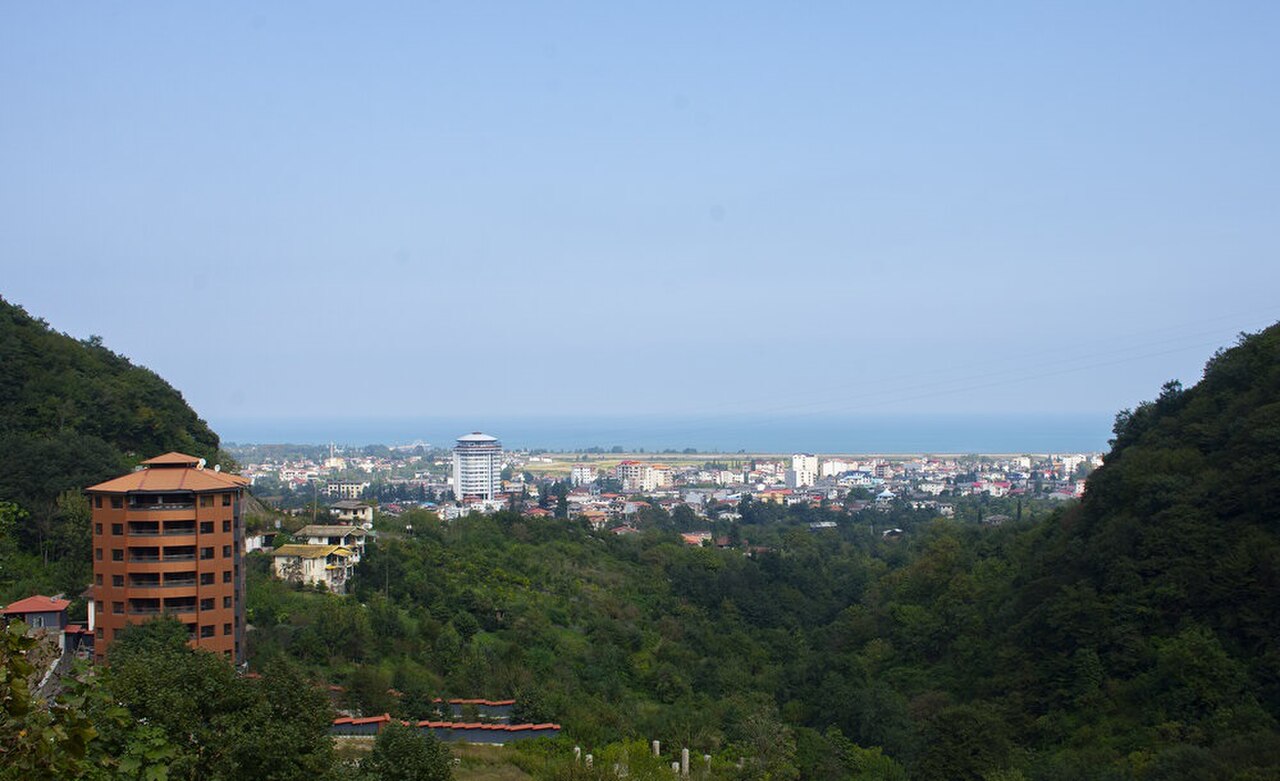
The drive from Ramsar to Arbakaleh takes you through some of the most beautiful road scenery in Mazandaran province. The coastal plain, with its rice paddies, citrus groves, and tea plantations, gives way within a few kilometres to steep forested slopes. The road winds upward through tunnels of overhanging trees, past streams that cascade down rocky channels, and alongside small farms growing kiwi fruit, vegetables, and tea. By the time you reach the village, you are well above the coastal humidity, and the air is cool, clean, and scented with forest vegetation.
The elevation of around 500 metres is significant. It puts Arbakaleh above the worst of the summer humidity that makes Ramsar itself feel oppressively muggy in July and August, while remaining low enough to be accessible year round. Snow falls in winter but rarely blocks the road for extended periods. Spring brings a rush of wildflowers and the full force of the mountain streams. Autumn offers the persimmons, spectacular foliage, and clear skies. Even summer, the peak tourist season on the Caspian coast, is pleasant here in the mornings and evenings.
What to See and Do
Forest walks. The Hyrcanian forests surrounding Arbakaleh are a UNESCO World Heritage site, recognised for their biological significance as a refuge for plant species that survived the last glaciation across much of Europe and Asia. Walking trails radiate from the village in several directions, ranging from gentle paths through the lower woods to more demanding routes that climb toward the higher ridges. The trails are not always clearly marked, and hiring a local guide for your first walk is a good idea.
Hot springs. The Ramsar region is known for its natural hot springs, and Arbakaleh is no exception. Several thermal springs exist in the hills around the village, their mineral rich waters believed to have therapeutic properties. Some are developed with simple bathing facilities, while others remain in a natural state, accessible only by foot. Ask locally for directions and current conditions.
Cable car. The Ramsar telephone cabin, one of the attractions of the wider Ramsar area, operates in the hills not far from Arbakaleh and offers spectacular views over the forest canopy to the Caspian Sea below. The ride takes you from the foothills up to a mountain station where the views stretch across the sea to the horizon on clear days.
Photography. The quality of light in the Caspian forests is extraordinary, particularly in the early morning when mist hangs in the canopy and shafts of sunlight filter through the leaves. Arbakaleh and its surroundings offer endless opportunities for landscape and nature photography, from the intimate detail of moss covered branches to the grand panorama of sea and mountain.
Handicrafts. The villages of the Ramsar region are known for their traditional handicrafts, particularly woven mats and baskets made from local reeds and grasses. In Arbakaleh and neighbouring settlements, you can often find women working on these crafts at home, and some will sell directly to visitors. The quality is high, and the prices are modest.
Accommodation and Food
Arbakaleh has a small number of cottages and villas available for rent, and some local families operate informal homestays. The accommodation is simple but clean, and the experience of sleeping in a mountain village surrounded by forest is itself part of the attraction. For more comfortable options, the city of Ramsar, just eight kilometres away, has a full range of hotels and guesthouses, including the historic Ramsar Hotel, a Pahlavi era property with its own hot springs and gardens.
The food in the Ramsar region is distinct from mainstream Persian cuisine. Caspian cooking features fish, particularly white fish and sturgeon from the sea, combined with herbs, garlic, walnuts, and pomegranate molasses. Mirza Ghasemi, a smoked aubergine and egg dish, is a speciality of the region, as is Akbar Joojeh, a chicken dish flavoured with pomegranate and walnuts. In the villages, meals are often prepared with ingredients from the family garden, and the quality is exceptional.
Practical Information
Getting there. Arbakaleh is eight kilometres from the centre of Ramsar, on the road that climbs into the Alborz foothills south of the city. The drive takes about fifteen minutes. Ramsar is accessible from Tehran by road, roughly four hours via the Chalus Road or the Qazvin Rasht freeway, or by air, as Ramsar has a small airport with flights to Tehran and other Iranian cities.
Best time to visit. The Caspian coast is at its busiest in summer, from June to September, when Tehran residents flee to the cooler mountain air of the north. Arbakaleh is pleasant during this period, though the humidity can be high during the day. The best times to visit are spring, from April to May, when the forests are at their greenest and the wildflowers are in bloom, and autumn, from late September to November, when the persimmons ripen and the foliage turns spectacular colours.
Tips. The roads around Arbakaleh can be narrow and winding. Drive carefully, particularly after rain when the surface can be slippery. Bring insect repellent, as the forests are home to mosquitoes. The village itself has limited facilities, so bring any supplies you need from Ramsar.
The Wider Context: Ramsar and the Caspian Coast
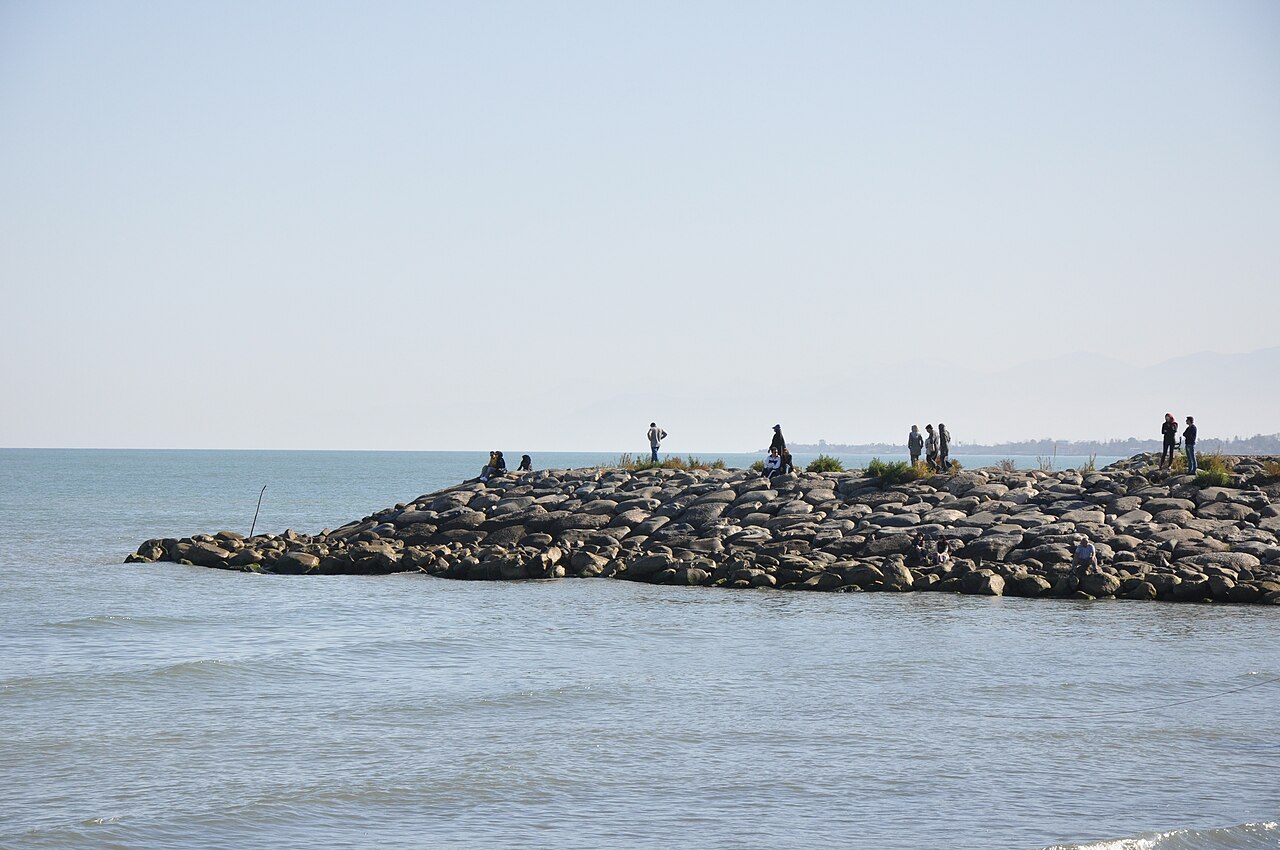
Ramsar is best known internationally for the Ramsar Convention on Wetlands, the international treaty on conservation of wetland habitats signed in the city in 1971. But for Iranians, Ramsar's appeal is simpler and more immediate. It is the prettiest of the Caspian resort towns, with a palm lined seafront promenade, a historic hotel, hot springs, and easy access to the mountains and forests of the Alborz. On summer weekends, the city is packed with visitors from Tehran and other points south, and the seafront restaurants do a roaring trade in fresh fish and local specialities.
Arbakaleh offers a quieter alternative to the Ramsar beach scene. It is a place where you can walk in ancient forests, breathe mountain air, eat simple food prepared by local families, and sleep to the sound of streams and birdsong. The village is small enough to feel intimate, yet close enough to Ramsar for you to combine a forest retreat with a dip in the Caspian Sea on the same day. For travellers exploring northern Iran, Arbakaleh is a reminder that the country's appeal extends far beyond the deserts and ruins of the popular guidebook itinerary, into the green and mountainous world of the Caspian littoral.