
What Is Ali Sadr Cave?
Deep inside the Zagros Mountains, northwest of the city of Hamedan, lies one of the most unusual underground landscapes on Earth. Ali Sadr Cave is a massive water cave formed roughly 190 million years ago during the Jurassic period, when limestone deposits began their slow transformation under the pressure of water and time. Today, it holds the distinction of being the largest navigable water cave in the world, and the only way to explore its inner chambers is by boat.
The cave stretches for kilometers beneath the earth, with vast underground lakes, towering stalactites and stalagmites, and corridors so large that the echo of a single water droplet can reverberate for seconds. The temperature inside stays at a constant 12 degrees Celsius year-round, whether it is scorching summer above or a snow-covered winter outside.

Where Is Ali Sadr Cave?
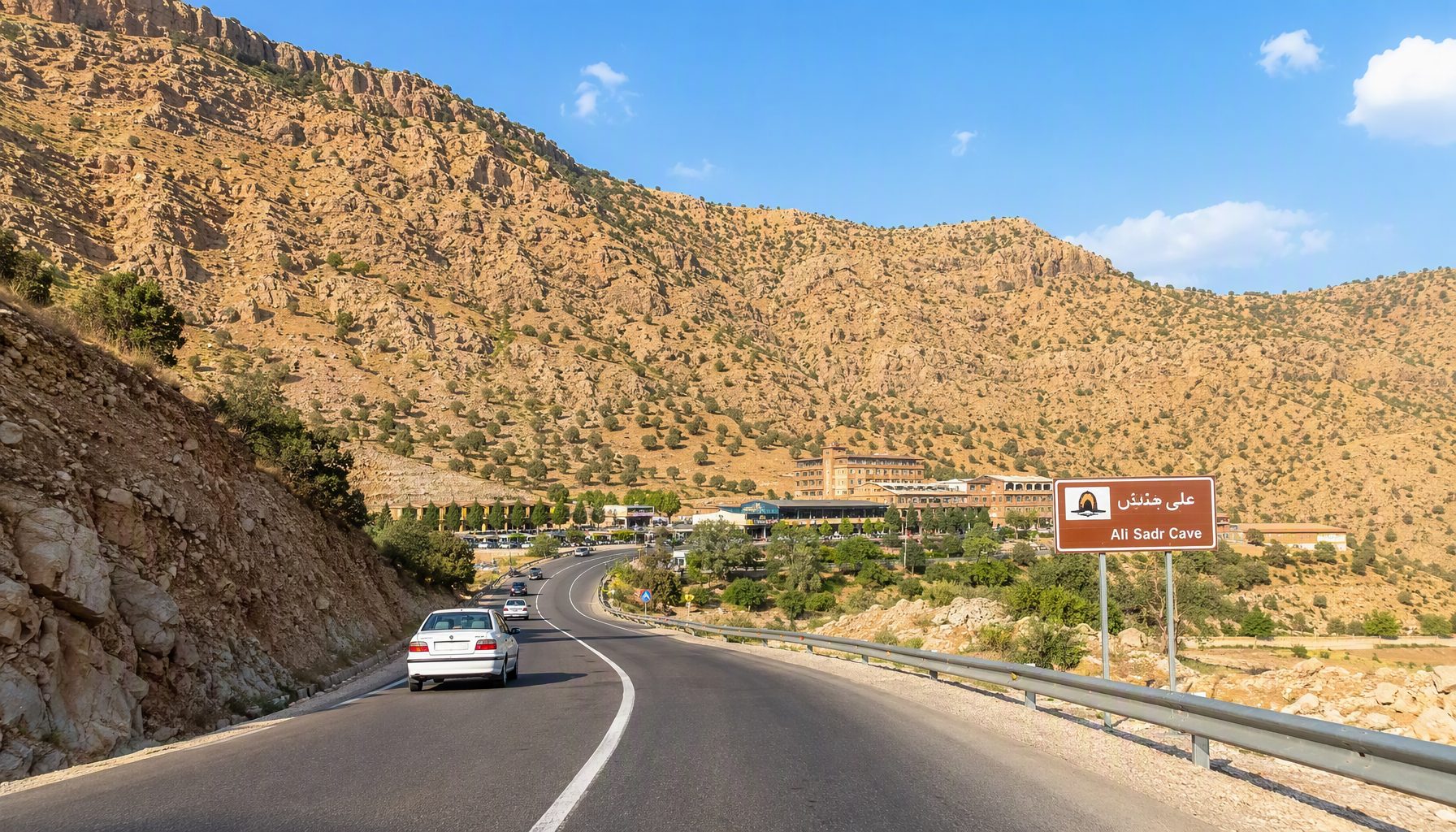
Ali Sadr Cave sits about 75 kilometers northwest of Hamedan, in western Iran. It is located near the village of Ali Sadr, which belongs to Kabudarahang County. The cave is embedded in the limestone hills of the northern Zagros range, at an elevation where the air is already cooler than the city below.
Hamedan itself is one of the oldest continuously inhabited cities in the world, formerly known as Ecbatana, the capital of the Median Empire. The city makes a natural base for visiting the cave, along with other major sites such as the Ganjnameh inscriptions, the Avicenna Mausoleum, and the ancient hill of Hegmataneh.
How to Get to Ali Sadr Cave
Reaching the cave from Hamedan is straightforward. The route follows the Hamedan to Lalejin road, passing through the town of Lalejin, famous across Iran as the center of traditional pottery. From Lalejin, the road continues toward Bijar and the Ali Sadr turnoff. The total distance from Hamedan city center is roughly 75 kilometers, and the drive takes about one hour to one hour and fifteen minutes by car. The entire route is paved, well-signposted, and suitable for standard cars and buses.
If you are coming from Tehran, the most direct route is via the Saveh to Hamedan highway, then continuing northwest toward the cave. The total distance from Tehran is approximately 430 kilometers, which takes five to six hours of driving. From Isfahan or other central cities, reach Hamedan first (about 300 kilometers), then follow the same northwest road.
For travelers without a private car, shared taxis and intercity buses run between Hamedan and Kabudarahang. From Kabudarahang, local taxis cover the final stretch to the cave entrance. Open Mehyar and tap Taxi to arrange rides from Hamedan to the cave or between towns along the way. Mehyar's Flights and Buses sections can also help you plan the longer legs of the journey, whether you are coming from Tehran, Isfahan, or Tabriz.
A Brief History of Discovery
Local villagers had known about the cave for generations. They called it Ali Sard, meaning "Ali's cold place," a reference to the permanently chilly air that flows from its entrance. For centuries, the cave served as a shelter during storms and was sometimes regarded as a sacred spring.
The first serious exploration took place in 1963, when a mountaineering team from Hamedan entered the cave with basic equipment and discovered an enormous network of underground passages and lakes. Subsequent surveys, conducted with the help of the Iranian military's geographical organization and both domestic and international researchers, mapped the navigable sections and established the infrastructure that allows visitors today. Even now, parts of the cave remain unexplored, and new chambers are occasionally discovered.
What You See Inside the Cave
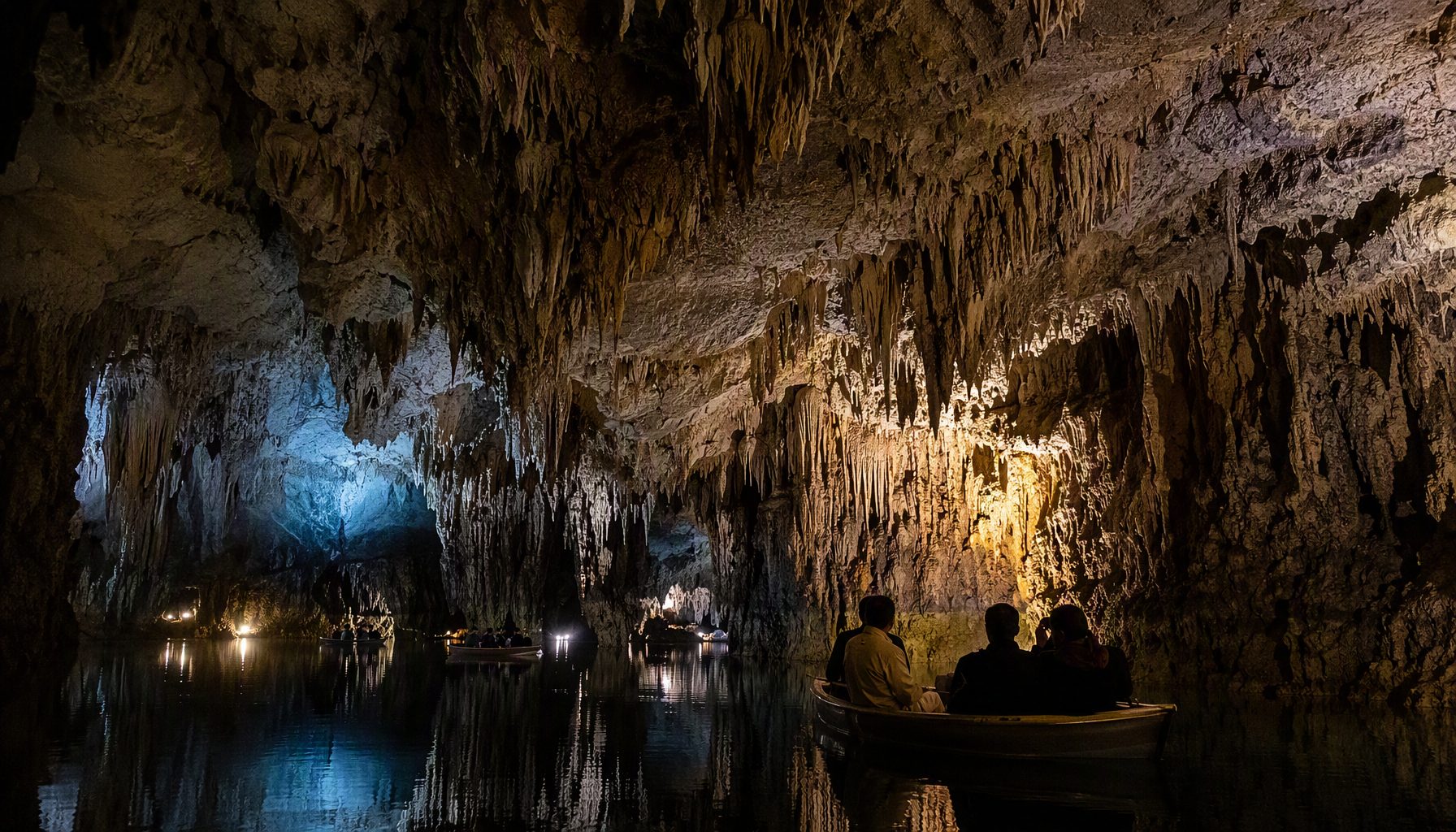
The boat ride through Ali Sadr is the centerpiece of the visit. You board a small rowboat at the cave's inner dock and glide across still, dark water while the ceiling rises above you into vast chambers. The silence is profound, broken only by the splash of oars and the occasional drip of water from the limestone above.
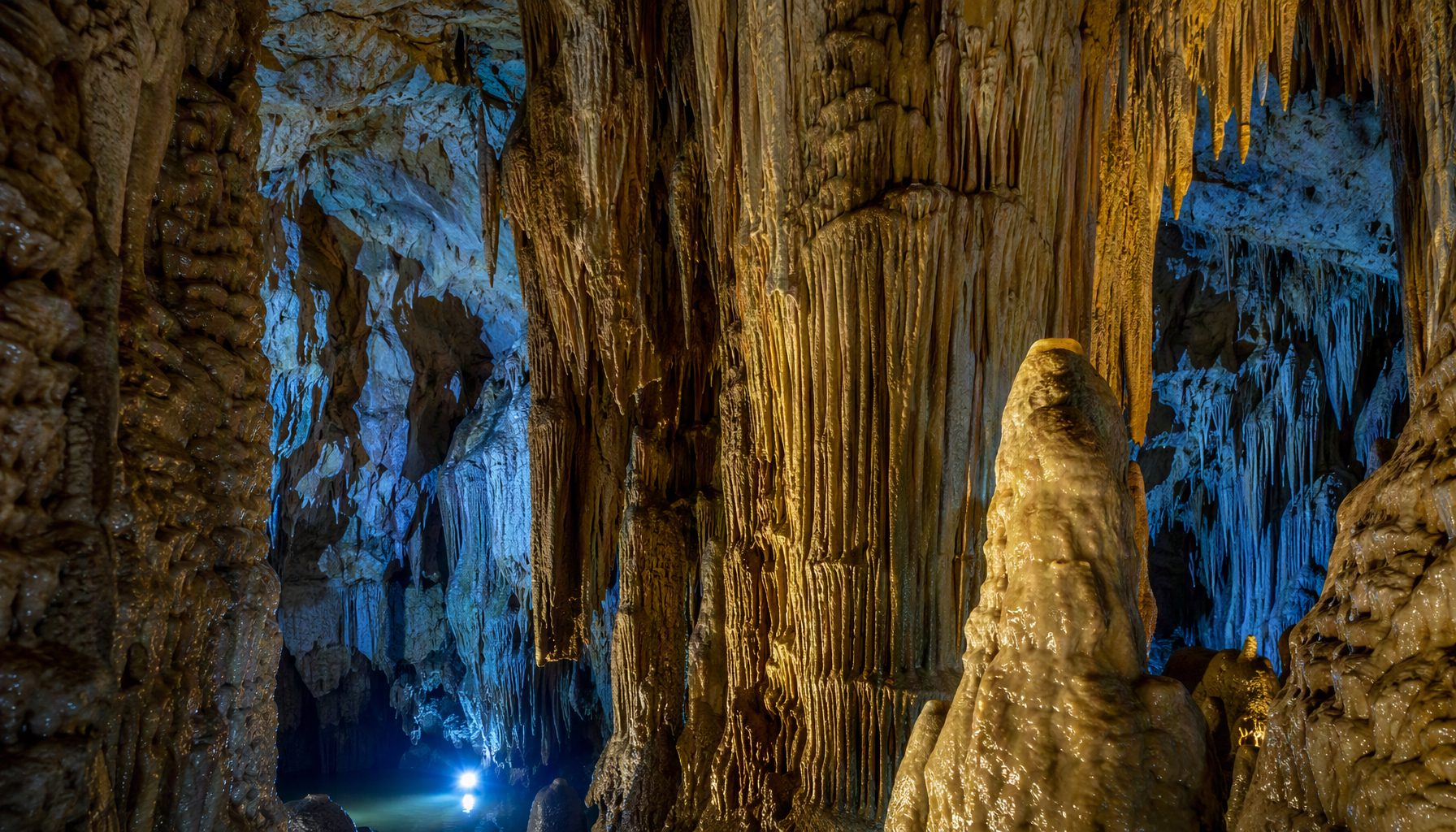
The cave walls and ceilings are covered with formations that have taken thousands of years to grow. Stalactites hang like frozen chandeliers from the roof, while stalagmites rise from the floor in columns and pillars. Some of these formations have acquired folk names: the "Ice Candles," the "Beating Heart," the "Elephant's Trunk." The lighting installed along the tourist route picks out these shapes without overwhelming the natural darkness.
Certain halls are so expansive that your voice carries in long, strange echoes. The water is clear and cold, and in places deep enough that the full height of the formations above is reflected in the surface below. The entire experience feels less like sightseeing and more like entering a cathedral carved by geology.
Hours, Tickets, and Practical Details
Ali Sadr Cave is open every day of the year, but operating hours shift with the seasons. During the warmer half of the year (roughly spring and summer), the cave is accessible from 8:00 in the morning until 6:00 in the evening. In autumn and winter, hours are shorter, typically closing around 4:00 in the afternoon.
Ticket prices are subject to change, so treat the following as a guide rather than a guarantee. As a rough reference, foreign visitors can expect to pay around 1,200,000 Iranian rials (approximately 1,200,000 tomans at the tourist rate), while Iranian nationals pay roughly half that amount. Children under six usually enter free. Online booking is available through the cave's official website and is strongly recommended during Iranian holiday periods such as Nowruz, when queues can be long.
The cave's internal temperature is a steady 12 degrees Celsius, so bring a warm layer even in midsummer. Wear shoes with good grip, as the boarding areas and some walking sections can be damp and slippery. Photography is permitted, but flash is discouraged to protect the delicate formations and preserve the atmosphere for other visitors. If you are prone to claustrophobia or discomfort in dark enclosed spaces, consider this before entering, though the main tourist route is wide and well-lit.
Facilities at the Cave Complex
The Ali Sadr Tourist Complex at the cave entrance is more than just a ticket counter. The site includes large parking areas, local restaurants and fast food stalls, a cafe, a small amusement park, green spaces, and a children's playground. There are also shops selling local handicrafts, including pottery from nearby Lalejin and leather goods from Hamedan.
In recent years, the complex has been upgraded with newer boats, improved lighting inside the cave, an online reservation system, standardized restrooms, and multilingual signage. The overall experience is well-organized for both domestic and international visitors.
Nearby Attractions and Day Trips
Ali Sadr Cave pairs naturally with a visit to Hamedan and its surroundings. The town of Lalejin, which you pass through on the way to the cave, is known as Iran's pottery capital, and a stop to browse the workshops is well worth the time. Back in Hamedan, the Ganjnameh rock inscriptions and waterfall on the southern slopes of Mount Alvand make for a striking half-day trip. The Avicenna Mausoleum, the ancient hill of Hegmataneh, and the Tomb of Esther and Mordechai are all within the city and can be covered in a day or two.
For travelers coming to Iran for the first time, our guide to planning your first trip to Iran covers visas, money, SIM cards, and the essentials you need before heading to destinations like Hamedan. And since you will be paying for tickets, meals, and taxis along the way, our guide to paying in Iran as a foreign visitor explains how to set up a Mehyar wallet and tourist card so you are never stuck without local currency.
When to Visit
The best window for visiting Ali Sadr Cave is from mid-May through early October. During this period, the weather in Hamedan is mild and the roads are clear. The cave itself, with its constant 12-degree interior, is actually a welcome escape from the summer heat. Winter visits are possible but less comfortable: the roads can be icy, the surrounding landscape is barren, and the shorter daylight hours limit your time at the site.
Plan Your Visit with Mehyar
Ali Sadr Cave is one of those rare natural wonders that feels genuinely otherworldly. The combination of geological age, underground scale, and the simple act of drifting through a mountain by boat makes it a highlight of any trip to western Iran.
Open Mehyar to start planning. Use the Planner to map out your Hamedan itinerary, Hotels to find accommodation in the city, and Taxi to arrange your transfer from Hamedan to the cave and back. Whether you are coming from Tehran, Isfahan, or Tabriz, Mehyar's Flights and Buses sections help you piece together the journey.
If Hamedan and Ali Sadr have sparked your interest in Iran's natural wonders, you might also enjoy the Persian Gulf islands of Kish and Qeshm, where geology has created an entirely different kind of spectacle above the water.