
In the village of Lahr, tucked into the Taleqan valley of Alborz province, stands a plane tree that has been growing for five centuries. Known locally as Chenar-e Kohansal-e Alborz (the Alborz Ancient Plane Tree), this living giant reaches 23 metres into the sky and has a trunk diameter of 430 centimetres. It is not the oldest tree in Iran, but it is among the most impressive, and its registration as a national heritage site speaks to the reverence Iranians have for ancient trees and the landscapes they anchor.
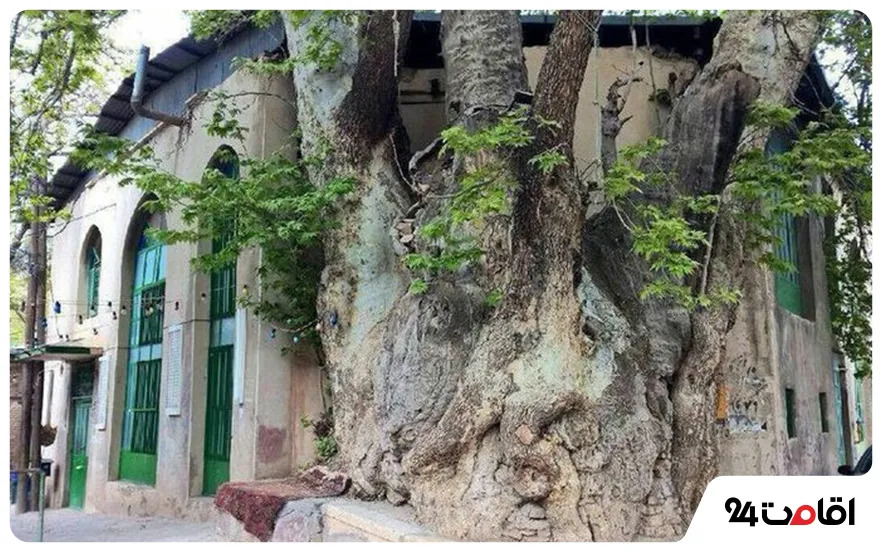
The tree is a Persian plane tree (Platanus orientalis), a species that has been part of Iranian culture and landscape for millennia. Plane trees are valued for their shade, their longevity, and their association with water sources and gathering places. In villages across Iran, old plane trees mark the centre of community life, the spot where elders meet and travellers rest. The Alborz Old Plane Tree is a particularly grand example of this tradition.

Where is the Alborz Old Plane Tree?
The tree stands in Lahr village, part of Taleqan county in Alborz province. Taleqan valley lies in the mountainous region north-west of Karaj, and it is known for its rivers, gardens, and relatively cool climate compared to the Tehran lowlands. The village of Lahr is one of many small settlements scattered through the valley, and the old plane tree is its most notable landmark.
Taleqan county is about 70 kilometres from Karaj and roughly 100 kilometres from Tehran, making it accessible for a day trip from either city, though the mountain roads mean the drive takes longer than the distance might suggest.
The tree and its setting
The Alborz Old Plane Tree is estimated to be around 500 years old, which places its germination in the late 15th or early 16th century, around the time of the Safavid dynasty's rise. Over five centuries, it has grown to its current height of 23 metres and developed a massive trunk with a diameter of 430 centimetres. The canopy spreads wide, providing substantial shade, and the tree's presence dominates the immediate surroundings.
Registered on Iran's national heritage list, the tree is protected as a natural monument rather than as a built site, which is why there is no ticket office, no guarded enclosure and no visitor centre around it. What protection exists comes from the village itself: the tree stands in the middle of a living settlement, and the community that planted and tended it five centuries ago has been replaced, generation by generation, by the community that still shades its gatherings beneath it.
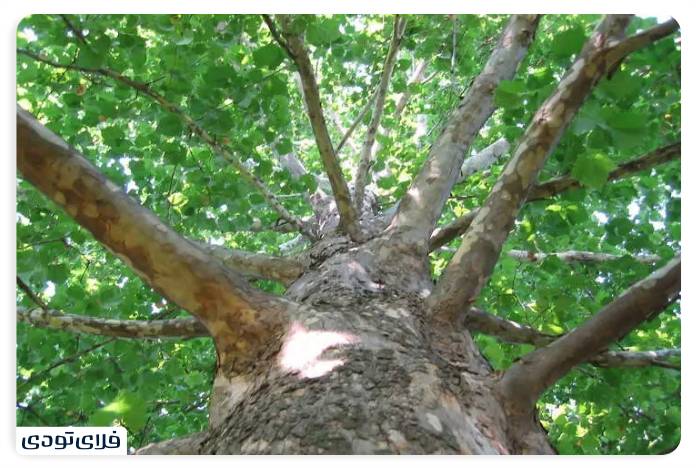
The setting is typical of Taleqan valley: mountain slopes, agricultural land, and the sound of running water. Plane trees in Iran are often found near qanats, springs, and rivers, and this one is no exception. The combination of the ancient tree, the village setting, and the mountain landscape creates a scene that has changed little over the centuries.
Why it matters
Ancient trees in Iran are not just biological curiosities; they are cultural landmarks. They mark the passage of time in ways that buildings sometimes cannot, and they serve as living connections to the past. The registration of the Alborz Old Plane Tree as a national heritage site reflects this cultural significance. It is recognized not only for its age and size but for what it represents: continuity, resilience, and the deep relationship between Iranian communities and their natural environment.
The tree also has ecological value. Old plane trees provide habitat for birds, insects, and other organisms, and their root systems help stabilize soil near water sources. In a region where agriculture and water management are central to life, a tree of this age and size is both a practical asset and a symbol.
How to get there
From Karaj. Taleqan county is about 70 kilometres from Karaj, the capital of Alborz province. The drive takes roughly 90 minutes to two hours, depending on road conditions and the specific route. The road follows the valley and offers views of the mountains and rivers that characterize the region.
From Tehran. The distance from Tehran is about 100 kilometres, and the drive takes two to two and a half hours. The route goes through Karaj and then into the Taleqan valley. Mountain roads can be winding, and conditions may change with weather, so allow extra time.
By Mehyar Taxi. For a comfortable ride with the flexibility to stop at viewpoints or spend extra time at the tree, open Mehyar and book a Taxi. Your driver can wait while you explore, and you avoid the stress of navigating mountain roads yourself.
By Mehyar Buses. Intercity buses serve the route from Tehran and Karaj toward Taleqan. Check the Mehyar app for schedules and availability. From the main road, you may need a local taxi or a walk to reach Lahr village.
By private car. If you have access to a car, the drive from Karaj or Tehran is straightforward, though the mountain roads require attention. Parking in Lahr village is usually not an issue, as it is a small settlement.
Visiting the tree
A visit to the Alborz Old Plane Tree is brief. The tree itself is the main attraction, and there are no extensive facilities or marked trails. Most visitors spend less than an hour at the site, taking photographs, walking around the tree, and appreciating its scale and age.
There is no entrance fee. The tree stands in or near the village, and access is open. You can approach the tree, touch the bark, sit in its shade, and take in the setting. The experience is simple and direct, which is part of its appeal.
If you are visiting Taleqan valley, the old plane tree can be combined with other activities in the region: walking along the river, visiting other villages, or simply enjoying the mountain scenery. Taleqan is known for its gardens and agricultural products, and a drive through the valley is rewarding in itself.
Best time to visit
The best time to visit the Alborz Old Plane Tree is during the warmer months, from late spring through early autumn. In spring, the tree is leafing out and the valley is green. In summer, the canopy provides welcome shade, and the mountain climate is cooler than the lowlands. In autumn, the leaves turn yellow, creating a different but equally photogenic scene.
Winter visits are possible, but the tree is bare, and mountain roads may be affected by snow and ice. If you visit in winter, check road conditions before you go and dress warmly.
Practical tips
- Combine with a Taleqan valley tour. The old plane tree is one of several points of interest in the area. Consider spending a half-day or full day exploring the valley.
- Bring water and sun protection for summer visits. The mountain sun can be strong, even if the air is cool.
- Respect the tree and the village. This is a living organism and a community landmark. Do not carve into the bark or damage the roots.
- Photography is welcome. The tree's massive trunk and wide canopy make for compelling photographs, especially in the warm light of late afternoon.
- Check road conditions if visiting in late autumn or winter. Mountain roads can be hazardous after rain or snow.