
The Ahvaz Astronomy Center, officially known as the Ibn Haytham Ahvazi Specialized Astronomy Cultural Center, is one of the most distinctive cultural and scientific attractions in Khuzestan Province. Located in the Kourosh (Kuy-e Mellat) neighbourhood of Ahvaz, the center offers visitors a chance to explore the cosmos through planetarium shows, telescope observations, interactive exhibits, and educational workshops. Named after the medieval Arab astronomer Ibn Haytham Ahvazi, the center combines the region's rich scientific heritage with modern astronomy education, making it an engaging destination for families, students, and anyone curious about the night sky.
A Center for Astronomy in Khuzestan
The Ahvaz Astronomy Center holds a unique position as the first organization in Khuzestan Province dedicated exclusively to astronomy education and outreach. Established in 1393 SH (2014-2015), the center began operations as the Shahrvand Cultural Center within Shahrvand Park, offering planetarium shows and stargazing events to the local community. The response from citizens, schools, and government and private organizations was overwhelming, leading to the construction of a new, purpose-built facility in the Kourosh neighbourhood.
Today, the center is a member of the Iran Astronomy Association and the Khuzestan Province Science and Technology Park, reflecting its commitment to scientific excellence and public education. The staff consists of experienced astronomers and educators who design programs for all age groups, from schoolchildren experiencing their first planetarium show to amateur astronomers seeking deeper knowledge of observational techniques.
The center's mission extends beyond entertainment. It aims to promote astronomy culture among the general public, raise scientific literacy, and inspire the next generation of astronomers and scientists. In a region more commonly associated with oil and industry, the astronomy center stands as a testament to the enduring human fascination with the stars.
What to See and Do
The Ahvaz Astronomy Center offers a range of activities and exhibits designed to engage visitors with the wonders of the universe. The planetarium is the centerpiece, featuring immersive shows that simulate the night sky, explain celestial phenomena, and take audiences on virtual journeys through the solar system and beyond. The shows are available in both Persian and, for groups, can be arranged in other languages with advance notice.
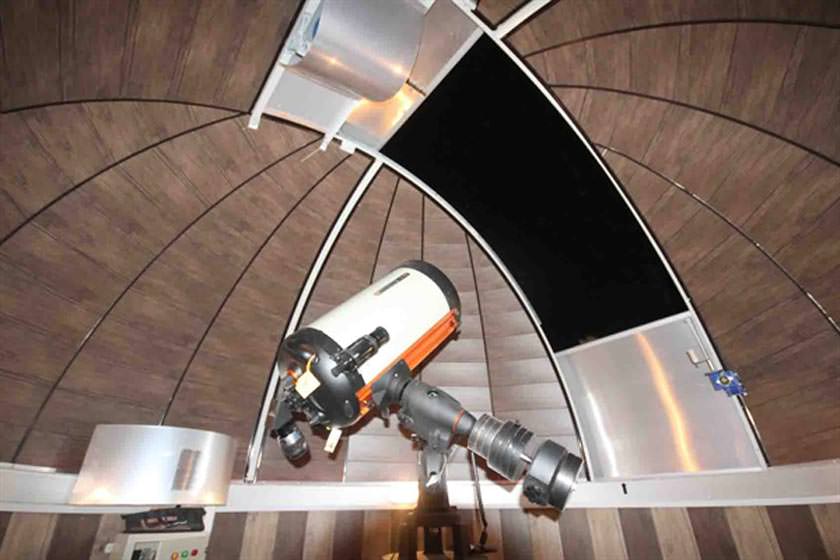
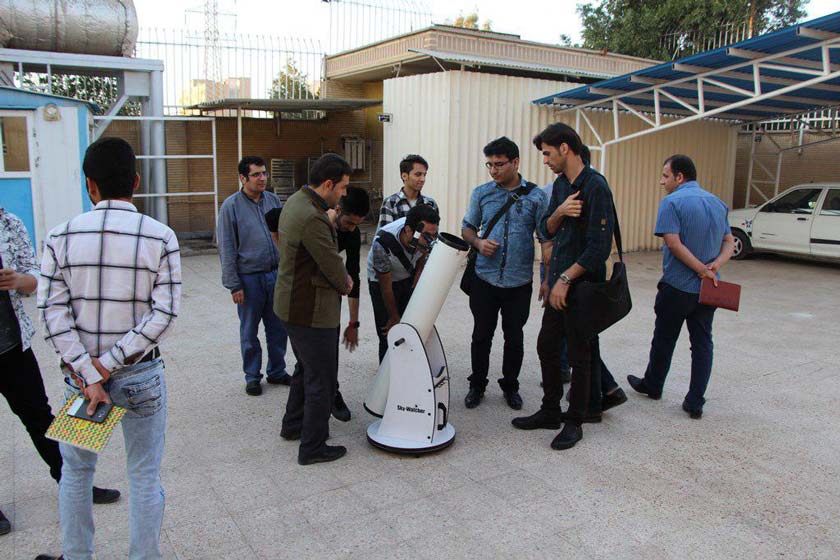
Telescope observation sessions are held on clear nights, allowing visitors to view the moon, planets, and deep-sky objects through the center's professional-grade equipment. The staff guide observers through what they are seeing, explaining the science behind each object and sharing the history of its discovery. These sessions are particularly popular during meteor showers and other celestial events.
Interactive exhibits throughout the center cover topics such as the life cycle of stars, the structure of galaxies, the search for exoplanets, and the history of astronomy in the Islamic world. Hands-on displays allow visitors to experiment with light, optics, and gravity, making complex concepts accessible to children and adults alike.
The center also hosts regular workshops and lectures on topics ranging from astrophotography to cosmology. These events are often led by visiting astronomers or researchers from local universities, providing opportunities for deeper learning and discussion. A small library and resource center offers books, journals, and digital materials for those who wish to explore astronomy further.
Ibn Haytham Ahvazi: The Namesake
The center is named in honour of Ibn Haytham Ahvazi, a medieval astronomer and mathematician from Ahvaz who made significant contributions to the field of optics and astronomy. Though less well-known in the West than his contemporary Ibn al-Haytham (Alhazen), Ibn Haytham Ahvazi was a respected scholar whose work influenced later developments in both the Islamic world and Europe.
By naming the center after this local scientist, the founders aim to connect modern astronomy education with the region's rich intellectual heritage. The exhibits include information about Ibn Haytham Ahvazi's life and work, as well as the broader tradition of astronomical observation and mathematical innovation in Khuzestan and the wider Islamic world.
Location and Setting
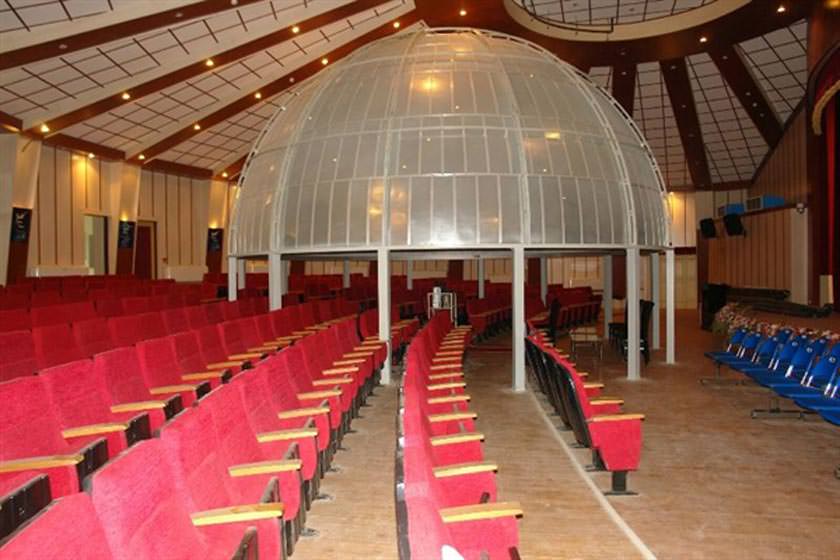
The Ahvaz Astronomy Center is located in the Kourosh (Kuy-e Mellat) neighbourhood, Phase 4, on the corner of 14th Street. The building is modern and purpose-designed, with a distinctive dome that houses the main telescope and observation area. The interior includes the planetarium, exhibition halls, workshop spaces, a library, and a small café where visitors can relax and discuss what they have learned.
The center is situated in a residential area of Ahvaz, making it easily accessible from other parts of the city. The surrounding neighbourhood is quiet and family-friendly, with parks and shops within walking distance. The center is not located within Shahrvand Park (its original home), but the new facility in Kourosh offers more space and better equipment for its growing programs.
How to get there
From central Ahvaz, the astronomy center is a short taxi ride through the city's eastern neighbourhoods. Open Mehyar and choose Taxi to set your destination to the center; the driver will take you directly to the entrance. The ride from the city center takes about 15 to 20 minutes, depending on traffic.
Mehyar also connects Ahvaz to other major cities across Iran via bus and flight services. For visitors coming from outside Ahvaz, the city is well-served by Ahvaz International Airport and the national rail network. From the airport or train station, a Mehyar Taxi will take you to the center in about 30 minutes.
The center is accessible by public transport as well, with bus routes passing near the Kourosh neighbourhood. However, taxis are the most convenient option, especially for evening visits when public transport frequency decreases.
Parking is available at the center, though spaces are limited. On busy nights with special events, arriving early is advisable to secure a spot.
Best time to visit
The Ahvaz Astronomy Center is open year-round, but the best time to visit depends on your interests. Autumn and winter (October to February) offer the clearest skies for telescope observation sessions, as the air is cooler and less humid than in the scorching Khuzestan summer. These months also coincide with several major meteor showers and planetary oppositions, making them ideal for stargazing.
Spring (March to May) is pleasant for visiting the center and exploring Ahvaz more broadly, though the skies may be hazy from dust and pollen. Summer (June to September) is extremely hot in Ahvaz, with temperatures regularly exceeding 45°C, but the center's air-conditioned interior provides a cool refuge, and planetarium shows are a welcome break from the heat.
School holidays and weekends are the busiest times, with families and groups filling the planetarium and exhibits. For a quieter experience, visit on a weekday morning or afternoon. Special events such as meteor shower viewings or guest lectures may require advance booking, so check the center's schedule before your visit.
Practical details
The astronomy center is free to visit, though some special events or workshops may have a small fee. Allow one to two hours for a full visit including the planetarium show, exhibits, and time at the café. The center is wheelchair accessible, and staff are accommodating to visitors with disabilities.
Photography is permitted in most areas, though flash may be restricted in the planetarium and exhibit halls. Telescope observation sessions are weather-dependent and may be cancelled in case of cloud cover or poor visibility.
The center combines easily with other Ahvaz attractions, including the historic bridges over the Karun River, the bazaar, and the nearby UNESCO-listed Chogha Zanbil ziggurat. For a complete Ahvaz city guide, explore the cultural, historical, and natural attractions of this vibrant Khuzestan city.