
There is a place in the western folds of the Alborz, where the Caspian forests climb steeply into alpine meadow, and the trees are so old that some of them predate the Persian empires. The locals call it Aghuzhal, which in the dialect of the region means "the neighbourhood of walnuts." It is not a single landmark but a landscape: a network of forest trails, summer pastures, wooden villages, and waterfalls spread across the high country between Tonekabon and the Gilan border.
Aghuzhal is not a place you visit for an hour. It is a place you walk into, slowly, with a guide and proper shoes, and let the forest close around you. This guide covers the route from Tonekabon, what you see on the trails, the nearby highlands worth adding to your itinerary, and the practical realities of visiting a zone with no mobile signal and limited facilities.
Where is Aghuzhal?
Aghuzhal sits in the Dohezar forest district of Tonekabon County, in western Mazandaran province. Tonekabon, also known by its former name Shahsavar, is the second-largest city in western Mazandaran after Chalus. The forest area begins about 45 kilometres south of Tonekabon, past the town of Khorramabad and the Soleymanabad junction, where the paved road gives way to a dirt track that winds 40 kilometres into the heart of the Hyrcanian forest.
The name Aghuzhal comes from the local words aghuz (walnut) and hal (neighbourhood or area), a fitting description for a landscape where walnut trees grow alongside beech, hornbeam, maple, and boxwood in a forest that has been growing undisturbed for millions of years. These are the Hyrcanian forests, a UNESCO World Heritage natural site, and some of the oldest broadleaf forests on Earth.
The area falls under the protection of Iran's Forests and Rangelands Organisation. It is not a formal national park with ranger stations and marked trails, which is part of what makes it rewarding and part of what makes preparation essential.
The forest and its wildlife
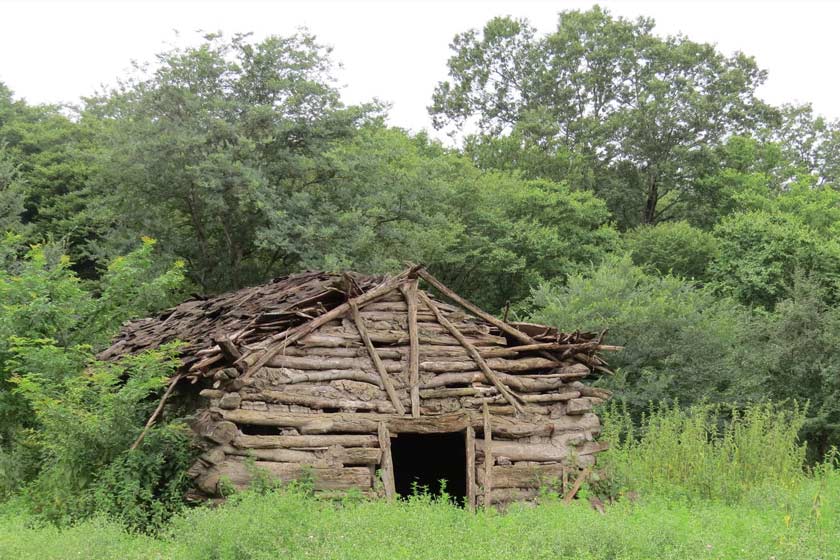
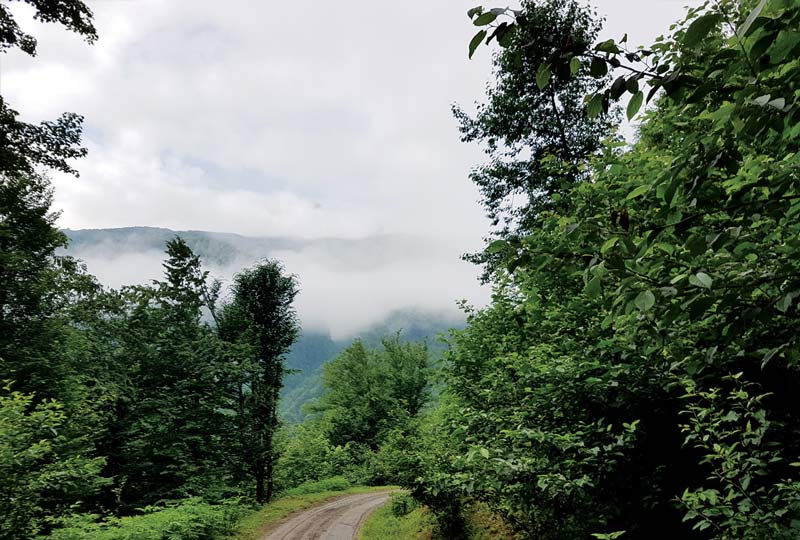
The trees at Aghuzhal are the headline. Beech, hornbeam, chestnut-leaved oak, and Hyrcanian boxwood grow to enormous heights, some of them several hundred years old. Ferns that look prehistoric cover the forest floor, and the air is thick with moisture and the smell of decomposing leaves. The village houses in the area are built from beech wood, and streams run between them, clear and cold from the mountain snowmelt.
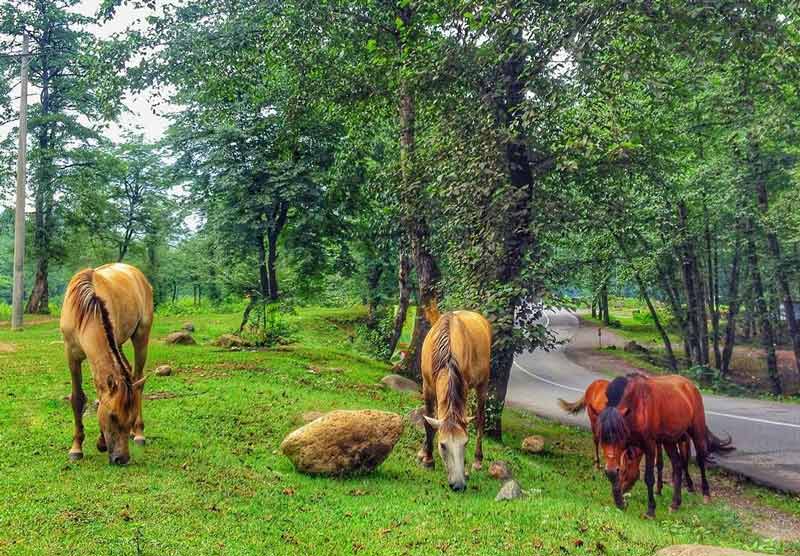
The wildlife is diverse. Mammals include deer, wild sheep, wolves, wild cats, foxes, and wild boars. In the open meadows, wild horses roam freely, and they are one of the most striking sights of the trek: groups of horses grazing on the high pasture with the forested ridge behind them. Birdlife is rich, with pheasants, partridges, golden eagles, and white-headed ducks among the species recorded in the area. Reptiles and amphibians are present in the lower forest, which is one reason proper footwear is essential on the trails.
How to get there from Tehran and Tonekabon
From Tehran by car. The drive to Tonekabon is about 355 kilometres and takes roughly four to five hours via the Chalus Road or the Qazvin-Ramsar freeway. From Tonekabon, head south through Khorramabad (5 km from the city centre) and continue to the Soleymanabad junction. Past the junction, a dirt road leads into the Dohezar forest. The drive from the junction to the Aghuzhal entrance is about 40 kilometres and takes roughly two hours. A vehicle with high clearance, ideally 4WD, is strongly recommended for the dirt section.
By Mehyar Taxi. The most practical way to reach Aghuzhal without your own car is to open Mehyar, choose Taxi, and set your destination to the Aghuzhal forest entrance. A taxi from Tonekabon can take you as far as the forest road allows, and you can arrange a round trip with a wait. Since there is no mobile signal in the forest, pre-arrange your pickup time with the driver before you start walking.
By Mehyar Buses. Mehyar Buses connects Tehran to Tonekabon regularly. From Tonekabon, you will need a local taxi for the remaining 45 kilometres to the forest entrance.
By organised tour. Some nature tourism operators in Tonekabon and Tehran offer guided treks to Aghuzhal and the surrounding highlands. These typically include transport, a local guide, and sometimes overnight accommodation in village cottages. A guide is recommended for anyone planning to venture past the main Aghuzhal area into the higher pastures or toward Laktarashan.
On-site mobility. The forest trails are walkable only. There are no vehicles past certain points, and the deeper pastures are reached on foot. The trails can be muddy and slippery, especially after rain.

What to see and do
Aghuzhal is a base for exploring a wider landscape of pastures, waterfalls, and remote villages. Here are the highlights.
The Aghuzhal forest trails
The main forest area offers trails of varying difficulty. The easier paths follow the streams and pass through the old-growth beech forest. More demanding routes climb steeply into the high pastures above the tree line. In most areas, there are no marked trails, and a local guide who knows the paths is essential. Mobile phones do not receive signal anywhere in the forest zone.
Milash Waterfall
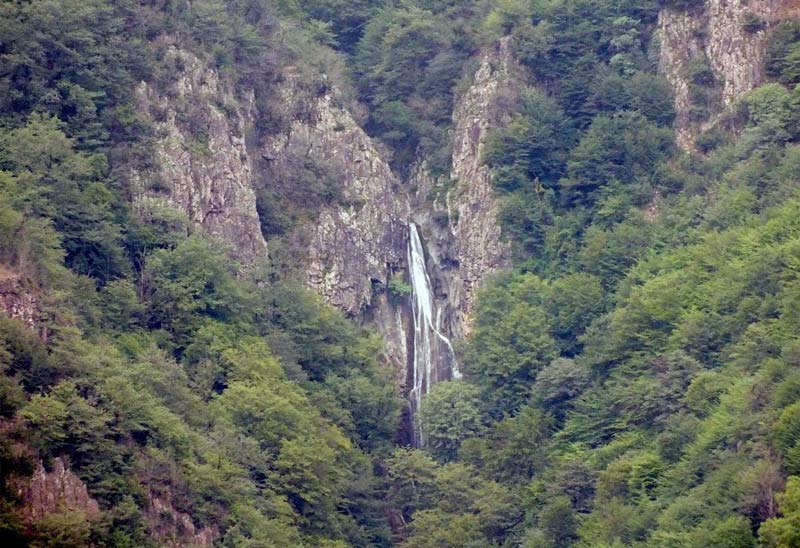
About 1 kilometre west of Milash village, in the Dohezar forest, Milash Waterfall is the tallest waterfall in northern Iran at 25 metres. The pool at its base is about 70 centimetres deep, with a rocky bottom. To reach it, drive to Milash village and then walk about 30 minutes with a guide. The waterfall is a popular stop for visitors combining it with the Aghuzhal forest.
Limra Highland
A few hours of forest trekking from Aghuzhal brings you to Limra, a high plateau above the clouds. At this elevation, the forest gives way to open meadow, and the views stretch across the Alborz range. In summer, nomadic herders bring their flocks to graze here. The highland is dotted with wooden cottages known locally as Telar, built in the traditional style of the region.
Daryasar Plain
Enclosed by four mountains, including Mount Alamut to the southwest, Daryasar is one of the most photogenic meadows in the area. In Ordibehesht (late April to May), the plain is covered in chamomile flowers, creating a white-and-yellow carpet against the snow-capped peaks. Numerous springs feed the meadow, and the combination of flowers, water, and mountain is striking.
Laktarashan Village
One of the most remote villages in the area, Laktarashan is reached by a full day's trek from Aghuzhal. The village has no vehicle access, which is why it has remained largely untouched. Ancient ruins around the village suggest a long history. The recommended approach is to drive as far as Valgser village and then hike several hours to Laktarashan. If you continue along the eastern slope, you reach the Nusha crossroads, another highland pasture, and from there you can descend to Miankuh village and catch a vehicle back to Tonekabon.
When to visit
Summer is the best season for Aghuzhal. The highland pastures are cool and pleasant, without the humidity of the Caspian lowlands. Temperatures are comfortable for trekking, and the meadows are at their greenest.
Spring, from early April, is also possible for the lower forest areas. However, the higher pastures and meadows can be dangerous in spring if the weather turns: rain makes the forest trails extremely slippery, and the highlands are significantly colder than the forest zone. Always check the weather forecast before heading to the upper elevations.
Autumn brings spectacular colour changes in the forest, with the beech and maple turning gold and red. It is a good season for visiting the lower forest areas, but the highlands begin to cool rapidly, and by late autumn the higher villages are deserted as residents move to lower ground.
Winter is not recommended. The area receives heavy snowfall, the roads become impassable, and the highlands are completely uninhabited from late autumn through early spring.
Where to stay
Aghuzhal and the surrounding pastures have basic wooden cottages that accommodate visitors. These are simple but clean, and they are located near the villages. The deeper parts of the forest are not suitable for overnight stays, and you should plan to be near a village before dark.
The Dohezar forest road area has more facilities than the Aghuzhal interior. If you are combining the trip with Milash Waterfall or the lower trails, staying near the Dohezar entrance gives you more options.
Camping is possible in the meadows, but only near villages and with proper gear. The nights can be cold even in summer, and rain is always a possibility.
What to bring
The last shops and small stores are at the Soleymanabad junction, before the dirt road into the forest. Stock up on food, water, and supplies before entering the forest zone. In the villages, you can buy fresh local bread, milk, butter, honey, and meat from the residents, which is a good way to support the local economy and eat well at the same time.
Essential items to bring:
- Warm clothing and a rain jacket, even in summer
- Proper hiking boots with ankle support and grip (the trails are muddy and there are snakes in the lower forest)
- A ground sheet or mat for sitting
- Personal medication and a basic first aid kit
- Enough water and food for the duration of your trek
- A headlamp or flashlight
- A physical map or downloaded offline maps, since there is no mobile signal