
Safarud Waterfall, also known as the First Waterfall of Javaherdeh, is a seasonal cascade situated on one of the most celebrated mountain roads in northern Iran. The waterfall forms where streams descending from the eastern slopes of Samasus Mountain converge and drop over a rocky ledge, tumbling through a narrow channel before continuing their course through villages and ancient forest towards the Caspian Sea. In spring the water is abundant and powerful; by late summer it slows to a gentle trickle, but the surrounding Hyrcanian greenery remains lush year-round. For travellers driving the Javaherdeh road, the waterfall is a natural first stop, a quick and rewarding break that previews the natural beauty further up the mountain.
Where is Safarud Waterfall?
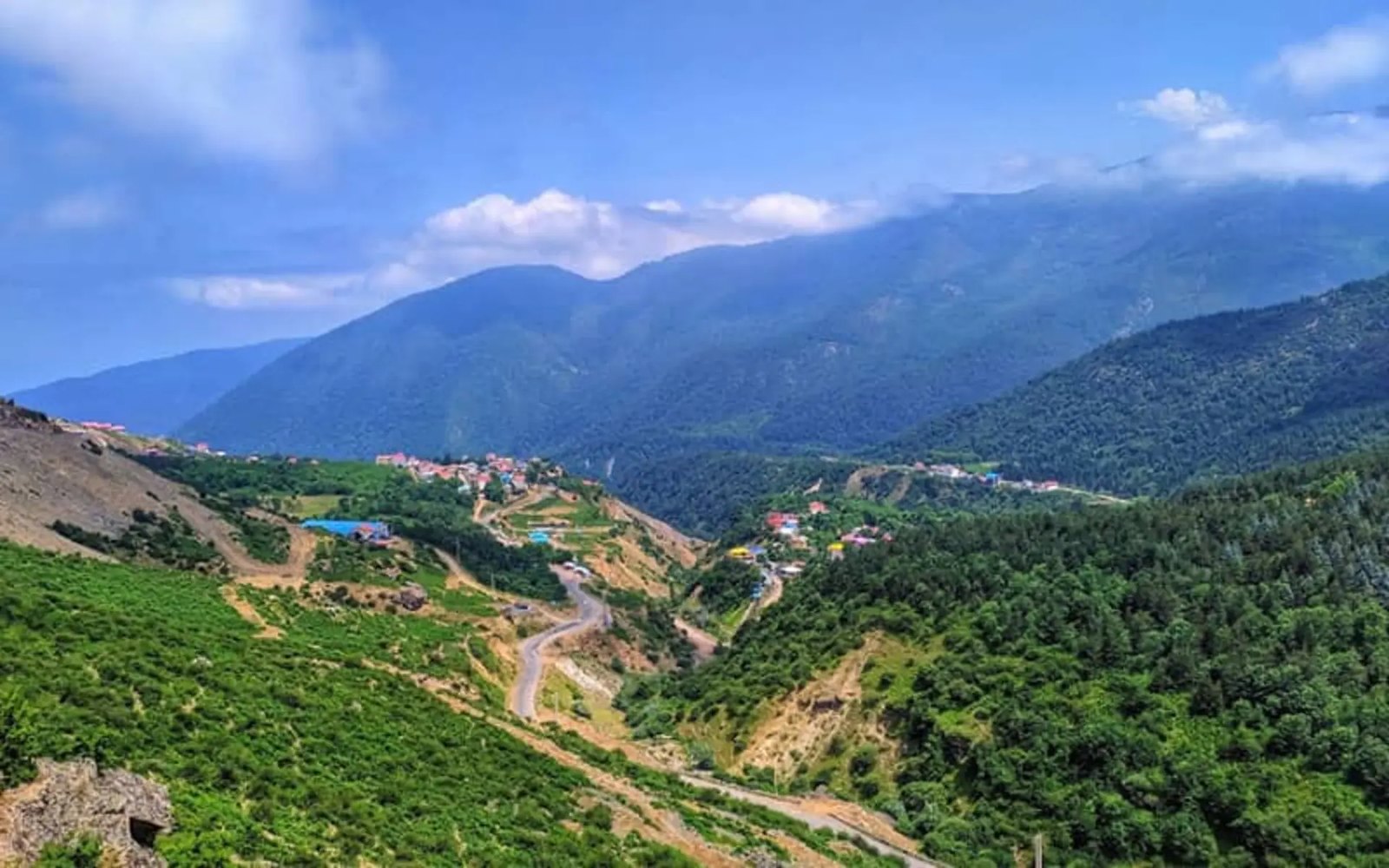
The waterfall is located 15 kilometres south of Ramsar city in Mazandaran Province, directly alongside the Javaherdeh mountain road. This road is one of the most famous scenic drives in Iran, climbing from the Caspian coast through dense subtropical forest to the hilltop village of Javaherdeh, perched at roughly 800 metres above sea level with sweeping views over the sea and the Alborz range.
The waterfall's source lies on the eastern slopes of Samasus Mountain, about 24 kilometres southwest of Ramsar. From its source, the Safarud stream passes through the villages of Javaherdeh, Tang Darre, and Sighel Mahalle, threading through forest and farmland before eventually reaching the Caspian coastal plain. The waterfall itself sits in the middle section of this course, where the stream first encounters a significant drop after leaving the upper villages.
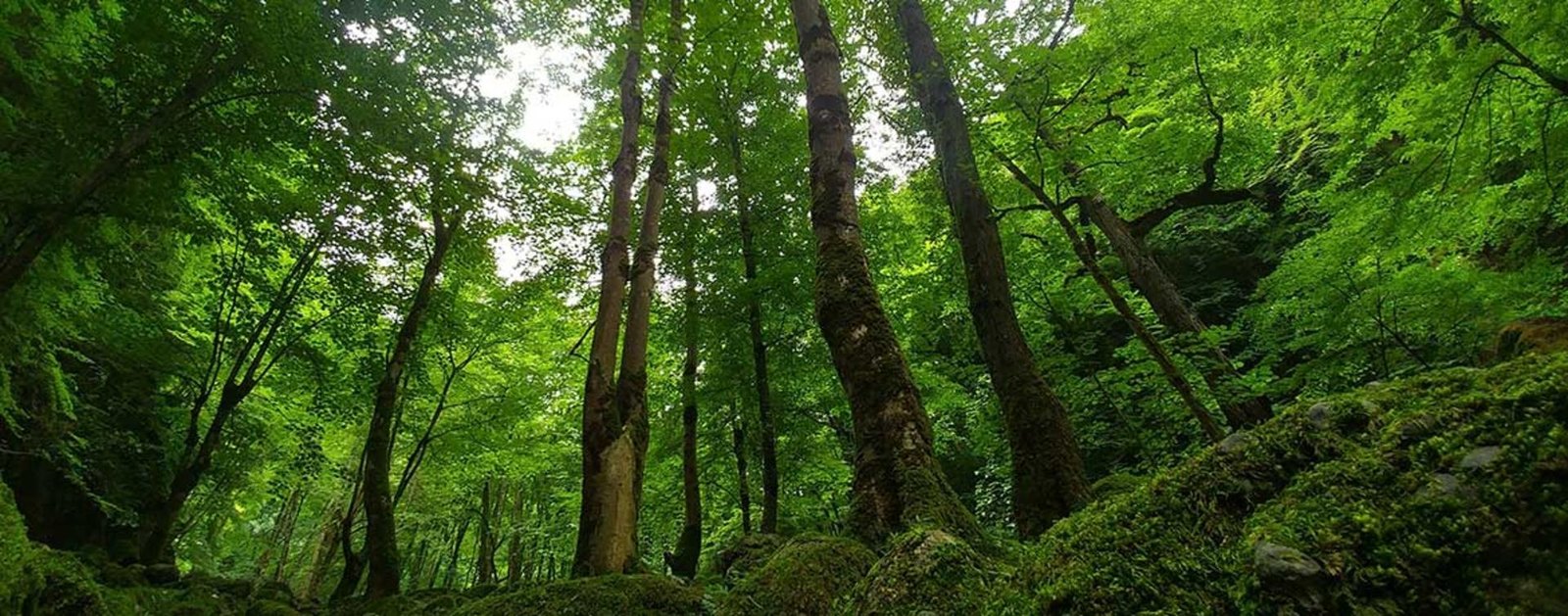
The surrounding forest is part of the Hyrcanian biome, a UNESCO-listed ancient ecosystem that stretches along the southern Caspian coast. These forests survived the last ice age and harbour plant species found nowhere else on Earth. The canopy here includes beech, oak, hornbeam, alder, and Caspian snowberry, creating a dense green tunnel along much of the road.
The Waterfall and Its Stream
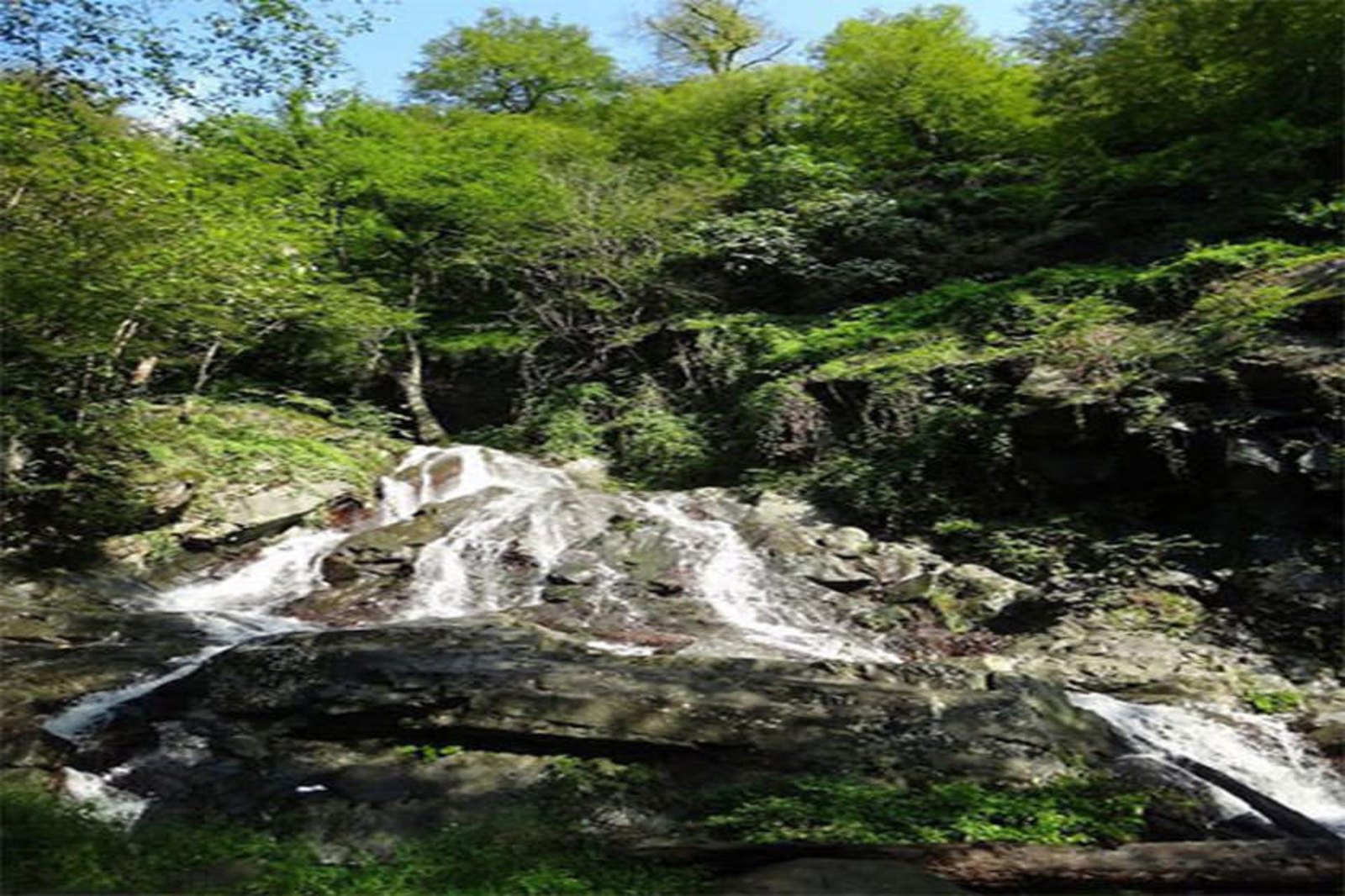
Safarud is not a tall waterfall in the dramatic sense. What makes it appealing is the setting: water rushing over smooth rocks in a forested gorge, with the road passing close enough for visitors to stop, photograph, and listen without any real hike. In spring and early summer, when snowmelt feeds the mountain streams, the flow is strong enough to create a satisfying cascade and a fine mist that catches the morning light. The rocks around the falls are dark and mossy, and the pool below is clear enough to see the smooth stones on the bottom.
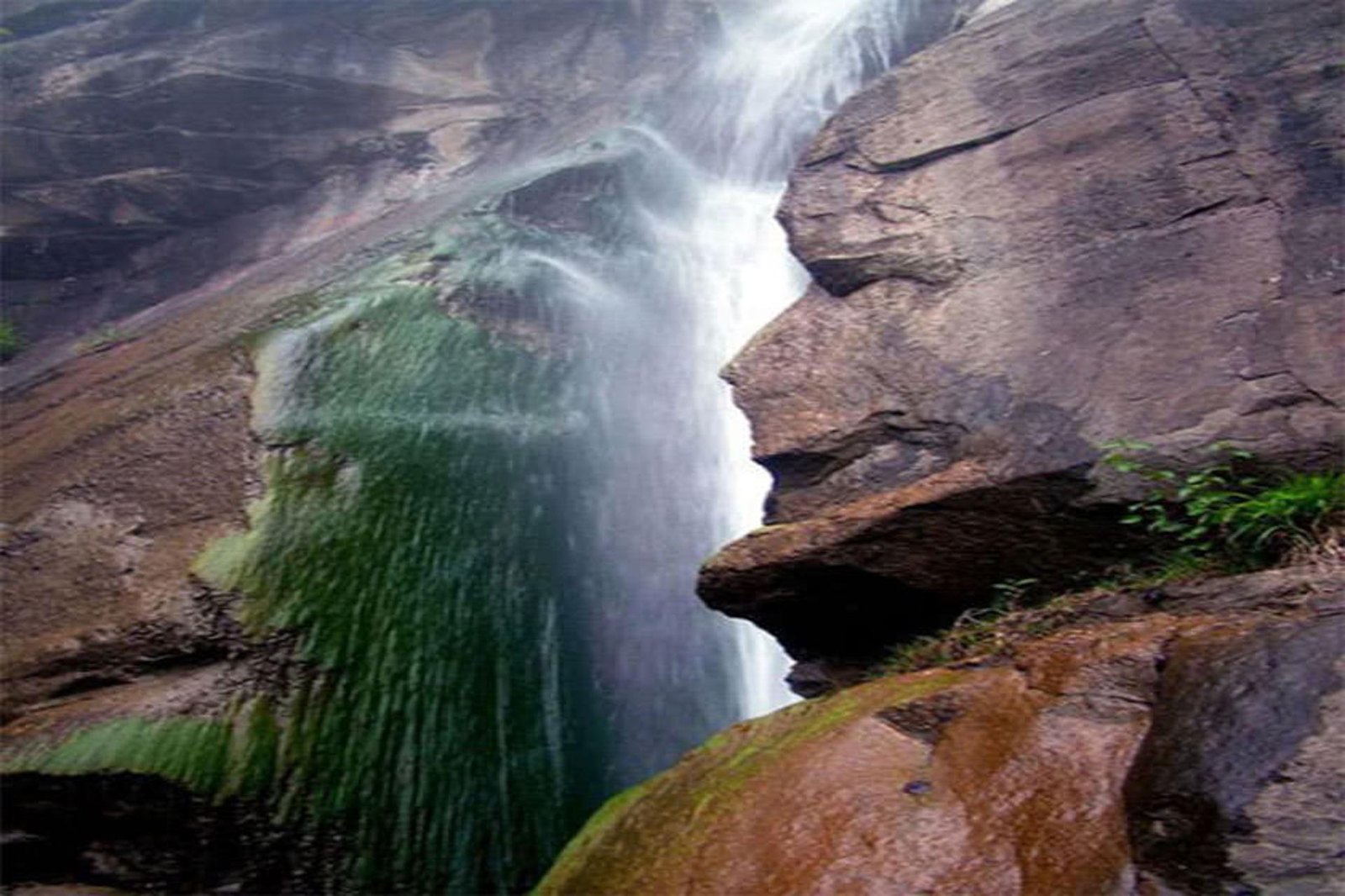
The stream continues its journey after the falls, passing through the remaining villages and forest before spreading out onto the coastal plain. In some sections, locals have built small weirs to channel water into rice paddies and gardens, a reminder that this stream is not just a scenic feature but a working part of the agricultural landscape.
The area around the waterfall is popular with local families for picnics, especially on spring weekends. You will often see spreads of food on the flat rocks near the water, with tea brewing on portable stoves and children splashing in the shallow pools. It is an authentic slice of northern Iranian outdoor life, far from the commercialised tourist sites.

The Javaherdeh Road
The road to Javaherdeh deserves attention in its own right. Starting from the southern edge of Ramsar, it climbs steadily through a series of hairpin bends, each one revealing a new layer of forest and a wider view of the Caspian below. The road is paved and well-maintained, though narrow in sections, with steep drops on the outside of some curves. Drivers should take their time, especially on the return descent.
Along the way, several viewpoints allow you to pull over and take in the panorama. On a clear day, you can see the Caspian Sea stretching to the horizon, the flat coastal plain dotted with rice fields, and the Alborz mountains rising behind you. The road is particularly beautiful in spring, when the forest canopy is at its freshest green and wildflowers bloom along the verges, and in autumn, when the leaves turn gold and crimson.
The village of Javaherdeh, at the top of the road, is one of the most visited hilltop villages in Mazandaran. Its name means "jewel place" in Persian, and the village lives up to it with traditional wooden houses, tea houses offering sea views, and small shops selling local products such as forest honey, dried herbs, and handwoven textiles. The village is especially atmospheric in the early morning, when clouds often settle in the valley below and the summit sits above a sea of mist.
How to get there
From Ramsar, follow the signs for Javaherdeh from the southern edge of the city. The road is well-marked and the total distance to the waterfall is about 15 kilometres, taking roughly 30 minutes by car. Open Mehyar and choose Taxi from Ramsar for a direct ride to the waterfall; the driver can wait while you explore, or continue up to Javaherdeh village.
From Tehran, the drive to Ramsar takes about four to five hours via the Chalus or Haraz roads, both of which offer spectacular mountain scenery. Mehyar also operates bus services from Tehran to Ramsar, and from the Ramsar terminal you can take a local taxi to the waterfall.
The waterfall has a small pull-off on the roadside, just large enough for two or three cars. On busy weekends and holidays, this can fill up quickly, so arriving early in the morning is advisable. There is no entrance fee or formal facility; the waterfall is visible directly from the road, and a short path leads down to the water's edge.
Shared taxis run between Ramsar and Javaherdeh throughout the day, and the driver will pass the waterfall. You can ask to stop briefly for photographs, though the roadside pull-off is the proper place to park and explore.
Best time to visit
Spring (April to May) brings the highest water flow and the most vibrant forest canopy. This is when the waterfall is at its most impressive, with strong cascades and a fine spray that catches the sunlight. The forest floor is carpeted with wildflowers, and the air is fresh and cool.
Early summer (June) is also pleasant, though the waterfall begins to diminish as the snowmelt slows. The forest remains green and the road is comfortable for driving. By August, the flow can be quite thin, though the setting remains beautiful.
Autumn (September to October) offers clear skies, comfortable temperatures, and spectacular foliage. The forest turns shades of gold, orange, and red, making this one of the best times for photography. Winter brings rain and occasional snow at higher elevations; the waterfall still flows, but the road can be slippery and the days are short.
Practical details
The waterfall is free to visit and accessible directly from the Javaherdeh road. Allow less than one hour for a visit including photography and a short walk beside the stream. There are no formal facilities at the waterfall itself; the nearest tea houses and shops are in Javaherdeh village, a few kilometres further up the road.
The waterfall combines easily with a visit to Javaherdeh village and other Ramsar attractions. For a complete Ramsar city guide, explore the other natural attractions, scenic drives, and coastal sites of this Caspian resort region.