
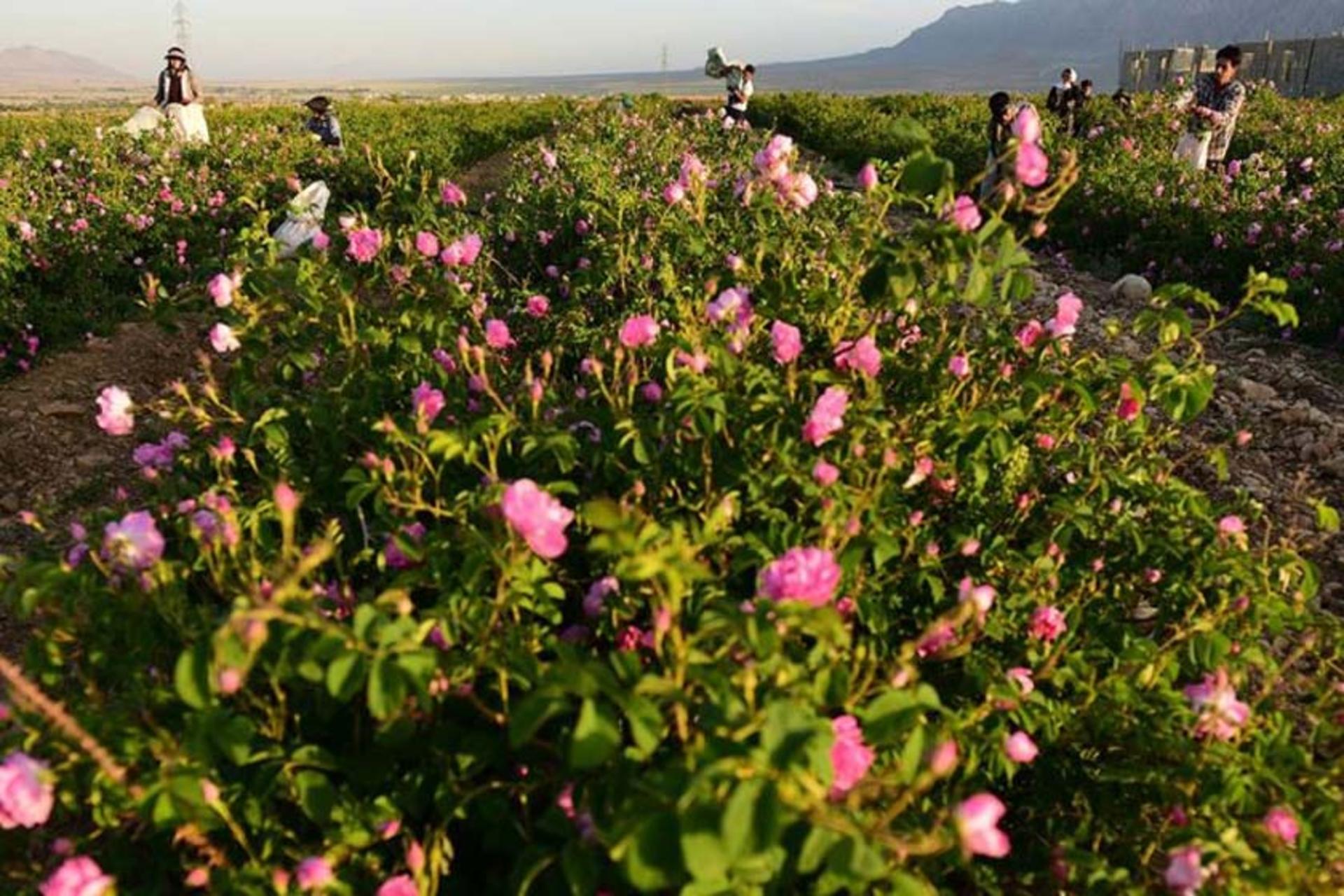
The first thing you notice is not the flowers. It is the scent. Kilometres before you reach Maymand, the air changes. A sweetness enters the car through the open window, soft and pervasive, nothing like the exhaust and dust of the road. You drive through groves of citrus trees and fields of wheat, and the scent grows stronger with every turn. Then the roses appear, stretching in long rows across the valley floor, a patchwork of pink and white against the brown earth and the pale green of pistachio trees. This is Golestan Mohammadi, the rose gardens of Maymand, and in spring they produce some of the finest rosewater in Iran and, many people will tell you, in the world.
Maymand is a small city in Fars province, in the southern part of Iran, roughly midway between Shiraz and the Persian Gulf coast. It is not a major tourist destination, and you will not find it on most itineraries. But it is one of the two great centres of rosewater production in Iran, alongside Kashan, and in some measures it has surpassed the older city. Iran's second largest rosewater-producing region, Maymand distills the Mohammadi variety of rose, the Damask rose, whose fragrance is considered the finest for traditional Persian rosewater. The gardens surrounding the city stretch for kilometres, and at the peak of the blooming season in late April and May, the entire area is saturated with the scent of roses. This guide covers what the gardens are, when to come, what you can see and buy, and how to reach this fragrant corner of Fars.
What Are the Mohammadi Rose Gardens?
Golestan Mohammadi refers to the extensive rose gardens surrounding Maymand and the neighbouring villages in Fars province. The name combines golestan, the Persian word for garden or rose garden, with Mohammadi, the variety of rose that is cultivated here. The Mohammadi rose, known in the West as the Damask rose, has been grown in Iran for centuries, and Maymand's climate and soil give it particularly fine aromatic qualities.
The gardens are not a single park or estate. They are a landscape-scale agricultural zone, with thousands of small plots tended by individual farming families. The roses grow in long, low hedges, typically waist-high, planted in rows between fields of other crops. At peak bloom, usually from mid-April through May, the roses produce an extraordinary density of flowers, and the harvest begins before dawn, when the essential oil content of the petals is at its highest.
The scale of production is considerable. Maymand and its surrounding district produce enough rosewater to supply markets across Iran, and a growing share is exported. The rosewater industry is the economic backbone of the region, and the gardens are not ornamental: they are working agricultural land, visited primarily by people who want to see the harvest, buy fresh rosewater, or simply breathe an air that carries a scent found almost nowhere else on earth.
The Rose Harvest: How Rosewater Is Made
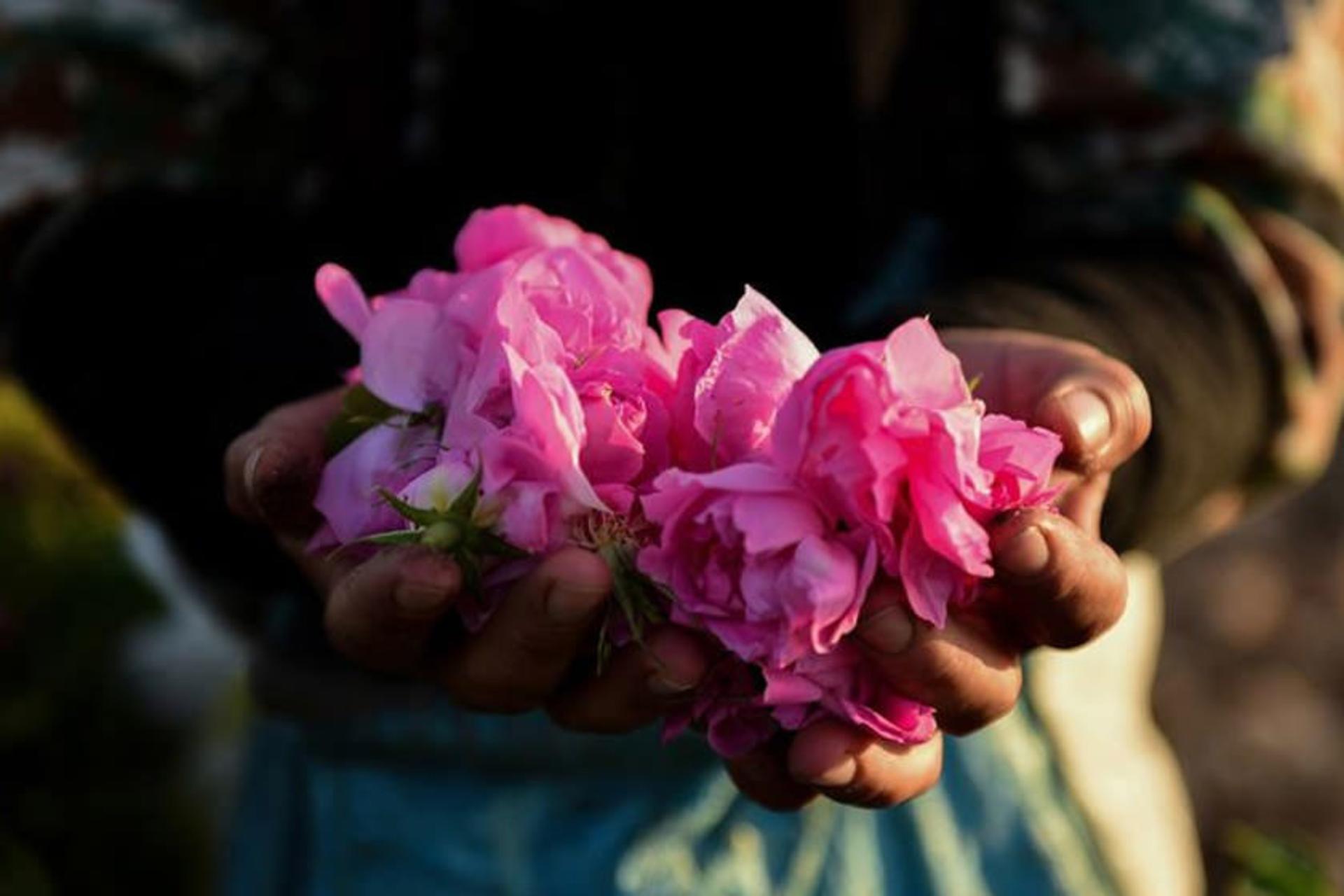
The harvest of Mohammadi roses is a time-sensitive operation. The flowers are picked in the early morning, usually between four and eight o'clock, when the dew is still on the petals and the concentration of essential oils has not yet been reduced by the heat of the day. Pickers move through the rows with practiced speed, snapping the pale pink blooms from their stems and dropping them into baskets or cloth bags.
The freshly picked roses are taken to local distilleries, many of them small family operations that have been in the same hands for generations. The traditional method of distillation uses a copper still called a degbiz, a large pot fitted with a conical lid connected by a copper tube to a receiving vessel. Rose petals and water are placed in the pot, heated over a wood or gas flame, and the steam passes through the tube into a cooling chamber where it condenses. The resulting liquid separates into two layers: rosewater on the bottom and a thin layer of rose essential oil on top. The rosewater is the primary product, bottled and sold for culinary, cosmetic, and religious use. The essential oil, far more concentrated and valuable, is collected in small quantities and sold separately.
A visit during the harvest season offers the chance to watch this process in action. Some distilleries welcome visitors and will explain the method, though these are working operations, not tourist attractions, and the experience is informal.
When to Visit
The roses bloom from mid-April through May, with peak bloom typically in the last two weeks of April and the first two weeks of May. The exact timing varies from year to year depending on the weather. In a warm spring, the bloom may begin earlier and pass more quickly. In a cool spring, it may extend into early June.
The best time to visit is during the harvest, when you can see the roses being picked and the distillation process in full operation. The scent is at its strongest during these weeks. After the harvest, the gardens lose much of their flower density and the distilleries wind down, though the landscape remains green and pleasant through the early summer.
Visiting outside the rose season is possible but less rewarding. Maymand has other attractions, and the surrounding region of Fars is rich in historical sites, but the gardens themselves are at their most dramatic only during the few weeks of bloom.
What to See and Buy
The main draw is the gardens themselves, but there is more to the visit. Local shops and roadside stalls sell fresh rosewater, rose essential oil, rose-scented sweets, and dried rose petals. The rosewater produced here is of markedly higher quality than the mass-market brands available in supermarkets, and buying directly from a producer is the only way to taste the real thing.
Rosewater from Maymand is used in Persian cooking, in the preparation of traditional sweets such as baklava, halva, and sholeh zard, and in religious ceremonies, particularly during Ramadan and Muharram, when rosewater is sprinkled in mosques and homes. It is also used in traditional medicine and cosmetics. The small bottles of pure rose essential oil are far more concentrated and are sold at correspondingly higher prices.
In addition to rose products, Maymand and the surrounding area produce excellent citrus fruits, pistachios, and dates. The agricultural landscape of the region is diverse, and the roadside stalls reflect that variety.

Getting to Maymand
Maymand is located in Fars province, in the southern part of Iran. The nearest major city is Shiraz, about 200 kilometres to the north. From Shiraz, the drive takes roughly two and a half to three hours via the intercity highway. The road is well maintained and passes through attractive agricultural and mountain scenery.
From Tehran, Maymand is a long journey by road, roughly 900 kilometres and ten to eleven hours. Most visitors fly to Shiraz and continue by car. Bus services connect Shiraz to the towns of Fars province, though reaching Maymand itself may require a local taxi from the nearest bus stop.
Mehyar covers transport throughout the region. Mehyar Flights connects Shiraz to Tehran and other major cities, and Mehyar Buses and Mehyar Trains serve the Shiraz route from most Iranian cities. For the last stretch from Shiraz to Maymand, Mehyar Taxi is the most convenient option, offering a direct, door-to-door journey through the Fars countryside.
Combining Your Visit with Fars Province
Fars province is one of Iran's richest regions for history and landscape. Maymand can be combined with visits to Shiraz, with its gardens, mosques, and the tombs of Hafez and Saadi, as well as the ancient ruins of Persepolis and Pasargadae to the north. The route from Shiraz to Maymand passes through landscapes that have been cultivated for thousands of years, and the drive itself is one of the pleasures of the visit.
For travelers interested in agricultural traditions, the rose gardens of Maymand can be paired with a visit to Kashan, the other great centre of Iranian rosewater production, in Isfahan province. The two regions use different rose varieties and slightly different distillation methods, and comparing them offers insight into the diversity of Iran's artisan food production.
Mehyar can help organize an itinerary that includes Shiraz, Persepolis, Maymand, and other highlights of Fars. Mehyar Hotels covers accommodation in Shiraz and the surrounding region. Mehyar Taxi handles local transport for day trips from Shiraz to Maymand and back.

Why Maymand Matters
In a country known for its ancient monuments and its dramatic landscapes, the rose gardens of Maymand offer something different: a living agricultural tradition that produces one of the finest sensory products in Iran. The scent of Mohammadi rosewater, properly distilled, is unlike anything else, and experiencing it at the source, in the gardens where it grows and the distilleries where it is made, is a privilege that few travelers seek out but that those who do never forget.
Maymand is also a reminder that Iran's tourism offering extends far beyond the classic circuit of Isfahan, Shiraz, and Yazd. The southern provinces have their own landscapes, their own products, and their own rhythms, and they reward travelers willing to venture beyond the guidebook.

Practical Tips
The gardens are open farmland, and there are no gates or admission fees. You can walk among the rose hedges during the harvest season, though it is polite to stay on the paths and not trample the plants. Distilleries are working spaces, and visitors should ask permission before entering. Photography is generally welcomed, especially of the gardens and the landscape, but ask before photographing people.
Accommodation in Maymand itself is limited. Most visitors base themselves in Shiraz and make the journey as a day trip, though staying overnight in the village allows you to experience the early morning harvest, which is the most atmospheric time. Local guesthouses and homestays may be available; enquire in advance through local contacts or your hotel in Shiraz.