
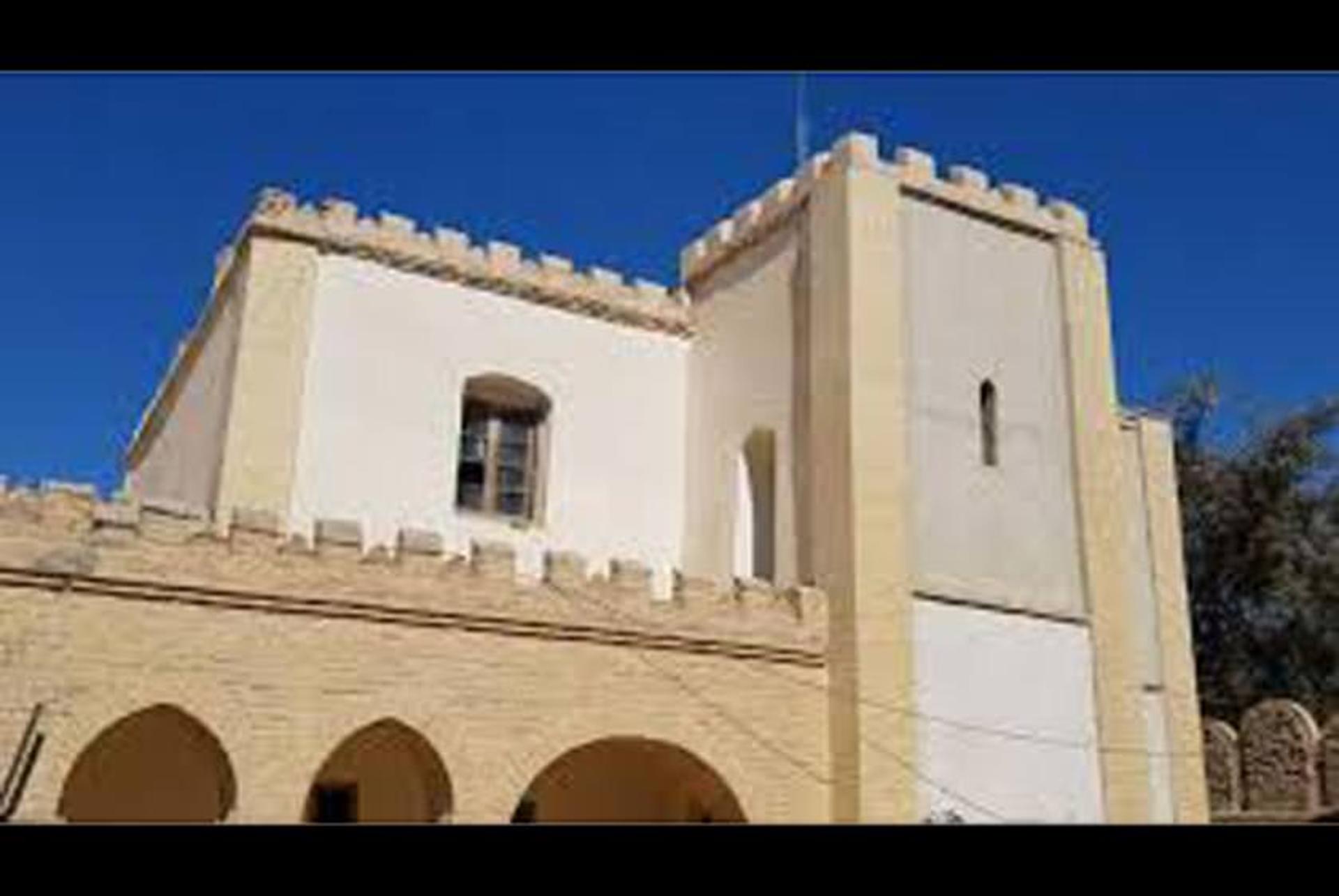
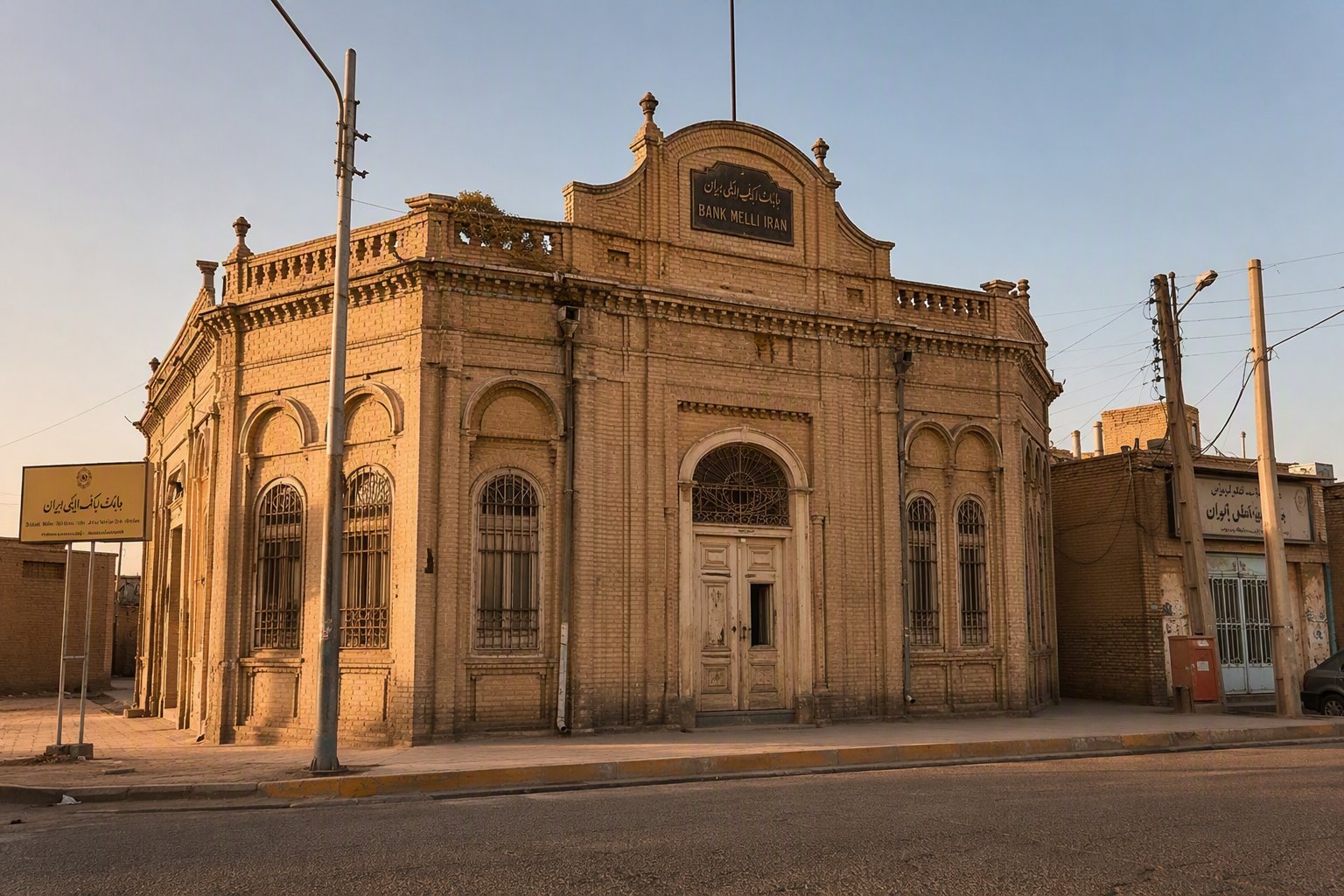
In the quiet city of Zabol, near the northeastern edge of Shahrdari Square, stands a building that carries more than a century of history within its walls. The British-Iran Bank is one of the most notable heritage landmarks in Sistan and Baluchestan province, and visiting it offers a rare glimpse into the commercial and political tensions that shaped this corner of Iran during the late Qajar period. If you are travelling through the southeast of Iran with Mehyar, this building deserves a place on your itinerary.
Where Is the British-Iran Bank?
The building sits roughly 150 metres northeast of Shahrdari Square in central Zabol. The city itself is the largest in the Sistan region of Sistan and Baluchestan province, close to the Afghan border. Zabol has long served as a trading crossroads, and the British-Iran Bank is a physical reminder of the foreign interest this frontier once attracted.
You can reach Zabol by air through Zabol Airport, or by road from Zahedan, the provincial capital, which lies about 175 kilometres to the south. Mehyar Taxi offers a comfortable way to explore the city once you arrive, and the bank building is easy to reach from the centre.
A Brief History of the Building
The British-Iran Bank dates to the final decades of the Qajar dynasty, a period when Britain and Russia competed fiercely for influence across Iran. European banks opened branches in several Iranian cities during this era, facilitating trade, extending loans to the government, and extending their nations' economic reach. The Zabol branch was no exception. It served as a node of commercial activity in a region where Iranian, Afghan and British interests converged.
The building survived the upheavals of the twentieth century and remained standing long after the bank itself ceased operations. In 2004, Iran's Cultural Heritage Organisation recognised its significance by registering it as a national monument, under the number 11191. Today it functions as a small museum, preserving the memory of an era when global powers jostled for position along Iran's eastern frontier.

The Anglo-Persian Context
To understand why a British bank operated in a remote city like Zabol, it helps to know the wider story. In January 1857, British forces seized the port of Bushehr on the Persian Gulf after six weeks of street fighting. The campaign was fought over the city of Herat, which Iran had governed for centuries but which Britain coveted as a buffer for its Indian empire. The resulting Treaty of Paris forced Iran to cede Herat and western Afghanistan, a loss that remains one of the most painful chapters in the country's territorial history.
That same spirit of commercial and imperial penetration shaped institutions like the British-Iran Bank. Banking operations gave foreign powers a peacetime presence inside Iran, complementing the military and diplomatic pressure they applied from the coast. The Zabol building is therefore more than an architectural curiosity. It is a document of the economic dimension of a colonial contest that redrew the map of the region.
What to See Inside
The museum inside the British-Iran Bank is compact but evocative. The rooms retain much of their original layout, with high ceilings, thick brick walls and arched doorways typical of late Qajar public architecture. Display cases hold old banknotes, ledgers, correspondence and photographs that illustrate how the institution operated and how it fitted into the daily commercial life of Zabol.
The exhibits also touch on the broader history of foreign banking in Iran, explaining how institutions like the Imperial Bank of Persia and the British-Iran Bank influenced the economy of the late nineteenth and early twentieth centuries. For visitors interested in the political and economic history of Sistan and Baluchestan, the museum provides valuable context that you will not find in standard guidebooks.
Plan to spend between one and two hours at the site. There is no rigid guided tour, so you can move through the rooms at your own pace and linger over the documents that interest you most.
Getting to Zabol with Mehyar
Reaching Zabol is part of the adventure. The city lies in a flat, arid plain near the Hamun wetlands, which are fed by the Helmand River flowing in from Afghanistan. The landscape has a stark beauty of its own, especially at dawn and dusk when the light turns the desert a deep amber.
By Mehyar Taxi. The simplest way to reach the British-Iran Bank is to open Mehyar, choose Taxi, and set the destination near Shahrdari Square. Your driver can wait while you explore the museum and then take you to other sights in Zabol, such as the local bazaar or the Hamun wetlands.
By Mehyar Buses. For budget travellers, Mehyar Buses connects Zahedan to Zabol with regular services. Book your seat in the app and enjoy the comfort of air-conditioned coaches on the desert highway.
By Mehyar Hotels. If you plan to spend the night, Mehyar Hotels lists accommodation in Zabol and nearby Zahedan, where choices are wider. Book through the app and pay with Mehyar Wallet for a seamless experience.
Practical Tips for Your Visit
The museum is open during standard government hours, typically Saturday through Wednesday from morning until early afternoon. It may close on Thursdays and Fridays, so confirm before you go. There is no entrance fee in most cases, though donations are welcome.
The best time to visit Zabol is between October and April, when the weather is mild and the desert heat is bearable. Summers in Sistan are notorious for the so-called "120-day wind", a fierce seasonal gale that carries sand and dust across the plain. If you travel during this period, carry a scarf and protect your camera equipment.
Photography is generally permitted inside the museum, but ask the attendant first. The building's facade makes an excellent photograph from the street, especially in the late afternoon light.
Beyond the Bank
Zabol and its surroundings have more to offer. The Sistan region is rich in ancient history. The site of Zreh, believed by some scholars to be the birthplace of the legendary hero Rostam, lies nearby. The Hamun wetlands, when filled, attract large flocks of migratory birds and provide a striking contrast to the arid landscape.
For travellers exploring the southeast of Iran, the British-Iran Bank in Zabol is a rewarding stop. It takes only an hour or two to visit, but the story it tells stretches back well over a century. Add it to your Mehyar itinerary and discover a side of Iran that few foreign visitors get to see.