
Summer in Iran: A Season of Escapes
Iran is a vast country with a climate as varied as its geography. While the southern coastlines along the Persian Gulf and the central desert plateau can become brutally hot in summer, the northern mountains, the Caspian coast, and the western highlands transform into cool, green retreats. This seasonal contrast is one of Iran's great travel advantages. Within a two-hour flight from the scorching heat of Tehran, you can be walking through misty forests, wading through mountain streams, or sipping tea on a terrace overlooking a valley where summer temperatures hover around 20 degrees Celsius.
Mehyar makes planning these escapes simple. Book your flight, reserve your hotel, and arrange your ground transport all through the app, so you spend your holiday enjoying the landscape rather than worrying about logistics.
The Caspian Coast: Gilan and Mazandaran
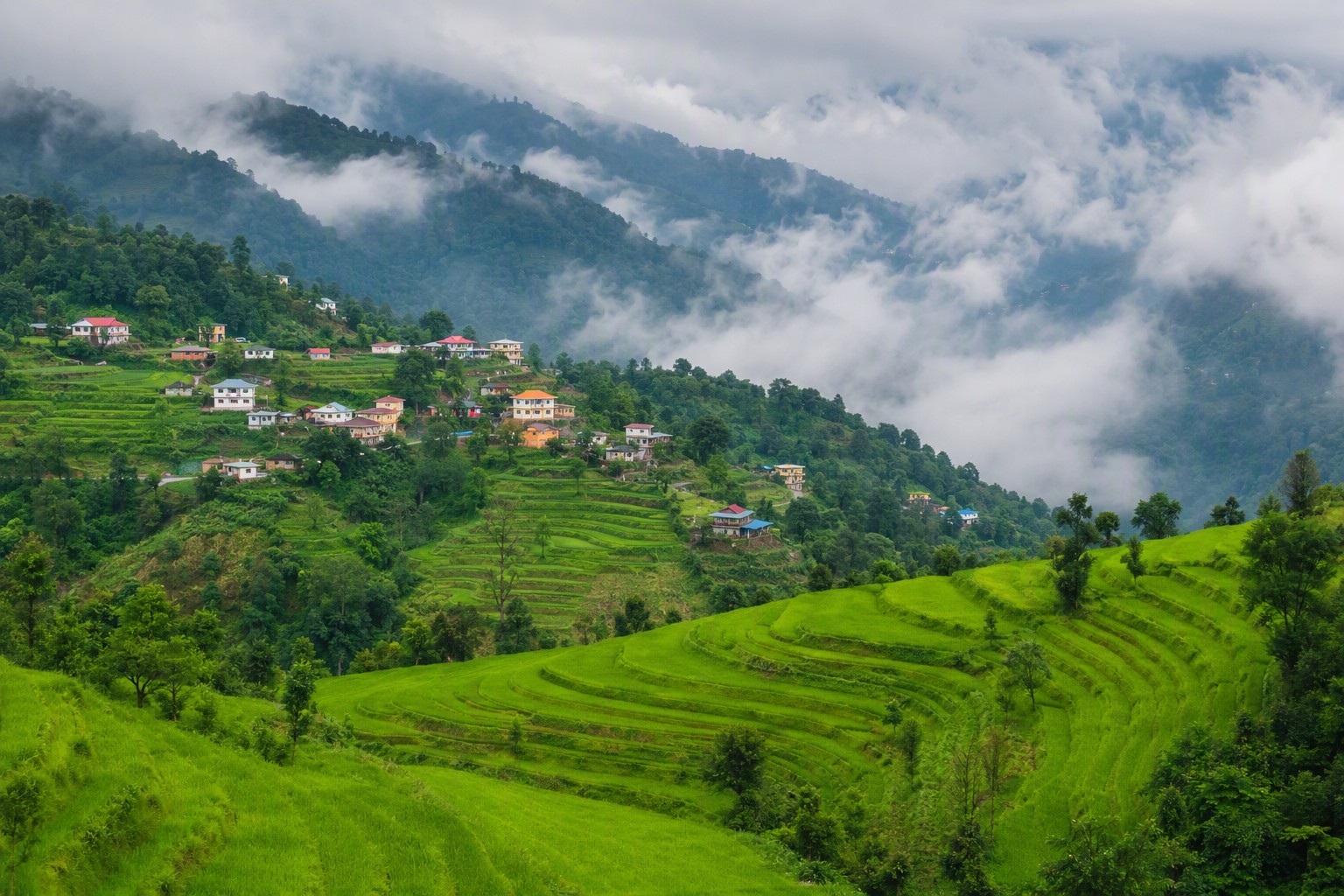
The northern provinces of Gilan and Mazandaran, stretching along the southern shore of the Caspian Sea, are Iran's most popular summer destination for good reason. The Alborz mountains wring moisture from the northern winds, creating a humid, subtropical climate that keeps the landscape lush and green all summer long. The cities of Rasht, Lahijan, and Ramsar, the towns of the Caspian coast, and the forest roads that wind through dense woodland all offer a refreshing escape from the heat.
Rasht, the capital of Gilan, is a gateway to the region and a city with its own distinct culture, cuisine, and rhythm. The bazaar of Rasht is one of the most atmospheric in Iran, with fresh herbs, fish from the Caspian, and local specialties like mirza ghasemi, a smoky eggplant and tomato dish. The city is also a launchpad for trips into the surrounding hills, where villages with red-tiled roofs and wooden balconies sit above terraced rice paddies that glow green in the summer sun.
Lahijan, a small city east of Rasht, is famous for its tea plantations. The hillsides around the town are covered in orderly rows of tea bushes, and the air carries the faint, grassy scent of fresh leaves. You can hike up to the dam lake above the town for a panoramic view of the plantations and the Caspian beyond, or visit the tea museum to learn about the history of tea cultivation in Iran.
Ramsar, at the western end of Mazandaran, is a resort town with thermal springs, wide sandy beaches, and grand hotels that date from the Pahlavi era. The Caspian Sea here is warm enough for swimming in July and August, and the surrounding mountains offer hiking trails through oak and beech forests.
The Caspian coast is accessible from Tehran by road (about 3 to 4 hours to the western end via the Chalus Road, one of the most scenic drives in Iran), by bus, or by flight to Rasht airport. Mehyar offers flights, buses, and hotels across the region.
The Alborz Highlands: Cool Mountain Air
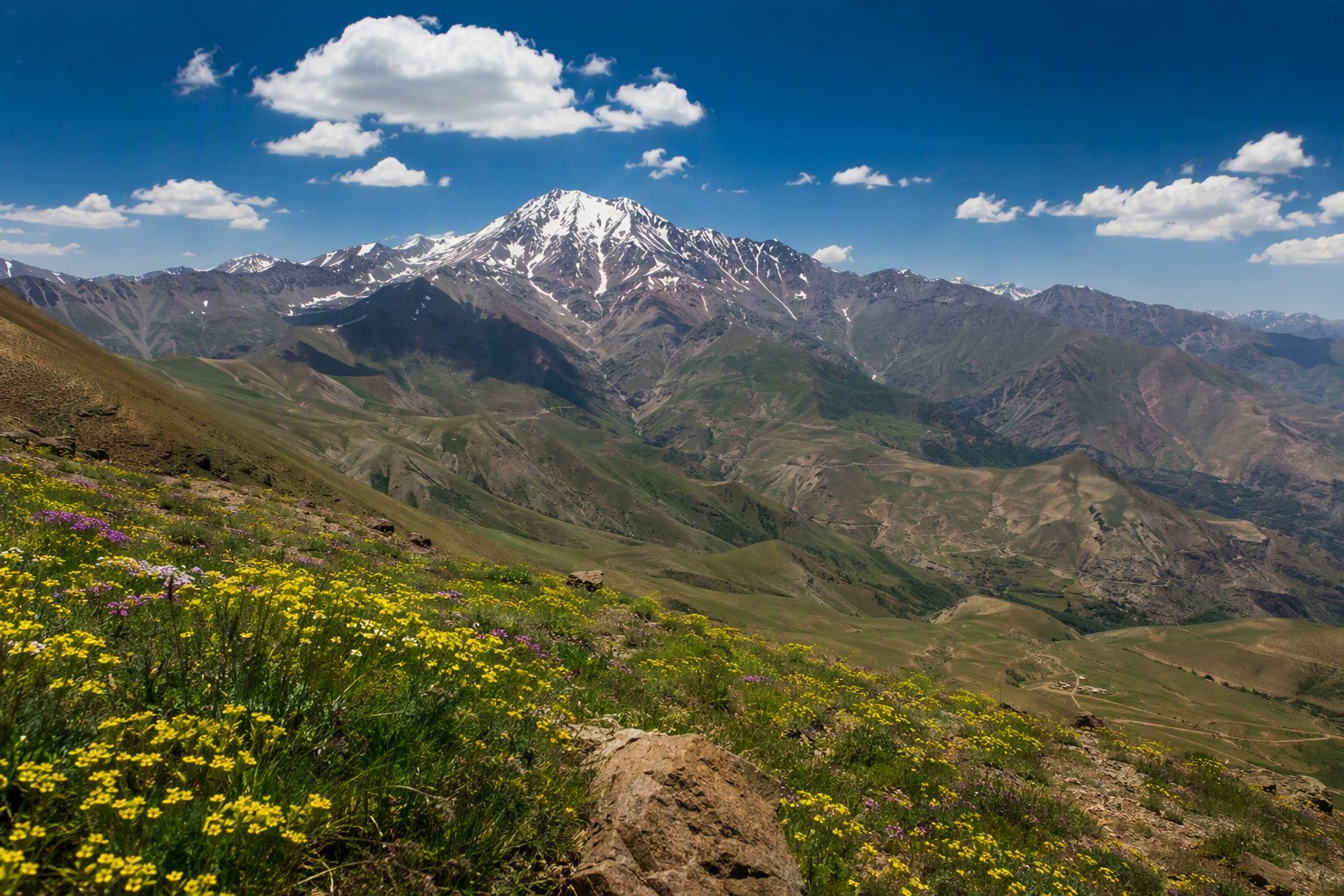
The Alborz mountain range runs east to west across northern Iran, forming a massive wall that separates the Caspian lowlands from the central plateau. In summer, the high valleys and passes of the Alborz offer some of the coolest weather in the country. Villages at altitudes above 2,000 meters enjoy daytime temperatures of 15 to 22 degrees Celsius, with cold nights that demand a warm jacket.
Kelardasht, a small town in Mazandaran province, is one of the most popular highland retreats. Surrounded by dense forests, rivers, and alpine meadows, it attracts Tehran families seeking cool air and outdoor activities. The road to Kelardasht passes through the famous Kandovan Tunnel and the Chalus River valley, offering dramatic scenery throughout the drive. Nearby, the Abbassabad Historical Complex, with its lake and gardens, makes for a pleasant afternoon visit.
Alamut Valley, further east in the Alborz, is famous for its dramatic landscape and its association with the medieval Assassins. The valley is narrow, flanked by sheer cliffs, and the river that runs through it is cold and clear even in summer. The village of Gazor Khan, at the entrance to the valley, is a good base for hiking and exploring the surrounding hills. The famous Alamut Castle sits on a high ridge above the valley, its ruins still visible and well worth the climb for the panoramic views.
Mount Damavand, at 5,610 meters the highest peak in Iran, draws trekkers and climbers throughout the summer months. The climbing season runs from mid-June to mid-September, when the weather is most stable and the snow line has retreated enough to make the ascent feasible. The base camp at 4,200 meters offers basic shelter, and the climb from the trailhead at Goosandsara takes two to three days round trip. Even if you do not summit, the approach through alpine meadows and past glacial lakes is spectacular.
Western Provinces: Kurdistan and Azerbaijan
The western provinces of Iran, including Kurdistan, Kermanshah, West Azerbaijan, and East Azerbaijan, sit at high altitude along the Zagros mountain chain. Summer temperatures here are warm but rarely oppressive, and the landscape of rolling green hills, walnut groves, and Kurdish villages offers a completely different experience from the rest of the country.
Sanandaj, the capital of Kurdistan province, sits at an altitude of about 1,500 meters and enjoys a mild climate even in July. The city has a rich cultural life, with traditional Kurdish music, distinctive dress, and a bazaar that reflects centuries of trade with neighboring Iraq. The Abidar Mountain, overlooking the city, offers hiking trails and panoramic views that are particularly beautiful at sunset.
Kermanshah, to the south, is known for the Taq-e Bostan rock reliefs, carved into a cliff face during the Sassanid era. The site is set in a lush valley with a spring that still flows, and the surrounding park provides shade and cool air. The nearby Bisotun inscription, a UNESCO World Heritage Site, is one of the most important historical documents in the world, carved into the cliff face in three languages in the 6th century BC.
In West Azerbaijan, the city of Urmia sits at the shore of Lake Urmia, a vast salt lake that, despite its reduced size in recent years, remains a striking natural feature. The surrounding highlands are cool in summer, and the region's Assyrian and Armenian heritage adds a cultural dimension that is rare in Iran.
The Zagros Highlands: Bakhtiari and Kohgiluyeh
Further south along the Zagros chain, the provinces of Chaharmahal and Bakhtiari and Kohgiluyeh and Boyer-Ahmad offer some of the most rugged and rewarding summer destinations in Iran. The Bakhtiari highlands, where nomadic tribes still migrate seasonally with their flocks, are cool, green, and crossed by fast-flowing rivers and waterfalls. The city of Shahrekord, at an altitude of over 2,000 meters, is known as the roof of Iran and enjoys some of the coolest summer temperatures in the country.
The Zard-Kuh massif, the highest peak in the central Zagros at 4,221 meters, draws serious trekkers in summer. The approach from the village of Chellgard passes through oak forests and alpine meadows, and the rivers that descend from the mountain are among the headwaters of the Karun, Iran's longest river.
In Kohgiluyeh and Boyer-Ahmad, the city of Yasuj is surrounded by oak forests and rivers, and the nearby waterfalls and springs provide cool swimming spots. The region is less visited by international tourists, which adds to its appeal for those seeking quiet and authenticity.

The Southeast: A Different Kind of Summer
While most summer destinations in Iran are in the north and west, the southeast offers its own appeal for certain travelers. The Baluchestan province, though hot, has a coastline along the Gulf of Oman that catches breezes and offers dramatic landscapes of cliffs, mangrove forests, and fishing villages. The port city of Chabahar, with its mild sea breezes, is more tolerable in summer than many expect, and the nearby Gligen geological park and the Martian Mountains provide striking photographic opportunities.
For those interested in a summer trip that combines heat with cultural discovery, the cities of Kerman and Bam offer a chance to explore the desert cities and the extraordinary citadel of Bam before retreating to the cooler highlands around Kerman, where the village of Mahan and the Shazdeh Garden provide shade and splendor.
Practical Tips for Summer Travel in Iran
Pack layers for the highlands. Even in July, evenings in Kelardasht, Damavand base camp, or the Bakhtiari highlands can drop below 10 degrees Celsius. A light jacket, long trousers, and a warm hat are essential for mountain camping.
Book flights and hotels early for the Caspian coast. The cities of Ramsar, Lahijan, and Rasht are extremely popular with Iranian domestic tourists in summer, and accommodation fills up quickly, especially on weekends. Mehyar allows you to search and reserve hotels in advance, avoiding the scramble.
Stay hydrated and protect yourself from the sun in desert-adjacent areas. Even in the highlands, UV exposure is strong at altitude. Carry water, wear sunscreen, and plan strenuous hikes for the early morning hours.
Road travel is scenic but demanding. The mountain roads between Tehran and the Caspian coast, particularly the Chalus and Haraz roads, are spectacular but can be congested on holiday weekends. If you are driving, leave early and allow extra time. Mehyar buses and flights offer stress-free alternatives.
Mehyar covers all the logistics for your Iranian summer escape. Whether you are heading to the Caspian beaches, the Alborz highlands, or the Kurdish mountains, you can book flights, hotels, buses, and taxis in one place. Focus on the journey, and let Mehyar handle the details.
Final Word
Iran in summer is not a single experience but many. The Caspian coast offers subtropical greenery and sea breezes. The Alborz highlands bring alpine meadows and cold rivers. The western provinces reveal Kurdish culture and Zagros landscapes. And even the southeast, though warm, has its own quiet beauty. Wherever you go, Mehyar is your partner for booking, planning, and exploring. Iran's summer is waiting.