
Shushtar, a city in Khuzestan province in southwestern Iran, has been shaped by water for over two thousand years. The UNESCO-listed Shushtar Historical Hydraulic System, a network of canals, weirs, and watermills dating to the Sassanian era, still channels the waters of the Karun and its branch, the Gargar River, through the heart of the city. On the western bank of the Gargar, adjacent to the old urban fabric, sits Bagh-e Khan, a Qajar-era garden that draws its water from the same ancient channels and offers visitors a green, tranquil escape steeped in history.

A Garden Born from the River
Bagh-e Khan belongs to the category of riverside gardens, a type common along the waterways of Khuzestan. The water that nourishes its trees and flowerbeds flows directly from the canal system surrounding the Shushtar waterfalls and mills. This living connection to the hydraulic system gives the garden a significance beyond its own boundaries. It is both an extension of the ancient engineering that made Shushtar famous and a peaceful retreat in its own right.
The garden sits at the end of Imam Street East, in the Bibi Dokhtaran neighbourhood, placing it firmly within the old city. Its location on the riverbank means that a stroll through the grounds is accompanied by the sound of flowing water, a feature that has drawn visitors for generations.
What You Will Find Inside
The garden is planted primarily with fruit trees, a reflection of the agricultural tradition of Khuzestan. Pomegranate, citrus, and fig trees form the main canopy, their branches creating dappled shade over the pathways below. Among the fruit trees, ornamental species add colour and fragrance. Rose bushes, including the fragrant Mohammadi rose, verbena, bougainvillea, and Persian primrose, bloom in season and lend the garden a soft, romantic atmosphere.
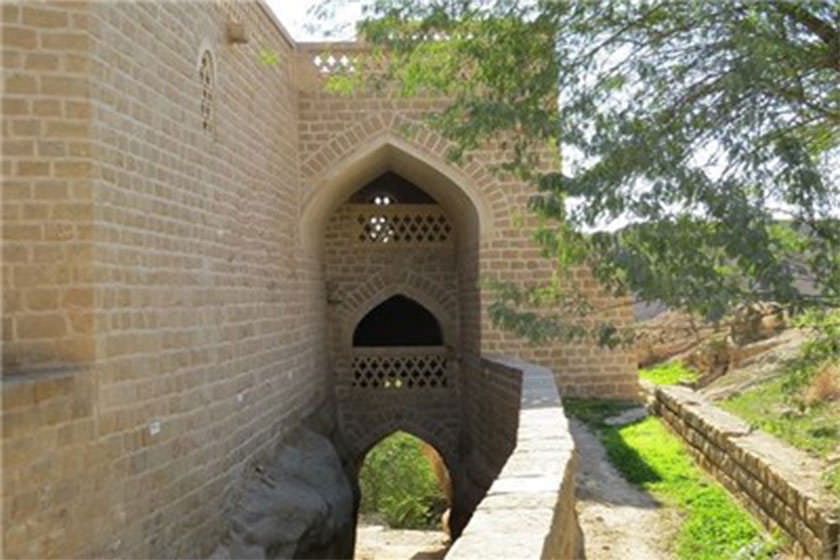
The pavilion at the centre of the garden is the architectural highlight. Built in the Qajar style, it features tall arched doorways, plaster decorations, and rooms that open directly onto the garden terraces. The pavilion once served as a reception space for the Khan, the local governor, and its proportions and ornament reflect that function. Today, the structure shows signs of age, but its bones are strong, and restoration efforts continue to bring it back to life.
The Shushtar Context
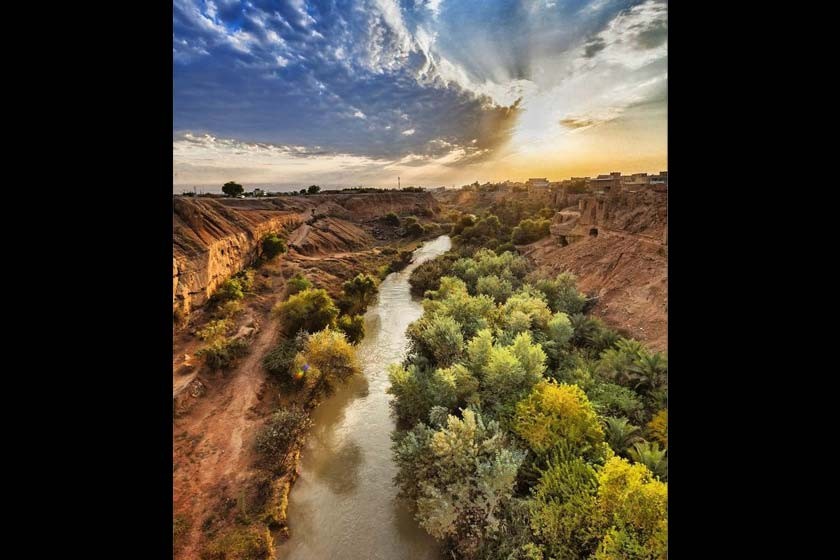
No visit to Bagh-e Khan is complete without understanding the extraordinary hydraulic system that surrounds it. The Shushtar Historical Hydraulic System, known locally as the Band-e Qaisar and the network of waterfalls and mills downstream, is an engineering marvel. The Romans contributed to the original bridge-dam during the captivity of Emperor Valerian in the third century CE, and Sassanian engineers expanded the system over subsequent centuries. Water diverted through the Gargar channel powers a series of mills before cascading over dramatic waterfalls, then rejoins the main river.
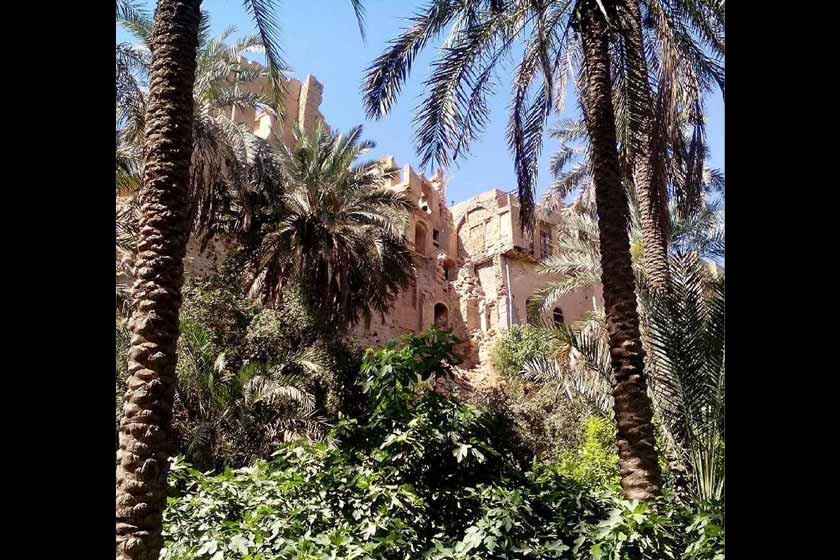
Walking from Bagh-e Khan to the waterfalls and mills takes only a few minutes. The combination of garden, river, and ancient industrial architecture makes this area one of the most rewarding heritage walks in southwestern Iran. Shushtar's old bazaar is also nearby, and you can continue your exploration through the covered lanes where local merchants sell spices, textiles, and date sweets.
Flora and Seasonal Character
The planting scheme at Bagh-e Khan follows the logic of traditional Khuzestani gardens, where utility and beauty were never separated. The fruit trees are not merely decorative; pomegranates, citrus, figs, and dates have sustained the people of this region for millennia. In spring, the citrus blossom fills the air with a sweet, heavy fragrance that mingles with the scent of the river. Mohammadi roses, grown across Iran for the production of rosewater, add a blush of pink and red along the garden paths. Bougainvillea, with its vivid purple and magenta bracts, climbs the garden walls and softens the edges of the stone pavilions.
Birdlife is another feature that rewards the patient visitor. The riverside location attracts kingfishers, swallows, and various songbirds that nest in the dense canopy. In the early morning, before the heat of the day sets in, the garden is alive with birdsong. Dragonflies hover over the water channels, and butterflies move between the flower beds throughout the warmer months. The combination of fruit, flower, and fauna gives Bagh-e Khan a richness that photographs alone cannot fully convey.
Connecting Past and Present
What makes Bagh-e Khan especially interesting is its layered history. The garden is not a museum piece frozen in time. It has been used, adapted, and reinterpreted across generations. During the Qajar era, it served as a pleasure garden for the local elite, a place to receive guests, hold celebrations, and enjoy the cool river air. In the decades that followed, it passed through various phases of use and neglect. Today, as Shushtar's profile as a heritage destination grows, the garden is being recognised for what it has always been: a living connection between the people of the city and the water that defines their landscape.
Visitors interested in the broader context of Khuzestan's heritage will find that Shushtar offers much more than a single garden. The city sits at the heart of a region that includes the ancient city of Susa, one of the oldest continuously inhabited settlements in the world, the ziggurat of Chogha Zanbil, and the reed marshes of the Hawizeh wetlands. Bagh-e Khan is the green, peaceful centrepiece of a wider itinerary that can fill several days.
Best Time to Visit
Shushtar has a hot semi-arid climate. Summer temperatures regularly exceed forty-five degrees Celsius, making outdoor sightseeing uncomfortable and sometimes unsafe. The best window for visiting Bagh-e Khan and the hydraulic system is from late October through early April, when daytime temperatures are mild and the garden is at its greenest. Spring, particularly March and April, brings wildflowers to the surrounding plains and fills the rivers to their seasonal peak.
Getting There with Mehyar
Open Mehyar and choose Taxi to reach Shushtar from Ahvaz, the provincial capital, which is about a ninety-minute drive. Mehyar Buses run regular services from Ahvaz, Tehran, and Isfahan to Shushtar, and you can book your ticket in advance through the app. If you are combining Shushtar with a visit to the Dezful or Andimeshk area, Mehyar can arrange your intercity transport as well. For those coming from further afield, Ahvaz International Airport has connections from Tehran and other major cities, and Mehyar Taxi will take you from the airport to Shushtar in under two hours.
Plan a half-day for Bagh-e Khan and the hydraulic system together. Start at the garden in the morning when the shade is deepest, walk down to the waterfalls and mills, then cross the Band-e Qaisar bridge-dam, one of the oldest of its kind in the world. If you have an extra day, the city of Dezful, with its historic bridges and riverside parks, is a short drive to the east. [Mehyar hotels](/hotels) in Shushtar and Ahvaz provide comfortable bases for exploring this remarkable corner of Khuzestan.