
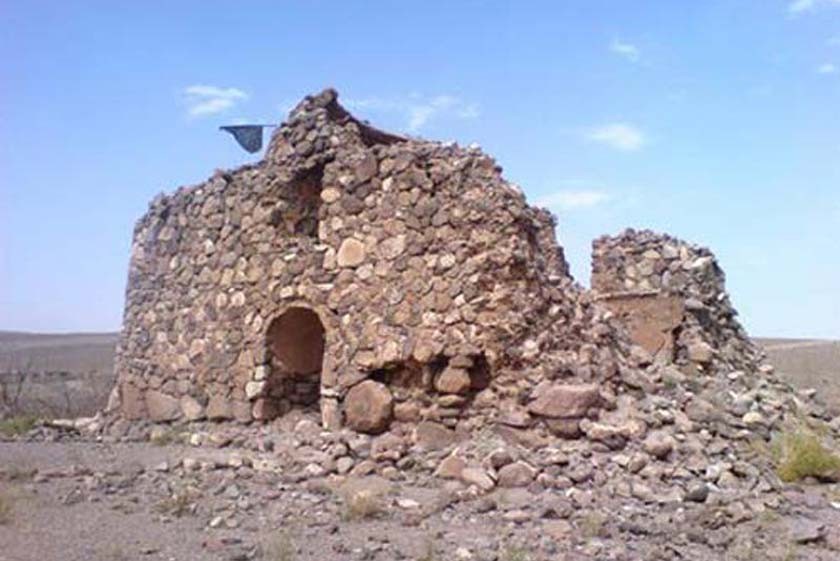
Atashkadeh Azarbagh, the Azarbagh Fire Temple, stands in the arid countryside of Kerman province, Iran, as one of the oldest surviving Zoroastrian places of worship on the Iranian plateau. Historical accounts trace the origins of this fire temple to the era of the Kayanian kings and the founding of the Zoroastrian faith itself, placing its beginnings among the earliest sacred structures of one of humanity's most ancient religions. Located on the road between Anar and Shahrbabak, near the village of Kahoo, this fire temple offers travelers a rare opportunity to encounter the deep spiritual heritage of pre-Islamic Iran in a setting of stark and powerful desert beauty.
The Origins and Early History
According to historical tradition, the origins of Atashkadeh Azarbagh extend back to the time when Zoroastrianism first emerged as a formal religious tradition. Some accounts connect the founding of the temple to the Kayanian dynasty, the semi-legendary kings whose reigns are recorded in the Avesta and the Shahnameh. This places the earliest origins of the fire temple in the remote reaches of Iranian antiquity, well before the Sassanian Empire codified Zoroastrian practice across its vast territory.
The fire temple suffered destruction during the invasion of Alexander the Great of Macedon, whose campaigns across Persia caused widespread damage to Zoroastrian religious sites and manuscripts. Following this devastation, the temple was rebuilt by Babak, the son of Sassan, under the supervision of the Parthian (Arsacid) authorities. This reconstruction ensured the survival of the sacred fire and the continuation of worship at the site, linking the temple to the very family from whom the Sassanian dynasty would later take its name.
The association with Babak, the father of Ardashir I and the founder of the Sassanian line, gives Atashkadeh Azarbagh a special significance in Iranian history. The rebuilding of the temple under Parthian patronage reflects the ongoing importance of Zoroastrian institutions during this transitional period, when the religious and cultural foundations for the later Sassanian revival were being laid.
Conflict and Damage in Later Centuries
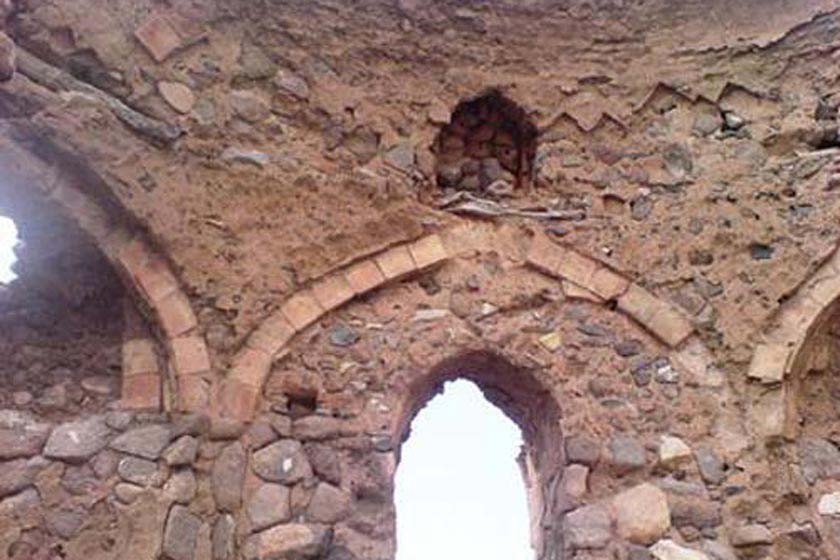
The fire temple endured through the Sassanian period and continued to hold significance in the centuries following the Arab conquest of Iran. During the final years of Safavid rule, a fierce battle took place between Afghan forces and the defenders of Shahrbabak. During this conflict, the Atashkadeh Azarbagh was hit by cannon fire, causing significant damage to the structure. The commander of the Shahrbabak garrison reportedly ordered defensive positions to be established around the temple, and the resulting fighting left lasting marks on the ancient walls.
Despite the damage sustained over the centuries, the essential form of the fire temple has survived, and its ruins continue to convey a powerful sense of the sacred purpose for which it was originally built. The site has been registered on Iran's National Heritage List, recognizing its importance as one of the earliest Zoroastrian fire temples in the country.
What to See at the Site
The fire temple is built in a location that reflects the Zoroastrian tradition of situating places of worship in elevated, open settings where the elements could be experienced as manifestations of the divine. The surrounding landscape is characteristically desert, with the dry plains and low hills of northern Kerman province stretching out in every direction under vast, unobstructed skies. The contrast between the austere natural environment and the spiritual ambition of the temple creates an atmosphere of profound solitude and reflection.

The architectural remains include sections of wall constructed from local stone and mortar, arranged in a plan that once housed the sacred fire in its central chamber. While the superstructure has not survived in its entirety, the footprint of the building and the orientation of its remaining elements provide insight into the construction techniques and spatial organization of early Zoroastrian worship spaces. Visitors with an interest in ancient Iranian religion will find the site rewarding for its raw authenticity and its distance from the heavily restored tourist monuments found elsewhere in the country.
The region around Shahrbabak is rich in historical sites, and travelers can combine a visit to Atashkadeh Azarbagh with excursions to other attractions in northern Kerman province. The city of Shahrbabak itself is known for its carpets and its mining heritage, while the broader area contains examples of Sassanian, Seljuk, and Safavid architecture that illustrate the continuous cultural importance of this corridor between Kerman and the central plateau.
Getting There
Atashkadeh Azarbagh is located on the road between Anar and Shahrbabak, near the village of Kahoo in Kerman province. To reach the site, travel to Kerman city first, then head northwest toward Anar and Shahrbabak. The distance from Kerman to the fire temple is approximately 150 kilometers, and the journey takes around two hours by car on a road that passes through the characteristic desert landscape of northern Kerman.
Use Mehyar to book a taxi from Kerman to the fire temple, or arrange transport through Mehyar Buses from cities such as Tehran, Yazd, or Shiraz to Kerman, then continue northwest by local transport. The road from Kerman to Shahrbabak is well-paved and passes through several small towns where you can stop for supplies. The site itself is free to visit and has no formal opening hours, so you can explore at any time during the day.
For travelers interested in the Zoroastrian heritage of Kerman province, combining a visit to Atashkadeh Azarbagh with the fire temples and Zoroastrian sites in the city of Kerman itself provides a comprehensive picture of the faith's long presence in this part of Iran. The city of Kerman also serves as a gateway to the desert landscapes of the Lut and the ancient sites along the southern Silk Road routes.