
The Azarakhsh Fire Temple, also known as the Stone Mosque of Darab, stands as one of the most extraordinary religious monuments in Fars province, Iran. Hewn directly from the living rock of the Kuh-e Pahna mountainside, this ancient structure served successively as a Mithraic temple, a Zoroastrian fire temple, and later as an Islamic mosque, making it the only known religious building in Iranian history that maintained sacred use across three distinct faith traditions. Located five kilometers southeast of the city of Darab and roughly 275 kilometers east of Shiraz, the Azarakhsh Fire Temple rewards travelers willing to venture beyond the main tourist circuits with a deeply atmospheric encounter with the layered spiritual history of the Persian plateau.
The History of the Site
Some researchers believe that the Azarakhsh structure began as a Mithraic temple during the Achaemenid period and was later converted into a Zoroastrian fire temple during the Sassanian era. This extraordinary building changed its religious function again during the Atabeg period, when it was adapted for use as a mosque. In various historical sources, the structure has been described with titles such as "Qasr-e Dokhtar" (Maiden's Palace) and "caravanserai," reflecting the uncertainty surrounding its original purpose.
According to historical tradition, the construction dates to approximately the third century BCE during the Sassanian period. During the Ilkhanid era, at the time of Hulagu Khan and under the order of Abu Bakr Saad ibn Zangi, the ruler of Fars, a mihrab was added to the left side of the building, and from that time the structure became known as the Stone Mosque of Darab. The fire temple was registered on Iran's National Heritage List on December 6, 1935, with registration number 229.
The site is unique in Iran's religious architectural history, as it represents continuous sacred use spanning the Mithraic, Zoroastrian, and Islamic periods. No other religious building in the country is known to have served all three traditions across its long history.
Architecture of the Fire Temple
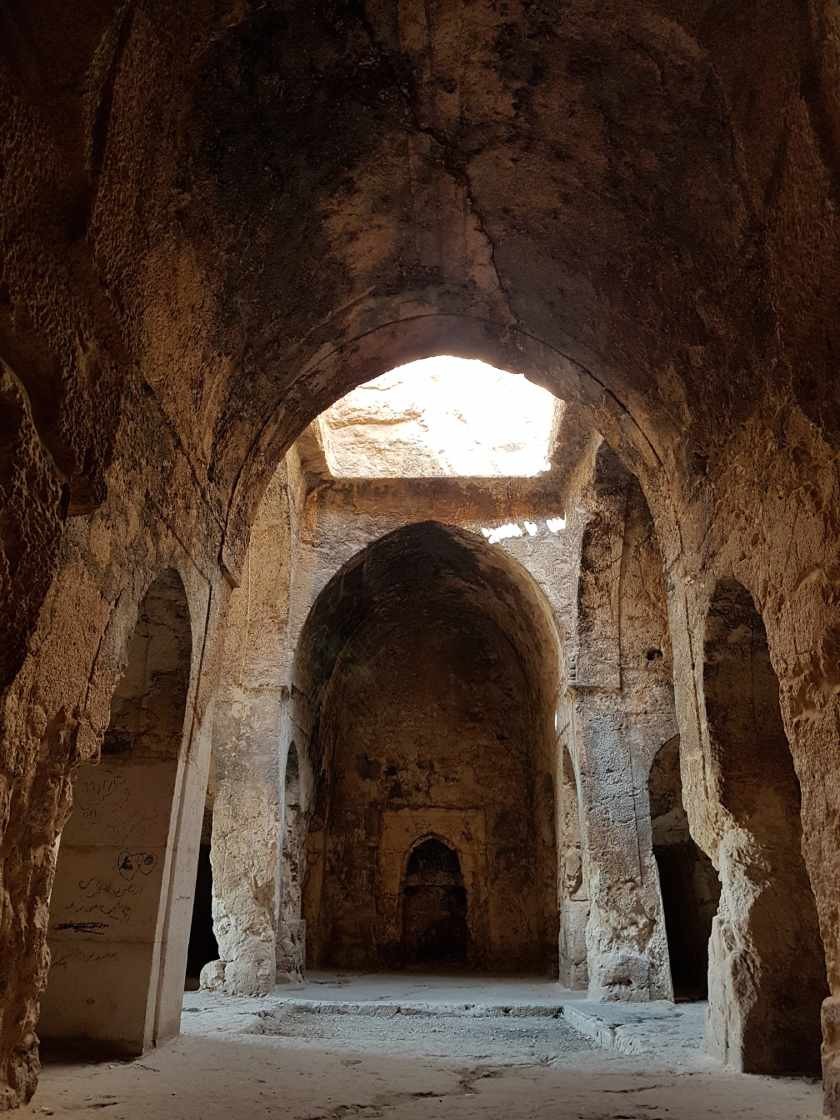
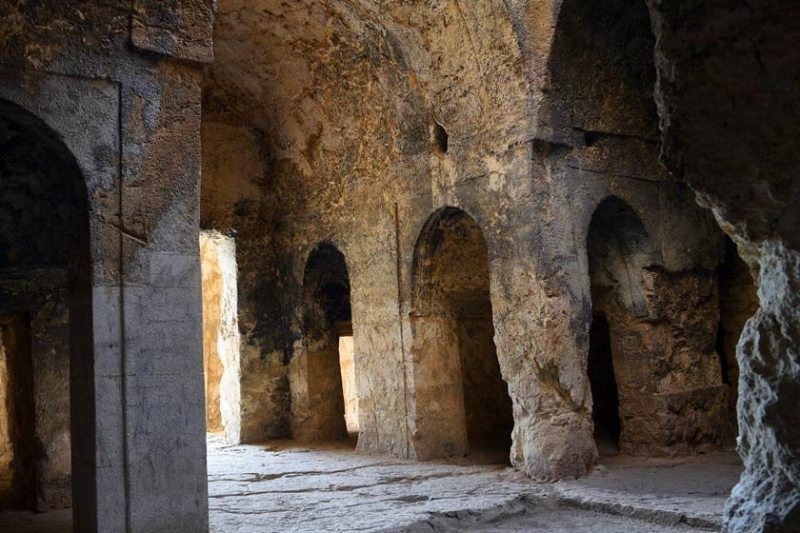
The Azarakhsh Fire Temple is a remarkable feat of rock-cut architecture. The structure covers an area of approximately 420 square meters and has been carved entirely from the mountainside. Part of the ceiling is open to the sky, and beneath this opening lies a shallow pool. The overall plan of the building is cross-shaped, with a portico featuring pilasters, columns, and arched openings surrounding the central space. The roofing over the four arms of the structure takes the form of cradle vaults, while the central section is cut away in a square plan.
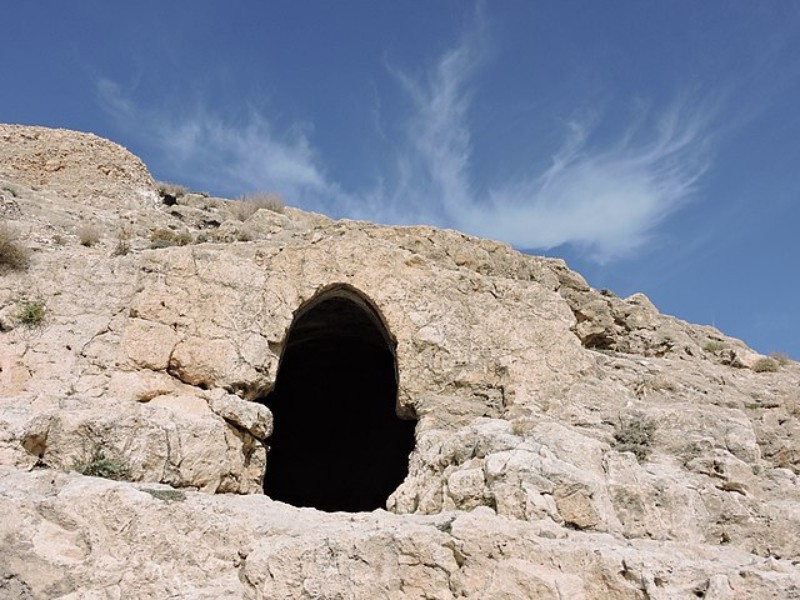
The longest dimension of the building runs east to west, beginning at the entrance. The entrances face toward the southeast, and the distance from the threshold of the entrance to the far end of the northwest section measures twenty meters. The two other sides, to the southwest and northeast, each extend approximately eighteen meters. It appears that construction began from above, with workers cutting down from the top of the mountain to create a square-plan light well, then carving the walls and arched porticos of the mosque from the resulting shaft.
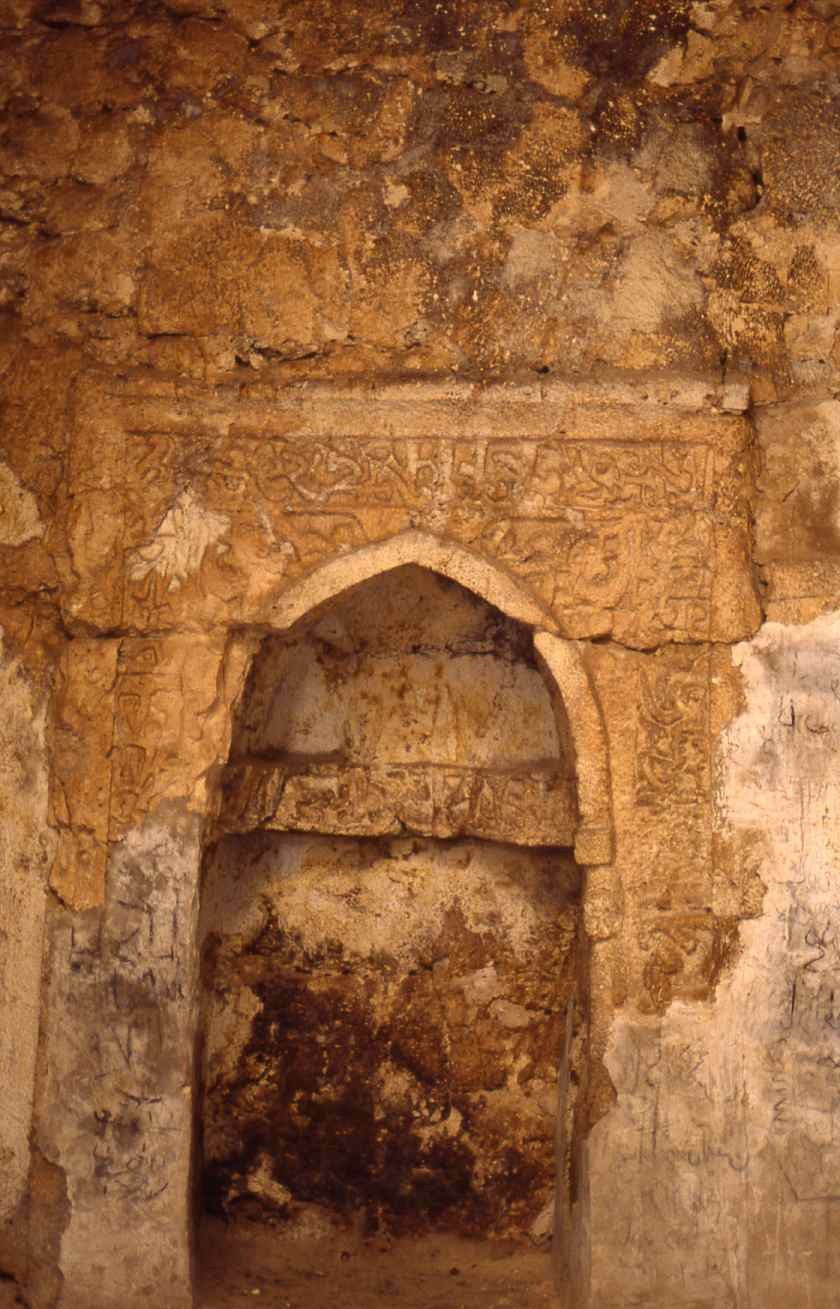
The presence of a mihrab decorated with muqarnas (stalactite vaulting) and Kufic inscriptions, along with the alignment of the mihrab toward the qibla, provides evidence of the building's Islamic phase. The Kufic inscriptions carved into the rock are among the most important artistic features of the mosque, preserving calligraphic traditions from the early centuries of Islamic rule in Fars.
What to See at the Site
The fire temple itself is the main attraction, but the surrounding area contains additional points of interest. To the north of the Stone Mosque, an unusual stone mill carved into the rock dates to the Sassanian period. This mill is unique in its architectural form and is said to have been repaired and rebuilt during the Atabeg, Qajar, and Naser al-Din Shah periods. Its proximity to the fire temple suggests that the entire mountainside functioned as a working complex, combining religious and practical activities.

Approximately one kilometer further along the road, the Naqsh-e Shapur rock relief depicts the victory of Shapur I over the Roman emperors. This Sassanian bas-relief, located on the face of Kuh-e Pahna, is one of the most debated examples of Sassanian rock art and provides important context for understanding the region's significance during the ancient period. Visiting the fire temple and the rock relief together makes for a rewarding half-day excursion that covers both the religious and political dimensions of Sassanian presence in the Darab region.
Getting There
To visit the Azarakhsh Fire Temple, you need to travel to the city of Darab, which lies 275 kilometers east of Shiraz in Fars province. From Darab, follow the road toward Rostaq. The fire temple is located approximately five kilometers southeast of the city, on the right side of the road, along the Darab bypass toward Hajjiabad. Use Mehyar to book a taxi from Shiraz to Darab, or take Mehyar Buses from Shiraz to Darab and arrange local transport from the city center.
The journey from Shiraz to Darab passes through some of the most scenically varied landscapes in Fars province, with the terrain gradually becoming more rugged and arid as you move toward the Zagros foothills. The road is well-maintained, and the drive takes approximately three to four hours depending on traffic. Once at the site, you can explore the fire temple and the surrounding area at your own pace.
For those interested in the broader heritage of Fars province, combining a visit to the Azarakhsh Fire Temple with the Naqsh-e Shapur relief and the nearby [ancient sites of Persepolis](/persepolis) near Shiraz provides a comprehensive overview of Sassanian and Achaemenid civilization in the heartland of Persia.