
Walking in Hamadan is like turning the pages of a book that refuses to end. Set in the Zagros mountains of western Iran, it is the Median capital and belongs to that small company of places, alongside Athens and Rome, that have stayed inhabited and important for twenty-six centuries. Herodotus credited its foundation to Deioces and described seven concentric walls, and excavations beneath the modern neighbourhood of Hegmataneh have located the palaces themselves. The antiquity here is not a stage set: it lies under your feet while the shops and tea houses carry on around it.

Where is Hamadan, and why does it reward the trip?
Hamadan is the capital of Hamadan province, high on the Zagros below Mount Alvand, about 290 kilometres west-south-west of Tehran. Altitude gives it cool summers and spring orchards, so travellers treat it as an escape from the capital. The monuments are compact and walkable, and the two best day trips, a boat through the world's longest water cave and a cable car up a mountain wall, are within easy reach of the centre.
How do you get to Hamadan from Tehran?
By Mehyar Buses. Hamadan is one of the easiest runs out of Tehran, with frequent coaches taking a little over three hours. Book a morning departure so you reach the tomb of Avicenna while the square is quiet.
By Mehyar Taxi or private car. A door-to-door Mehyar Taxi is the comfortable option, and the only practical one for Ali Sadr Cave, Ganjnameh and Nahavand, which sit badly with public transport. Much of the road is motorway across open plain.
By air. Flights into Hamadan exist but are few and seasonal, so check what Mehyar Flights lists for your dates; for most travellers the road is quicker door to door.
Which monuments define the city?
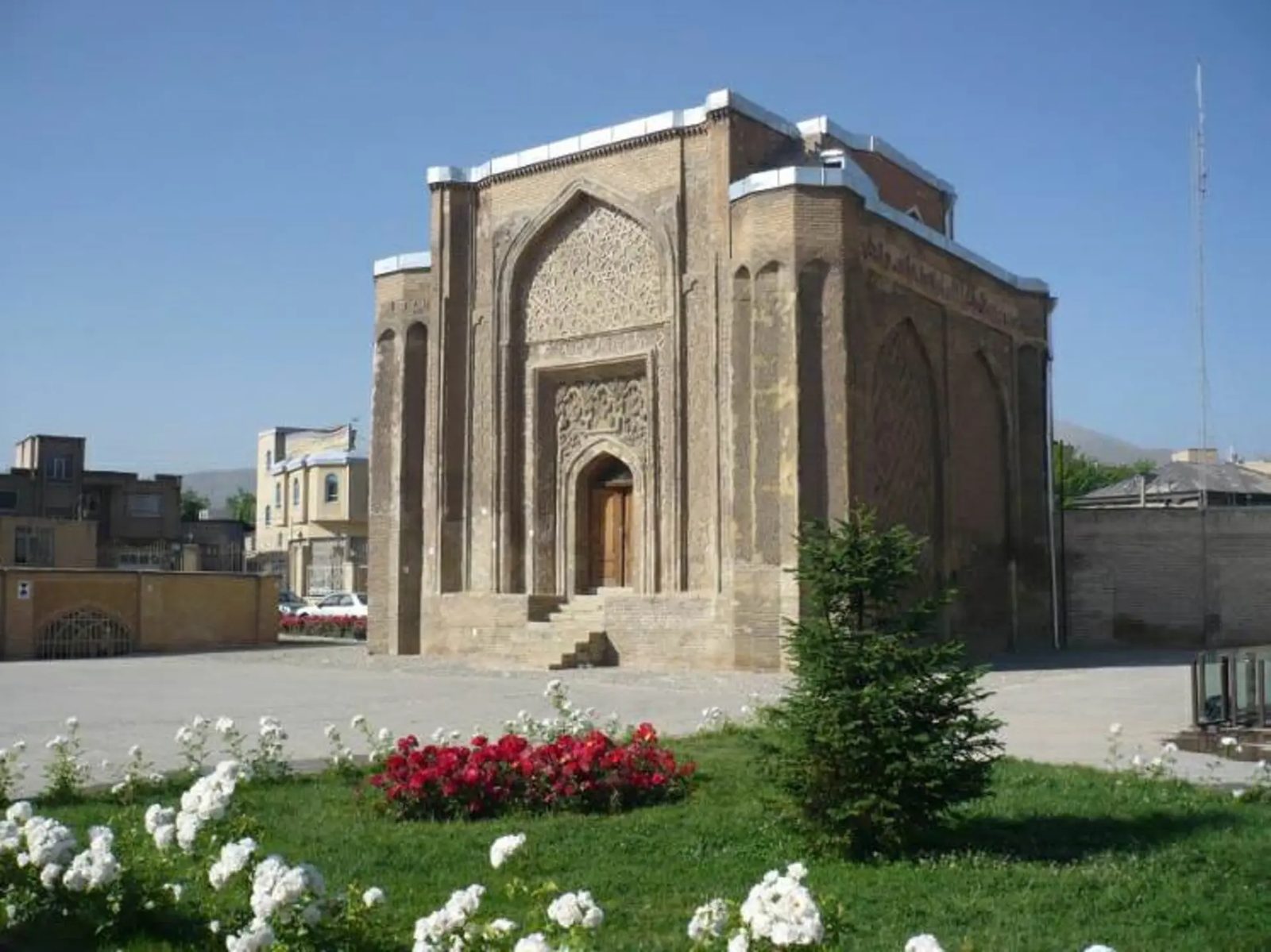
The Tomb of Avicenna. In the oval Bu Ali Sina square, lined with old plane trees and fountains laid out in the manner of a Persian garden, stands the monument to Iran's most famous physician-philosopher. The tower's design borrows from the Gonbad-e Qabus at Gonbad Kavous. Its south hall keeps coins, pottery and finds from the millennia before Christ; the north hall holds manuscripts and works of Avicenna. Opening is roughly 08:30 to 17:00, with a modest ticket to confirm locally.
The Alavian Dome. A short walk away, near the Imamzadeh Abdullah square, this is one of the most extraordinary surviving pieces of post-Islamic architecture in Iran, celebrated for its brickwork and carved stucco, and listed as national heritage monument number 94 in 1932. It is usually open from about 09:00 to 19:00.
The Stone Lion. At the eastern end of the twelve-metre avenue stands one of a pair of stone lions that once guarded a city gate, the gate that took the Arab-era name Bab al-Asad. Dating is debated, with some arguing for a Median origin, while the neighbouring cemetery of clay coffins is plainly Parthian.
Baba Tahir's Tomb. In a square in the north of the city rests Baba Tahir Orayan, the mystic quatrain poet of the fifth century after the Hijra, listed as national heritage in 1997. The interior is sheathed in mosaic faience, and twenty-four of his quatrains, in the local Lori dialect, are carved on stones around the tomb chamber; a handicraft museum sits beside it.
Aref Qazvini's Grave and the Qorban Tower. A few streets from Avicenna lies the grave of Aref Qazvini, born in Ghazvin in 1880, poet and songwriter of the Constitutional era. The Qorban Tower, between gardens, is a seventh- or eighth-century tomb of the poet Hasan ibn Attar, known as Aboul Ala Hamadani, and of Seljuk amirs. It is listed but not open to visitors.
Where do you stand inside the ancient city?
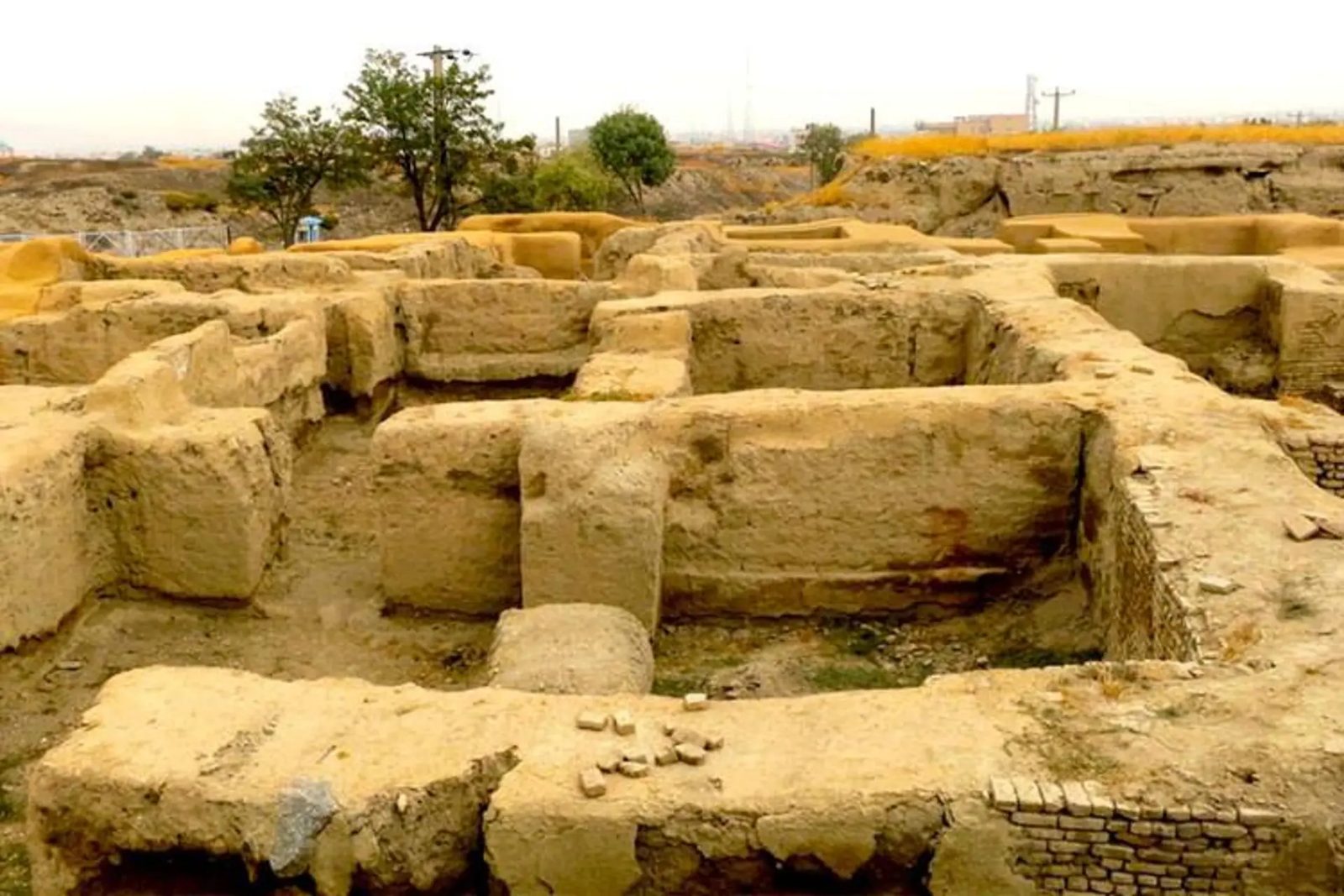
Hegmataneh. The tell of Hegmataneh, in the Ekbatan square district, is the buried core of the Median capital and today an open archaeological quarter, visited generally from 09:00 to 18:00. Few places let you read a city's whole stratigraphy in one trench.
Hegmataneh Museum. On the eastern side of the tell, in a building that began life as a school, it displays finds from Hegmataneh and material from across the province, and is the best single stop for making sense of the excavation.
What is there for shoppers and museum lovers?

The Traditional Bazaar. Between Babataher, Ekbatan and Shohada streets, the covered bazaar is a Qajar survival with domed crossings and guild-specific rows. Open until about 21:00, it pairs easily with the nearby monuments.
The Qaleh Bathhouse. In the old Qashqaltarashan quarter, this 1,500-square-metre Qajar bathhouse keeps its octagonal vestibule, cold room and hot room. Restored in 2008, it now serves as the anthropology museum and holds a traditional eating house where musicians perform. Hours are unusual, split between mid-afternoon and evening, so check first.
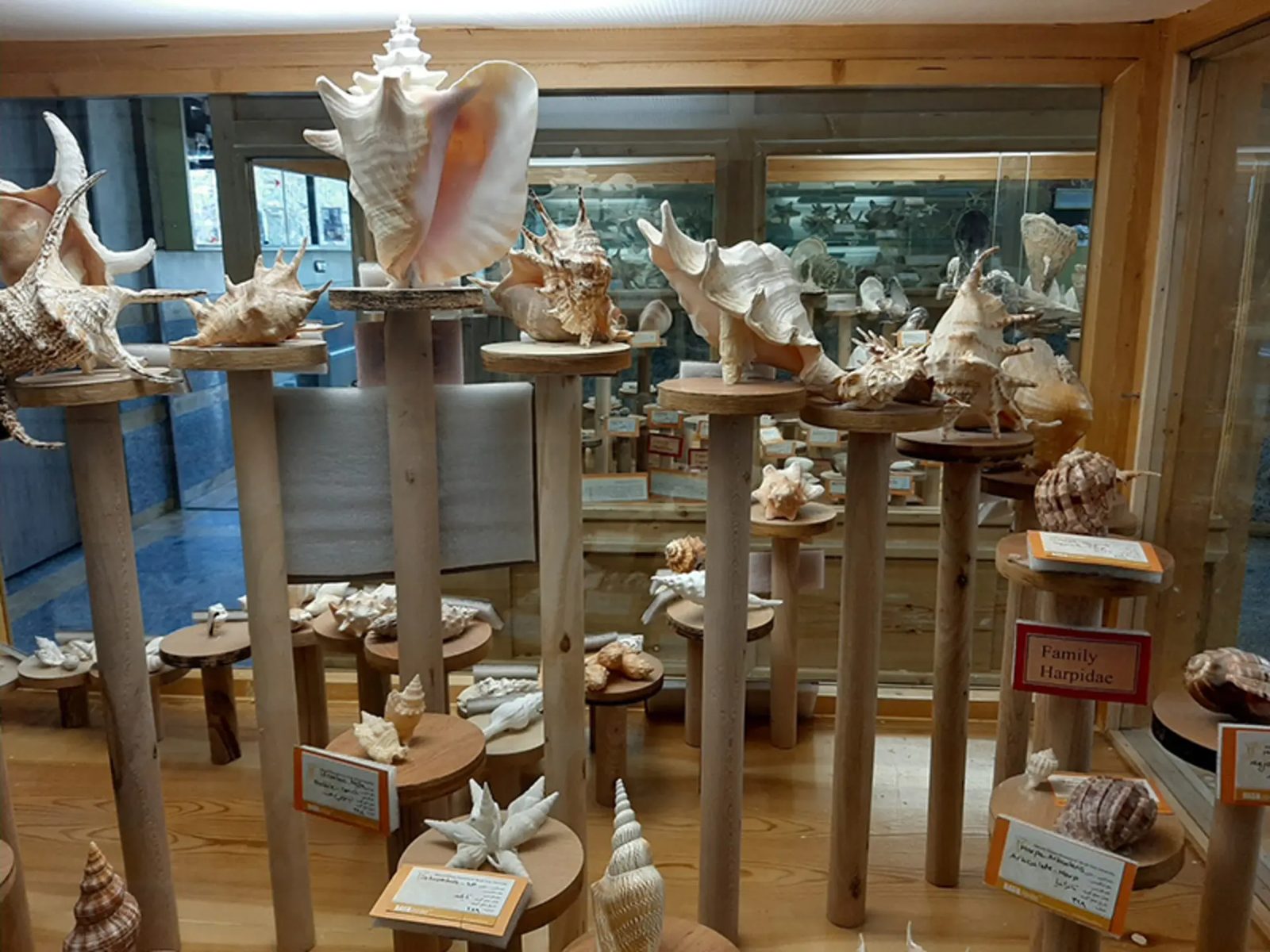
The Natural History Museum. On Azadegan boulevard, inside the agriculture faculty of Bu Ali University, a 2,000-square-metre collection assembled by Jafar Mohammad Alizadeh and his students holds fossils and mounted specimens from Iran and abroad, and is an unexpectedly good stop with children.
Which day trips are worth the drive?
Ali Sadr Cave. The strongest single reason to add a day to any Hamadan trip. North-west of the city, in the Gol Tappeh district of Kaboudarahang county, this is the longest water cave in the world: winding corridors and halls at 2,100 metres, held at a constant 20 degrees and entered by boat on a schedule. Bring a jacket whatever the season, and expect summer queues.
Ganjnameh. Nine kilometres south-west, fifteen minutes by car, Ganjnameh sits in the Alvand mountains above the valley locals call Farahbakhsh. Give it a full day if you want all of it: the rock inscriptions and waterfall, a cable car, the Tarikdareh ski slope with chairlift and tow, a 200-metre suspension footbridge and a 520-metre zip line.
Ekbatan Lake. Fifteen kilometres south-east, half an hour out, Ekbatan is Hamadan's green weekend address, with rowing and water skiing, gardens, a restaurant and a guesthouse: a comfort stop, pleasant on a July evening.
The Laodice Temple at Nahavand. West at Nahavand stands a Greek temple of the Seleucid age, raised by Antiochus III, who reigned between 223 and 187 BC, for his wife Laodice and identified by a Greek inscription found on site. It is the least crowded major monument in the province.
Where do you find the city's sacred sites?
The Congregation Mosque. On the Ekbatan pedestrian street by Imam Khomeini square, the great mosque of Hamadan is a Qajar building of the reigns of Fath Ali Shah and Mohammad Shah, with inscriptions dated 1251 and 1253 after the Hijra. A working place of worship in an altered shell, its minarets later additions.
The Holy Shrine of Imamzadeh Hossein. At the head of Shohada street, Shahzadeh Hossein is one of Hamadan's architectural treasures, crowned by a fine brick dome. The tomb hall faces north behind a small iwan, with two cruciform shrine chambers, cells on two storeys, muqarnas beneath the arch and a carved wooden cenotaph under the high dome; an old mulberry shades the courtyard. Genealogies make the Imamzadeh a descendant of Imam Hassan Mojtaba or a son of Imam Hassan Askari. Dress for a shrine, not a museum.
Where should you stay, and when is the best time to visit?
Stay in the centre, within reach of the Bu Ali Sina and Imam Khomeini squares, so the monuments, bazaar and best restaurants are walkable. Mehyar Hotels lists rooms across the range, and the detail worth looking for is parking, since the day trips are self-driven. Book ahead for June to September, when Tehran's families come up for the cool, and for the ski season at Ganjnameh.
Spring is the best all-round answer: the city turns green, the orchards flower and the mountain roads open. Summer is the season locals defend, cool and dry, perfect for Ali Sadr Cave and Ganjnameh though the queues grow. Autumn brings clear light over the Misan plain and quieter museums. Winter is cold and snowy, closing high roads but filling Ganjnameh with skiers.
Practical notes for your trip
Sites here keep separate hours and separate tickets, some of them odd: the bathhouse runs mid-afternoon and evening, the Avicenna tomb closes early, and the cave works to a boat schedule that cannot be rushed. Confirm locally, and carry cash for tickets and the village restaurants on the Ganjnameh road. Friday is weak for museums but good for atmosphere, and because the old quarters are narrow lanes and steps, book a Mehyar Taxi for your morning slots rather than trying to flag one.