
On a rocky outcrop overlooking the city of Kerman, the remains of an ancient fire temple stand as the oldest historical structure in the city. Known locally as Qal'eh Dokhtar (the Girl's Castle) and also associated with the name Anahita, this Sassanian-era monument dates to the 3rd century CE and has watched over Kerman for nearly 1,800 years. It is a place where the weight of history is palpable, where the silence of the desert wind carries echoes of a time when Zoroastrian priests tended sacred flames on this very spot.
The structure sits at the edge of the modern city, a place where the ancient and contemporary coexist in close proximity. The fire temple was built during the Sassanian Empire, when Zoroastrianism was the dominant faith and fire temples dotted the Iranian plateau. Today it stands as a powerful symbol of Kerman's deep historical roots, attracting scholars, history enthusiasts, and curious travelers who want to trace the layers of civilization that have accumulated in this corner of southeastern Iran.
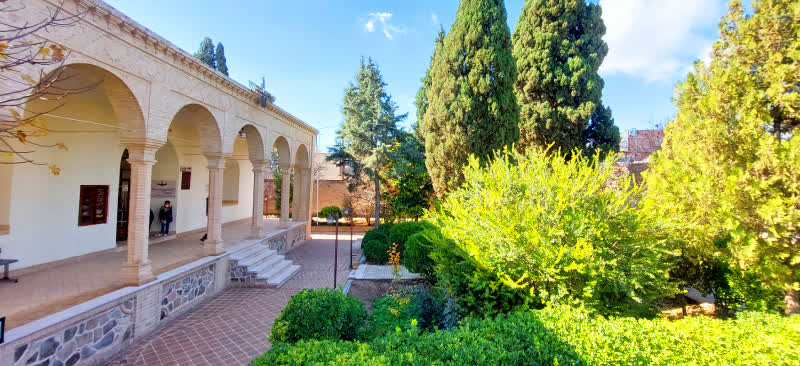
Where Is the Fire Temple?
The fire temple is located on a hill to the northeast of Kerman's city center, in Kerman province in southeastern Iran. It sits above the modern neighborhood, visible from many points in the city due to its elevated position on the rocky escarpment. The hill itself is a distinctive landmark, its flat-topped outline contrasting with the low buildings of the surrounding residential areas. The site is easily reached by taxi or local transport from any hotel in Kerman, and the short journey from the city center takes you through a mix of modern streets and older quarters that hint at the city's layered past.
Kerman province is one of Iran's largest, stretching across the arid southeastern quadrant of the country. The province has been a crossroads of trade routes for millennia, linking the Persian Gulf coast to the central plateau and the eastern frontiers. Kerman city itself has been continuously inhabited since at least the Sassanian period, and the fire temple is the most visible surviving monument from those early centuries.
How to Get There
From central Kerman, the site is a short drive of about 10 minutes. Open Mehyar and choose Taxi to reach the hill from your accommodation in the city. The road leads to a parking area near the base of the hill, and a short walk uphill along a marked path brings you to the ruins. The climb is gentle and takes only a few minutes, but the elevation gain rewards you with sweeping views even before you reach the temple itself.
For travelers arriving in Kerman by bus or plane, the fire temple is one of the first historical sites worth visiting to understand the depth of the city's heritage. You can book via Mehyar Buses from Yazd or Shiraz to reach Kerman, then use local transport to the site. Kerman's airport connects to Tehran and several other Iranian cities, making the fire temple accessible as part of a broader journey through the historical sites of the southeastern plateau.
Historical Background
The Sassanian fire temples were central to Zoroastrian worship, where the sacred fire was kept burning continuously as a symbol of divine light and truth. This particular temple in Kerman is believed to have been one of the major fire temples of the Kerman region during the Sassanian period. The Sassanians ruled Iran from 224 to 651 CE, and during those four centuries they constructed an impressive network of religious buildings, palaces, and fortifications across their empire.
The name Qal'eh Dokhtar (Girl's Castle) comes from a local legend, as is common with ancient structures across Iran. Stories of princesses and mythical heroines are often attached to ruins whose original purpose has faded from collective memory. The association with the goddess Anahita, who was linked to water and fertility in pre-Islamic Iranian religion, adds another layer to the site's significance. Anahita was one of the most revered deities in the Zoroastrian pantheon, and fire temples bearing her name suggest that this was a place of particular importance in the religious landscape of Sassanian Kerman.
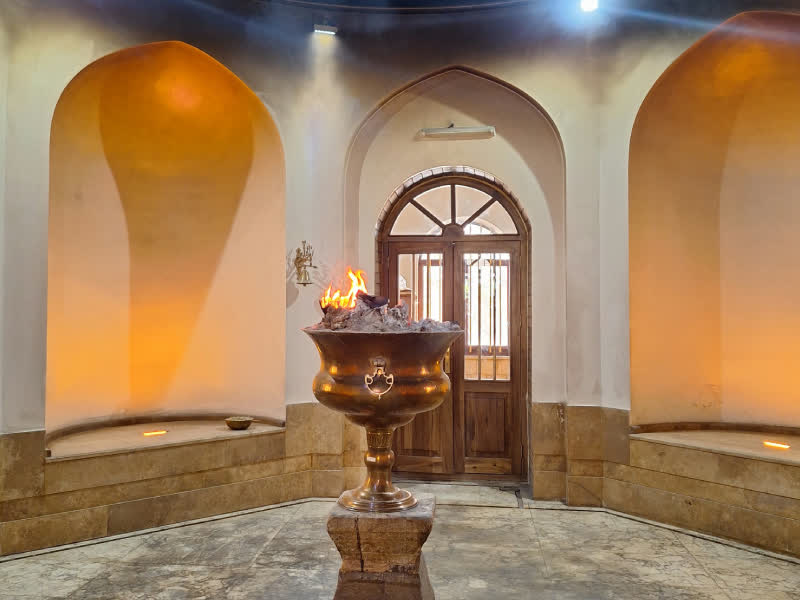
Archaeologists have studied the construction techniques and materials used in the temple, noting the use of local stone, brick, and a distinctive Sassanian mortar. The domed chamber at the heart of the structure is characteristic of fire temple architecture, designed to house the eternal flame and allow smoke to escape through an opening at the apex. The thickness of the walls indicates both structural ambition and the desire to create an interior space that would remain cool in Kerman's fierce desert summers.
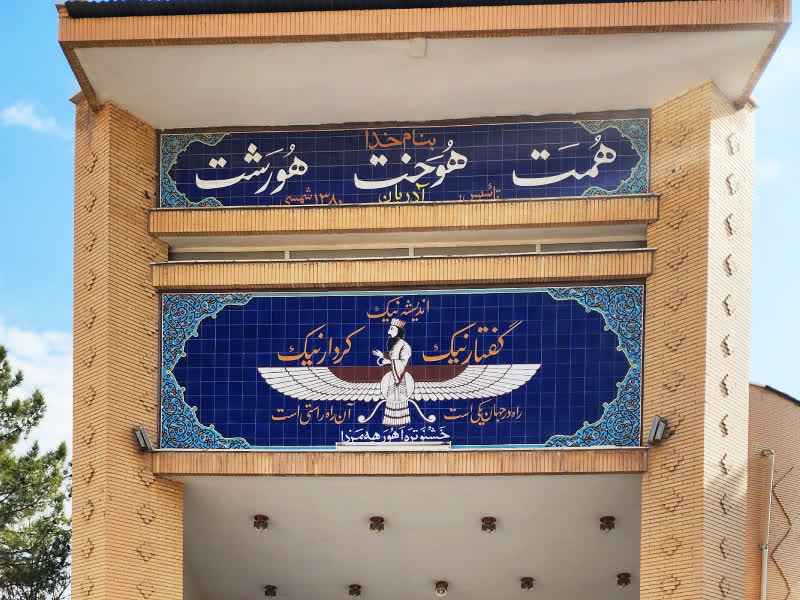
What to See
The remaining structure consists of a large domed chamber built from brick and mortar, with portions of the dome still intact after nearly 18 centuries. The interior shows the characteristic vaulted architecture of Sassanian construction, with niches and arches that once framed the sacred fire. The exterior walls bear the marks of centuries of exposure to Kerman's desert climate, their surfaces weathered by wind-blown sand and the occasional winter rain.
From the hilltop, the views over Kerman are expansive. To the south, the city spreads across the desert plain, its modern neighborhoods and historic quarters visible in a single panorama. To the north, the Jebal Barez mountain range rises on the horizon, its peaks catching the light long after the surrounding plain has darkened. The setting makes the historical context vivid: this was a place built to be seen from afar and to command a view of the surrounding landscape, a beacon of faith visible to travelers approaching Kerman from the north and east.
The area around the temple also contains traces of ancillary structures, storage rooms, and what may have been living quarters for the priests who tended the flame. These less conspicuous remains are worth exploring, as they provide insight into the daily life of the temple community and the practical arrangements required to maintain a sacred fire around the clock.
The Surrounding Area
Kerman itself is rich in historical sites, from the Friday Mosque with its stunning tilework to the Ganjali Khan complex, a Safavid-era ensemble of bathhouse, caravanserai, and bazaar that ranks among Iran's finest. The fire temple sits apart from these Islamic-era monuments, offering a glimpse into the pre-Islamic history of the region and reminding visitors that Kerman's story extends far beyond the Arab conquest.
The Kerman bazaar, one of the oldest and longest covered bazaars in Iran, is within easy reach for those combining historical visits with cultural exploration. The bazaar's vaulted corridors connect a network of caravanserais, mosques, and specialty shops selling everything from Kerman carpets to local spices. The Ganjali Khan Square, the focal point of the bazaar district, is a beautiful example of Safavid urban planning and a natural companion to a visit to the ancient fire temple.
For those with time to explore further, the Kerman province offers the desert landscapes of the Lut, the historic town of Bam with its UNESCO-listed citadel, and the palm groves of Jiroft. The fire temple serves as an excellent starting point for understanding the deep historical context that ties all these sites together.
Best Time to Visit
Autumn from October to November and spring from March to April are the most comfortable seasons, with mild temperatures suitable for exploring the open-air ruins. Kerman's desert climate means that summer, from June to August, brings extremely high temperatures that make daytime visits difficult. If you must visit in summer, arrive early in the morning or in the late afternoon. Winter is mild during the day but can be quite cold at night, and the site offers little shelter from the wind. The golden light of late afternoon, however, casts the ancient stones in a warm glow that is perfect for photography.
Practical Details
The site is managed by Iran's Cultural Heritage organization. A small entrance fee applies, and the site is open daily during daylight hours. Allow about one hour to explore the temple ruins and take in the panoramic views. Combine your visit with the Ganjali Khan complex and the Kerman bazaar for a full day of historical and cultural exploration. Local guides are sometimes available at the site and can provide helpful context about the Sassanian period and the significance of fire temples in Zoroastrian worship.