
Spring is the season when Iran is at its most alive. The orchards of the north blush into blossom, the gardens of Shiraz fill with the scent of orange trees, the steppes of the northwest turn green, and the deserts cool enough to walk before the summer heat returns. For travelers, however, spring comes with a catch, and the catch has a name. Nowruz, the Persian New Year, falls at the spring equinox and transforms the country's travel patterns for roughly two weeks every March. Hotels fill to capacity, roads become rivers of cars, and the prices of everything from bus tickets to guesthouse beds climb steeply. A last minute spring tour in Iran is entirely possible, but it rewards preparation, flexibility, and the knowledge of where to go when the obvious destinations are full.
This guide is written for the traveler who has decided late. Perhaps the Nowruz holiday arrived and you had not planned anything. Perhaps you are a visitor whose dates landed in the middle of the season for reasons beyond your control. Either way, you have options, and some of them are excellent. The key is understanding the season's rhythms, knowing which destinations absorb crowds well and which ones choke, and using the booking tools that let you lock in a room and a seat without weeks of lead time.
Understanding spring in Iran
Iranian spring runs from late March to late June, but the character of the season changes sharply across those months. March is cool, changeable, and dominated by the Nowruz holiday. April is the greenest and most stable month in most of the country, with daytime temperatures that feel pleasant in most regions and countryside at its most photogenic. May is warmer, particularly in the south and the deserts, but still comfortable in the mountains and the north. By June, the lowlands are hot, and the attention of travelers shifts toward the cooler elevations of the Alborz and Zagros ranges.
Rain in spring is possible in almost any region, though it is rare in the southeast and moderate elsewhere. The Caspian provinces of Gilan and Mazandaran can be wet at any time of the year, and spring showers there are frequent but usually brief. The deserts of Yazd, Kerman, and the central plateau are dry but pleasant in April, with warm days and cool nights. The south, including the Persian Gulf coast, warms quickly and by late May is already uncomfortable for anyone unaccustomed to heat and humidity.
The Nowruz factor
Nowruz deserves its own section because it changes everything about spring travel in Iran. The holiday begins at the spring equinox, around March 20 or 21, and the travel wave typically builds from a few days before the equinox and lasts until about the second day of April. During this window, Iranians travel. They visit family in other cities, they head for the Caspian coast, they drive to the mountains and the historical cities, and they fill every hotel, motel, guesthouse, and campground that the country possesses.
The consequence for a traveler planning at the last minute is straightforward. During Nowruz week, the most popular destinations, including Isfahan, Shiraz, Yazd, Kashan, and the Caspian coast, are often fully booked. Roads to the north are congested to the point of paralysis on peak days. Prices for the rooms that do remain available can be double or triple their normal rate. None of this makes Nowruz travel impossible, and in fact experiencing the holiday in an Iranian city can be one of the most rewarding cultural experiences of any trip. But it does mean that a last minute planner needs a different playbook.
The first option is to embrace the holiday rather than fight it. Cities such as Tehran, which empties as its residents leave, become surprisingly calm and easy to navigate during the Nowruz days themselves. Museums and major sights in Tehran are less crowded than usual, and the atmosphere in the days around the equinox, with haft sin tables in homes and public spaces, is genuinely special. The second option is to pick destinations that are less famous but equally rewarding, and this is where the last minute traveler can do particularly well.
Where to go on a last minute spring trip
If your dates fall during Nowruz week and you have not booked, aim for places that Iranians visit less in that exact window. The deserts around Yazd and Kerman, for example, see less of the domestic holiday crowd than the classical circuit, and the spring weather there is excellent. A trip that combines the historic city of Yazd with the desert landscapes of the surrounding province, including the ancient towers of silence and the beautiful villages of the region, can be arranged in a few days and will be quieter than Isfahan or Shiraz.
The northwest of Iran is another strong option. Tabriz, Kandovan, and the mountains of East Azerbaijan are far from the routes that most holiday traffic follows, and the spring scenery of the region, with green meadows and snow still on the high peaks, is at its best exactly when the lowland cities are busiest. Kandovan in particular, the troglodyte village whose cone shaped dwellings are still inhabited, makes a memorable base for a few days.
The Caspian coast is the single most popular domestic destination at Nowruz, and this means it is also the hardest to book at the last minute. If your heart is set on the north, the strategy is to go either very early in the holiday or very late, after April 2 or so, when the wave has receded. Alternatively, aim for the quieter stretches of coast and the less famous mountain towns of Mazandaran and Gilan, where accommodation is easier to find than in the big resorts.
For travelers whose dates fall in April or May, after the holiday has passed, the entire country opens up. This is the best window for the classical itinerary, including Isfahan, Shiraz, Persepolis, and Yazd, with comfortable temperatures, green landscapes, and thinner crowds than the holiday weeks. It is also the ideal time for hiking in the Alborz and Zagros, for visiting the villages of Alamut and the Caspian foothills, and for the gardens and orchards of the northwest.
How to book at the last minute
Last minute booking in Iran is far easier than it was a decade ago, and the tools now available make it realistic to plan a trip a few days in advance. The most important of these is the Mehyar app, which brings hotels, bus tickets, and taxis together in one place. For accommodation, Mehyar lists hotels and guesthouses across the country with real time availability, which means you can see exactly what is open in a given city on a given night and book it immediately. This is particularly valuable during Nowruz, when the difference between a booked room and a full city can come down to who checks the app first.
For intercity transport, the same principle applies. Bus travel in Iran is extensive, comfortable, and affordable, and Mehyar Buses allows you to search schedules and reserve seats on the major routes. During the holiday period, the most popular departures sell out, but the app shows you the options that remain, and a flexible traveler can almost always find a seat on some route toward some destination. Train tickets are also available through the app for the routes that Iran's rail network covers, including the main lines from Tehran to Mashhad, Tabriz, Shiraz, and Bandar Abbas.
For the final legs, the legs between stations and hotels, and for the day trips that no bus serves, Mehyar Taxi is the tool that makes a last minute itinerary actually work. A private car with a driver can be booked for a few hours or a full day, and in a country where the sights are often spread out and public transport does not reach the smaller attractions, this flexibility is what turns a wish list into a plan. The drivers know the roads, the prices are set in advance, and you can change the itinerary on the go without renegotiating.
What to expect on the trip
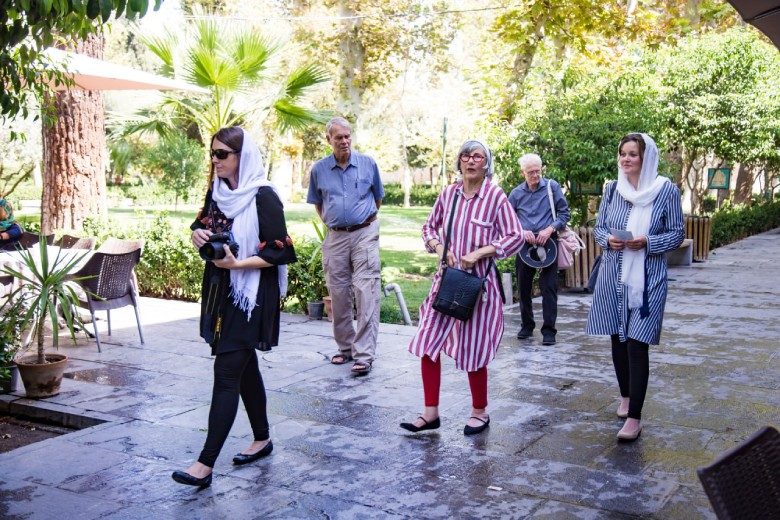
Spring travel in Iran, especially in the holiday weeks, comes with a particular texture that is worth anticipating. The first thing to expect is hospitality. Iranians travel with their families, and the parks, the roadside stops, and the squares fill with picnics. It is entirely normal to be invited to join, and a foreigner who accepts even a cup of tea will be treated as an honored guest. The second thing to expect is fullness. The famous sights, the bridges of Isfahan, the tomb of Hafez in Shiraz, the squares and bazaars, will have queues, and the most photogenic spots will have people in them. This is not a reason to avoid the sights, but it is a reason to visit them early in the morning.
The third thing to expect is variety in accommodation quality. During peak weeks, the remaining rooms are often in the less polished properties, and the standards of service can vary. Booking through Mehyar mitigates this, because the listings include photos, reviews, and clear prices, and because a confirmed booking through the app is far more reliable than an arrangement made on arrival. Still, a last minute traveler during Nowruz should pack patience along with the sunscreen.
Weather in spring is generally kind, but it is not uniform. A traveler heading to the mountains in April should bring layers, because the temperature difference between noon and evening can be significant, and snow is still present on the high passes. A traveler on the Persian Gulf coast in May should prepare for heat. Checking the forecast for each stop before setting out, and building an indoor alternative into each day, is a habit worth developing.
A sample last minute itinerary
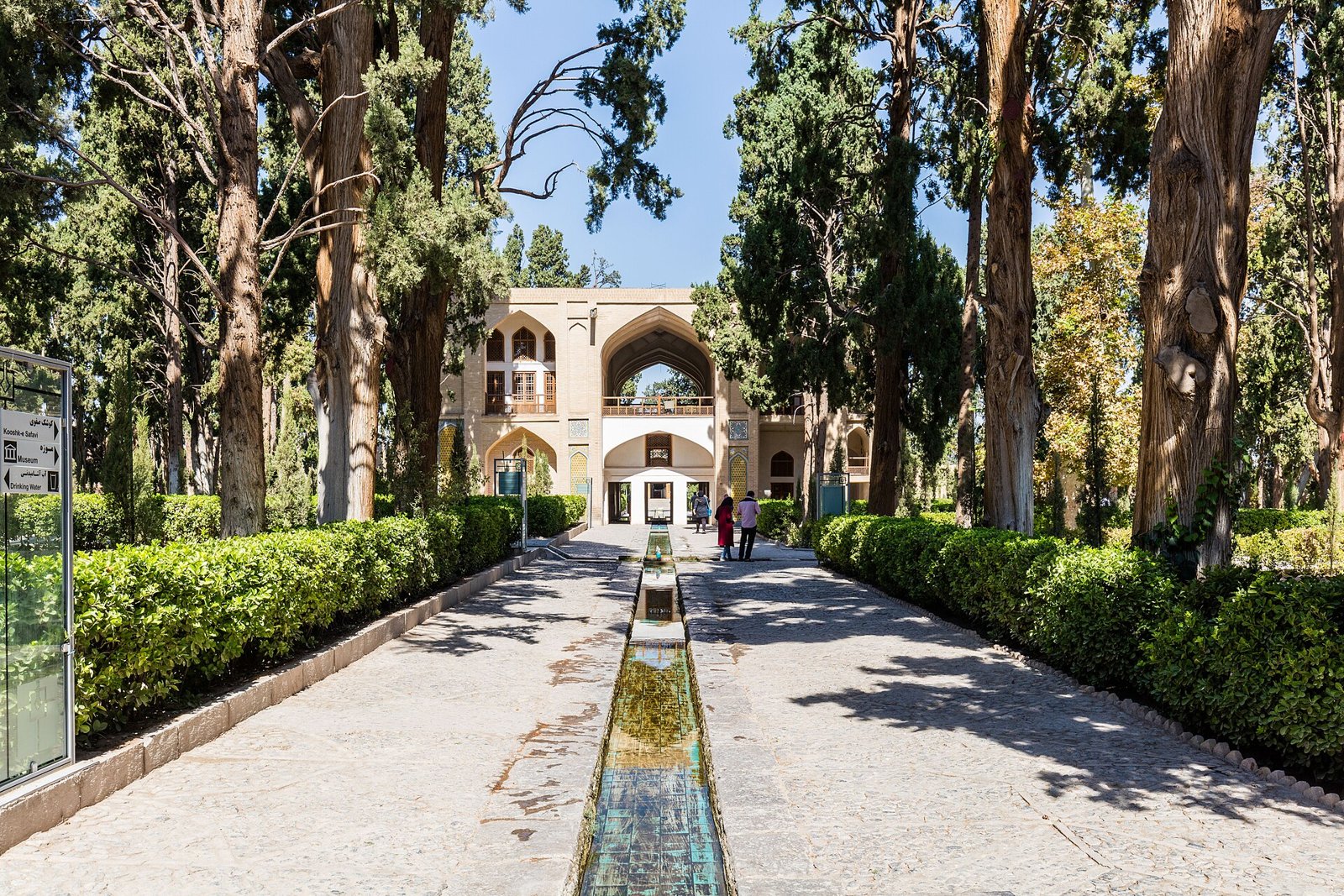
Here is how a realistic last minute spring trip might come together. Suppose it is April 3, the holiday wave has just receded, and you have five days. Open Mehyar and check flights from Tehran to Shiraz, or book a night bus for the evening and sleep your way south. Spend the first two days in Shiraz and the surrounding region, visiting Persepolis in the morning of day two before the tour groups arrive, and the tombs of Hafez and Saadi in the late afternoon. On day three, take a morning transport or a private car toward Yazd, arriving in time for an evening walk through the old city. Day four belongs to Yazd itself, the Jameh Mosque, the Amir Chakhmaq complex, and the towers of silence at sunset. On day five, book an afternoon flight or bus back to Tehran, with a final morning in the bazaar buying termeh and sweets.
For a northern alternative in the same window, book a bus or a Mehyar Taxi to Rasht, then spend the days moving through Gilan at a slow pace, from the green countryside to the tea fields around Lahijan and the coast at Anzali. The roads are calmer after the holiday, the ecolodges have room again, and the spring green of the province is at its peak.
The point of these examples is that a last minute spring tour in Iran is not a compromise but a different kind of trip. It trades the certainty of a long planned itinerary for the freedom to follow the season, and with the booking tools now available, the trade is a good one. Book the first night, book the first transport, and let the rest of the plan grow as you travel.
Practical checklist for the last minute traveler
Before you go, run through a short list. Check the Nowruz dates and know exactly where you are in the holiday calendar. Book your first night and your first transport through Mehyar, even if everything else remains open. Carry cash, because card payment is unreliable in smaller towns. Pack layers, since spring weather swings widely between regions and between day and night. Download offline maps for the areas you will visit. And leave room in the plan for the unexpected, because in Iran the unexpected is usually an invitation, a meal, or a view you did not know existed.
Spring is the season when Iran is easiest to love, and a last minute trip taken in that season, with a little flexibility and the right tools, will reward you with the country at its greenest, its most festive, and its most welcoming.