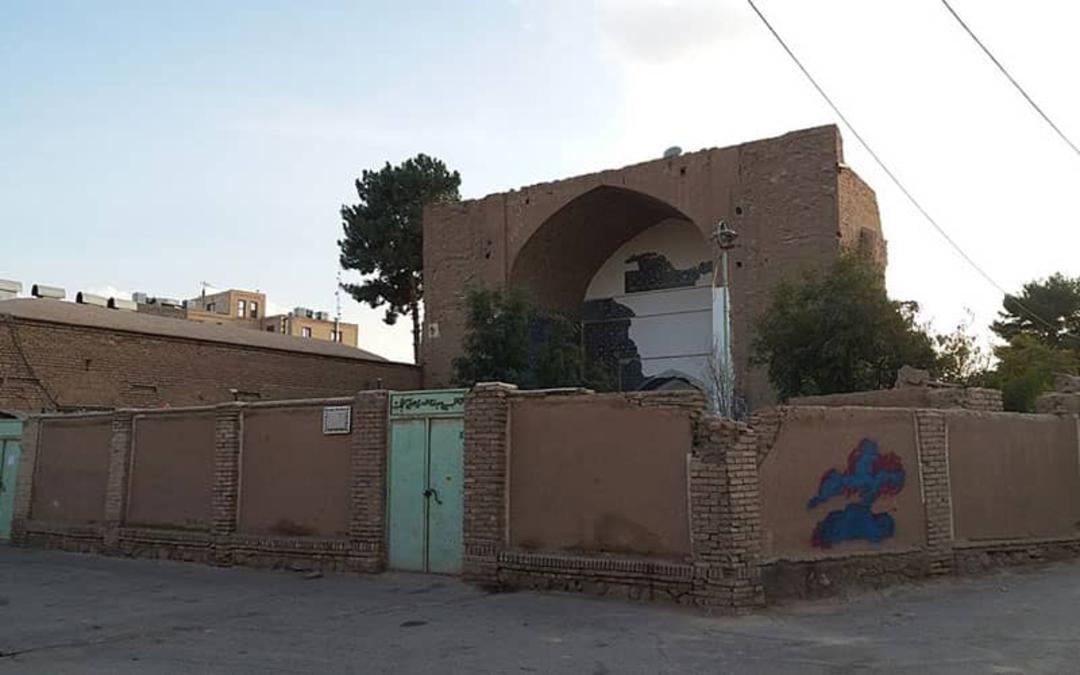
In the historic heart of Kerman, tucked along Abu Hamed Street near what was once the Shah Bazaar, stands a structure that tells a story few visitors expect to find in southeastern Iran. The Green Dome, known locally as Gonnbad-e Sabz, is the surviving remnant of a vast complex built during the Qara-Khitai period in the thirteenth century CE. Its turquoise-tiled dome once soared some fifty meters above the city, a landmark visible from the surrounding mountains. Today, only a single grand iwani remains standing, but even that fragment carries enough weight to make the site worth the journey. This was once one of the earliest universities in Iran, a center of learning built by a remarkable woman named Turkan Khatun, and its story stretches far beyond its crumbling walls.

The Qara-Khitai Legacy in Kerman
The Qara-Khitai were one of many dynasties that rose and fell across the Iranian plateau during the turbulent centuries following the Mongol invasions. In Kerman, they established a local branch that ruled for approximately 83 years, leaving a cultural imprint that outlasted their political power. The founder of the Kerman branch, Buraq Hajib, laid the first bricks of the Green Dome complex around 1230 CE. Construction continued under his successor, Turkan Khatun, who transformed the project into something far grander than a simple tomb.
Turkan Khatun was a ruler of unusual vision. She governed Kerman for roughly thirty years, a remarkable tenure for a woman in that era, and used her authority to build not only the Green Dome but also qanats, caravanserais, mosques, hospitals, and roads across the region. Her most ambitious foundation was the Green Dome complex itself, which she conceived as a multidisciplinary center of learning.

Iran's First University?
The Green Dome functioned primarily as a school and scientific center, a place where scholars gathered to teach and study. Historical sources record that professors of the stature of Sheikh Mahmoud Shabestari, Majd Khvafi, and Sadid al-Din Vozvni traveled to Kerman specifically to lecture at this institution. Their presence alone speaks to the reputation the Green Dome had earned as a center of intellectual life.
Beyond teaching, the complex included a grand assembly hall, a governmental citadel, the Ismatiyeh University, the Mashid Garden, and the tombs of the Qara-Khitai rulers. It was, in effect, a small city of knowledge and power. For more than two centuries, the Green Dome served as one of the most prominent scientific centers in the region, attracting students and scholars from across the Islamic world.
The scholar who ranked the Green Dome's dome as the finest example of mosaic tilework in all of Iran was the distinguished architectural historian Dr. Pirnia. He identified the tilework as the oldest surviving mosaic in the country, a distinction that places the Green Dome among the most important decorative art monuments in Iranian history. Marco Polo himself noted the Green Dome as a remarkable structure during his travels through the region.
Architectural Details
The dome, with its turquoise faience tiles, gave the complex its name. The color green in Persian architectural terminology often encompasses the range of turquoise and blue-green tones used in tilework, and the Green Dome's tiles span that spectrum beautifully. The octagonal plan and the decorative muqarnas work on the iwani reflect a sophisticated understanding of geometry and structural aesthetics.
One remarkable feature of the complex was its relationship to the surrounding water table. Local tradition holds that no cesspit existed within one kilometer of the Green Dome's own water well, a detail that speaks to careful urban planning and an awareness of sanitation that was ahead of its time.
Earthquakes and Decline
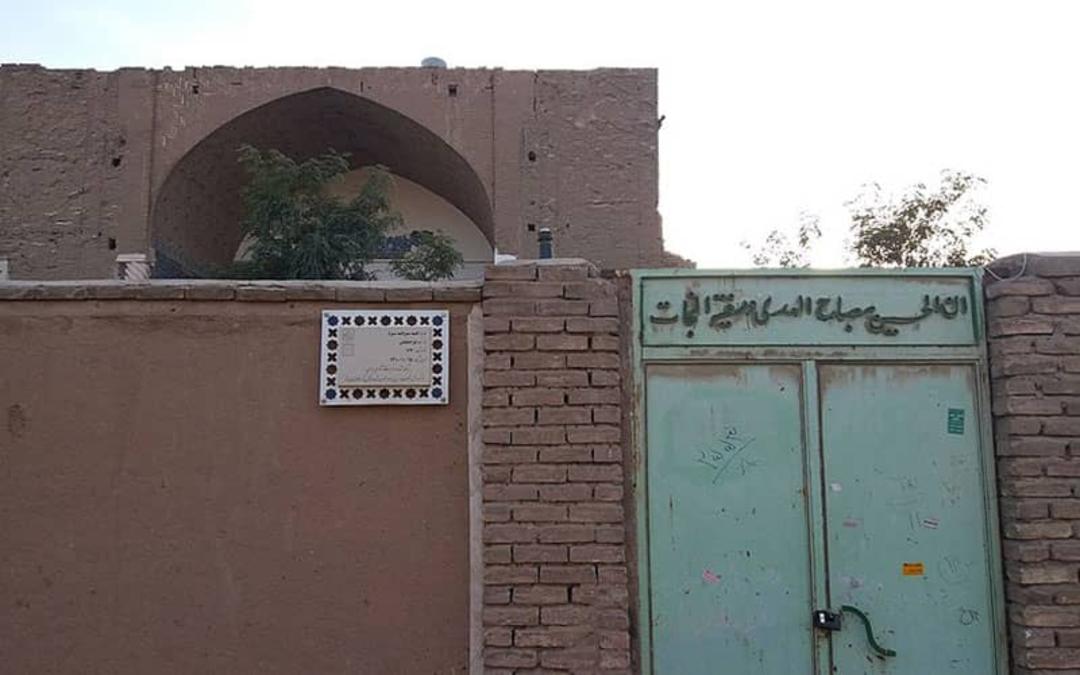
Much of the original grandeur was lost to natural disasters and human neglect. A devastating earthquake in 1314 AH (1896 CE) caused major damage to the structure. Subsequent decades brought unauthorized excavations and indifferent maintenance, reducing what was once a vast complex to the solitary iwani that stands today. Archaeological work in the surrounding area has revealed traces of the original foundations and additional architectural remains beneath the modern residential fabric of the neighborhood.
The tomb of Turkan Khatun herself survives adjacent to the Green Dome, on its right side, and is locally known as the Tomb of Seyed Khoshru. Her legacy as a builder, a patron of learning, and a just ruler remains woven into the identity of this corner of Kerman.
How to Get There
The Green Dome sits on Abu Hamed Street in central Kerman, within easy walking distance of the Ganjali Khan Bazaar and other major historical sites. Kerman is served by an airport with regular domestic flights from Tehran, Shiraz, and Isfahan. The city also has a railway station and road connections to Yazd (approximately 380 kilometers), Shiraz (approximately 530 kilometers), and other regional centers. Mehyar Taxi offers reliable transport within Kerman for visits to the Green Dome and surrounding sites.
Hours and Tickets
The Green Dome iwani is generally accessible during daylight hours. As with many lesser-known historical sites in Iran, formal opening hours can vary. Visiting in the company of a local guide or through an organized tour ensures access to the interior and valuable historical context. Entry is typically free or carries a nominal fee.
Nearby Attractions
Kerman is rich in historical attractions that complement a visit to the Green Dome. The Ganjali Khan Complex, with its stunning square, bathhouse, and bazaar, is a Safavid-era masterpiece just minutes away. The Rayen Citadel, a magnificent adobe fortress, lies about 120 kilometers to the southeast. The Shah Nemat-ol-Vali Shrine in the nearby town of Mahan and the unique desert landscape of the Lut Desert, a UNESCO World Heritage Site, are all within a day's drive.
Travelers exploring Kerman can use Mehyar Hotels for comfortable accommodation and Mehyar Wallet for seamless transactions throughout their stay in this historically rich corner of southeastern Iran.