
In a quiet alley off Shams Abadi Street in central Isfahan, behind the plane trees and the wrought-iron gates of a Qajar-era mansion, a different kind of museum waits. It is not a museum of art or archaeology, though the building itself is historic and the rooms are handsome. It is a museum of education, dedicated to the story of how children and young people have been taught in Isfahan and in Iran over the centuries. The rooms that were once the private quarters of a prominent family have been converted into galleries that trace the evolution of learning from the traditional maktab, where boys sat cross-legged on the floor and recited the Quran from memory, to the modern classroom with its rows of desks, blackboards, and textbooks. This is the Education Museum of Isfahan, also known as the House of Ata-ol-molk Dehsh, and it is one of the most unusual and rewarding museums in the city.
The building itself is part of the story. Ata-ol-molk Dehsh was a prominent figure in Isfahan during the late Qajar period, a man of learning and influence who built this house as a residence for his family. The mansion follows the traditional plan of a Qajar merchant's house: a central courtyard surrounded by rooms on two levels, with decorative plasterwork, painted ceilings, and wooden lattice windows that filter the light into soft geometric patterns. After the revolution, the house was transferred to the Ministry of Education, and in 2002 it was opened as a museum dedicated to the history of education in Isfahan Province. The conversion was done with care, preserving the architectural character of the house while adapting the rooms to serve as exhibition spaces.
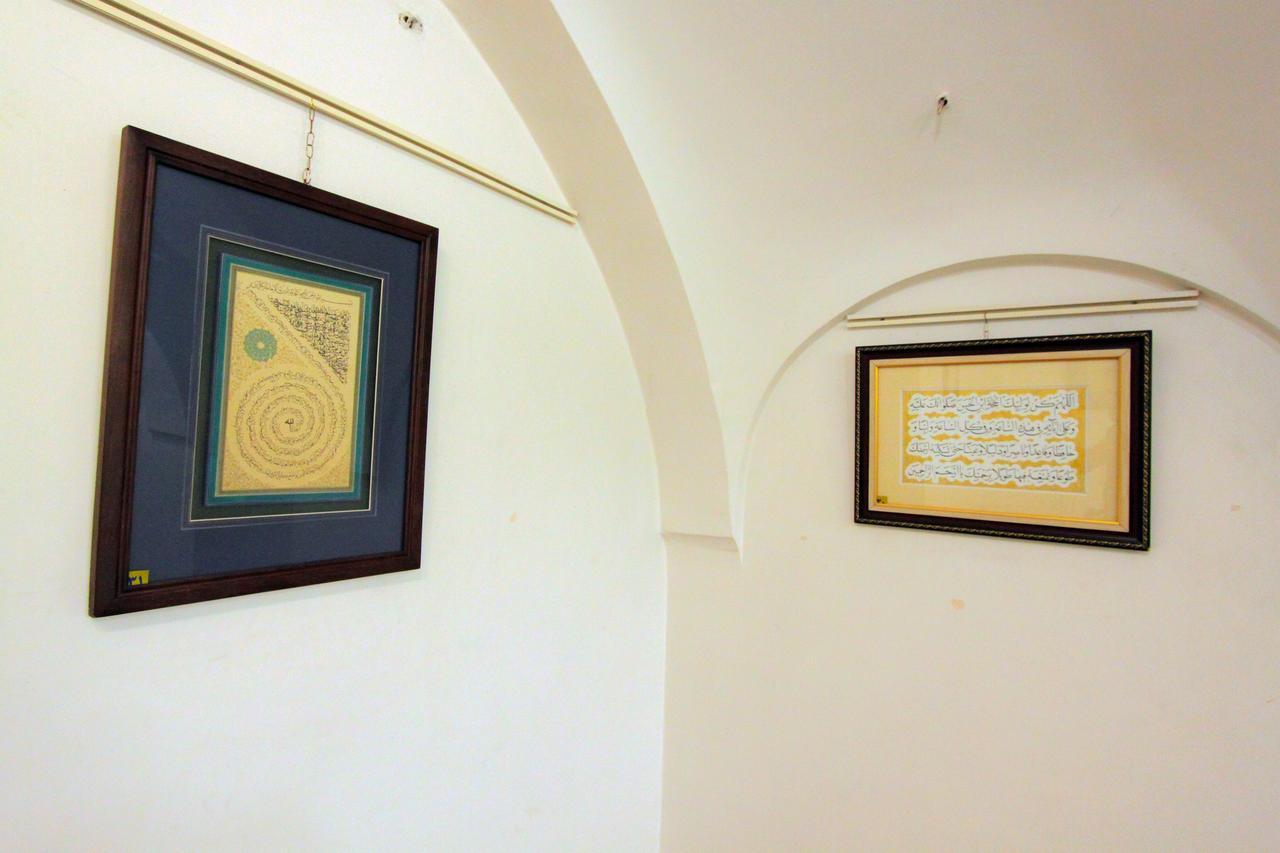
Where is the Education Museum of Isfahan?
The museum is located in the centre of Isfahan, on Shams Abadi Street near Sheikh Bahaei Square. The address, as it is signed locally, is Isfahan, Shams Abadi Street, Sheikh Bahaei Square, Ata-ol-molk Dehsh Alley. It sits in a residential neighbourhood that was historically home to Isfahan's educated and merchant classes, and the streets around the museum are lined with tall walls, old gardens, and the occasional historic house that has been converted into a cafe or cultural centre.
The museum is within walking distance of several other important sites in Isfahan. The Chehel Sotoun Palace is about a ten-minute walk to the south, and the Hasht Behesht Palace is a similar distance to the southwest. The Imam Square (Naqsh-e Jahan Square) is about fifteen minutes on foot to the east, though most visitors combine the museum with a tour of the central Isfahan palaces and gardens rather than trying to fit it in with the square.
Isfahan sits in central Iran, on the banks of the Zayandeh Rud, roughly 340 kilometres south of Tehran by road.
How to get to Isfahan and to the Education Museum
Most visitors arrive in Isfahan from Tehran. The distance is about 340 kilometres, covered in roughly four to five hours by car. Here are the main transport options.
By Mehyar Taxi. The most flexible way to reach Isfahan from Tehran, or to move between the city's museums, is to open Mehyar, choose Taxi, and set your destination. A private car gives you the freedom to visit the Education Museum in the morning and then continue to the Chehel Sotoun Palace or the National Museum in the afternoon, with stops for tea and lunch along the way. Within Isfahan, Mehyar Taxi is the quickest way to get from your hotel to the museum and back.
By Mehyar Buses. For budget travellers, Mehyar Buses connects Tehran to Isfahan with comfortable coaches that run frequently throughout the day. The journey takes about five to six hours. From the Isfahan bus station, a short taxi ride brings you to Shams Abadi Street.
By plane. Isfahan has an international airport, Shahid Beheshti Airport, with domestic flights from Tehran and several other Iranian cities, as well as limited international connections. From the airport, it is about a thirty-minute taxi ride to the museum.
By walking. If you are staying in central Isfahan, the museum is within easy walking distance of many of the city's other sights. A morning walk from the Imam Square through the bazaar and along Chahar Bagh Avenue, turning east onto Shams Abadi Street, is a pleasant way to approach the museum and gives you a sense of the city's layout.

What to see at the Education Museum
The museum is housed in the rooms of the Qajar mansion, and each room or gallery is dedicated to a different aspect of the history of education in Isfahan.
The traditional maktab. One of the most evocative exhibits is a recreation of a traditional maktab, the elementary school that was the standard form of education for most Iranian children before the establishment of modern schools in the twentieth century. The room is set up with a low carpeted floor, a niche in the wall where the Quran would have been kept, and a raised seat for the mullah who taught the children. The atmosphere is quiet and intimate, and it is easy to imagine the sound of children reciting their lessons in unison, the scratch of reed pens on paper, and the occasional rap of the teacher's cane.
The evolution of the classroom. Another gallery traces the transition from the maktab to the modern school, with displays of early twentieth-century textbooks, blackboards, desks, and teaching aids. You can see the shift from rote memorisation of religious texts to the introduction of mathematics, science, and geography into the curriculum. The exhibits include photographs of early schools in Isfahan, report cards, and personal accounts from teachers and students who experienced the transition.
The science laboratories. One of the most interesting sections of the museum is dedicated to the development of science education. The rooms are set up as historical science laboratories, with exhibits on geology, biology, chemistry, physics, and astronomy. The geological section includes mineral samples and maps of Isfahan's geological formations. The biology section has preserved specimens and anatomical models. The chemistry and physics sections display vintage laboratory equipment, glassware, and instruments that would have been used in school laboratories in the mid-twentieth century. The astronomy section includes old star charts and teaching models of the solar system.
The Dehsh House itself. Beyond the educational exhibits, the building is worth exploring for its own sake. The courtyard is planted with old trees and has a small pool in the centre, a classic feature of the Isfahani house. The rooms around the courtyard have decorative plasterwork (gach-bori) on the walls and ceilings, with floral and geometric motifs that are characteristic of the Qajar period. The wooden lattice windows (orosi) filter the light into patterns that shift throughout the day. Walking through the house, you are experiencing the domestic life of a prominent Isfahani family at the same time as you are learning about the broader history of education.
The library and archives. The museum also houses a small library and archive of historical educational texts, including manuscripts, printed books, and official documents related to the administration of schools in Isfahan Province. Researchers and students of educational history can arrange access to the archive by contacting the museum in advance.
For more on the cultural institutions of Isfahan, see our guide to the museums of Isfahan.

Best time to visit the Education Museum
The museum is indoors, so it is accessible year-round. But the best time to visit is in spring or autumn, when the weather in Isfahan is mild and you can combine the museum with walks in the city's gardens and along the river.
Spring (March to May) is the most pleasant season, with mild temperatures and the city's gardens in bloom. The light in spring is ideal for photographing the museum's interiors, as it enters through the lattice windows at a low angle and creates soft patterns on the floors.
Autumn (September to November) offers clear skies and comfortable temperatures. The trees in the museum courtyard turn golden, and the light has a warm quality that brings out the tones of the plasterwork and painted ceilings.
Summer (June to August) is hot, but the museum's thick walls and courtyard provide relief from the heat. Visit in the morning to avoid the midday temperatures.
Winter (December to February) can be cold, but the museum is heated and the indoor exhibits are comfortable to explore. The courtyard may be less inviting, but the rooms are atmospheric on a grey winter day.