
Iran's Overlooked Jewel on the Silk Road
Damghan sits on the northern edge of the great central desert, roughly halfway between Tehran and Mashhad along one of Iran's most traveled corridors. In antiquity, it was known as Sad Darvazeh, the City of a Hundred Gates, a testament to its importance as a stopping point for the great trade caravans that crossed the Iranian plateau. Today, the modern city has absorbed much of the old mud-brick fabric, but a surprising number of monuments survive, and the compact center rewards patient exploration. For travelers who are willing to look past the surface, Damghan offers a concentrated dose of Iranian history, from pre-Islamic fire temples to Seljuk towers, all set against a backdrop of stark desert mountains and pistachio orchards.
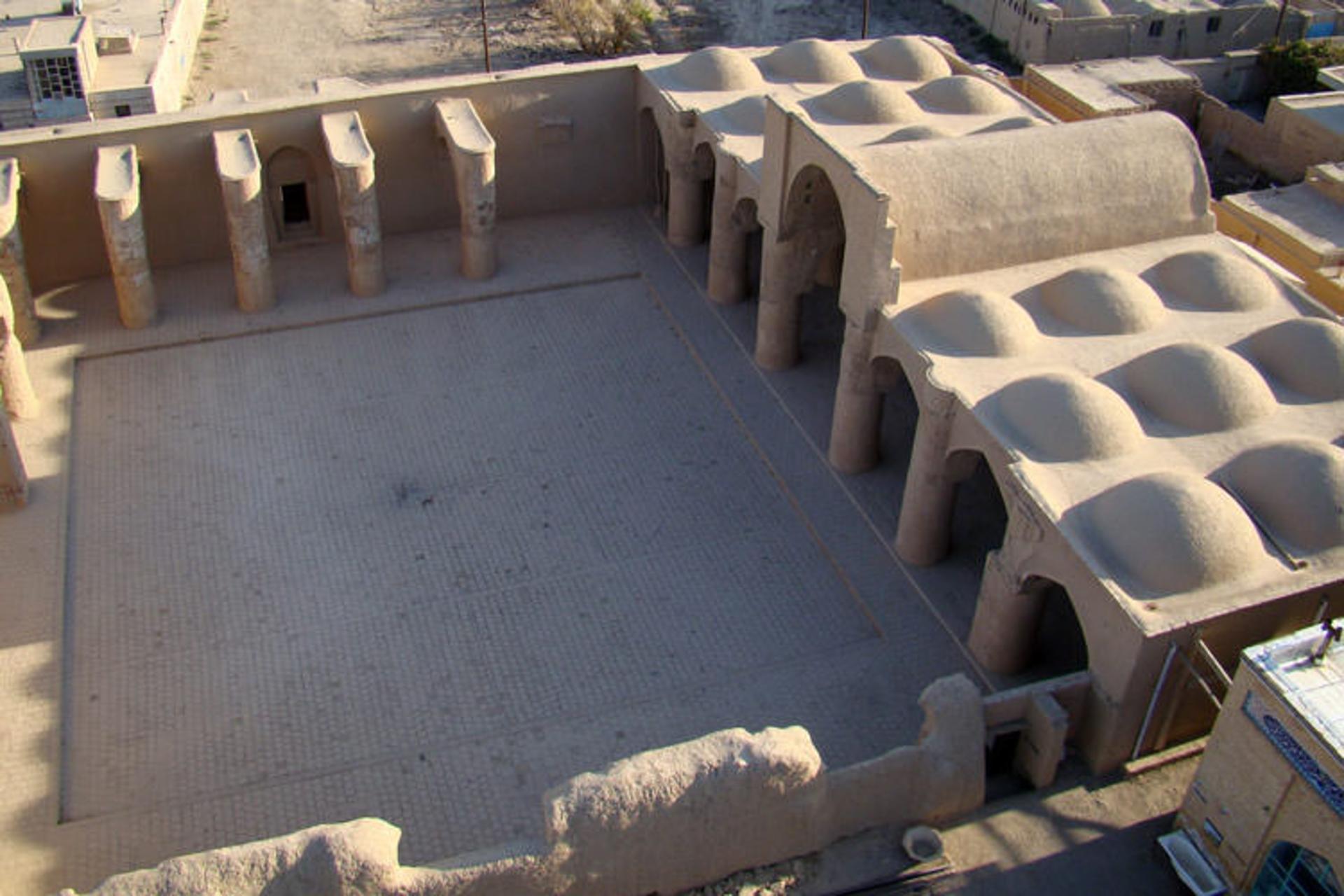
Tarikhaneh: Iran's Second-Oldest Mosque
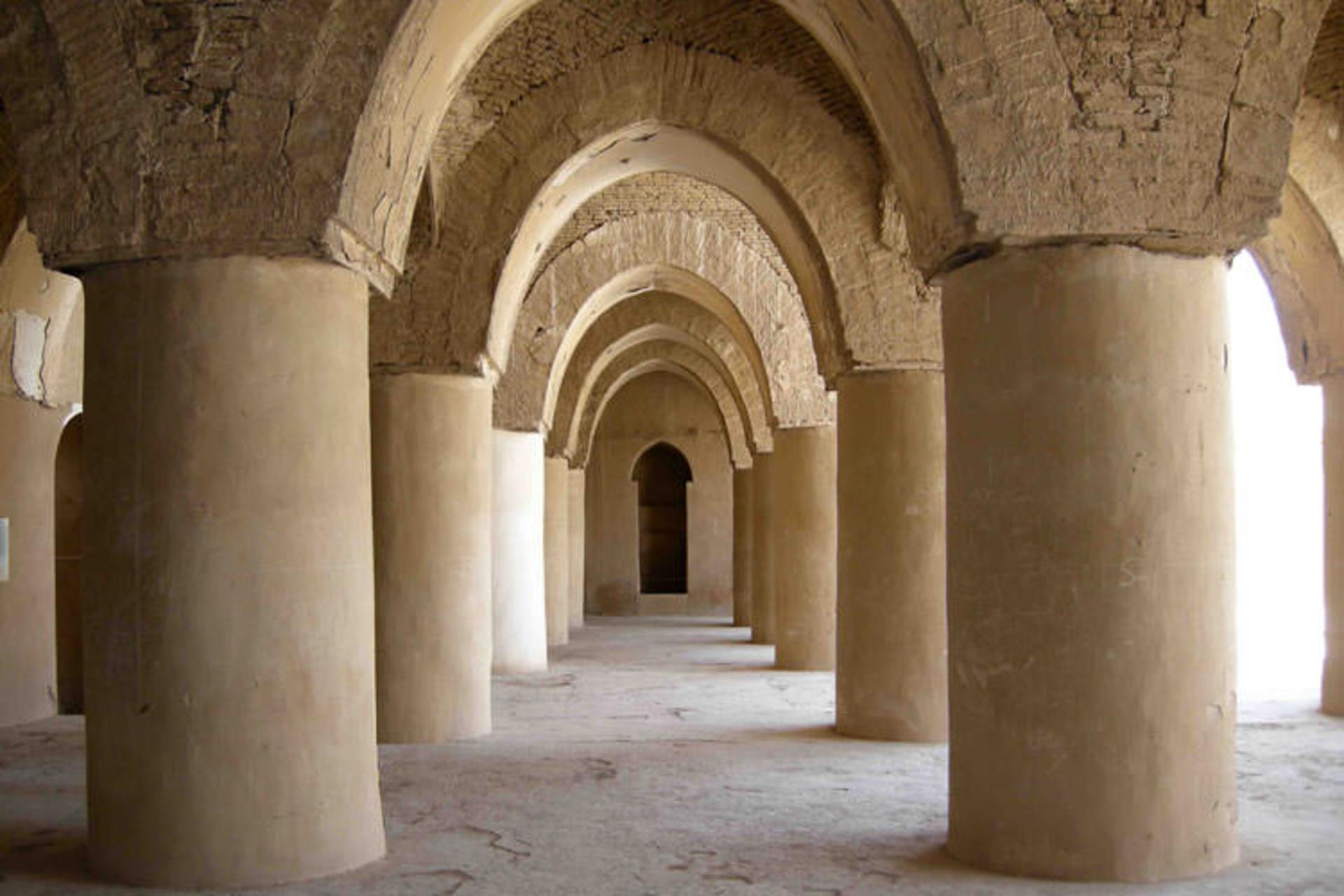
No visit to Damghan is complete without Tarikhaneh, a structure whose origins reach back approximately 1,300 years, making it the second-oldest mosque in Iran after the Jameh Mosque of Saveh. Built on the ruins of a pre-Islamic Zoroastrian fire temple, the mosque retains a palpable sense of antiquity. Its hypostyle hall is supported by eighteen massive columns, thick and unadorned, that rise from stone bases and carry the weight of the ceiling with an economy of means that speaks to the practical engineering of the early Islamic period.
The central courtyard is surrounded by reconstructed arcades that, while not original, convey the spatial logic of the early congregational mosque. The brick minaret, standing some thirty meters tall, dates to 418 AH (approximately 1027 CE) and is decorated with delicate geometric patterns that repay close inspection. Because of construction activity nearby, the minaret appears slightly tilted, adding an unintentional charm to an already remarkable structure.
The mosque is located on Shahid Motahhari Street, about 400 meters south of Imam Khomeini Square, and is accessible on foot from the city center. Entrance is typically free, and visitors are welcome outside of prayer times. Allow at least an hour to appreciate the proportions of the hall, the play of light through the columned spaces, and the craftsmanship of the minaret's brickwork.
Jameh Mosque and the Seljuk Minaret

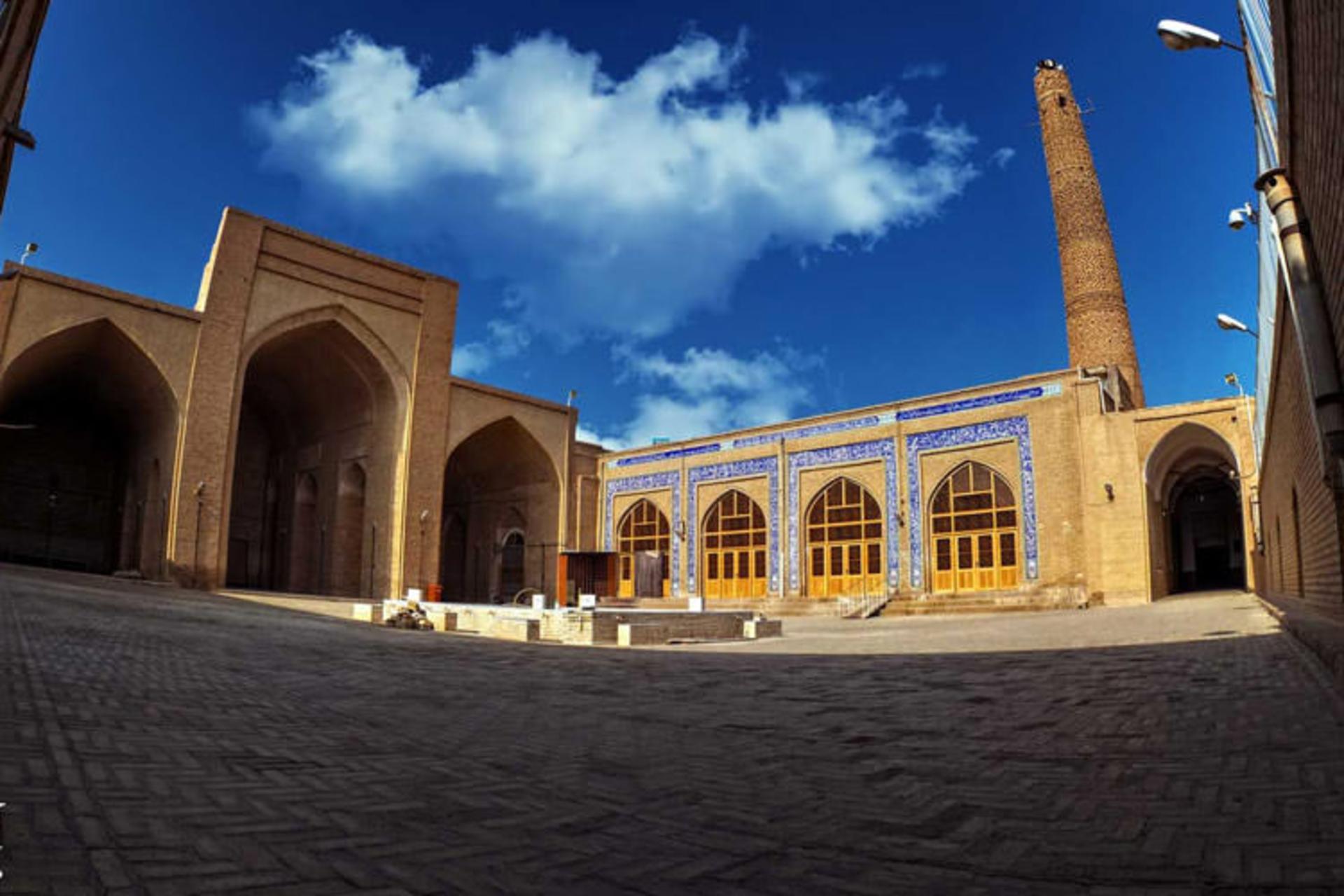
A short walk from Tarikhaneh, on the western edge of Imam Khomeini Square, stands the Jameh Mosque of Damghan. The current building appears largely modern on the outside, but its origins go back roughly a thousand years. The most striking feature is the brick minaret, which dates to the mid-fourth century AH and is one of the finest examples of early Seljuk decorative brickwork in the region. The patterns are abstract and geometric, relying on the interplay of raised and recessed brick courses to create a visual effect that changes with the angle of the sun.
Inside, the prayer hall is simple and unpretentious, as is typical of congregational mosques in smaller Iranian cities. The real attraction is the minaret itself, which can be studied from the courtyard. For photography enthusiasts, the late afternoon light, when the sun catches the raised brick patterns, produces the best results.
Pir Alamdar and Chahl Dokhtar: Seljuk Funerary Towers
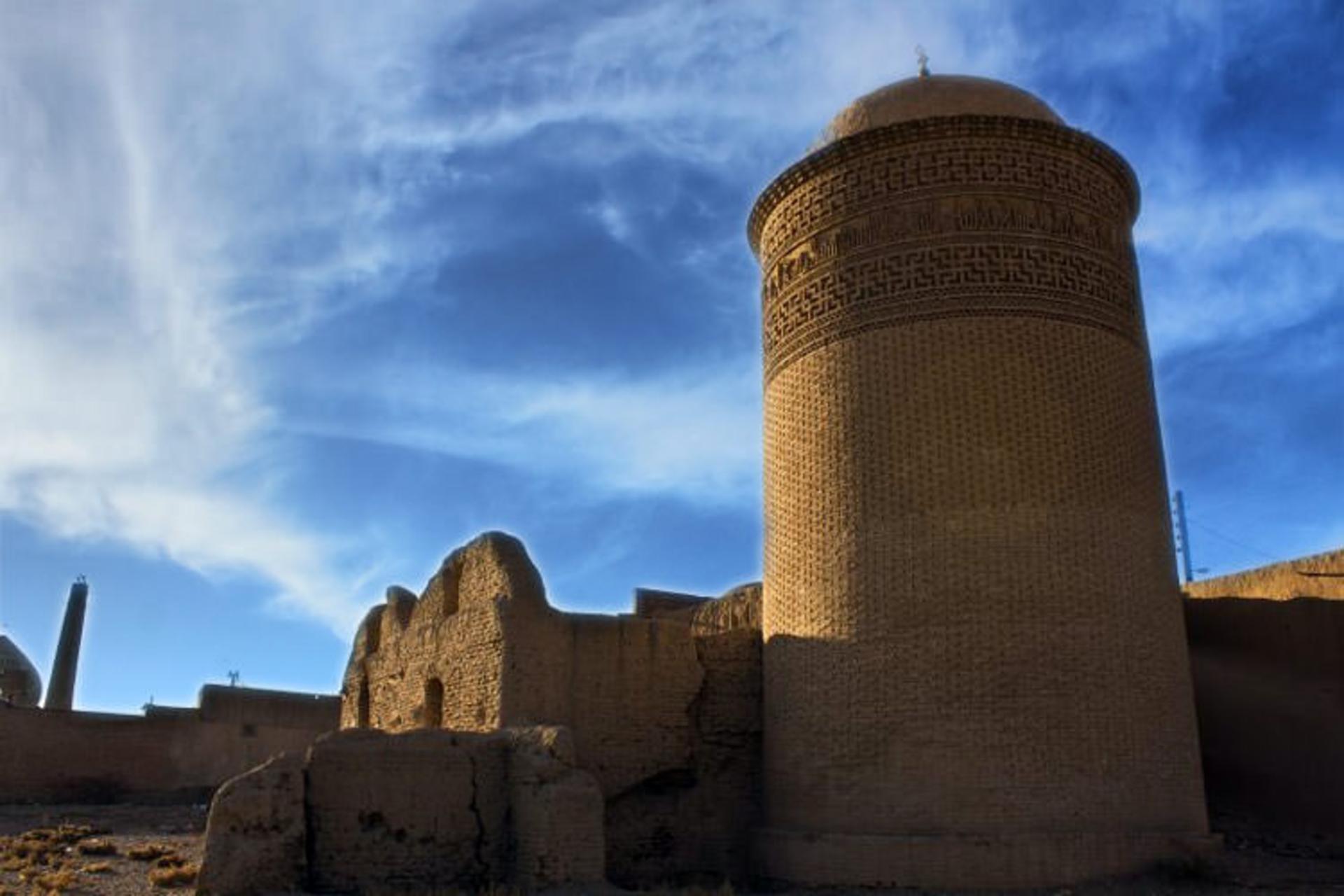
A few minutes' walk west of the Jameh Mosque brings you to the tomb of Pir Alamdar, a cylindrical tower built in the first decades of the fifth century AH. The structure originally featured a conical roof, which has since been replaced by a brick dome decorated with bands of Kufic inscription. The interior is surprisingly beautiful, with muqarnas transitions and plasterwork that suggest the building was commissioned by someone of considerable means and taste.
Nearby, in Chahar Shir Square, stands the Chahl Dokhtar tower, a structure similar in form to Pir Alamdar. The square itself is one of Damghan's main nodes, connecting the city's historic core with the bazaar and the surrounding neighborhoods. The adjacent Imamzadeh Jafar is an impressive brick mausoleum with short corner towers, arched false windows, and a five-layered conical dome. It is a working religious site, and visitors should dress respectfully and remove shoes before entering.
The Bazaar and Urban Fabric
The stretch between Imam Khomeini Square and Chahar Shir Square constitutes the historic commercial spine of Damghan. The covered bazaar, though modest by the standards of Tabriz or Isfahan, retains its traditional character and is flanked by the central branches of most major banks. From Imam Khomeini Square, Shahid Beheshti Street leads northeast toward the Mashhad road, while Shahid Motahhari Street leads southeast toward Tarikhaneh and the railway station, which sits about two kilometers from the center.
Chahar Shir Square connects to the north with the spacious Azadi Boulevard, lined with plane trees, and to the west with a historic caravanserai that has been repurposed for commercial use. The Khandaq Bazaar, accessible from the east side of the square, is a good place to sample local products, most notably Damghan's celebrated pistachios, which are among the finest in Iran.
Chesmeh Ali: A Desert Oasis
One of the most rewarding excursions from Damghan is to Chesmeh Ali, a spring and historical complex located approximately thirty kilometers to the north. The road offers a striking sequence of landscapes: dry, stony hills give way to views of snow-capped Alborz peaks, and mud-walled garden compounds appear among groves of plum and walnut trees. The spring itself feeds a pool surrounded by towering willow trees, and the ruins of a Qajar-era kolah farangi pavilion stand in the center, their octagonal form partially collapsed but still evocative of the leisurely pleasures of the nineteenth-century elite.
Beyond Chesmeh Ali, the road continues north through dramatic Alborz valleys to the small town of Diba, a place of quiet mountain beauty. Further still, in the hills above Diba, stands Radkan Tower, a Seljuk-period astronomical tower similar in concept to Tughrol Tower in Rey. The road to Radkan is rough and requires a high-clearance vehicle, but the effort is rewarded by the tower's remote setting and the panoramic views of the surrounding range.
Where to Stay and Eat
Damghan offers a handful of accommodation options that, while not luxurious, provide clean and comfortable bases for exploring the city. Hotel Amir, located above a good budget restaurant in Meydan-e Varzesh (about 1.5 kilometers from Chahar Shir Square), offers small but adequate rooms with private bathrooms and friendly staff. Hotel Danesh, on Shahid Beheshti Street, has a more polished exterior and well-maintained rooms with air conditioning and refrigerators, though at a slightly higher price point. Hotel Jahangardi, adjacent to the Municipal Park and within five minutes' walk north of Chahar Shir Square, offers traditional vaulted ceilings and a caravanserai-like atmosphere that appeals to travelers seeking character over modernity.
For food, the city is not a culinary destination in the way that Isfahan or Shiraz might be, but it does offer honest Iranian fare. A small coffee shop thirty meters northeast of Imam Khomeini Square on Shahid Beheshti Street serves decent Turkish coffee and espresso. The Azadi Boulevard has several fast-food outlets, and the pizza place opposite the Khandaq Bazaar is popular with locals. The real culinary highlight, however, is the pistachio. Damghan's pistachios are renowned across Iran, and buying them fresh from the bazaar is an experience in itself.
Getting There
Damghan lies on the main Tehran-Mashhad highway and railway line, making it accessible from either direction. From Tehran, the drive takes approximately four to five hours via the Semnan-Damghan road (Route 44). Buses depart regularly from Tehran's Eastern Bus Terminal (Terminal-e Sharq) and arrive at Damghan's bus terminal on Shahid 17 Shahrivaz Street, about one kilometer west of the city center. The bus journey takes roughly four hours.
From Semnan, the capital of the province, Damghan is about three hours to the east by road. From Shahroud, it is roughly seventy-five minutes to the west. Shared taxis and intercity buses connect Damghan with both cities throughout the day. When you arrive in Damghan, public transport will drop you at either Imam Khomeini Square or Chahar Shir Square, which are the two main hubs of the city center.
For travelers using Mehyar, the app can help arrange taxis within the city and provide directions to the major sights. Given Damghan's compact size, most attractions are within comfortable walking distance of the two central squares, though Chesmeh Ali and Radkan Tower will require private transport.
Climate and When to Visit
Damghan has a desert-influenced continental climate. Summers are hot and dry, with temperatures regularly exceeding thirty-five degrees Celsius, making sightseeing uncomfortable during midday hours. Winters are cold, with occasional frost and snow, particularly in the mountain areas to the north. The best times to visit are spring, particularly March through May, when the weather is mild and the pistachio trees are in bloom, and autumn, from late September through November, when the harvest is underway and the light is superb for photography.
Practical Information and Hours
Most of Damghan's historical monuments are open during daylight hours and do not charge an entrance fee, though this can change. Tarikhaneh Mosque is accessible outside of prayer times. Jameh Mosque is open throughout the day, though non-Muslim visitors may be asked not to enter the prayer hall during congregational prayers. Pir Alamdar and Imamzadeh Jafar are generally accessible during daytime hours. For the most current information, ask at your hotel or check with the local tourism office near Chahar Shir Square.