
Christmas in Iran | Armenian and Assyrian Traditions in the Heart of Iran
Iran is not a country most people associate with Christmas. The headlines tend to run in other directions. Yet behind the political noise, a quieter reality persists: Iran has been home to Christian communities for nearly two thousand years, and those communities still mark the birth of Christ with devotion, ritual, and quiet joy every winter. This guide explains who celebrates Christmas in Iran, when the celebrations fall, and where travelers might witness the traditions firsthand.
Who Celebrates Christmas in Iran
Christianity in Iranian lands predates the arrival of Islam by several centuries. Merchants and missionaries carried the faith along the Silk Road during the Parthian period, and by the third century, Christian communities were well established across the empire. Today, the two largest indigenous Christian groups are the Armenians and the Assyrians, each with distinct liturgical calendars and customs.
Armenian Apostolic Christians form the most populous Christian community in Iran. They are concentrated in Tehran, Isfahan (particularly the New Julfa quarter), and Tabriz. The Assyrian community, smaller but deeply rooted, lives primarily in northwestern Iran around Urmia and in parts of West Azerbaijan Province. Both communities are officially recognized under the Iranian constitution and maintain their own churches, schools, and cultural institutions.
There are also smaller Catholic and Protestant congregations in the major cities, though their public visibility is more limited. When people refer to Christmas in Iran, they are most often describing Armenian or Assyrian observances.
Why Armenian Christmas Falls on January 6
One of the first things that surprises visitors is that many Iranian Christians celebrate Christmas on January 6 rather than December 25. This is not a mistake or a local quirk. The Armenian Apostolic Church has never adopted the December 25 date that became standard in the Western calendar. Instead, it keeps the ancient tradition of celebrating the Nativity and the Baptism of Christ together on January 6, the feast of Epiphany. In the Iranian solar calendar, this date usually falls on the 16th or 17th of Dey.
Assyrian Christians in Iran, like most Western and Eastern churches, observe Christmas on December 25. This means that the Christmas season in Iranian Christian neighborhoods actually unfolds in two waves: first the Assyrian celebration on December 25, then the Armenian observance nearly two weeks later.

Christmas Traditions Among Assyrian Iranians
Assyrian Christians begin a fasting period called the Nativity Fast roughly 25 days before December 25. During this time, many families abstain from meat and dairy as a form of spiritual preparation. On Christmas Eve, families gather for the midnight liturgy at their local church. The service, conducted partly in Syriac (the liturgical language descended from the Aramaic that Jesus himself spoke), includes the Eucharist and special hymns.
After the service, families return home for a festive meal. The breaking of the fast is itself a celebration. Visits to elders and clergy follow on December 26, when priests and deacons in turn visit the families of their congregation. It is a season of reciprocity and community cohesion.
Interestingly, the Assyrian New Year does not fall on January 1. It is celebrated in the spring, coinciding with the ancient festival of Akitu, which in Iran lines up around Nowruz (March 21). For Assyrian Iranians, the winter holidays are purely about the Nativity, not about the turn of the calendar year.
Christmas Traditions Among Armenian Iranians
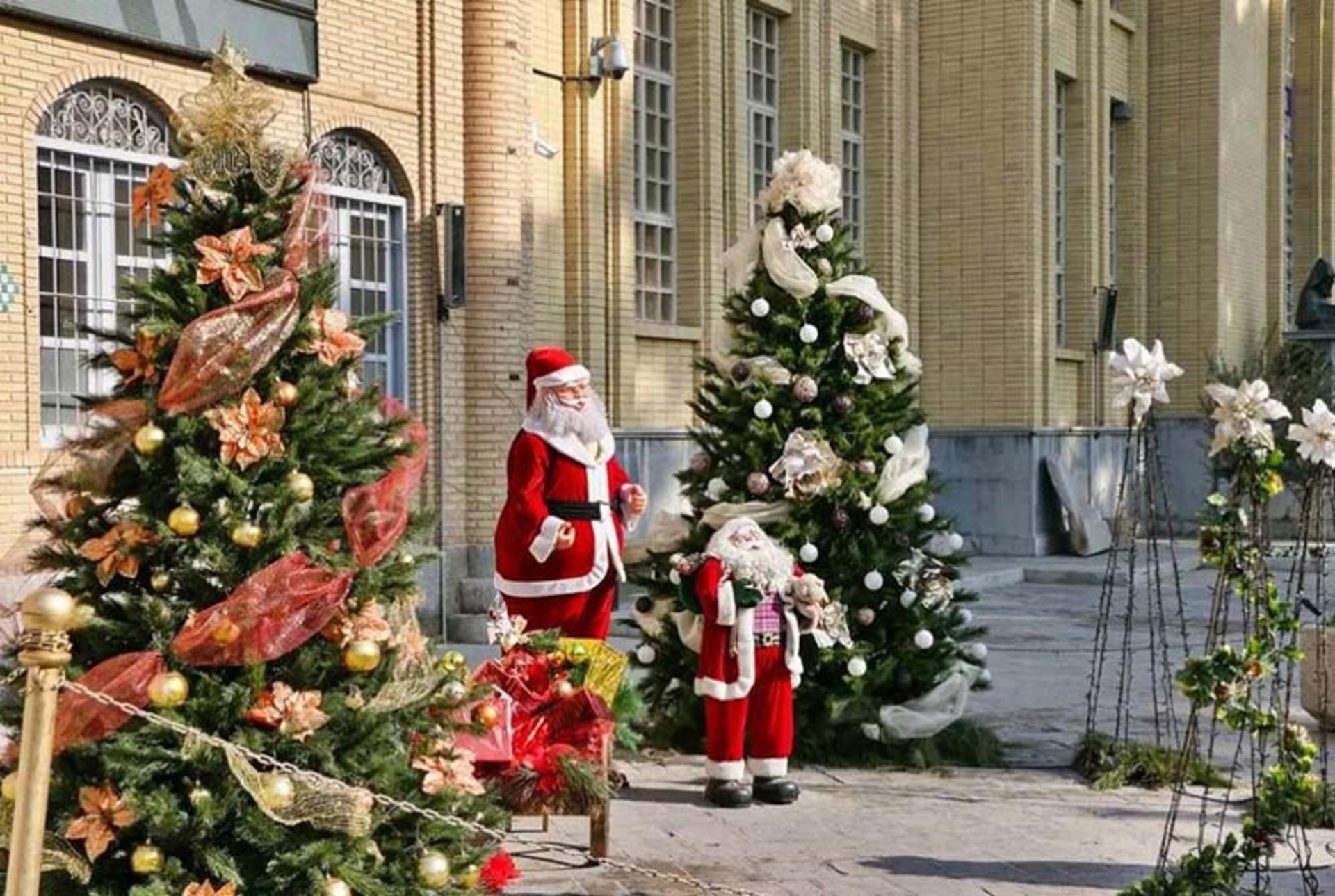
Armenian Christmas in Iran centers on January 6. In the weeks leading up to the feast, Armenian neighborhoods in Tehran and Isfahan begin to show signs of the season. Christmas trees appear in homes and in church courtyards. Shops along streets such as Mirza Shirazi Street in central Tehran may display modest seasonal decorations. The tone is restrained compared to the commercial Christmas of Western capitals, but no less sincere.
On Christmas Eve, Armenian churches hold evening services that draw the faithful from across the community. The liturgy follows the Armenian rite, chanted in classical Armenian (Grabar) alongside modern Armenian. Families then gather for a special dinner. Traditional dishes vary by family origin, but the meal is always festive, and the table typically includes foods that have been prepared together over generations.
On the day of Epiphany itself, a special ceremony called the Blessing of Water takes place in churches. The priest blesses water in memory of Christ's baptism, and congregants take some of the blessed water home. This ritual gives Armenian Christmas its dual character: it celebrates both the birth and the baptism of Jesus.

Where to Experience Christmas in Iran as a Traveler
Travelers visiting Iran in late December or early January can witness aspects of Christmas life in the country's Christian quarters, though respectful distance is important. These are religious observances, not tourist performances.
Tehran has several active Armenian churches, the most prominent being the Holy Sarkis Cathedral on Abbasabad Hill. The neighborhood around the cathedral hums with quiet activity during the Christmas season. Assyrian churches in Tehran also hold services open to visitors who attend respectfully.
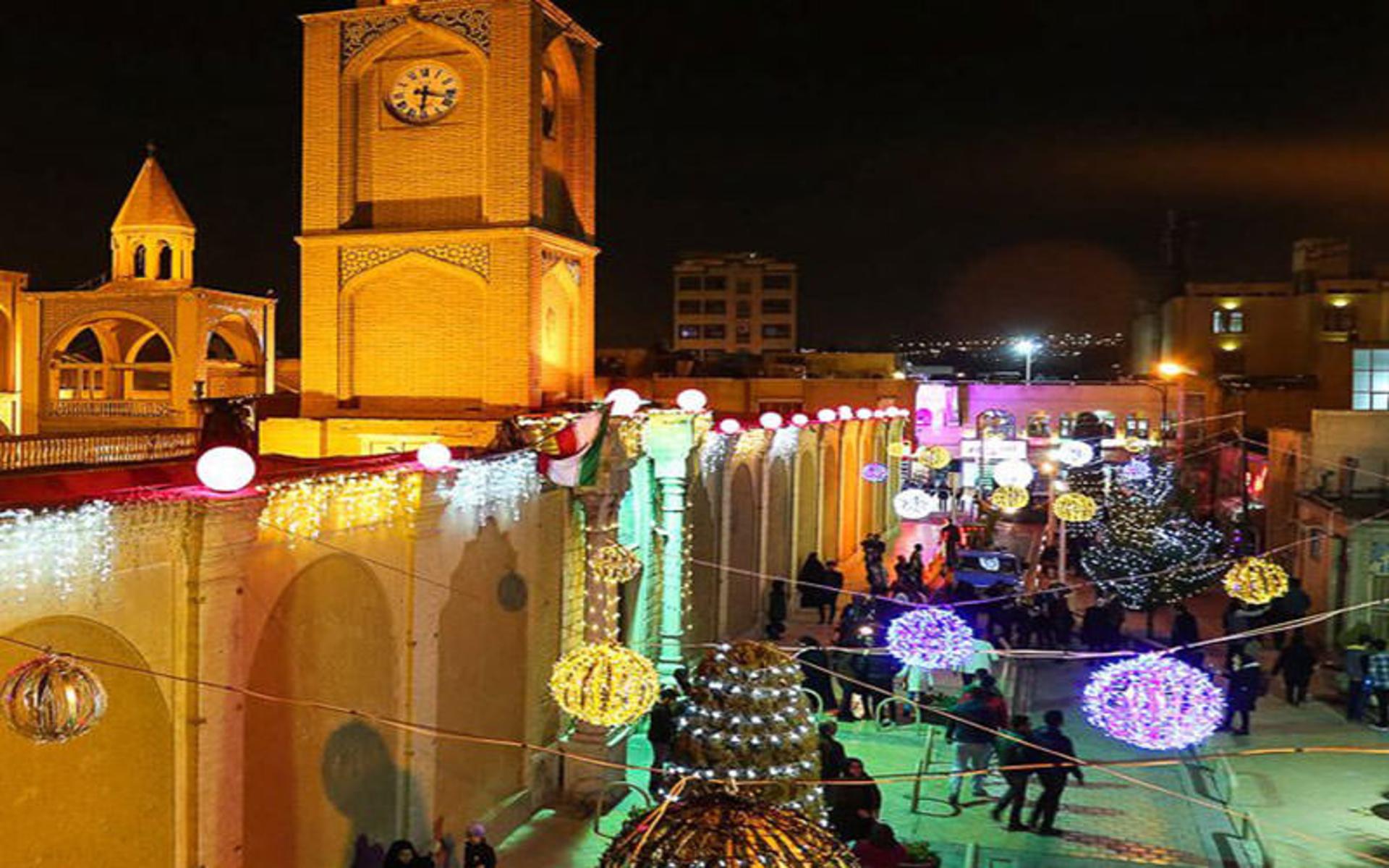
Isfahan offers perhaps the most atmospheric setting. The New Julfa quarter, established in the early 17th century when Shah Abbas I relocated tens of thousands of Armenians from the town of Julfa, contains around a dozen surviving churches. The Vank Cathedral (Cathedral of the Holy Sisters) is the grandest, with intricate frescoes combining Armenian and Persian artistic traditions. Attending a service here on January 6 is a memorable experience.
Tabriz, Urmia, and several smaller towns in West Azerbaijan also have active churches where Assyrian and Armenian communities gather. In Urmia, the Assyrian presence is especially visible, and the Syriac language is still spoken in some households.
Christmas and Iranian Winter Culture
Christmas in Iran overlaps with another beloved winter tradition: Yalda Night, or Shab-e Yalda. Celebrated on the winter solstice (around December 21), Yalda is an ancient Persian festival marking the longest night of the year. Families gather to eat pomegranates, watermelon, and nuts, and to read poetry, especially the verses of Hafez. Though Yalda has no religious connection to Christmas, the seasonal spirit of gathering, light, and warmth during the darkest time of year creates a natural resonance.
In cities with mixed populations, it is not unusual for Muslim Iranian friends and neighbors to visit Christian families during the Christmas season, just as Christian Iranians participate in Nowruz and Yalda gatherings. This mutual observation of each other's traditions is one of the quieter features of daily life in Iran.
Practical Tips for Visitors
If you plan to attend a church service during Christmas in Iran, dress modestly and ask permission before taking photographs. Women will generally need to cover their hair inside the church. Services are often long and conducted in Armenian or Syriac, but the atmosphere is welcoming to quiet observers.
Photographs of church exteriors and Christian neighborhoods are generally fine, but always ask before photographing individuals. The communities are proud of their heritage but value privacy.
For travelers looking to explore the Christian heritage of Iran, Mehyar can help with planning your visit. Whether you need hotels in Tehran or Isfahan, or a taxi to reach the New Julfa quarter, the Mehyar app covers the essentials so you can focus on the experience itself.
Iran's Christian Heritage Goes Deeper Than Most Travelers Realize
The story of Christmas in Iran is really a story about the depth and diversity of Iranian civilization. Christianity here is not a foreign import or a recent arrival. It is woven into the fabric of the land, from the Parthian caravanserais where the faith first took root to the churches of New Julfa where Armenian liturgy still fills the air each January.
For travelers willing to look beyond the familiar narrative, the Christian communities of Iran offer a window into a side of the country that rarely makes the evening news. The smell of incense in a 400-year-old cathedral in Isfahan, the sound of Syriac hymns in Urmia, the sight of a Christmas tree in a Tehran living room: these are moments that complicate easy assumptions and enrich the journey.
Plan your trip to Iran with Mehyar and discover the layers of history and culture that make this country one of the most rewarding destinations in the Middle East.