
Bandar Chabahar sits at the far southeastern corner of Iran, where the coastline opens onto the Gulf of Oman and the Arabian Sea. It is Iran's only port with direct access to the Indian Ocean, and for travelers who make the journey, the reward is a landscape unlike anywhere else in the country. Pink sandstone ridges that look like a Martian surface. A lagoon that turns flamingo pink in certain seasons. Mud volcanoes that bubble up from tectonic forces still at work beneath your feet. Beaches where sea turtles nest under starlight. And through it all, a climate that stays warm in winter and cool in summer, earning Chabahar its reputation as the most temperate port on Iran's southern coast.
This guide covers the natural attractions that make Chabahar worth the trip, how to reach the city, where to base yourself, and how Mehyar can handle your flights, hotels, taxis, and buses so you can focus on the landscape rather than the logistics.
Where is Chabahar?
Chabahar County covers roughly 22,000 square kilometres in the southeasternmost part of Iran, in Sistan and Baluchestan Province. It borders Pakistan to the east, the Gulf of Oman to the south, and the inland counties of Iranshahr and Nik Shahr to the north and west. The city itself sits at a latitude that roughly parallels Miami, Florida, and shares the subtropical warmth of that American port.
The port is Iran's closest maritime gateway to the Indian Ocean and the broader shipping routes of South Asia. It is approximately 1,350 kilometres from Tehran by road, about 600 kilometres from Zahedan (the provincial capital), and roughly 1,200 kilometres from Karachi across the water. Chabahar Bay forms the largest natural inlet along Iran's southern shores, and the county has around 500 kilometres of coastline along the Gulf of Oman.
The strategic importance of Chabahar extends beyond tourism. For the six landlocked Central Asian republics of Afghanistan, Turkmenistan, Uzbekistan, Tajikistan, Kyrgyzstan, and Kazakhstan, Chabahar represents the most direct route to open water. International investment in port infrastructure, including expanded docking capacity for ocean-going vessels, a railway connection to the interior, and an upgraded international airport, has been transforming the city into a major trade corridor. This development is bringing better roads and services, which benefits visitors as well.
How to get to Chabahar
Reaching Chabahar requires some commitment, which is part of why it remains relatively untouched by mass tourism. Here is how to get there.
By air
Konarak Airport, located about 40 kilometres south of Chabahar, handles domestic flights from Tehran, Bandar Abbas, and occasionally other Iranian cities. Flight schedules can be limited, so advance planning is essential. Open Mehyar Flights and search for routes to Konarak (CHH) to compare departures and prices. From the airport, Mehyar Taxi connects you to your hotel in Chabahar city in about forty minutes.
By road from Bandar Abbas
The overland route from Bandar Abbas to Chabahar covers approximately 600 kilometres along the Gulf of Oman coast. The drive passes through a succession of fishing villages, coastal cliffs, and dramatic headlands. By car, the journey takes around seven to eight hours. By bus, allow nine to ten hours depending on stops.
Mehyar Buses operates regular services between Bandar Abbas and Chabahar, offering a comfortable and affordable option for travelers who prefer not to drive. The coastal highway itself is one of the most scenic drives in Iran, and many visitors find the journey as memorable as the destination.
By road from Zahedan
From Zahedan, the provincial capital, the road to Chabahar covers roughly 600 kilometres and takes six to seven hours. Zahedan is reachable by air from Tehran and by road from other eastern Iranian cities. Mehyar Taxi is available for the Zahedan to Chabahar leg if you prefer a private transfer over the bus.
The Martian Mountains
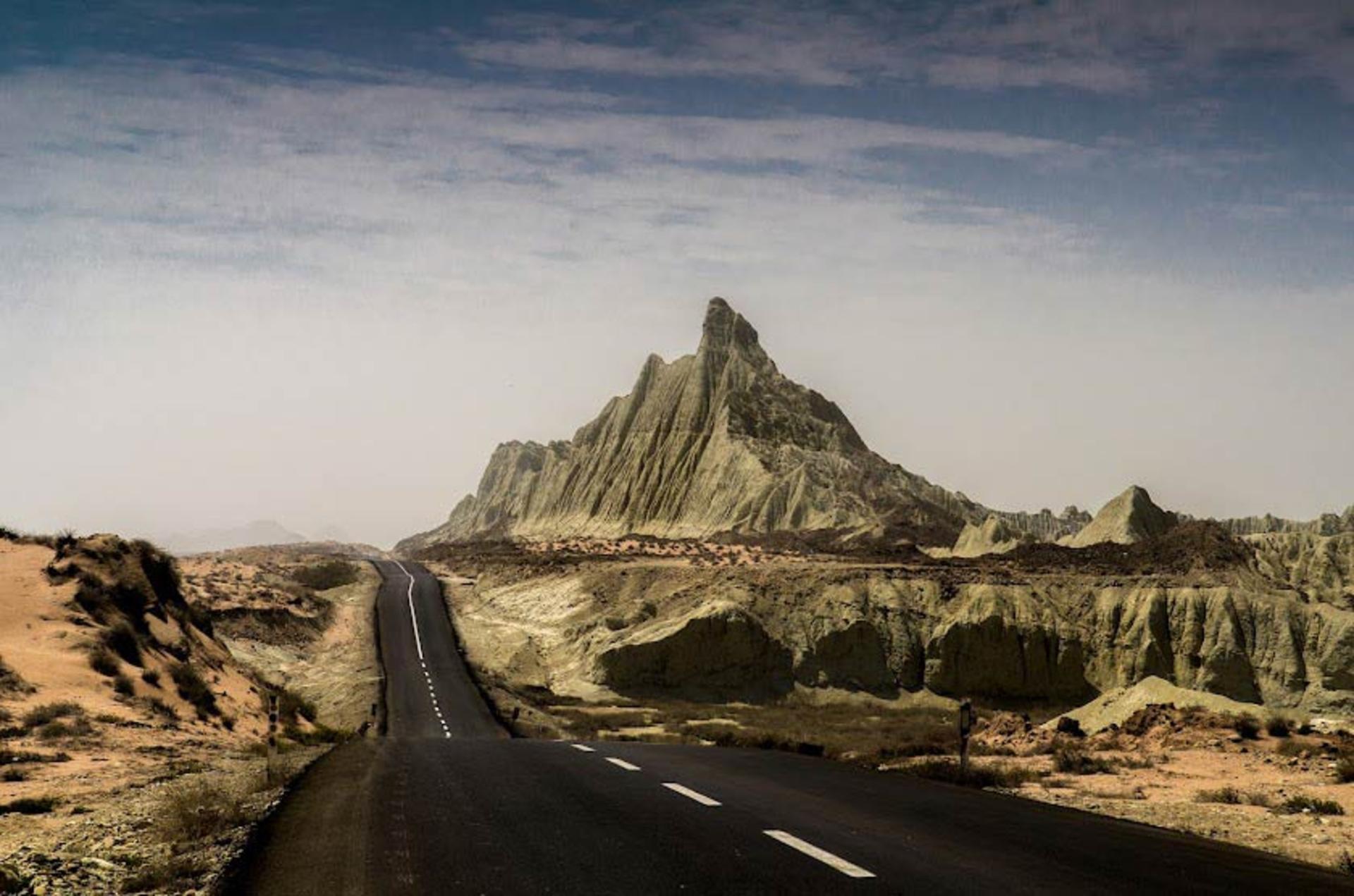
About 50 kilometres east of Chabahar, near the village of Gol Afshan, a range of sandstone hills rises from the coastal plain in shades of pink, orange, and red. The erosion-sculpted ridges and valleys look like photographs from Mars, which is how they earned their local name: the Martian Mountains, or Kuh-e Merikhi.
The colours come from layers of sedimentary rock deposited over millions of years and then exposed by wind and water erosion. The softer layers have been carved into arches, fins, and hoodoo-like pillars, while the harder layers form ridgelines that catch the light differently at sunrise and sunset. The best time to visit is late afternoon, when the low sun turns the entire range a deep rose-gold. There is no entrance fee and no formal infrastructure. You walk among the formations on foot, following informal trails that local guides can help you navigate.
Mehyar Taxi from Chabahar to the Martian Mountains takes about 45 minutes. Plan for two to three hours at the site for photography and exploration, and bring water, sun protection, and sturdy shoes.
Lipar Lagoon (Pink Lake)
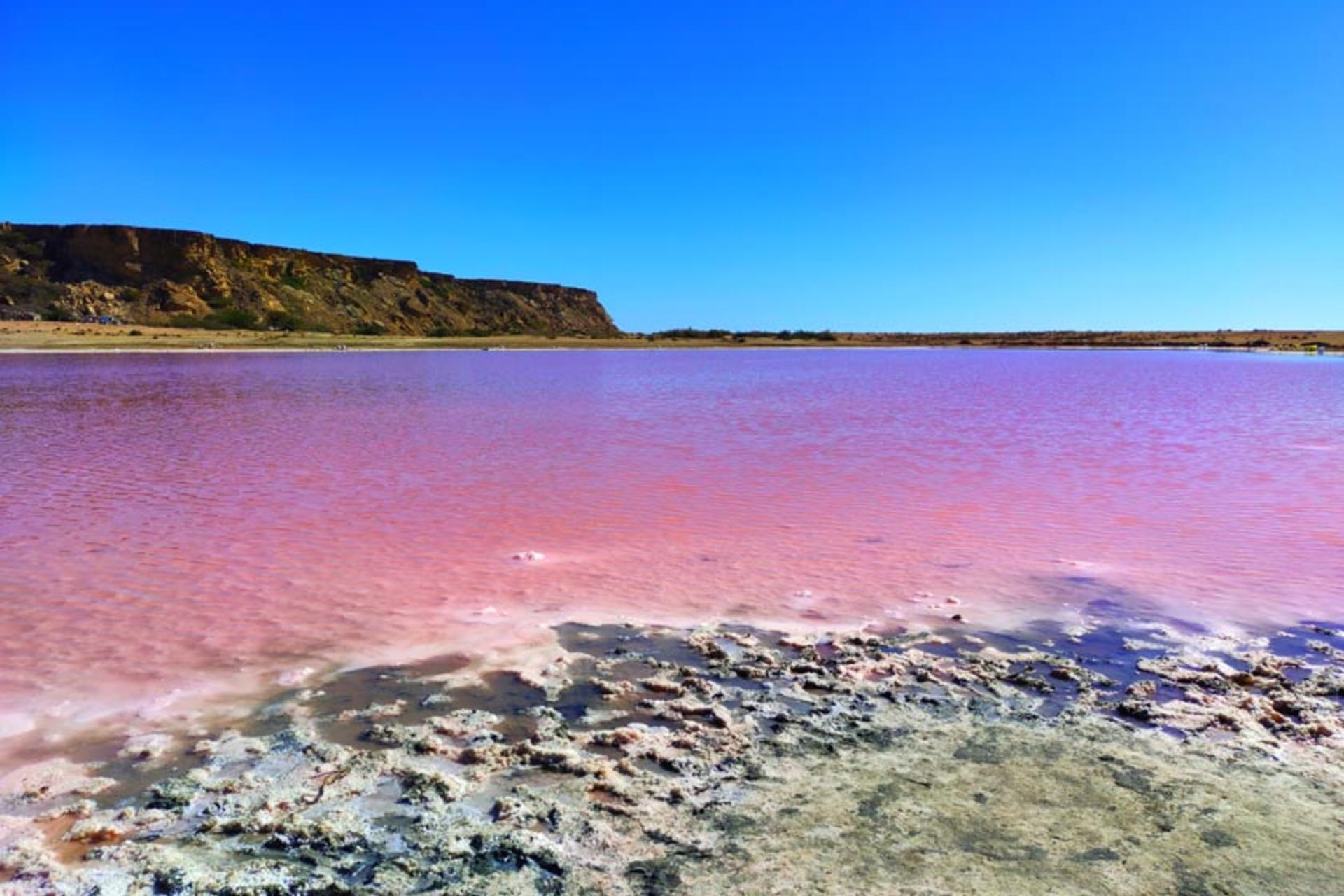
Southwest of Chabahar, between the city and the village of Lipar, a shallow lagoon sits in a basin surrounded by marshland. In certain seasons, particularly during the warmer months, the water turns a striking shade of pink due to the presence of halophilic microorganisms and the flamingos that feed in the shallows.
Lipar Lagoon is one of the most photographed natural phenomena in the region. The pink water contrasts with the green of the surrounding marshes and the blue of the sky, creating a landscape that looks digitally altered but is entirely natural. The lagoon also supports a range of migratory bird species, making it a worthwhile stop for birdwatchers. The nearby village of Lipar has a small shrine called Bibi Golandan that is visited by locals and adds a cultural dimension to the stop.
Access is via a dirt road from the coastal highway. The best viewing is from the shore, where you can walk along the edge of the lagoon and observe the birdlife. Visit in the early morning or late afternoon for the best light and the highest chance of seeing flamingos.

Mud Volcanoes of the Makran Coast
Near the village of Gol Afshan, about 50 kilometres east of Chabahar, a cluster of mud volcanoes offers one of the most unusual geological sights in Iran. These small cone-shaped formations bubble and occasionally erupt with cool mud and gas, driven by the compression of underground gases in the sedimentary layers along the Makran tectonic zone.
The mud volcanoes of the Makran coast are among the few active examples in the world. They are not dangerous, though they can be messy. The mud is cool to the touch and locals attribute various skin benefits to it. The site is remote and undeveloped, which adds to the experience of standing beside a geological phenomenon that most people on Earth have never seen.
A visit to the mud volcanoes pairs naturally with a trip to the Martian Mountains, since both are on the eastern side of Chabahar. Arrange a half-day excursion through Mehyar Taxi and budget two to three hours at the site.
The Coastal Beaches and Sea Turtles
Chabahar's coastline includes several beaches of striking beauty. The most well-known is the beach near Beris village, a traditional fishing community about 60 kilometres west of Chabahar. The beach here is backed by rugged cliffs and faces open water where dolphins are frequently spotted. The fishing village itself is worth a visit for its colourful boats and the daily catch brought in by local fishermen.
More significantly for conservation, sections of the Chabahar coast serve as nesting grounds for green sea turtles and hawksbill turtles. Between April and September, female turtles come ashore at night to lay their eggs in the sand. Protected nesting areas exist along parts of the coast, and local conservation organizations work to safeguard the hatchlings during the incubation period.
If you visit during nesting season, ask your hotel or guide about the possibility of observing a nesting event. These are carefully managed experiences to avoid disturbing the animals, and they offer a rare opportunity to witness a primal natural spectacle.
Chabahar Free Zone and Geopark
Chabahar is designated as a free trade zone, which means relaxed visa requirements for many nationalities and duty-free shopping in designated areas. In 2019, UNESCO added the Chabahar Geopark to its Global Geoparks Network, recognizing the region's outstanding geological heritage, including the Martian Mountains, mud volcanoes, coastal formations, and the diversity of its marine and terrestrial ecosystems.
The geopark designation has brought increased attention to the area's potential for geotourism, and infrastructure is gradually improving. New roads, signage, and visitor facilities are being added, though the region still rewards travelers who are comfortable with a degree of roughness and self-reliance.
Practical tips for visiting Chabahar
Best time to go. November through March offers the most comfortable weather, with daytime temperatures in the mid-twenties Celsius and cool evenings. Summer is hot and humid, though the heat is more bearable than in inland cities like Ahvaz or Bandar Abbas.
How long to stay. Three to four days allows you to see the main natural attractions: the Martian Mountains, Lipar Lagoon, the mud volcanoes, the Beris fishing coast, and the city itself. Add a day if you want to explore the coastal road further west toward Bandar Abbas.
Where to stay. Chabahar has a range of hotels from budget to mid-range. Use Mehyar Hotels to compare options and book in advance, especially during the November to March high season when demand rises.
Getting around locally. Distances between attractions are significant, and public transport within the county is limited. Mehyar Taxi is the most practical way to reach the Martian Mountains, Lipar Lagoon, mud volcanoes, and coastal villages from your hotel in Chabahar city.
What to bring. Sunscreen, a hat, sturdy walking shoes, plenty of water, and a camera with a polarizing filter for the pink lagoon and sandstone formations. If you plan to visit the beaches, bring swimwear for the warmer months.
Chabahar in the Mehyar network
Chabahar is one of Iran's most rewarding destinations for travelers willing to venture beyond the classic tourist circuit. Its natural attractions are world-class, its culture is distinct from the rest of Iran, and its climate makes it a viable winter destination when much of the country is cold.
Start planning your Chabahar trip with Mehyar. Search Mehyar Flights for airfare to Konarak Airport, compare Mehyar Hotels for accommodation, book Mehyar Buses for the scenic overland route from Bandar Abbas, and use Mehyar Taxi for local transfers and day trips to the natural sites. The Mehyar Wallet keeps all your travel expenses in one place, from flights to hotels to taxis, so you can focus on the landscape and leave the logistics to us.