
Carved into the sheer limestone face of Mount Bisotun, some 100 meters above the valley floor, the Bisotun Inscription stands as one of the most important archaeological documents ever produced by human civilization. This monumental trilingual text, commissioned by Darius the Great in 521 BCE, served as the key to unlocking the ancient cuneiform script and, through it, the entire written heritage of Mesopotamia and the Persian Empire. For any traveler to western Iran, standing before this masterpiece of ancient communication is an experience that stirs the imagination like few other sites on Earth.
Where Is the Bisotun Inscription?
The inscription sits on the western slopes of the Zagros Mountains in Kermanshah Province, roughly 30 kilometers northeast of Kermanshah city and directly beside the modern Tehran-Kermanshah highway. Its location was no accident. In the ancient world, this pass through the Zagros formed a critical node on the Royal Road and other trade routes linking the Persian heartland with Babylon and the lands beyond. Darius placed his declaration here deliberately, ensuring that travelers, messengers, and armies passing through would see the enduring record of his power.
The site itself is part of the larger Bisotun archaeological complex, a UNESCO World Heritage property that encompasses monuments from the prehistoric era through the Ilkhanid period. The inscription shares the cliff face with later carvings and with the dramatic natural scenery of the Zagros, where walnut groves, seasonal waterfalls, and limestone crags create a landscape of extraordinary character.
How to Get There
The Bisotun Inscription is easily reached from Kermanshah city, the provincial capital. The city has an airport with regular flights from Tehran and Mashhad, and it connects to the national road network via the modern freeway system.
From Tehran: The distance is roughly 520 kilometers, and the drive takes five to six hours along a well-maintained freeway that cuts through the scenic highlands of central Iran. The last stretch before Bisotun offers spectacular views of the Zagros limestone formations.
From Kermanshah city center: A short 30-minute drive northeast along the highway takes you directly to the site. Local taxis, rental cars, and Mehyar transport options are all available.
From Isfahan or Shiraz: The journey is longer but rewarding, taking you through some of the most beautiful mountain scenery in the country. Plan for seven to nine hours of driving with opportunities for stops at intermediate historical sites.
Booking your transport through [Mehyar](/) ensures comfortable, reliable transfers and the flexibility to stop for photographs along the way.

The Inscription Itself: A Masterpiece of Communication
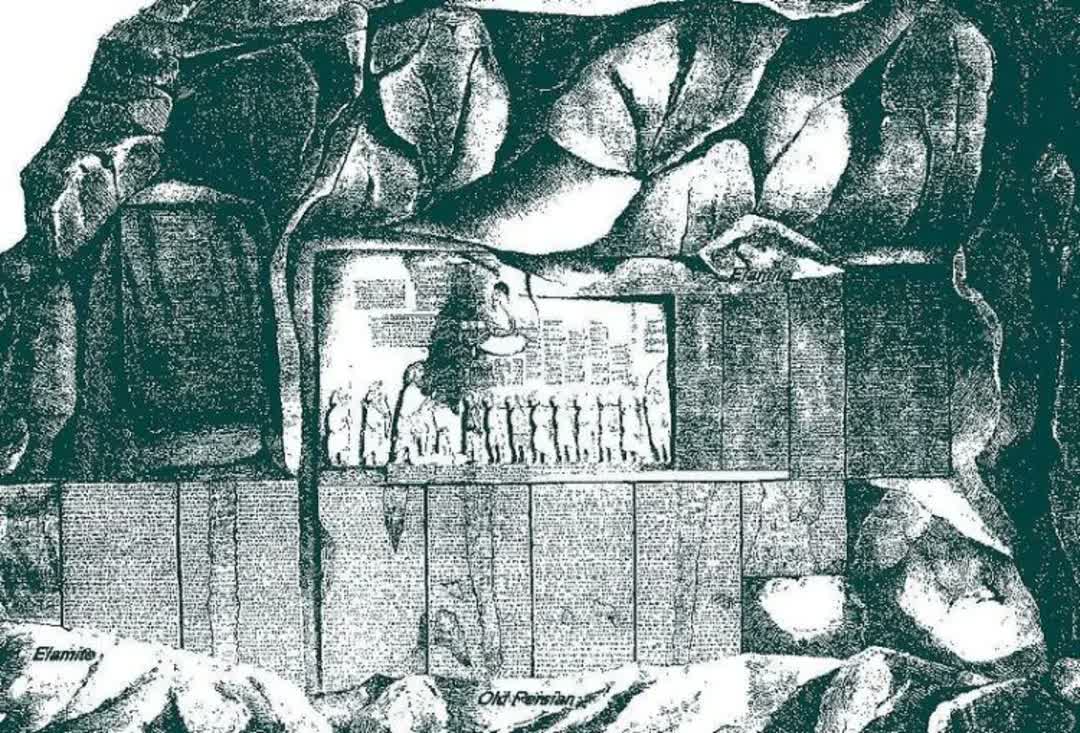
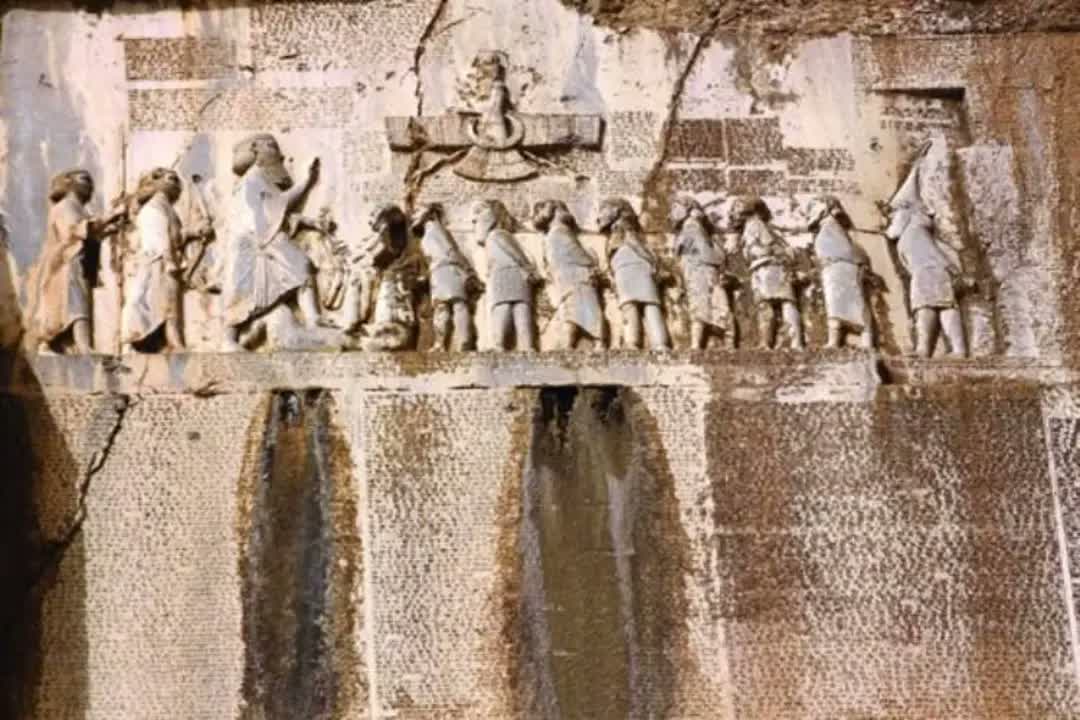
The Bisotun Inscription consists of a massive rock relief accompanied by approximately 1,200 lines of cuneiform text in three languages: Old Persian, Elamite, and Babylonian (Akkadian). The relief, measuring roughly 3 by 5.5 meters, shows Darius I standing in a triumphant pose, his foot upon the chest of the rebel Gaumata, who had usurped the throne. Behind Darius stand two attendants holding spears, while nine bound rebel kings are depicted in a row below, each wearing the distinctive costume of his region.
Above all hovers the winged disk of Ahura Mazda, the supreme deity in Zoroastrian belief, blessing the king and his victory. The composition is a masterpiece of Achaemenid art, balancing narrative clarity with symbolic power.
The text itself is Darius's own account of how he seized power after the death of Cambyses II, defeated the false claimant Gaumata, and then crushed a series of rebellions across the empire. It reads partly as a political manifesto and partly as a prayer, with Darius repeatedly attributing his success to the will of Ahura Mazda and warning future readers of the consequences of treachery.
Deciphering the Script: The Key to an Ancient World
Perhaps the most remarkable chapter in the story of the Bisotun Inscription is its modern rediscovery and decipherment. For centuries, the cuneiform script had been entirely forgotten. European travelers who encountered the inscription in the seventeenth and eighteenth centuries could make nothing of it, dismissing the strange wedge-shaped marks as mere decoration.
The breakthrough came in the 1830s and 1840s, when British army officer Henry Rawlinson risked his life to copy the inscription by climbing the cliff face using ladders and ropes. Working alongside scholars such as Edward Hincks and Jules Oppert, Rawlinson succeeded in deciphering the Old Persian version first, then used it as a bridge to unlock the Babylonian and Elamite texts. This achievement, comparable in significance to Champollion's decipherment of Egyptian hieroglyphs using the Rosetta Stone, opened the door to the entire cuneiform literary tradition of ancient Mesopotamia.
Today, a small museum at the base of the cliff tells the story of this decipherment, displaying copies of Rawlinson's notebooks and explaining the linguistic methods that brought the voices of ancient Persia, Babylon, and Elam back to life.
Historical Context: The World of Darius the Great
To appreciate the Bisotun Inscription fully, it helps to understand the turbulent world in which Darius created it. The Achaemenid Empire, founded by Cyrus the Great around 550 BCE, had grown under Cyrus and his son Cambyses into the largest empire the world had yet seen, stretching from the Indus River to the Aegean Sea. But Cambyses's death in 522 BCE triggered a crisis of succession that threatened to tear the empire apart.
Darius, a member of a collateral branch of the royal family, stepped into this chaos. He claimed that the throne had been seized by an impostor, a Magus named Gaumata who pretended to be Cambyses's brother. After defeating Gaumata, Darius faced a wave of revolts across the empire as subject peoples seized the opportunity to assert their independence. Over the course of a single year, Darius crushed these rebellions one by one, and it is this dramatic narrative that he chose to immortalize at Bisotun.
The result was more than a war memorial. It was a declaration of legitimacy, a theological statement, and a masterful piece of propaganda, all carved in stone for eternity. The use of three languages reflected the multilingual nature of the empire and ensured that the message would reach the widest possible audience across its diverse population.
Practical Details for Visitors
The Bisotun Inscription is part of the Bisotun World Heritage complex, which is open daily. Entrance fees are modest, and the site provides parking, restrooms, and a visitor center. The climb to the best viewing point involves a steep staircase, so sturdy footwear and water are recommended. Morning light provides the best conditions for photography, when the sun illuminates the cliff face directly.
A visit to the inscription typically takes one to two hours, depending on how much time you spend in the museum and on the hiking trails nearby. Guides can be arranged through [Mehyar](/) or at the site, and their knowledge greatly enhances the experience by pointing out details that would otherwise go unnoticed.
Best Time to Visit
Spring (April to June) is the most beautiful season at Bisotun. The Zagros mountains are carpeted with wildflowers, the walnut trees are in fresh green leaf, and the weather is mild and pleasant. Autumn (September to November) is also excellent, with golden foliage and comfortable temperatures. Winter can bring snow and cold winds from the mountains, while summer is hot, though the site remains accessible year-round.
Nearby and Related Attractions
A visit to the Bisotun Inscription pairs naturally with the other treasures of Kermanshah Province. The Sassanian rock reliefs at Taq-e Bostan, just 25 kilometers from Kermanshah city, offer another extraordinary example of ancient Persian art carved into stone. The Anahita Temple at Kangavar, the Parau Cave, and the Friday Market of Kermanshah all enrich a broader exploration of the region.
For travelers following an ancient Persia itinerary, combining Bisotun with Persepolis and Pasargadae further south creates a powerful narrative arc through the heart of the Achaemenid world. [Mehyar](/) can help you plan a multi-city journey that connects these iconic sites with comfortable transport and expert local guides.
Experience the Voice of Ancient Persia
The Bisotun Inscription is more than an archaeological curiosity. It is the moment when the ancient world spoke directly to the modern one, when a king's declaration carved in stone became the bridge across twenty-five centuries of silence. Standing at the foot of that great cliff, looking up at the relief of Darius and the cuneiform lines that changed the course of scholarship, you feel the continuity of human civilization in a way that is both humbling and electrifying. Let [Mehyar](/) take you there.
