
Northern Iran hides a landscape that surprises nearly everyone who encounters it for the first time. Drive south from the Caspian shore for barely an hour and the flat coastal plains give way to steep, forested valleys draped in mist. This is Bandpay, a region of villages, rivers, and dense woodland that stretches across the southern countryside of Babol county in Mazandaran province. For travelers seeking the real Mazandaran, the one that locals know and love, Bandpay offers an experience that the crowded beach resorts of the northern coast simply cannot match.
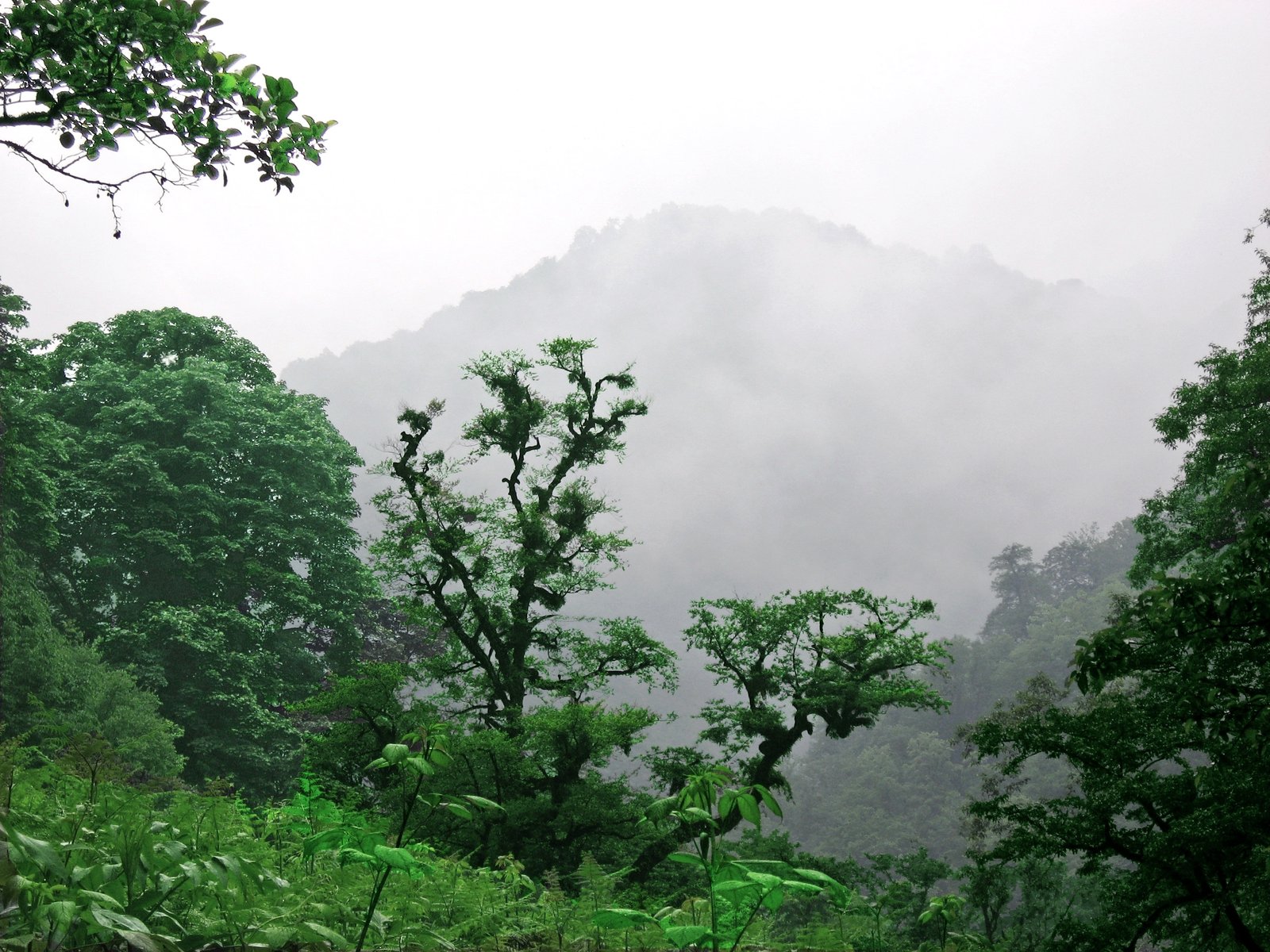
Bandpay, sometimes spelled Bandpey, is not a single destination but a district, a collection of villages and natural areas spread across the foothills of the Alborz mountains. The name itself refers to the lower mountain slopes that ring the coastal plain, and the landscape lives up to it. Everywhere you look, thick forests of oak, beech, and hornbeam climb the hillsides, threaded by streams that eventually feed the rivers running down to the Caspian Sea. The air smells of wet earth and green leaves, a scent that defines this corner of Iran and makes it one of the country's most refreshing retreats.
Location and Geography
Bandpay occupies the southern portion of Babol county, extending from the edge of Babol city into the Alborz foothills. The district is divided into two sub-districts: Bandpey-e Gharbi (Western Bandpey) and Bandpey-e Sharqi (Eastern Bandpey). The administrative center of Western Bandpey is the town of Khush Rudpey, while Eastern Bandpey encompasses a broader swath of mountain villages and forested valleys.
The elevation rises sharply from roughly 20 meters above sea level near Babol to over 1,200 meters in the higher villages. This dramatic change in altitude creates a succession of microclimates. The lower slopes are blanketed in deciduous forest, part of the ancient Hyrcanian forest belt that once covered the entire southern coast of the Caspian Sea and survives today only in isolated pockets along the northern Iranian coastline. These Hyrcanian forests are a UNESCO World Heritage Site, recognized for their exceptional biodiversity and their status as living fossils of a forest type that existed across the Northern Hemisphere millions of years ago.
The higher elevations transition into mixed forest and alpine meadow, where the trees thin out and give way to grasslands used by nomadic herders during the summer months. Several rivers originate in these mountains, carving deep valleys as they descend toward the Caspian. The Babol Rud, the most significant river in the county, draws much of its water from springs and snowmelt in the Bandpay highlands.
The climate is humid subtropical, with rainfall distributed throughout the year but heaviest in autumn and winter. Summer brings warm days and cool nights, especially at higher elevations, making Bandpay a popular escape for residents of Babol and other lowland cities. Winter can be cold and wet, with occasional snowfall at elevations above 800 meters.
What to See and Do
The villages of Bandpay are the primary draw for visitors. Unlike the tourist-oriented towns on the Caspian coast, these settlements retain an authentic character that has changed little over generations. Houses are built of wood and clay, with sloping roofs designed to shed the heavy Caspian rains. Gardens surround each home, filled with persimmon trees, pomegranate bushes, and aromatic herbs. In spring, the hillsides burst into color with wildflowers, and the rice paddies on the lower slopes turn vivid green.
The village of Filband, sitting at roughly 1,200 meters elevation, is perhaps the most famous of the Bandpay settlements. The road to Filband winds through some of the most spectacular forest scenery in all of Mazandaran, with hairpin turns offering views that stretch from the dense canopy below to the snow-dusted peaks of the Alborz above. In summer, Filband serves as a highland retreat, its cool air a welcome contrast to the humid lowlands. Local families open their homes to visitors, offering simple meals of forest honey, fresh bread, and local dairy products.

Hiking is a major activity in the Bandpay region. Trails connect the villages to each other and to highland pastures, following routes that shepherds and foresters have used for centuries. The trails range from gentle walks through valley forests to strenuous climbs to mountain ridges with panoramic views. In spring and early summer, when the meadows are in bloom, the hiking is at its finest. Local guides can arrange multi-day treks that combine village stays with highland camping.
The rivers of Bandpay offer opportunities for nature observation and simple recreation. Streams cascade through forested gorges, creating small waterfalls and natural pools where swimming is possible on warm summer days. Birdlife is abundant in the forests, with species including the Caucasian black grouse, the Caspian snowcock, and numerous raptors that nest in the cliffs above the treeline. The Hyrcanian forest understory supports a rich population of mammals, including brown bears, wolves, wild boar, and the endangered Persian leopard, though these larger species are rarely seen by casual visitors.
For those interested in rural culture, Bandpay provides an unfiltered view of Mazandarani life. Farming, animal husbandry, and forestry remain the economic foundations. Visitors can observe rice cultivation in the lower terraces, watch cheese being made in mountain pastures, and learn about the traditional charcoal burning that has sustained forest communities for generations. The local dialect of Mazandarani, still spoken widely in the villages, preserves words and grammatical forms that have disappeared from the language of the coastal cities.
History and Cultural Context
The human history of the Bandpay region stretches back thousands of years. The Hyrcanian forests, which cloak the hillsides today, are the same forests that ancient Greek and Roman writers described in accounts of the Caspian littoral. The region was part of the satrapy of Hyrcania under the Achaemenid Empire, and its dense woodlands provided both refuge and resources for successive waves of settlement.
During the Islamic period, the mountain communities of Mazandaran maintained a degree of independence that lowland populations rarely enjoyed. The difficult terrain made large-scale military campaigns impractical, and local dynasties governed the region with minimal interference from central authorities. This isolation preserved distinct cultural traditions, including the Mazandarani language, traditional music, and agricultural practices that continue to shape daily life in Bandpay villages.
The architectural heritage of Bandpay reflects both the climate and the cultural history. Traditional houses use a post-and-beam construction method with infill walls of woven branches and clay, a technique suited to the humid, seismic environment. Roofs are steeply pitched and covered with wooden shingles or, more recently, corrugated metal. Granaries stand on raised platforms to protect grain from moisture and rodents. These structures, still visible in many villages, represent an architectural tradition that evolved over centuries to meet the specific challenges of the Caspian forest environment.
Practical Information
Bandpay has no formal tourist infrastructure in the sense of ticketed attractions or visitor centers. The experience is organic and unstructured, centered on village visits, hiking, and nature immersion. Accommodation is available through homestays in villages like Filband, where families welcome guests into their homes. Meals are simple and local, featuring forest honey, fresh dairy, garden vegetables, and occasionally lamb or chicken. Mehyar Hotels can assist in identifying guesthouses and eco-lodges in the Babol area that provide comfortable bases for exploring Bandpay.
There are no entrance fees to visit the villages or hike the trails. The forests and mountains are open access, though visitors should respect private property and agricultural land. Guides can be arranged through local contacts in Babol city, and Mehyar Taxi services can transport you from Babol to the trailheads and villages of the Bandpay region.
Bring sturdy footwear for hiking, as forest trails can be muddy and slippery, especially after rain. Rain gear is advisable even in summer, as afternoon showers are common in the mountains. Insect repellent is useful during the warmer months when mosquitoes are active in the forest understory.
Best Time to Visit
The best time to visit Bandpay depends on what you want to experience. Spring, from April through June, is the most beautiful season, when wildflowers carpet the meadows, the forests are at their greenest, and the weather is mild and comfortable. This is the ideal period for hiking and village exploration. The rice paddies on the lower slopes are planted in late spring, transforming the landscape into a patchwork of flooded fields and young green shoots.
Summer, from July through August, is warm in the valleys but pleasantly cool in the higher villages like Filband. This is the peak season for local visitors escaping the heat of the Caspian lowlands, and the mountain villages can be busy on weekends. Swimming in forest streams is a popular activity during this period.
Autumn, from September through November, brings spectacular foliage colors to the deciduous forests. The oaks and beeches turn shades of gold, amber, and crimson, creating landscapes that rival any autumn scenery in Europe or North America. The weather remains mild through October, though rainfall increases in November.
Winter transforms Bandpay into a quiet, snow-dusted landscape. The higher villages receive significant snowfall, and some roads become impassable. This is not the ideal season for visitors unless you are specifically seeking a snowy mountain experience and are prepared with appropriate equipment.
How to Get There
Bandpay is easily accessible from Babol, the nearest major city. Babol itself sits on the main Tehran-to-Babol highway, and is also connected by rail and bus services to Tehran and other northern cities. From Babol city center, the drive to the Bandpay villages takes approximately 30 to 60 minutes, depending on your destination.
By Mehyar Taxi. Booking a Mehyar Taxi from Babol is the most comfortable and flexible way to reach Bandpay. The roads into the mountains are paved but winding, and having a local driver who knows the routes is invaluable. Your taxi can take you from village to village, wait while you hike, and bring you back to Babol on your schedule.
By private car. Driving from Babol to the Bandpay villages is straightforward. The main road heads south from Babol and enters the foothills, with signposted turns to individual villages. The roads are generally in good condition, though the mountain sections can be narrow and winding. A standard car is sufficient; four-wheel drive is not required for the main villages.
By local transport. Shared taxis and minibuses run between Babol and the larger Bandpay villages, though service to the smaller settlements is limited. This is the cheapest option but requires flexibility and some facility in Persian, as schedules and routes are communicated informally.
The journey from Babol into the Bandpay highlands is an experience in itself. Within a short drive, the urban landscape gives way to rice paddies, then to forested slopes, then to mountain villages perched on ridges with views stretching to the Caspian Sea in the distance. This progression of landscapes, compressed into less than an hour of driving, is what makes Bandpay so special. It is a place where the natural beauty of northern Iran remains vivid and unspoiled, waiting for travelers who are willing to look beyond the coast.