
Bushehr is old in a way few Iranian cities are. Long before the Qajar merchants raised their tiled mansions above the waterfront, this was a working port on the Persian Gulf with some five thousand years behind it, and its deeper past still surfaces: at Shgab, just outside the city, Elamite burial mounds run right down to the sea. What makes Bushehr distinctive is not one monument but the texture of the whole town: a historic quarter of four old neighborhoods, breeze-cut lanes, consular houses from an age when Britain, Germany and Portugal traded here, and a seafront where the light turns the Gulf from pale green to hard blue by noon. This guide covers what to see, when to come, where to stay and how to arrive, with Mehyar's local services at hand.

Where is Bushehr?
Bushehr is the capital of Bushehr Province, strung along a shallow curve of the Persian Gulf coast in southwestern Iran, about 1,150 kilometers south of Tehran. It is the country's principal Gulf port and, historically, the most important commercial harbor of southern Iran. The city has kept the outlook of a trading town more than a provincial capital: the sea, the heat and the monsoon winds have shaped its architecture, its food and its music, including the lively bandiri drumming the south is known for.
Getting to Bushehr and getting around
The Gulf heat makes flying the sensible default, and Bushehr has its own airport with services from Tehran. Mehyar Flights books the short southern hop so you can spend a morning in Tehran and an afternoon on the Gulf waterfront. If you prefer the road, the coast route from Shiraz to the southeast is the most scenic approach, and Mehyar Buses run scheduled services between the southern cities.
Within the city, the historic quarter, the seafront and the fish market sit close enough to combine on foot in the cooler hours, but the heat makes a car worthwhile for outlying sights such as Shgab and the protected areas. Mehyar Taxi covers airport and hotel transfers and short hops to individual attractions. If you are touring the coast, island crossings or the drive toward Shiraz are easy to arrange through Mehyar.
The old bazaar and the historic quarter

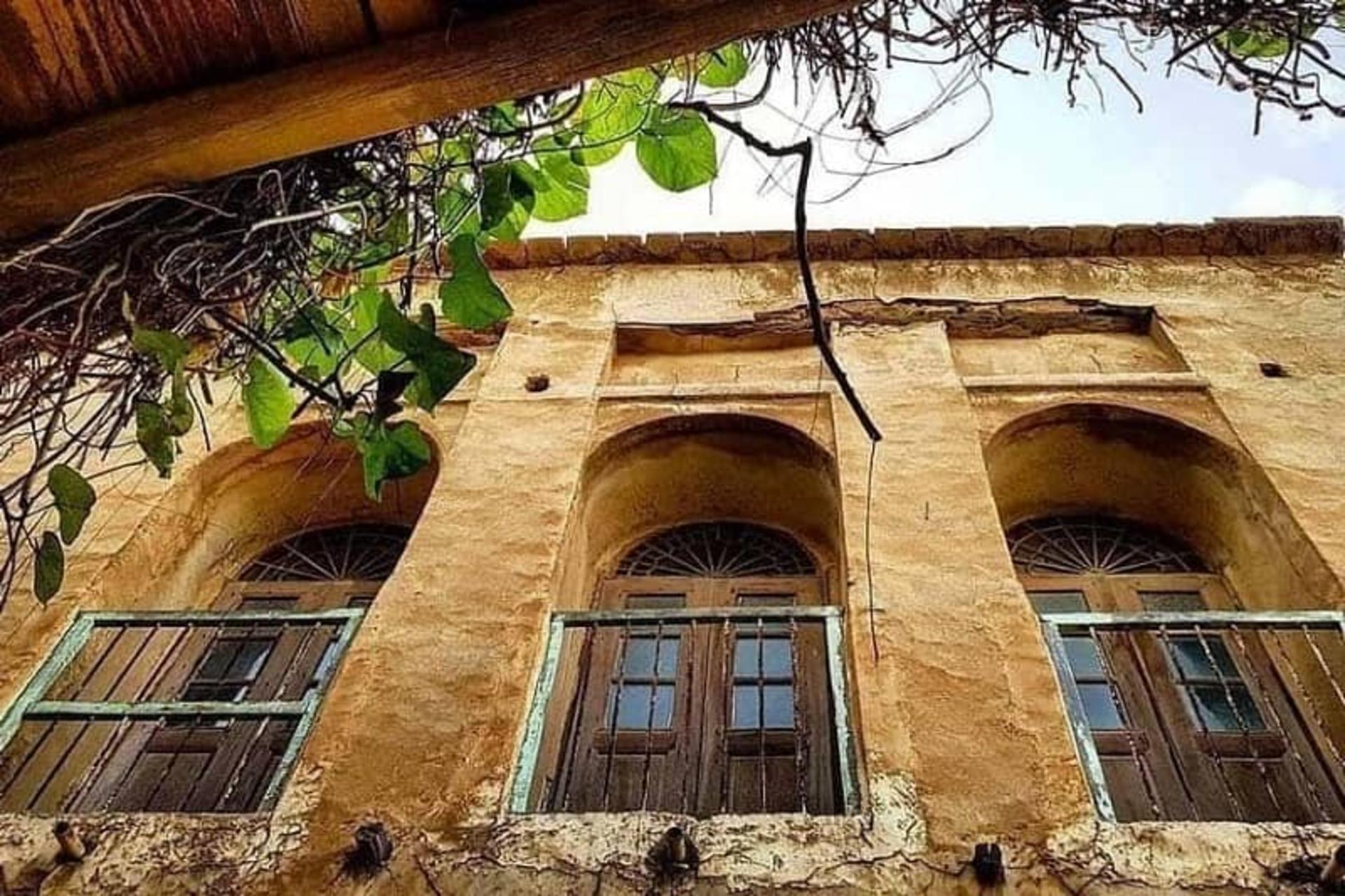
The Old Bazaar of Bushehr, set in the Dehdashti quarter, dates to the founding of the modern town in the Afshar period and grew into one of the country's economic hubs under the Qajars. Foreign trading nations opened consulates nearby, and the bazaar was registered as a national heritage site in 1385 SH. Today little survives beyond a short passage and a few empty shops, yet the space still carries the pulse of the old port and is a good place to meet local crafts.
Around it spreads Bushehr's Historic Texture, a registered national site of some 38 hectares covering four neighborhoods: Behbahani, Dehdashti, Kouti and Shandabi. Dating to the age of Nader Shah, it is one of Iran's most unusual residential fabrics, a dense weave of merchant mansions, former consulates, mosques, an old church, lanes and the bazaar, all built for shade and ventilation in a brutal climate.
The merchant mansions


The grand houses of Bushehr's trading families are the heart of the old town. Malg, in the Bahmani quarter, is a registered national monument of some 4,000 square meters, built in the Qajar period by French architects using local materials, inspired by a French chateau and Bushehr's own tradition. With nested gardens, a reception pavilion, verandas, halls, baths and towers, it was acquired by the provincial cultural office and opened as one of the finest houses on the coast.
Near the seafront in Behbahani, only about ten meters from the water, stands Golshan Palace, roughly 170 years old and also a national monument. A merchant named Golshan used it as a combined home and trading house: the ground floor held the reservoir, bath, kitchen and servants' rooms, the two upper floors living, reception and business. The Kazeroni House, another tall Qajar mansion in Behbahani, shows the same logic of height, its many stories letting families retreat to cooler levels in the unbearable summer. The Dehdashti House in Kouti, a four-story Qajar building raised by the oil trader Haj Gholam-Hossein Dehdashti and sometimes called the "oil mansion," has since 1377 SH housed the Museum of the History of Medicine of the Persian Gulf, where old trade documents, some with embossed siyaq script and two-century-old stamps from Britain, India and Germany, are kept.
The Taheri House in Behbahani, built as the municipality by the mayor Seyadet and later bought by a man named Taheri, is now the Bushehr Ethnographic Museum. The Qazi House reaches back to the Zand period: a national monument with flower-and-vine plasterwork, a muqarnas entrance and carved wooden windows set with colored glass. Rounding out the civic buildings is the Amireh Mansion, built in 1317 AH by Ahmad Khan Daryabigi, governor of the ports and islands of the Persian Gulf, once the municipality and today the seat of the city council.
Learning and faith: the school, mosque and reservoir
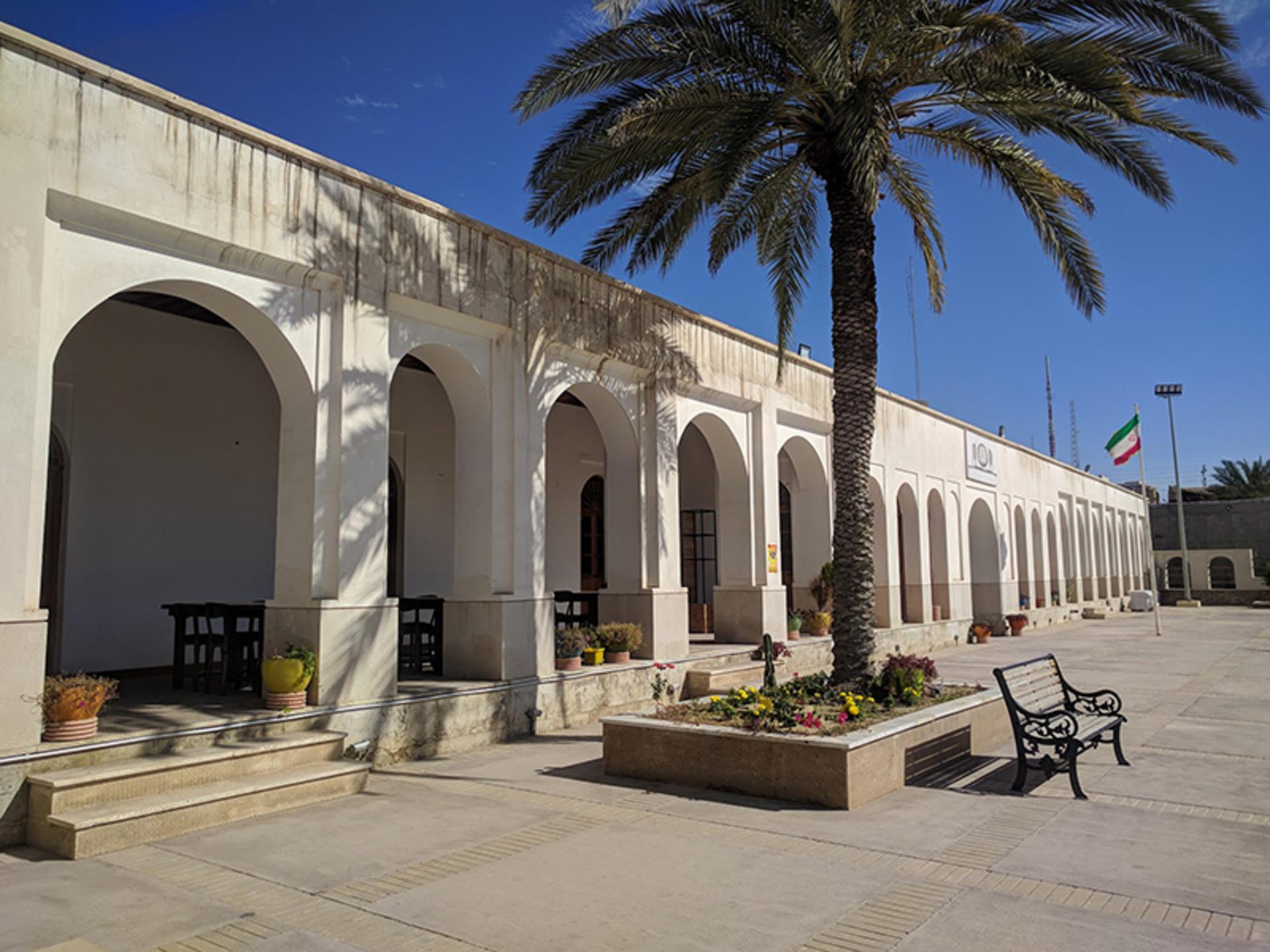
Saadat School, founded in 1278 in the Qajar period, is called the mother of the modern schools of southern Iran. Its founding day, 18 Espand, is celebrated as the National Day of Bushehr, and the school is the country's fifth "Enduring School." With some 1,500 square meters of striking architecture, it now runs in two parts: a working section for students and a historic-cultural section for visitors, with rooms of photographs of former pupils and notables and a gallery of local crafts.
Kufa Mosque, built under Naser al-Din Shah, is a study in southern restraint: a hall-based plan with no dome, no minaret and a flat roof, built of Khalkhal stone, plaster and teak around a square court, with eight columns in the prayer hall. The Qavam Reservoir, more than 150 years old, once supplied the town's drinking water, built of tough local stone with an arched frame that rises about two meters above ground and drops some three below. Today it works as a traditional restaurant, a lively way to taste the south.
The older past: Shgab, the General's Grave and the museums
At Shgab, an archaeological site registered as a national monument, burial mounds low enough to flatten the ground run to the waterline, dating back some 4,200 years to the Elamites. Clay urns holding skeletons, hand-cut graves and dry-stone cists have been found alongside Parthian and Sasanian burial customs, making it a magnet for anyone drawn to deep history.
The General's Grave, or Qabr-e Jeneral, is a reminder of the colonial centuries: an Egyptian-style obelisk raised over what is likely a British officer killed during the 1856 Herat episode, when Bushehr was seized by British forces; the surrounding cemetery of some 35 British soldiers became a park in 1390 SH. The city's maritime memory is kept at the Persian Gulf Maritime Museum in Sabz Abad, the former British consulate of the Naser al-Din Shah era, whose collections display naval gear, old maps, a 110-year-old vessel and antique typewriters. At the other end of the story sits the Rais Ali Delvari Museum, in the modest Qajar house of the constitutionalist leader who headed the southern uprising against the British in the First World War, registered as a national monument.
Nature and the season: Helle, Chahkouh and Mir Ahmad
Beyond the town, Bushehr Province opens onto a different kind of coast. The Helle Protected Area, to the south, conserves the wildlife and scrubland of the southern plains. The Chahkouh Forest Park, close to the city, offers shaded ground and a break from the seafront glare, and to the south the Mir Ahmad Hot Spring draws locals who swear by its mineral water. These out-of-town sites are best treated as day-trip options to confirm with a local guide, saving the fullest hours for the old town.
The best time to visit Bushehr
The Gulf coast is punishing in summer, when heat and humidity drive everyone indoors at midday. The good season runs from late autumn through early spring, roughly November to March, when the seafront is pleasant around the clock and the winter months are mild and clear. If you come in summer, plan visits for early morning and after sunset, when the lanes and the reservoir-restaurant come alive, and keep the museums for the hottest hours.
Where to stay in Bushehr
Most accommodation clusters along the seafront and the central avenues, so the historic quarter, the bazaar and the fish market are a short taxi apart. Book a hotel with good air-conditioning and, ideally, a Gulf view; Mehyar Hotels lists vetted properties for short stops and longer coastal stays. For the old-town experience, choose a place within or beside the historic texture to walk the lanes in the cool of the morning.
Travel notes for Bushehr
The south is warm and easygoing but conservative in the old quarters, so dress modestly near the mosques and bazaar and carry cash for the fish market and smaller shops. The heat is real even in the good season, so build your day around midday shade and let Mehyar arrange the airport transfer and any coastal drive. Bushehr is best taken slowly: a morning in the mansions, lunch of Gulf fish, an evening on the waterfront, and the deep past at Shgab if you have time.