
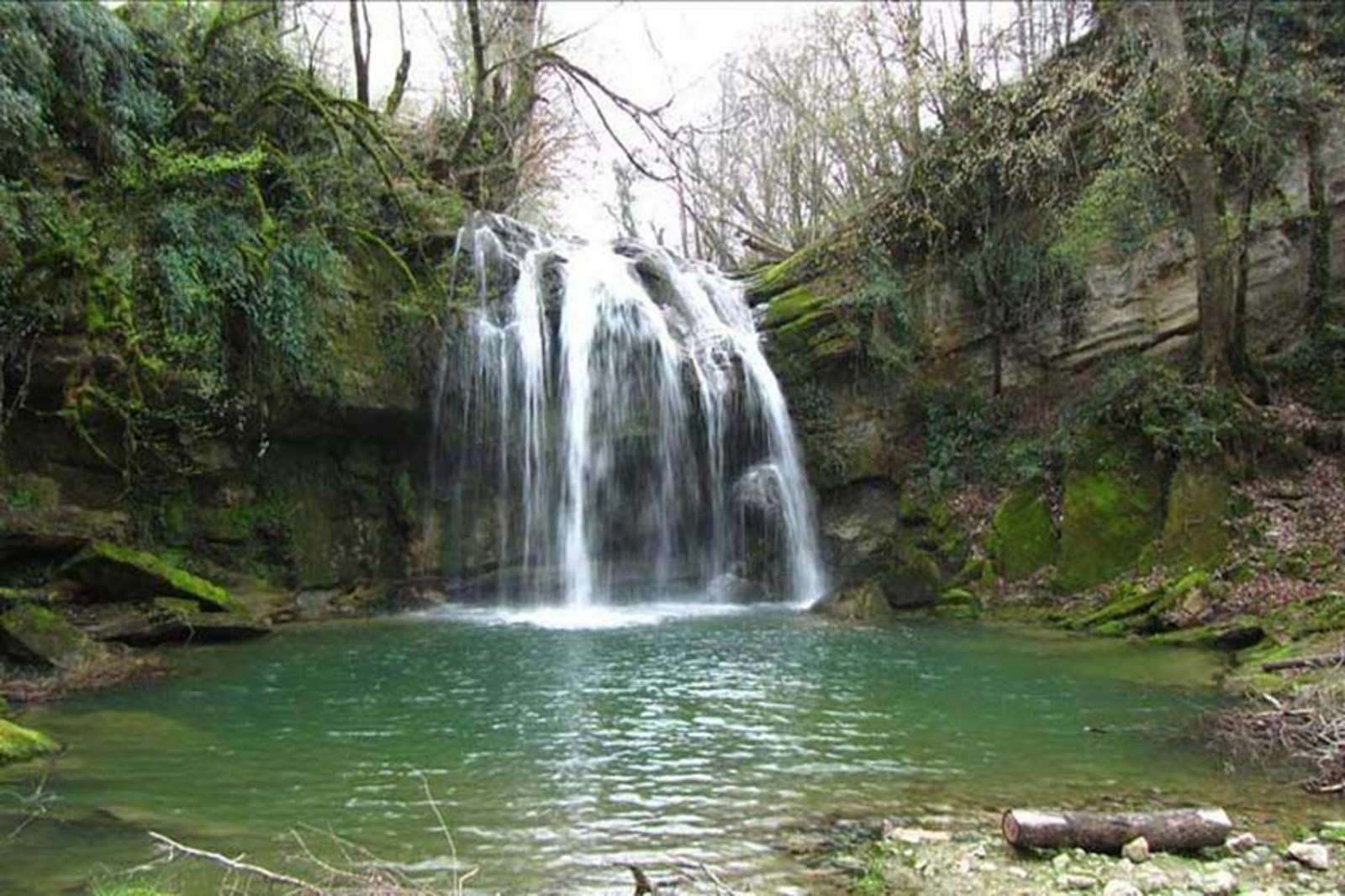
Siasaret Waterfall is one of the most accessible natural attractions in the Ramsar area, located just 300 metres from the main road that climbs towards the highland village of Jannat Rudbar. The waterfall drops over a moss-covered rock face into a clear pool, surrounded by the dense green canopy of the Hyrcanian forest. Its proximity to the road makes it an ideal stop for travellers exploring the scenic mountain routes south of Ramsar, requiring only a short detour from the main journey. The name "Siasaret" evokes the dark, shaded quality of the gorge, where the forest canopy is so thick that even on bright summer days the air remains cool and dappled with filtered light.
Where is Siasaret Waterfall?
The waterfall is located 35 kilometres south of Ramsar city in Mazandaran Province, adjacent to the access road leading to the summer highland area of Jannat Rudbar. It sits at a lower elevation than Jannat Rudbar itself, in a zone where the Caspian forest is at its densest and the air carries the scent of wet earth and green leaves year-round.
The Jannat Rudbar road is one of several mountain routes that climb from the Caspian coastal plain into the Alborz foothills south of Ramsar. These roads are popular with locals seeking cooler temperatures in summer and with travellers looking for waterfalls, forest walks, and hilltop villages with views over the sea. The Siasaret waterfall is the first major natural attraction on the Jannat Rudbar road, making it a natural first stop before continuing higher into the mountains.
The surrounding forest is part of the Hyrcanian biome, a UNESCO-listed ancient ecosystem that stretches along the southern Caspian coast. These forests survived the last ice age and harbour plant species found nowhere else on Earth. The canopy here includes beech, oak, hornbeam, alder, and Caspian snowberry, creating a dense green tunnel along much of the road. The forest floor is rich with ferns, mosses, and fungi, and the air is humid even in dry weather.
The Waterfall and Its Setting
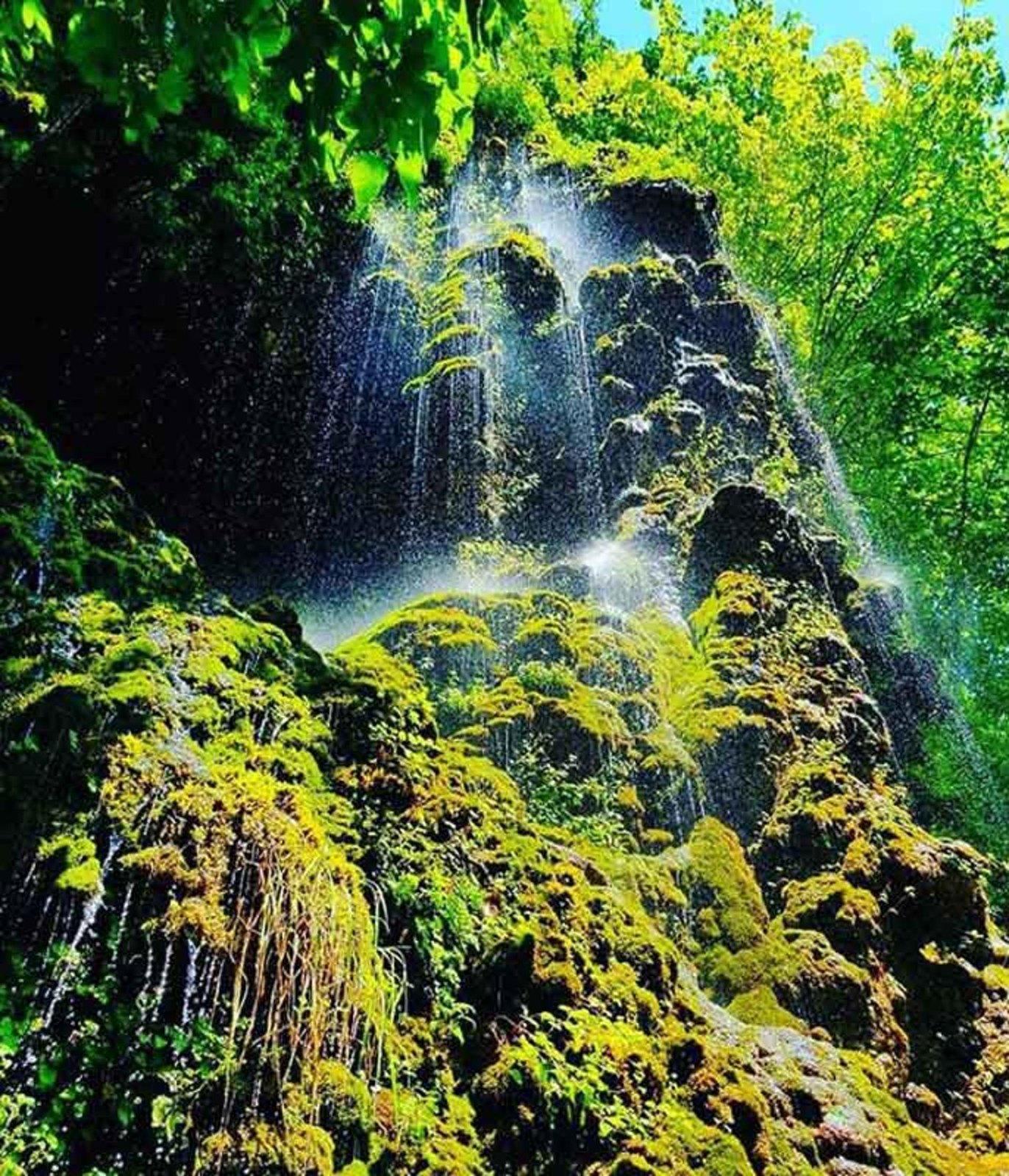
The waterfall itself is compact but attractive, with water cascading over a broad rock face into a shallow pool. The rock surface is dark and heavily mossy, giving the waterfall a lush, almost tropical appearance despite being in northern Iran. The flow varies with the seasons: in spring and early summer, when snowmelt feeds the mountain streams, the cascade is strong and the pool below is full; by late summer and autumn, the flow diminishes to a gentle trickle, though the mossy rocks and the forest setting remain beautiful.
The area around the waterfall is heavily shaded, with large trees leaning over the gorge and their roots gripping the rocky banks. Short nature trails lead into the forest from the waterfall, suitable for easy walks among the ancient trees. The forest here is remarkably quiet, with the sound of water and birdsong replacing the noise of the road just a few minutes' walk away.
The pool at the base of the waterfall is shallow but clear, and on hot summer days locals and visitors sometimes dip their feet in the cool water. The rocks around the pool are smooth and slippery when wet, so sturdy shoes are advisable if you want to explore close to the water.
Jannat Rudbar and the Highland Road
The road to Jannat Rudbar continues climbing after the waterfall, rising through the forest to the highland village of Jannat Rudbar itself. The name "Jannat Rudbar" means "Paradise Valley" in Persian, and the village lives up to it with its cool summer climate, traditional architecture, and sweeping views over the Caspian Sea and the forested slopes below.
Jannat Rudbar is one of the most popular highland retreats in the Ramsar area, visited by locals seeking relief from the humid coastal summer and by travellers looking for an authentic mountain village experience. The village has several tea houses and small shops selling local products such as forest honey, dried herbs, and handwoven textiles. The traditional houses are built of wood and stone, with steep roofs designed to shed the heavy Caspian rain and snow.
The road to Jannat Rudbar is paved and well-maintained, though narrow in sections with steep drops on the outside of some curves. The drive itself is one of the highlights, with hairpin bends, forest tunnels of green, and viewpoints where you can pull over and take in the panorama. On a clear day, you can see the Caspian Sea stretching to the horizon, the flat coastal plain dotted with rice fields, and the Alborz mountains rising behind you.
Combining a visit to Siasaret Waterfall with a stop at Jannat Rudbar makes an excellent half-day excursion from Ramsar. The waterfall provides a quick nature fix, while the village offers a chance to slow down, enjoy tea with a view, and experience the highland atmosphere.
How to get there
From Ramsar, drive south along the main mountain road towards Jannat Rudbar. The waterfall is signposted and visible from the road, with a small parking area just off the main route. Open Mehyar and choose Taxi from Ramsar for a direct ride to the waterfall; the driver can wait while you explore, or continue up to Jannat Rudbar village. The drive from central Ramsar takes about 45 minutes.
From Tehran, the drive to Ramsar takes about four to five hours via the Chalus or Haraz roads, both of which offer spectacular mountain scenery. Mehyar also operates bus services from Tehran to Ramsar, and from the Ramsar terminal you can take a local taxi to the waterfall.
The road to the waterfall is paved and suitable for all vehicles. The final 300-metre path from the main road to the waterfall is a short walk on a rough track, passable in normal shoes. There is no entrance fee or formal facility at the waterfall itself; the nearest tea houses and shops are in Jannat Rudbar village, a few kilometres further up the road.
Shared taxis and local buses run between Ramsar and Jannat Rudbar throughout the day, especially in summer when the highland village is at its most popular. You can ask to stop at the waterfall on the way, though the roadside pull-off is the proper place to park and explore.
Best time to visit
Spring and early summer (April to June) bring the best water flow and the greenest forest. This is when the waterfall is at its most impressive, with a strong cascade and a full pool. The forest canopy is at its freshest green, and the air is cool and fragrant with the scent of wet earth and new leaves.
Summer (July to August) is hot and humid on the coast, but the waterfall and Jannat Rudbar are significantly cooler, making them popular weekend escapes for Ramsar residents. The waterfall flow diminishes by late summer, but the forest shade and the cool pool remain attractive.
Autumn (September to October) offers pleasant temperatures, clear skies, and spectacular foliage. The forest turns shades of gold, orange, and red, making this one of the best times for photography. The crowds also thin out after the summer peak, and the roads are quieter.
Winter brings rain and occasional snow at higher elevations. The waterfall remains accessible, though the road can be slippery and the days are short. The forest takes on a moody, atmospheric quality in winter, with mist hanging in the valleys and the sound of water echoing through the bare trees.
Practical details
The waterfall is free to visit and accessible at all times during daylight hours. Allow one to two hours for a visit including a short forest walk and time at the pool. The site has basic facilities including a parking area and a small kiosk selling drinks and snacks. The nearest proper tea houses and restaurants are in Jannat Rudbar village.
The waterfall combines easily with a visit to Jannat Rudbar and other Ramsar attractions. For a complete Ramsar city guide, explore the other waterfalls, scenic drives, and coastal sites of this Caspian resort region.