
Some cities wear their history lightly. Tabriz does not. The capital of East Azerbaijan Province, home to roughly 1.5 million people, is a city whose past presses in from every direction: in the arcades of the UNESCO-listed bazaar, in the battered wall of the Arg-e Alishah, in the tombs of poets who defined Persian literature, and in the sweet shops where nougat has been made the same way for generations. Travelers who come to northwestern Iran looking for depth rather than postcards find it here in abundance. Tabriz has been a capital, a commercial crossroads, a crucible of revolution, and a workshop of ideas, and every one of those identities has left a mark you can still visit today.

The Geography of a Mountain City
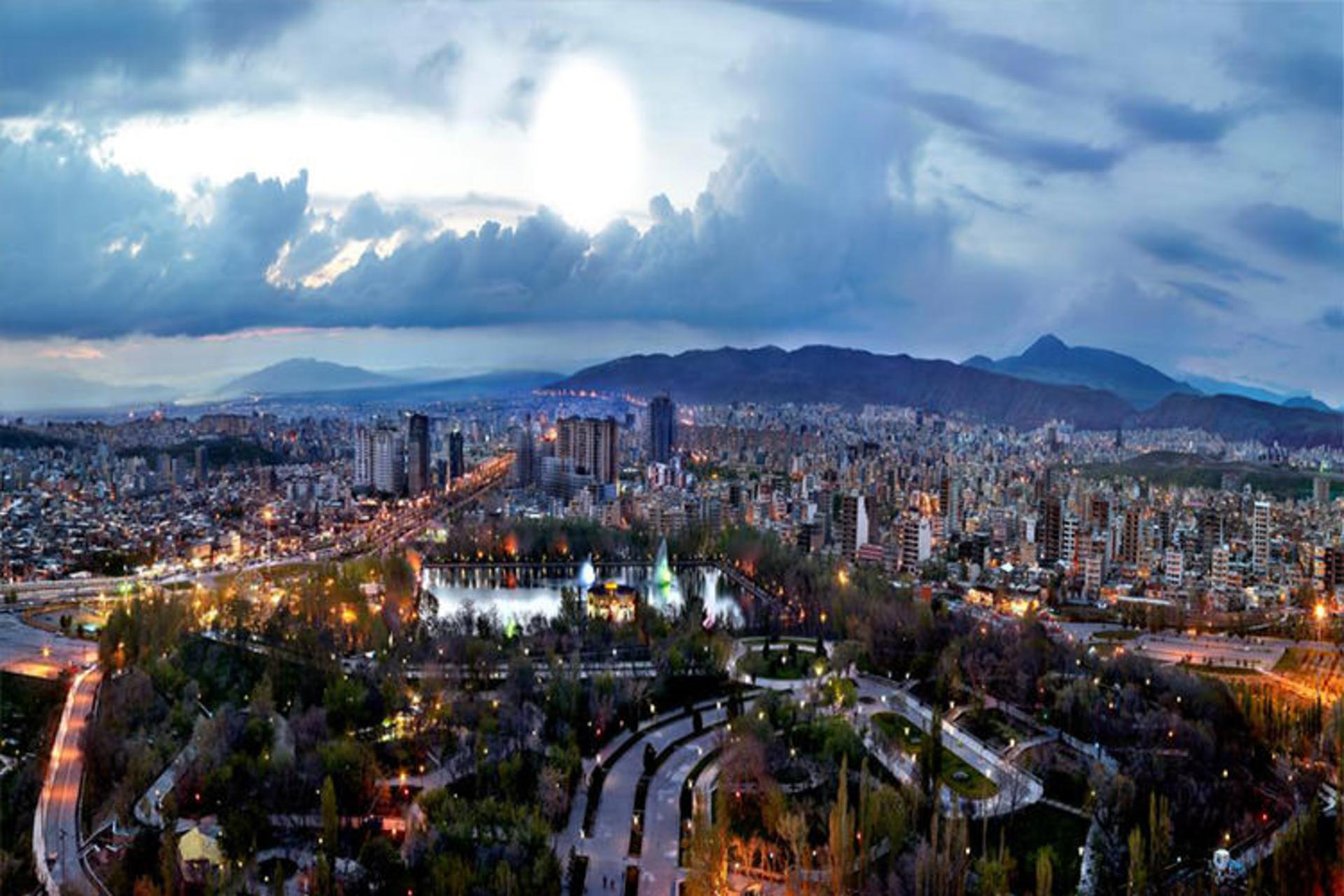
Tabriz sits in a broad intermontane basin at the western edge of the Sahand volcanic massif, at an elevation ranging from 1,350 to 1,550 metres above sea level. Mountains hem the city in on the north, south, and east, while the flat, salty plain of the Talkheh Rud river stretches away to the west. This bowl-like setting shapes everything about the city, from its cold, dry winters to its famously pleasant summers, and it explains why Tabriz has always been a natural waypoint for caravans moving between the Iranian plateau, the Caucasus, Anatolia, and Mesopotamia.
The city occupies a strategic position on the historic Silk Road, and for centuries it linked East and West as the gateway of the Orient. It is the largest city in northwestern Iran and the region's administrative, commercial, industrial, cultural, and communications hub. After the opening of the railway to the Turkish border, Tabriz strengthened its role as the principal land gateway of Iran, and its airport today connects the city to all major Iranian destinations as well as international routes.
A Capital Through the Centuries
The oldest surviving reference to Tabriz appears in a Sargonic inscription, and archaeological excavations across the city confirm a settlement history stretching back more than four thousand years. But Tabriz truly enters history as a capital. It served as the seat of the Atabakan of Azerbaijan, the Khwarazmshahs, the Ilkhanate, the Chupanids, the Jalayirids, the Aq Qoyunlu, and the Safavids. When Shah Ismail I founded the Safavid dynasty in 1501, Tabriz was his first capital, and at the turn of the sixteenth century it was likely the fifth largest city in the world.
Under the Qajars, Tabriz became the official residence of the crown prince, and it was here that Abbas Mirza and his successors learned the business of ruling. This crown prince era transformed the city, filling it with mansions, barracks, and institutions of modern learning. The twentieth century brought its own upheavals. Tabriz was the beating heart of the Constitutional Revolution, and its people paid dearly for their resistance to royal absolutism and foreign occupation.
The city has also suffered catastrophically. Earthquakes have repeatedly flattened Tabriz, most devastatingly in 858, 1042, 1721, and 1780. Each time, the people rebuilt. Foreign travelers who passed through the city, from Chardin in the seventeenth century to Jackson in the twentieth, remarked on this resilience again and again: a city that burns down, crumbles, and rises again, larger and busier than before.
Arg-e Alishah: The Fortress That Refused to Fall
Rising from the heart of the old city, at the corner of Imam Khomeini and Ferdowsi Streets, the Arg-e Alishah is at once the most battered and the most imposing monument in Tabriz. What stands today is the remnant of an enormous vaulted hall built in the early fourteenth century during the Ilkhanate period under Taj al-Din Ali Shah, the vizier of Sultan Öljaitü. The structure was intended as a mosque and congregational complex, and its iwan walls once rose to heights that rivalled the great monuments of the Mongol world.
The building's later history is as eventful as its construction. In the early nineteenth century, during the Russo-Persian wars, Crown Prince Abbas Mirza converted the ruin into a military garrison and artillery foundry, which is why it is known today as the Arg, or citadel. Subsequent earthquakes brought down the great vault, leaving only the massive flanking walls and the towering iwan fragment that visitors see now. Even in its broken state, the wall of the Arg is one of the tallest surviving mud-brick structures in Iran, and standing beneath it, you can feel the ambition of the age that raised it.
The surrounding complex includes valuable historic structures such as the Nejat School, one of the first modern schools in Iran. The Arg anchors a district of old streets and workshops that rewards unhurried exploration.
El Goli: The Eight-Thousand-Pillar Garden
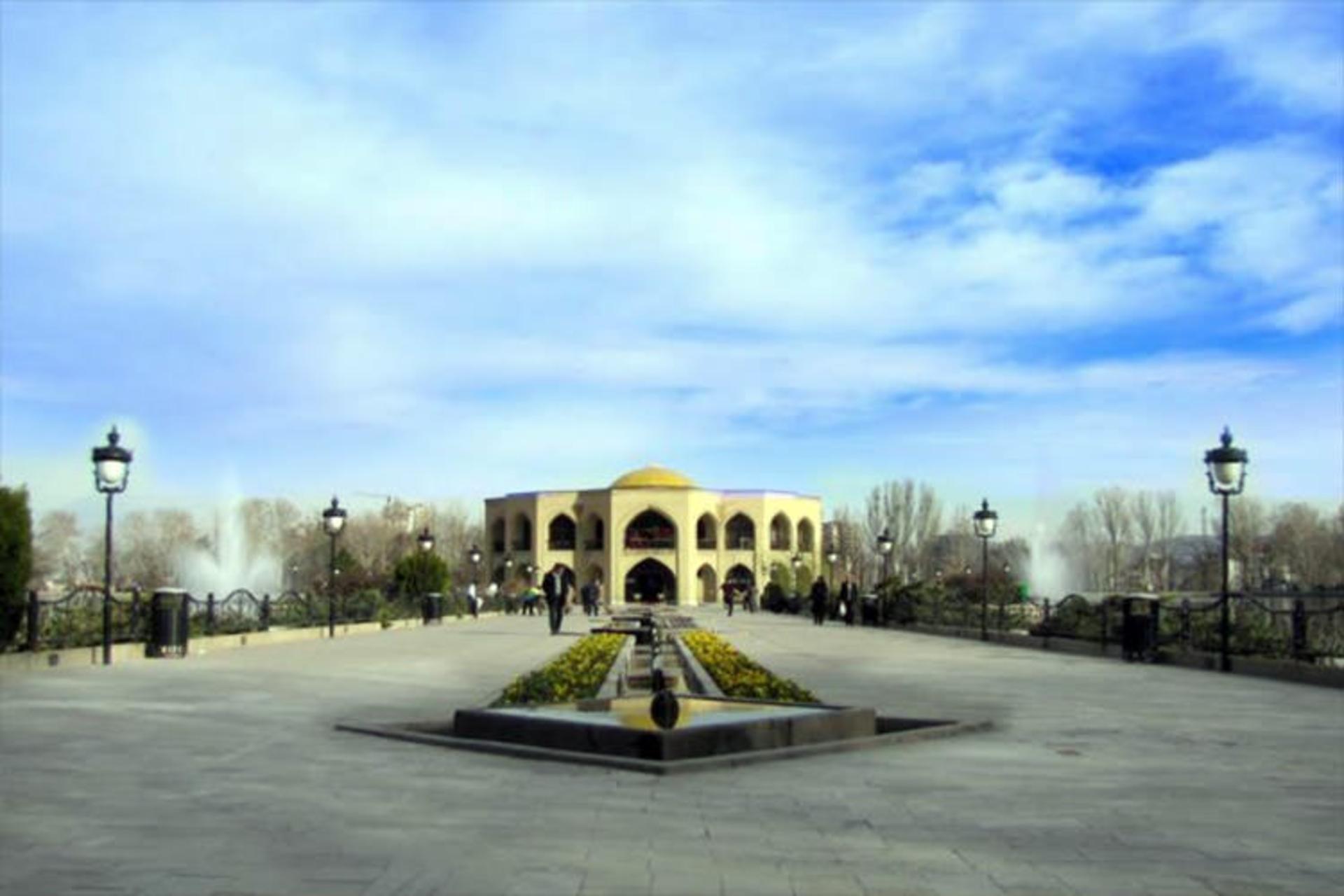
Seven kilometres southeast of the city centre lies El Goli, the most beloved pleasure ground of Tabriz. A great square artificial lake sits in the middle of a landscaped park, and in the centre of the lake rises an octagonal pavilion, rebuilt in the 1970s on the foundations of an older structure, that is known locally as the Shah Goli palace. The name El Goli is often interpreted as "the people's pool," and on summer evenings the gardens around the water fill with families strolling, boating, and drinking tea as the light fades over the Sahand foothills.
The origins of El Goli go back to the Aq Qoyunlu rulers of the fifteenth century, and the site was expanded under the Safavids, who dredged the pool and lined it with stone. In the Qajar era, roads were laid around the reservoir and avenues of cypress, weeping willow, and bedding flowers were planted to decorate the promenade and freshen the air. Under the Pahlavis the park passed to the municipality and became a public recreation ground, with the first major restorations carried out by the provincial governor Mehdi Dolat in the mid-twentieth century.
Today El Goli offers boating, restaurants, a hillside funicular, and miles of walking paths. For visitors arriving in Tabriz on a hot summer afternoon, it remains the classic place to catch a breeze and watch the city relax.
Mount Sahand: The Sleeping Volcano
The white bulk that hangs over every view of Tabriz is Sahand, an extinct volcano whose summit, Kamal Dagh, rises 3,707 metres above the surrounding plains. The massif contains more than a dozen peaks above 3,000 metres, and in winter its slopes hold snow well into the spring. Botanists know Sahand as the bride of Iranian mountains: in early summer the meadows are sheeted with tulips, wild mint, and a dozen species of mountain flowers, and nomad families bring their flocks up to the high pastures.
For travellers, the mountain offers hiking in summer, snow sports in winter, and, above all, a dramatic counterpoint to the city below. Springs bubble from the higher slopes, sacred to local tradition, and the streams feed both Lake Urmia to the west and the valley of the Qezel Uzen to the east. Excursions to the foothill villages around Osku and Kandovan, where houses are carved into eroded volcanic cones, combine naturally with a visit to Tabriz itself.
Maqbarat al-Shoara: Where Tabriz Buries Its Poets
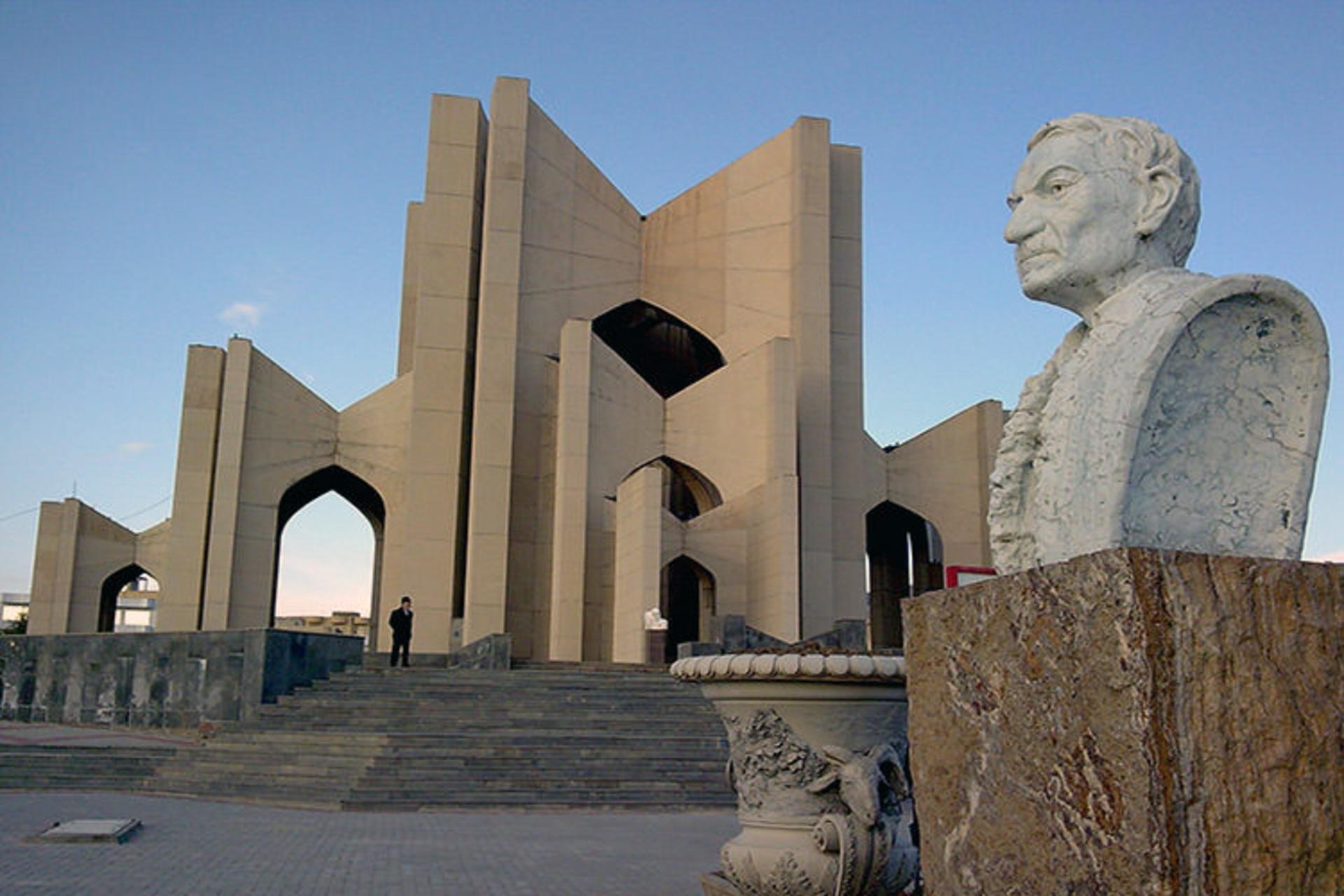
On Thiqat al-Eslam Street, beside the mausoleum of Seyyed Hamzeh, stands one of the most moving monuments in Iran: the Maqbarat al-Shoara, the Poets' Mausoleum. This cemetery quarter, known in older documents as Haziret al-Shoara and Haziret al-Qozat, has been the burial place of Tabriz's literary figures for close to a thousand years. Here lie Qatran Tabrizi, the great eleventh-century panegyrist; Khaqani Shirvani, master of the ornate qasida; Asadi Tusi, Mujir al-Din Beylaqani, Homam Tabrizi, and dozens more.
Time and earthquakes buried much of the old graveyard, and by the twentieth century the site was neglected. In 1971, after the earthquakes of the 1780s had all but erased it, a national competition was organized through the Ettela'at and Kayhan newspapers to design a worthy monument. Construction followed, and today a striking modern structure of concrete and granite rises over the graves, its surfaces carved with verses from the poets buried below. The most recent arrival is Mohammad Hossein Shahriar, the beloved twentieth-century poet of Azerbaijani and Persian verse, whose death in 1988 drew enormous crowds.
Visiting the Maqbarat al-Shoara is one of the great experiences of Tabriz. Stand among the gravestones and read the carved couplets, and the literary history of a thousand years becomes personal: these are not just names in anthologies, but neighbours of the city that raised them.
Bagh-e Golestan: The Old Public Garden
In the west of the city, Bagh-e Golestan, known in Azeri as Golestan Bagi, is among the oldest urban parks of Tabriz. Created in 1929 on the grounds of the old Gajil cemetery, it served for decades as the principal public garden of the city, the place where families strolled after a morning in the bazaar. The park covers about 52,000 square metres and contains old plane and poplar trees, ornamental pools, and a small amusement area that has entertained generations of children. Although the removal of its historic walls in recent decades dimmed some of its former charm, the garden remains a pleasant green retreat in a busy district, and the nearby Qonqa square preserves the memory of Iran's first urban tramway.
Souvenirs of Tabriz: A Treasury of Sweets and Crafts
No account of Tabriz is complete without its markets, and no visit to its markets is complete without tasting. The city's confectionery is famous across Iran, and its hand-made products have been exported since the Qajar era.
Nouga. The most famous sweet of Tabriz is nouga, a chewy confection of egg white, sugar, walnuts, and vanilla, closely related to the gaz of Isfahan but with a character all its own. Sold in brightly wrapped bars in every sweet shop and airport kiosk, nouga is the taste most travellers carry home.
Ghorabiyeh. These melt-in-the-mouth almond or coconut cookies are among the oldest sweets of the city, baked especially for Eid celebrations. Good ones crumble at a breath and fill the mouth with the scent of cardamom.
Baklava. Azerbaijani baklava, cut in diamond or square pieces and filled with pistachio, almond, or coconut, is richer and denser than its Turkish cousin. Tabriz's confectioners are widely held to make the best in Iran.
Ris. A traditional sweet of milk, sugar, vanilla, pistachio, and cocoa, ris comes in beaded and cocoa varieties, and its varieties suit every palate.
Rahat al-holqum. The Turkish delight of Iran, sold beside heaps of nuts and dried fruit, is a staple of Yalda night and festive tables.
Other sweets. Latifeh, a soft cream-filled pastry; konjed bread, a sesame sweet enriched with egg yolk; halva made from black sesame seed; and zanjabili, a ginger bread served at iftar, round out the confectionery shelf.
Nuts and dried fruit. The orchards of Azerbaijan supply almonds, walnuts, dried apricots, peaches, and raisins in profusion, and the nuts market beside the bazaar is one of the most photogenic places in the city.
Leather and shoes. Tabriz has been the shoe capital of Iran for nearly a century. Around 2,000 workshops and 5,000 shops sell hand-made leather shoes of legendary durability, and shoppers come from across the country for boots that last decades. Even visitors who arrive intending only to browse leave with a pair.

Planning Your Visit to Tabriz
Tabriz is best visited in late spring or early autumn, when the mountain air is crisp and clear. Summers are dry and warm but far milder than the Iranian interior, while winters are genuinely cold, with heavy snow. The city is well served by the Tabriz International Airport, by rail connections to Tehran and to the Turkish border, and by an extensive highway network.
Getting around with Mehyar. Once you arrive, the simplest way to reach each monument is to open the Mehyar app, choose Taxi, and set your destination. For visitors arriving from other cities, Mehyar Buses connects major cities across Iran, and you can check schedules and book your seat in advance through the app.
The great advantage of Tabriz is that most of its monuments sit within a compact central district. The Arg-e Alishah, the Jame Mosque, the bazaar, and the Constitution House can be combined in a single day of walking. El Goli requires a short taxi ride, and Mount Sahand is a full-day excursion. Allow at least three days to see the city properly, and more if you intend to explore the volcanic villages of the surrounding hills.
Few cities in Iran reward the curious traveller as thoroughly as Tabriz. It is a city where history is not a museum piece but a living fabric, where the sweets are worth the trip alone, and where the mountains that ring the horizon hold stories older than the empire that made the city famous.