
Iran's reputation as a travel destination rests on its ancient cities, its deserts, and its Persian gardens. But there is another Iran, one that surprises nearly every first time visitor who ventures north of the Alborz Mountains. Gilan province, wedged between the Caspian Sea and the forested slopes of the mountains, is a world apart from the arid plateau of the interior. Here the air is thick with moisture, the hillsides are covered in dense deciduous forest, the rice paddies stretch to the horizon in sheets of green, and the villages look as though they belong to a different continent entirely. Sush is one of these villages, a small settlement in the green heart of Gilan that offers a window into a way of life that has changed surprisingly little over the centuries, even as the country around it has modernized at pace.
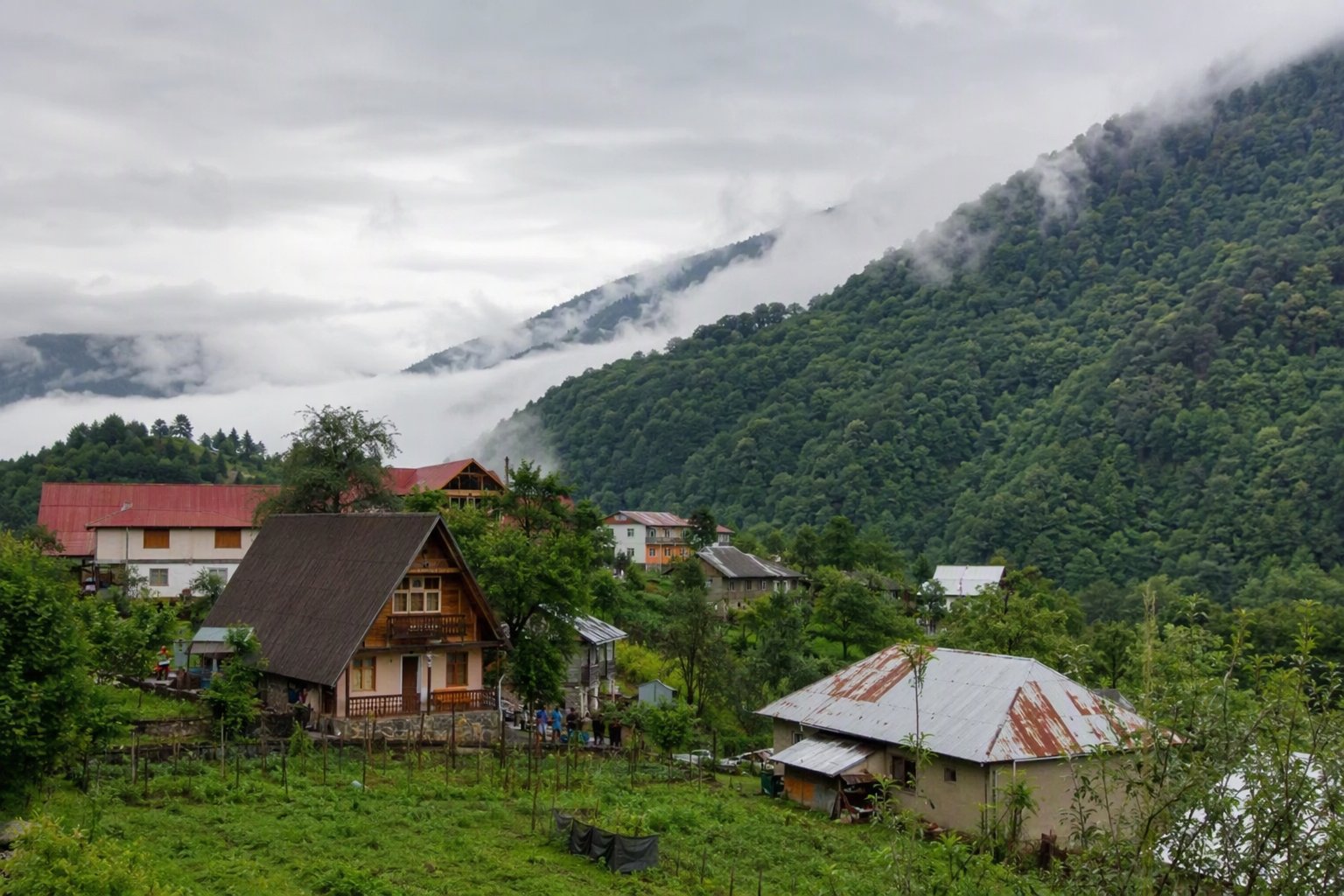
The drive to Sush from Rasht, the capital of Gilan, takes you through some of the most beautiful rural scenery in Iran. The road winds between tea plantations and rice fields, passes through villages where the houses have red tiled roofs and wooden balconies, and crosses rivers that run fast and clear from the mountains. The rain is frequent, sometimes a drizzle and sometimes a downpour, and the forest on either side of the road seems to drink it all and give back a green so vivid it almost hurts to look at. Sush itself sits among this landscape, a cluster of houses surrounded by gardens and forest trails, and the pace of life there is set by the seasons, the harvest, and the weather, not by the clock.
What is Sush and why visit it?
Sush is a village in the rural district of Gilan, part of the broader Caspian region that stretches across northern Iran. Like many villages in this province, it is defined by its landscape. The Alborz Mountains to the south trap the moisture coming off the Caspian Sea, creating a microclimate that supports some of the most productive agriculture in Iran. Tea, rice, olives, and kiwi fruit are all grown in the surrounding countryside, and the village economy has historically been tied to these crops. For the traveler, Sush is interesting not because it has a single spectacular monument but because it represents a living landscape, a place where you can see how people have adapted to this particular environment over generations and where the traditions of food, building, and social life remain intact.
Rural tourism has grown significantly in Gilan over the past decade, and Sush has benefited from this trend. Visitors come from Tehran, Isfahan, and other Iranian cities to escape the heat and dust of the plateau and to spend a few days in the cool, green countryside. Foreign travelers are less common but not unknown, and the village has the advantage of being close enough to Rasht for easy access while remaining far enough from the main roads to feel genuinely remote. The ecolodges that have opened in recent years offer comfortable accommodation in traditional settings, and the food, prepared with local ingredients and recipes, is some of the best in Iran.

The landscape and climate of Sush
Gilan's climate is classified as humid subtropical, which in practice means hot and humid summers, mild and rainy winters, and rainfall spread across most of the year. Sush shares this pattern. The summer months of June through August are warm, with temperatures in the low thirties, but the humidity keeps the heat from feeling as oppressive as it does in the desert cities. Autumn brings cooler temperatures and spectacular colors as the forests change. Winter is mild by Iranian standards, though the rain is persistent and the mountain tracks above the village can be muddy and slippery. Spring, from March to May, is the most beautiful season, when the rice paddies are flooded and the young shoots push through the water, the hillsides are covered in wildflowers, and the whole landscape seems to be breathing.
The forest around Sush is predominantly hyrcanian, part of the ancient Caspian forest belt that is a UNESCO World Heritage Site in its own right. The trees include oak, beech, alder, and hornbeam, along with smaller understory plants that create a dense, layered canopy. Walking in the forest is one of the main activities for visitors, and the trails range from easy paths along the valley floor to more demanding routes that climb into the hills and offer panoramic views over the rice terraces below. Birdwatchers will find the area rewarding, with species including the Caspian tit, the hyrcanian woodpecker, and various raptors that hunt over the forested slopes.
How to get to Sush
The most practical gateway to Sush is Rasht, the capital of Gilan province. Rasht has an airport with regular flights from Tehran, and the city is connected to the capital by a modern highway that takes about three to four hours by car. From Rasht, Sush is accessible by road, though the exact route depends on the current condition of local roads, which can change after heavy rain. The drive from Rasht takes roughly an hour and a half to two hours, depending on the exact location and road conditions.
The simplest approach for foreign visitors is to arrange transport through Mehyar. A taxi booked in advance gives you the flexibility to stop at viewpoints, visit other villages along the way, and avoid the uncertainty of finding transport at the last minute in a region where public transit options are limited. Shared taxis and minibuses run from Rasht to the larger towns in the area, but the final leg to Sush itself may require a local arrangement. If you are driving, the roads are generally good, though narrow in places and occasionally subject to landslides in the wetter months.
Where to stay: ecolodges and local accommodation
One of the most appealing aspects of visiting Sush and the surrounding villages is the chance to stay in a local ecolodge. Gilan has been at the forefront of Iran's rural tourism movement, and the ecolodges here range from simple family run guesthouses to more polished operations that combine traditional architecture with modern comforts. The rooms are typically in restored or newly built structures using local materials, with wooden beams, tiled roofs, and verandas overlooking the gardens or the valley. The bathrooms are clean and modern, and the beds are comfortable, though the emphasis is on simplicity and authenticity rather than luxury.
Meals are a highlight. The food of Gilan is recognized by UNESCO as part of the Creative Cities Network for Gastronomy, and the villages live up to this reputation. Breakfast typically includes local cheese, eggs, fresh bread, honey, and tea grown on the nearby plantations. Lunch and dinner feature dishes made with rice, herbs, fish from the Caspian, walnuts, pomegranate molasses, and the sour flavors that define the regional cuisine. Mirza Ghasemi, a smoked eggplant and tomato dish, is a Gilan specialty, as is Baghali Ghatogh, a stew of broad beans, dill, and eggs. These are not restaurant approximations but home cooking, prepared by the ecolodge hosts using ingredients from their own gardens and the surrounding countryside.
Booking in advance is advisable, especially in spring and autumn when demand is highest. Mehyar lists available ecolodges and guesthouses in the area, and the hosts are generally happy to arrange transfers from Rasht or from the nearest town. If you are traveling independently and arrive without a reservation, you may still find a room, but the safer option is to book ahead, particularly if you are traveling with a group or during a holiday period.
What to do in and around Sush
The appeal of Sush is not a checklist of sights but the rhythm of village life itself. Mornings are best spent walking. Follow the paths that lead from the village into the surrounding fields and forest, watch the farmers at work in the rice paddies, and stop to talk to the locals, who are famously hospitable in this part of Iran. The forest trails offer shade and cool air even on warm days, and the sounds of the forest, bird calls, running water, wind in the canopy, create a backdrop that makes the walk itself the destination.
Afternoons can be spent more slowly. Read on the veranda of your ecolodge, drink tea with your hosts, or visit the village tea house if there is one, where the older men gather to play backgammon and discuss the day's news. If you are visiting during the harvest season, you may be invited to help with the picking of tea leaves, olives, or rice, an experience that gives you a direct connection to the land and the people who work it.
For day trips, the surrounding area offers a great deal. The Caspian Sea coast is within driving distance, and the beaches near Bandar Anzali and Lahijan are popular with Iranian families in summer. The town of Masuleh, with its extraordinary stepped architecture, is a few hours to the west and makes a compelling day trip. The Alborz passes to the south offer high mountain scenery and the chance to see nomadic camps in summer. And the city of Rasht itself, with its grand bazaar and excellent restaurants, deserves a day of your time at the start or end of any trip to Gilan.

The food of Gilan
Any visit to Sush is also a visit to one of the great culinary regions of Iran. Gilan's food is distinct from the cuisine of the rest of the country, with its emphasis on sour flavors, fresh herbs, fish, and walnuts. The dishes are bold and aromatic, and they reflect the abundance of the region, where the rain and the soil produce ingredients that are hard to find elsewhere in Iran. Kateh, the local style of rice cooked in a pot with a crispy bottom layer, is preferred over the drained rice of the plateau, and the meals are typically accompanied by local pickles, yogurt, and a range of herb plates.
The ecolodges in Sush and the surrounding villages cook the food of the region at its most authentic. This is not the refined restaurant cuisine of Tehran but the home cooking that has been passed down through generations, made with ingredients picked that morning from the garden. It is some of the best food you will eat anywhere in Iran, and for many visitors, the meals alone justify the trip.
Practical tips for visiting Sush
Gilan is wet. Bring a rain jacket regardless of the season, and shoes that can handle mud. The trails around Sush are beautiful but can be slippery after rain, and the village paths are not always paved. A small flashlight is useful for evening walks, as street lighting in rural areas is minimal. Cash is essential, as ATMs are few and card payment is not available in most village shops or ecolodges.
Mosquitoes can be a problem in the warmer months, especially near the rice paddies. Repellent is worth bringing, though the local ecolodges usually provide nets or treated rooms. The humidity can be a surprise for visitors coming from the dry interior, and it is worth allowing a day to acclimatize before attempting any strenuous hikes.
The best time to visit depends on what you want. Spring is the greenest and the most beautiful, with wildflowers and flooded paddies. Summer is warm but lively, with the harvest activities and the chance to swim in the Caspian. Autumn brings spectacular colors and cooler temperatures, and the forests at their peak are unforgettable. Winter is quiet and atmospheric, with low clouds, rain, and the chance to see the village under a dusting of snow on the higher ground, though some ecolodges close for the season.
Sush is a reminder that Iran is a country of many landscapes and many ways of life. The green north, with its forests, its rice fields, and its villages, is as much a part of Iran as the deserts of Yazd and the gardens of Shiraz, and experiencing it gives you a fuller picture of what this country has to offer. A few days in Sush, walking the trails, eating the local food, and talking to the people, will leave you with a sense of a different Iran, one that is quieter, greener, and deeply rooted in the land.