
Along the arid coastline of southeastern Iran, where the Gulf of Oman meets the Baluchi desert, one of nature's most unusual phenomena plays out in quiet, steady eruptions. The mud volcanoes of Sistan-Baluchestan, known locally as gelfeshan or golpashan, are cone-shaped hills that periodically expel cool mud, water, and gases from deep beneath the earth's surface. They do not roar with lava like the volcanic mountains of Japan or Iceland. Instead, they bubble and sigh, pushing thick gray mud upward in a process that locals have watched for centuries and that geologists still study to understand the forces at work far below.
For travelers visiting Chabahar and the surrounding coast, the mud volcanoes are among the most surreal and memorable sights in a region already filled with geological wonders. The drive from Chabahar toward the Pakistani border passes through landscapes that look almost Martian, and then, without warning, you arrive at a field of small gray cones that pulse with slow, viscous life. It is a place where the planet reveals a different kind of power, patient and persistent, shaping the surface from within.

What Are Mud Volcanoes and How Do They Form
Mud volcanoes are geological structures formed when pressurized gas and fluids trapped deep in sedimentary layers find a path to the surface. Unlike true volcanoes, which erupt molten rock from the earth's mantle, mud volcanoes release a mixture of water, fine sediment, and gases, primarily methane, at temperatures close to ambient. The mud that emerges is often cool to the touch, and in some cases it carries dissolved minerals that give it medicinal properties valued by local communities.
Globally, mud volcanoes are concentrated along tectonically active coastal margins, with roughly 1,100 known active sites worldwide. They cluster along 41 coastlines and 21 marine margins, with the highest concentration found in shallow seas and continental shelf environments. In Asia, Azerbaijan holds the world record with approximately 1,700 mud volcanoes, followed by significant fields in Indonesia, China, Myanmar, and Taiwan.
Iran's mud volcanoes are found along the southeastern coast, concentrated in Sistan-Baluchestan province. Twenty mud volcanoes have been identified in the region, distributed in three main clusters: five between Jask and Minab ports, nine between Chabahar and Jask, and six between Chabahar and the Iran-Pakistan border, particularly north of the Gulf of Gwatr.
Local Names and Cultural Significance
The mud volcanoes of Sistan-Baluchestan carry different names depending on the local dialect and region. In the Gwatr area, the Dashtyari plain, and eastern Baluchistan, residents call them "buten." In Chabahar, Kahur, and Zarabad, they are known as "golpashan," meaning flower-spraying, or "napuk," meaning the navel of the earth or the navel of the sea. These names reflect the local understanding that the mud volcanoes are openings connecting the surface to forces deep underground.
For centuries, Baluchi communities have attributed healing properties to the mud. The practice of "gol darmani," or mud therapy, involves applying the cool, mineral-rich mud to the skin to treat joint pain, skin conditions, and inflammation. While scientific studies on the specific mineral composition of Iranian mud volcanoes are still limited, the tradition is widespread and deeply embedded in the cultural life of coastal Baluchistan.

The Pir Gol Mud Volcano and Other Key Sites
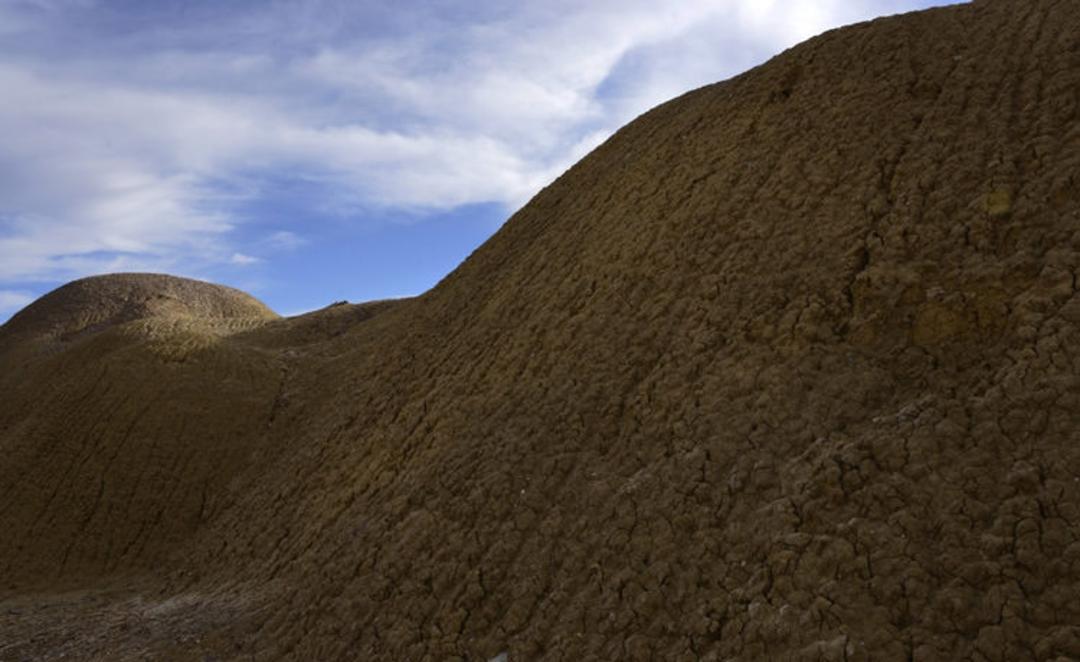
Among the most visited mud volcanoes in the region is Pir Gol, a prominent cone located near the coastal road between Chabahar and Gwatr. Pir Gol rises several meters above the surrounding plain and features a central crater that periodically overflows with fresh mud, creating dark rivulets that dry into cracked patterns under the hot sun. The site is accessible by car, with a short unpaved track leading from the main road to the base of the cone.
Other notable mud volcanoes in the area include those near the villages of Tang and Pirooz, as well as several smaller cones scattered across the Dashtyari plain. During the rainy season, when groundwater levels rise and pressure builds in the subsurface chambers, the volcanoes become more active, with taller mud flows and more frequent bubbling. This is the best time to visit, as the contrast between the wet, flowing mud and the surrounding dry landscape is at its most dramatic.
Activity at these sites varies from year to year, and some volcanoes may appear dormant during dry seasons only to erupt vigorously after heavy rainfall. Local guides from nearby Baluchi villages can provide current information on which cones are active and offer insights into the geology and folklore of the area.
Geological Importance and Scientific Study
The mud volcanoes of Sistan-Baluchestan are of particular interest to geologists because they provide a window into the tectonic processes shaping the Makran subduction zone, where the Arabian Plate slides beneath the Eurasian Plate. The gases released by the mud volcanoes, primarily methane with traces of carbon dioxide and nitrogen, originate from organic matter trapped in the deep sedimentary layers and carried upward by the rising fluids.
Researchers from Iranian universities and international institutions have studied these sites to understand the composition of subsurface gases, the rate of mud emission, and the potential for mud volcanoes to reveal information about petroleum reserves deep below the seabed. Some studies have suggested that the mud carries microfossils and mineral fragments from depths of several kilometers, making the volcanoes natural drilling cores that bring deep-earth materials to the surface without any human intervention.
Visiting the Mud Volcanoes
A visit to the mud volcanoes is a unique experience that combines geological wonder with the raw beauty of the Baluchi coast. The landscape around the cones is stark and otherworldly, with low scrub, sandy soil, and occasional salt marshes creating a backdrop that emphasizes the strangeness of the bubbling mud. The cones themselves range from small mounds barely a meter high to impressive structures several meters tall, each with its own crater and flow patterns.
Visitors can walk around the cones, observe the bubbling mud up close, and in some cases touch the cool surface. The mud is safe to handle and, as local tradition holds, believed to have beneficial effects on the skin. Bring old shoes or sandals that can be discarded or cleaned, as the mud stains readily and can be difficult to remove from footwear. Early morning or late afternoon visits are recommended to avoid the intense midday heat of the Baluchi coast.
How to Get There
The mud volcanoes are located along the coast of Sistan-Baluchestan province, primarily between Chabahar and the Gulf of Gwatr. Chabahar is the nearest major town, reachable by air from Tehran and other Iranian cities, or by road along the coastal highway from Bandar Abbas. The distance from Tehran to Chabahar by road is approximately 1,800 kilometers, though flying takes about two and a half hours.
From Chabahar, the Pir Gol mud volcano and other sites are accessible by car along the Chabahar to Gwatr coastal road. The journey takes about one to two hours, depending on which sites you wish to visit. Mehyar Taxi operates in Chabahar and can arrange day trips to the mud volcanoes with a knowledgeable local driver. Mehyar Hotels also offers accommodation options in Chabahar for visitors planning to explore the region's geological wonders.
For budget travelers, local buses run between Chabahar and towns along the coast, though you will need to arrange a taxi from the nearest village to reach the mud volcano sites directly.
Hours and Tickets
The mud volcanoes are natural features in open landscape with no entrance fees, restricted hours, or formal facilities. Access is available at all times, though visiting during daylight hours is strongly recommended for safety and visibility. Allow two to three hours for a visit to the main sites, including time to walk around the cones and photograph the landscape.
Nearby Sites and Tips
The mud volcanoes combine naturally with a broader tour of Chabahar's geological attractions, including the Martian Mountains, the mangrove forests of Hara, and the beaches of the Gulf of Oman. The coastal road between Chabahar and Gwatr passes through some of the most dramatic scenery in southern Iran, with rugged cliffs, wide bays, and occasional fishing villages where you can stop for fresh seafood.
Bring sunscreen, a hat, and plenty of water. The Baluchi coast is hot and dry for most of the year, with summer temperatures regularly exceeding forty degrees Celsius. The best season to visit is between November and March, when temperatures are comfortable and the possibility of rain increases mud volcano activity. Spring months, particularly February and March, offer an excellent balance of mild weather and active mud flows. Respect the local Baluchi communities and their traditions, and ask permission before photographing people or entering private land near the villages.