
Few figures in the sweep of human history command the reverence accorded to Cyrus the Great. Born sometime between 600 and 576 BC and dying in 530 BC, this extraordinary ruler forged the largest empire the ancient world had ever known and established governing principles that still resonate across millennia. His story is not merely a chronicle of conquest but a testament to the power of vision, tolerance, and respect for the peoples one encounters. For travellers exploring the ruins of Pasargadae in the heartland of Fars province, standing before the simple yet dignified tomb that has endured for twenty-five centuries, the magnitude of what Cyrus accomplished becomes almost palpable.
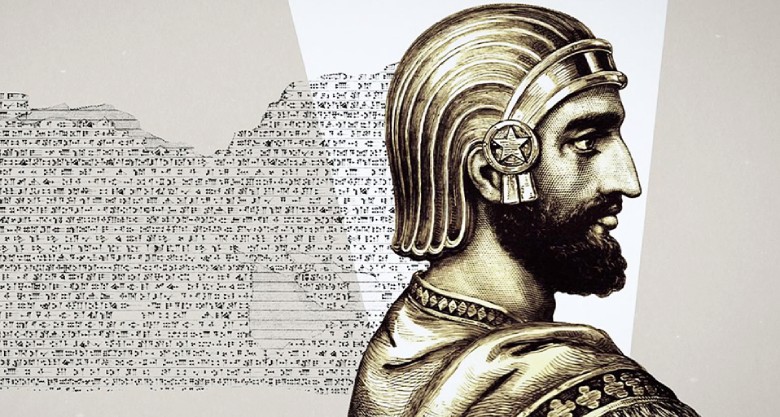
Royal Origins and the Path to Power
Cyrus II of Persia was born into circumstances that already marked him for greatness, though nothing could have predicted the scale of his achievements. His father, Cambyses I, ruled the kingdom of Anshan, an ancient city in the region of Elam in what is today southwestern Iran. His mother, Mandane, carried equally distinguished blood as the daughter of Astyages, the last king of the Median Empire. This dual heritage of Persian and Median royalty placed young Cyrus at the intersection of two powerful traditions, but lineage alone does not forge empires.
In 559 BC, following the death of his father, Cyrus ascended to the throne of Anshan. At that time, the Medes remained the dominant power in the region, and Cyrus was nominally a vassal under his grandfather Astyages. Yet Cyrus harboured ambitions that extended far beyond the modest boundaries of his inherited kingdom. In 550 BC, after a carefully orchestrated revolt against Astyages, Cyrus overthrew the Median Empire and united all the Iranian tribes under a single banner. This was not merely a change of dynasty. It was the birth of the Achaemenid Empire, a polity that would reshape the political map of the ancient world.
The Conquests That Built an Empire
With the Medes subjugated and the Iranian peoples united, Cyrus embarked upon a series of military campaigns that would transform his kingdom into the largest empire the world had yet witnessed. His genius lay not solely in martial prowess but in the combination of strategic brilliance with a diplomatic sensibility that won the allegiance of conquered peoples rather than merely their submission.

The conquest of Lydia, occurring around 546 BC, demonstrated both Cyrus's tactical ingenuity and his willingness to integrate rather than destroy. Lydia, a fabulously wealthy kingdom in Asia Minor ruled by the legendary King Croesus, fell to Cyrus after a decisive engagement near the Lydian capital of Sardis. Rather than executing or humiliating the defeated monarch, Cyrus treated Croesus with honour and incorporated the Lydian territories into his growing domain. This approach sent a message throughout the ancient world: submission to Cyrus brought not ruin but continuity and protection.
The fall of Babylon in 539 BC stands as perhaps the most remarkable of all Cyrus's achievements. Babylon was the jewel of Mesopotamia, a city of extraordinary cultural richness and historical significance. Yet by the late 530s BC, internal discontent had weakened the kingdom under the rule of Nabonidus, whose religious policies had alienated the powerful priesthood of Marduk. Cyrus exploited this disaffection masterfully. According to the accounts preserved in the Cyrus Cylinder, he entered the city "in peace, amidst joy and jubilation." There was no sack, no massacre, no burning of temples. Instead, Cyrus restored religious sanctuaries, returned displaced peoples to their homelands, and governed with a lightness of touch that astonished his contemporaries.
Governance Built on Tolerance
What truly distinguishes Cyrus the Great from the many conquerors who preceded and followed him was his philosophy of governance. At a time when victorious rulers routinely imposed their own gods, languages, and customs upon subjugated populations, Cyrus adopted a radically different approach. He respected the customs of every land he conquered. He permitted the free practice of all religions within his domains. He restored temples and sacred sites that had been neglected or destroyed by previous rulers. This was not mere pragmatism, though it certainly served practical ends by reducing resistance to his rule. It reflected a genuine conviction that diversity was a strength rather than a threat.

The most celebrated expression of this policy concerned the Jewish people, who had been exiled from their homeland by the Babylonian king Nebuchadnezzar II and held in captivity in Babylon. After his conquest of the city, Cyrus issued a decree permitting the Jewish exiles to return to Jerusalem and supporting the reconstruction of the Second Temple, which had been destroyed during the Babylonian invasion. This act earned Cyrus a uniquely honoured place in Jewish tradition. The Hebrew Bible refers to him as "Messiah," literally "anointed one," a title ordinarily reserved for the kings and priests of Israel alone. In the entire biblical text, Cyrus is the only foreigner to receive this designation.
The Cyrus Cylinder: An Ancient Charter of Rights
The artifact known as the Cyrus Cylinder, created around 539 BC following the conquest of Babylon, has come to be regarded as one of the most significant documents in the history of human governance. This clay cylinder, inscribed with an account of Cyrus's peaceful entry into Babylon, records his efforts to repatriate displaced peoples, restore religious temples, and uphold justice throughout his newly acquired territories. While modern scholars debate whether the cylinder constitutes a "charter of human rights" in the contemporary sense, there is no dispute that it represents an extraordinarily early example of a ruler publicly committing to principles of justice, religious freedom, and cultural respect.
The cylinder was discovered in 1879 during excavations at Babylon by the Assyriologist Hormuzd Rassam. Today it resides in the British Museum in London, where it remains one of the most visited objects in the collection. A replica is displayed at the United Nations headquarters in New York, a recognition of its symbolic importance to the modern concept of human rights.
Death and the Tomb at Pasargadae
Cyrus the Great died in 530 BC, reportedly during a military campaign against the Massagetae, a nomadic people inhabiting the steppes east of the Caspian Sea. His son Cambyses II succeeded him and briefly added Egypt to the empire's vast territories, but it was Cyrus's vision that provided the enduring foundation.
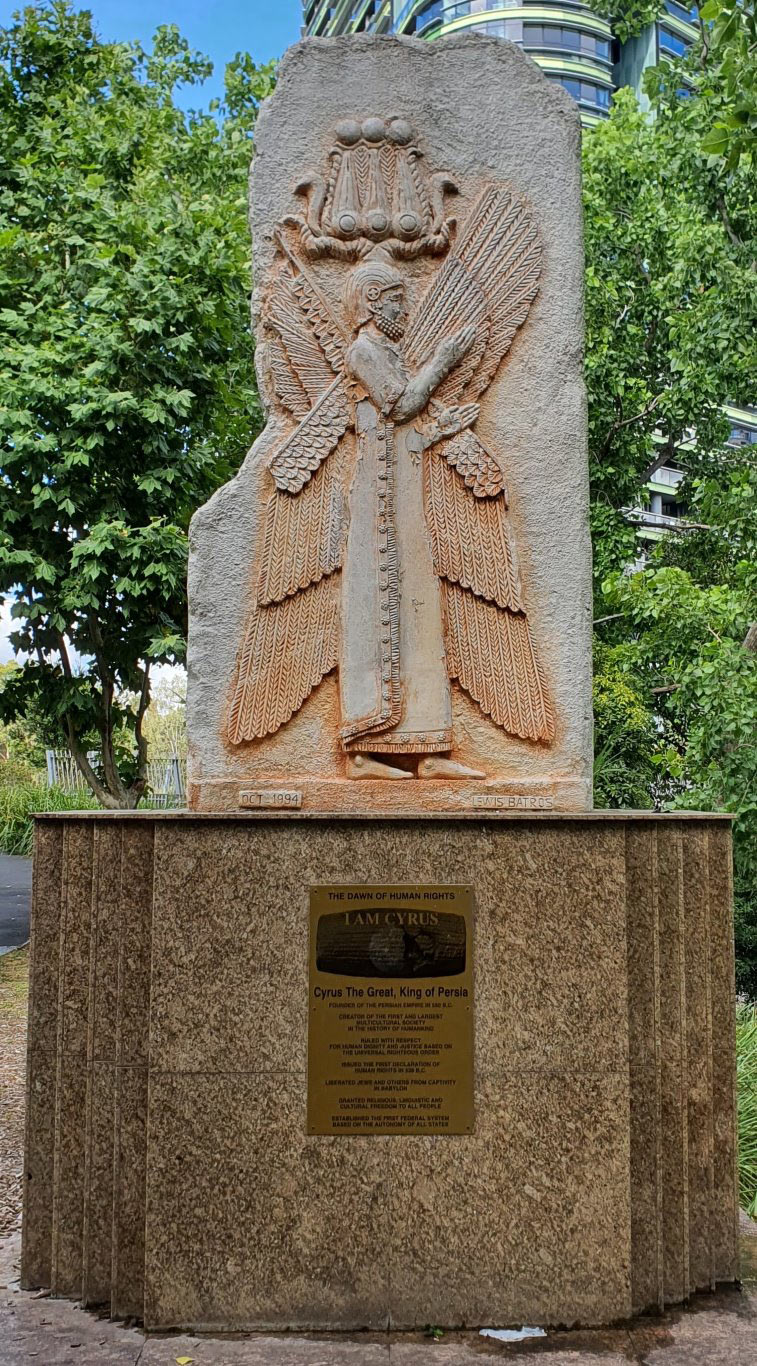
The tomb of Cyrus at Pasargadae remains one of the most moving monuments in Iran. It is striking in its simplicity: a stepped stone platform surmounted by a small gabled structure, devoid of the elaborate reliefs and grandiose inscriptions that later Achaemenid kings would commission for their tombs at Naqsh-e Rostam and Persepolis. When Alexander the Great conquered Persia two centuries after Cyrus's death, he reportedly visited the tomb and was so moved by what he found there that he ordered its restoration and improvement. The inscription said to have been placed at the tomb reads: "O man, whoever thou art and from wheresoever thou comest, for I know thou wilt come, I am Cyrus who founded the empire of the Persians. Envy me not therefore the little earth that covers my body."
An Enduring Legacy
The influence of Cyrus the Great extends far beyond the boundaries of his empire or the span of his lifetime. His system of provincial governance through satraps was adopted and refined by his successors, including Darius the Great, and was later emulated by Alexander, the Seleucids, and the Romans. His principles of religious tolerance and cultural respect prefigured concepts that would not find widespread expression in governance until the Enlightenment, more than two thousand years later.
In the American colonies, Thomas Jefferson is believed to have studied Xenophon's Cyropaedia, an ancient account of Cyrus's education and governance, and to have drawn upon its lessons when formulating ideals of leadership and tolerance. The United Nations Declaration of Human Rights, adopted in 1948, acknowledges the Cyrus Cylinder as an historical antecedent.
For visitors to Iran, a journey to Pasargadae is a pilgrimage to the origins of an idea that has shaped civilizations. The plain of Fars stretches around the tomb in every direction, and in the quiet of that landscape, the achievements of a man who lived twenty-five centuries ago feel remarkably present. Cyrus the Great understood something that the modern world is still struggling to learn: that true power lies not in the destruction of what is different but in the respectful embrace of diversity. His legacy is not merely a chapter in a history book. It is a living principle that continues to inspire those who seek to build societies grounded in justice, tolerance, and mutual respect.