
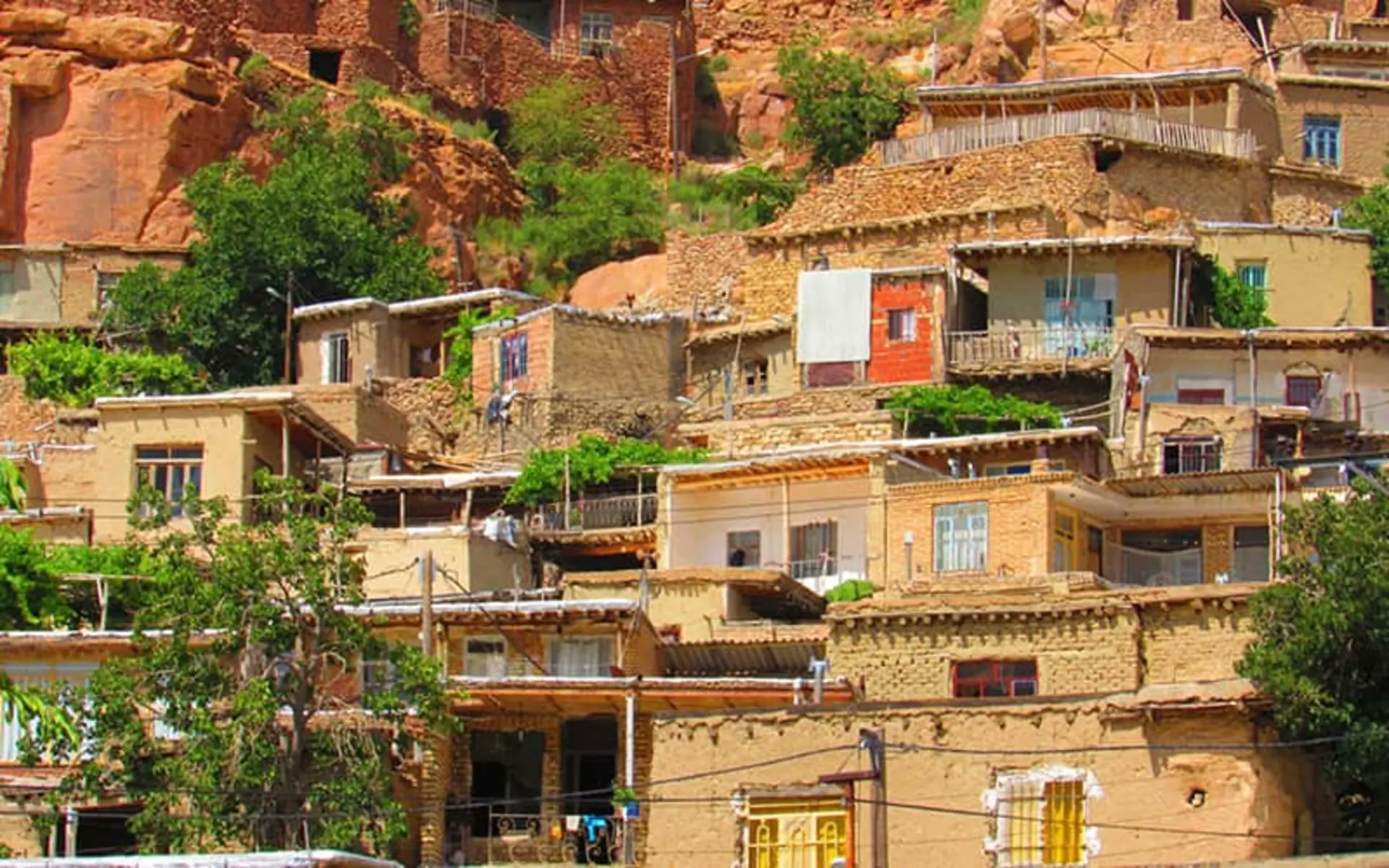
Nestled in a narrow valley surrounded by towering mountains in North Khorasan Province, Esfidan village is one of Iran's most striking examples of step architecture and mountain settlement design. Located just 45 kilometers southeast of Bojnord, the provincial capital, this village earned the title of Iran's most beautiful village in 2006, and it is not hard to see why. Houses are built into the hillside in a cascading formation where the roof of one home serves as the courtyard of the house above it, creating a living staircase that has drawn comparisons to the famous village of Masouleh in Gilan.
Esfidan, also known locally as Isbian, offers far more than its photogenic architecture. Visitors here find rushing springs, waterfalls hidden in mountain valleys, ancient fortresses perched on rocky outcrops, sacred shrines with centuries of history, and some of the friendliest communities in northeastern Iran. The village speaks a Khorasani Turkish dialect, and its economy revolves around walnut orchards, apple gardens, and handwoven carpets that are among the finest in the province.
Where Is Esfidan Village?
Esfidan sits in a mountain valley in Bojnord County, North Khorasan Province, in northeastern Iran. The village lies at an elevation that gives it a moderate mountain climate, with cool summers and cold winters. It is positioned between the cities of Quchan and Shirvan, making it a natural stop for travelers exploring the wider North Khorasan region. The surrounding peaks protect the village from harsh winds and create a microclimate where walnut, apple, cherry, and grape vines thrive in the fertile soil.
The village's isolation, tucked deep in a mountain valley, has helped preserve its traditional character. Unlike many Iranian villages that have modernized beyond recognition, Esfidan retains much of its original layout, building techniques, and cultural practices. The stepped houses, narrow lanes, and communal courtyards all reflect a way of life shaped by the mountainous landscape.
How to Reach Esfidan Village from Bojnord
Getting to Esfidan requires first reaching Bojnord, the capital of North Khorasan. The city sits 738 kilometers from Tehran, roughly a nine-hour drive or a short domestic flight. From Bojnord, two routes lead to Esfidan, both starting on the Bojnord-Shirvan freeway.
Route one: Enter the freeway and after about seven kilometers, take the Esfidan exit on the right. This 15-kilometer paved road passes through the village of Chenaran and offers pleasant mountain scenery. At the end, you reach a four-way intersection. Turn right and continue through the village of Nowdeh before arriving at Esfidan via a winding mountain road.
Route two: Stay on the freeway for about 15 kilometers to a second Esfidan exit. This route passes through the Sissab area and also leads to the same four-way intersection, where you continue straight into the village.
Both roads are fully paved and suitable for standard vehicles. The drive from Bojnord takes roughly 45 minutes to an hour, depending on your chosen route. Using Mehyar Taxi gives you the flexibility to stop at viewpoints along the way and wait while you explore the village at your own pace.

The Step Architecture of Esfidan
The most immediately striking feature of Esfidan is its stepped construction. Houses climb the mountainside in tiers, each level set back from the one below. This design is not merely aesthetic; it is a practical response to the steep terrain and the need to maximize usable space in a narrow valley. Every rooftop doubles as a terrace or walkway, and the entire village functions as a single interconnected structure.
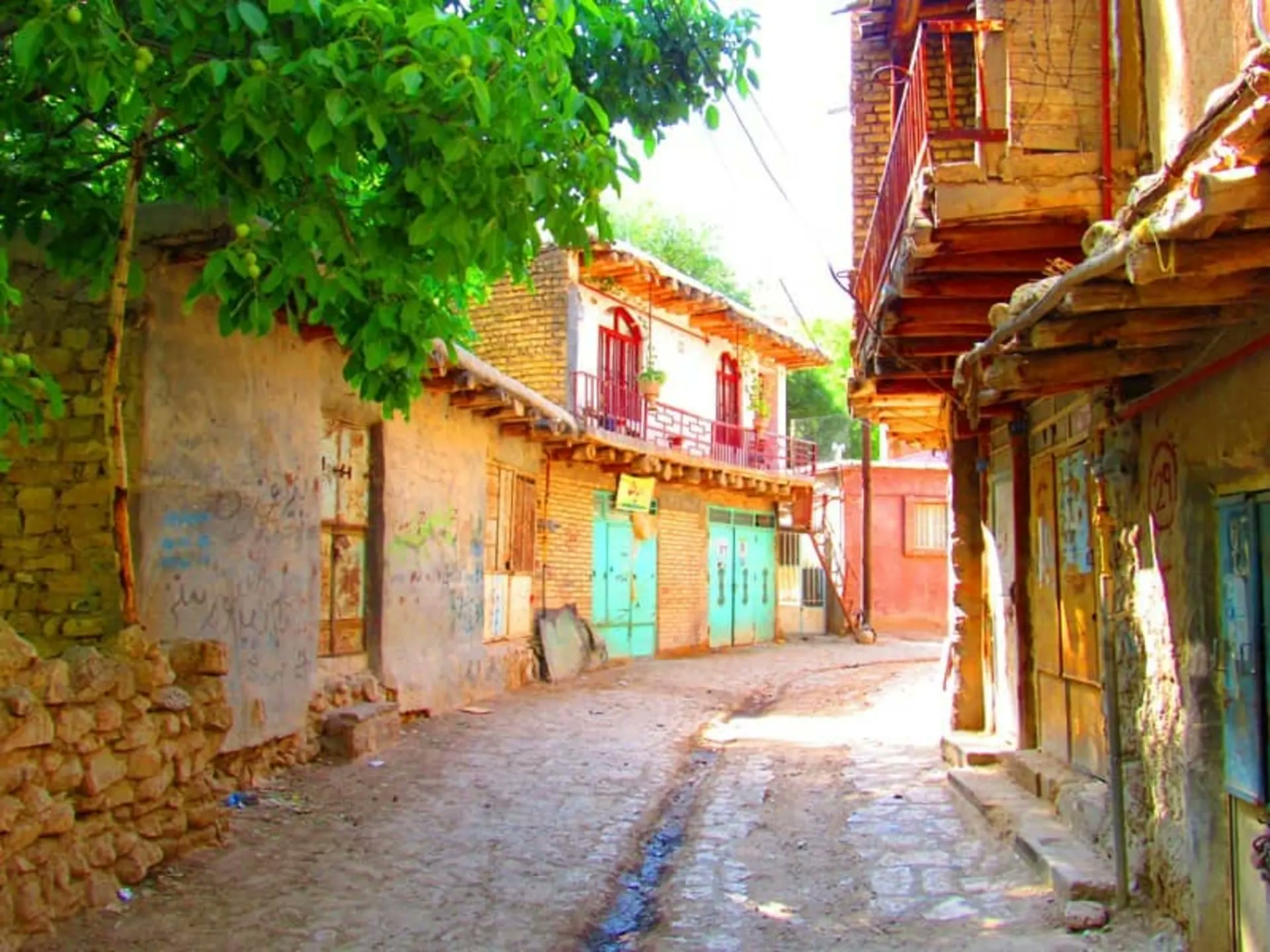
Locals take great pride in this architectural heritage. The buildings use stone, wood, and mud-brick, materials sourced from the surrounding mountains and shaped by generations of craftsmen. Walking through the village, you pass through covered alleys, small courtyards, and doorways that open onto stunning valley views. Photographers will find endless compositions here, especially in the early morning light when shadows play across the stepped facades.
Sights Around Esfidan Village
Hinarud Valley and Spring
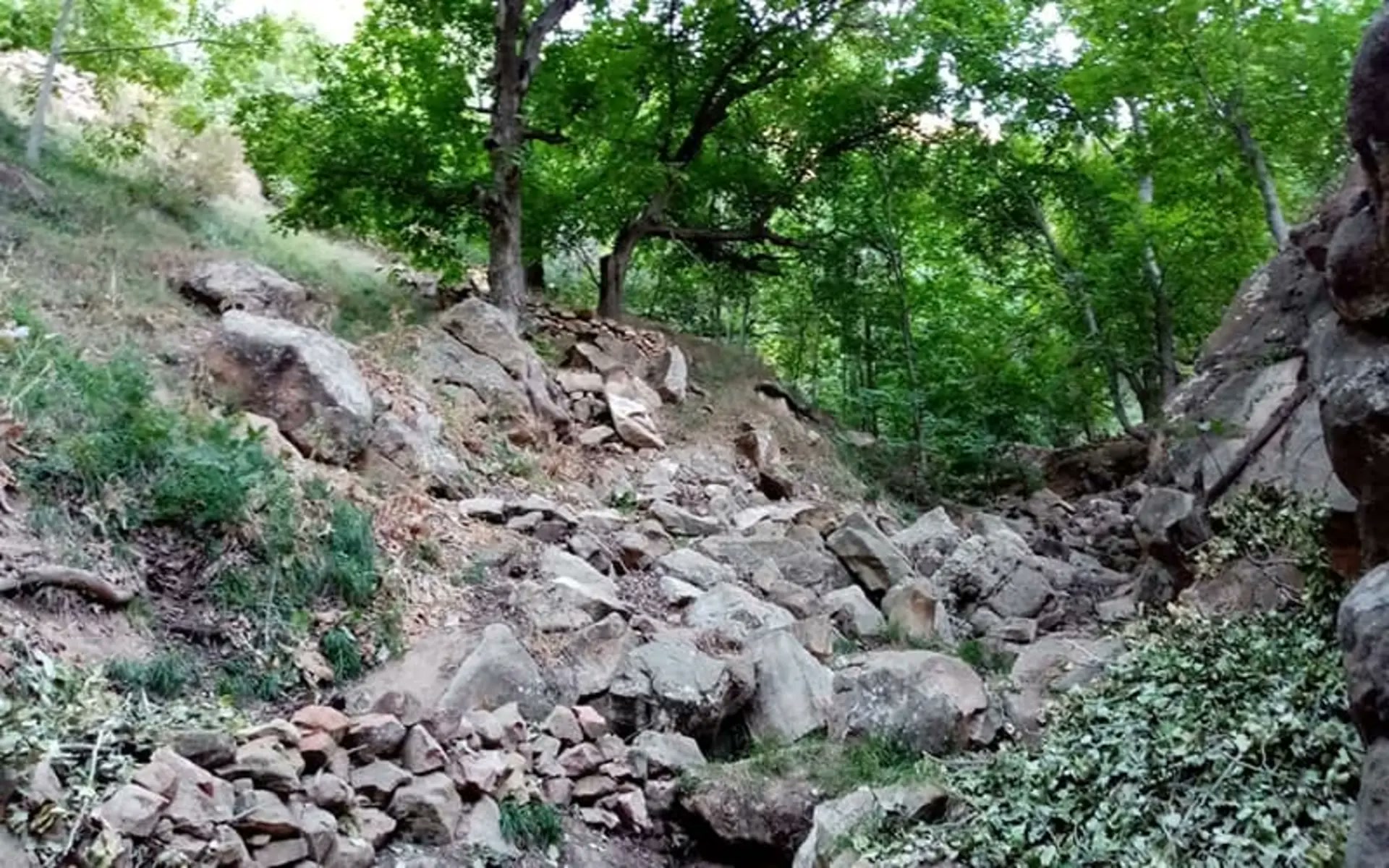
About half an hour's walk northwest of the village lies Hinarud Valley, a deep gorge carved by centuries of water flow. The spring emerges from a cave-like opening in the mountain rock, filling a small pool before continuing downhill to feed the village gardens. The water is cold, clear, and exceptionally refreshing. Local farmers channel it through an intricate system of irrigation ditches that keep the orchards green throughout the dry summer months.
Bahargah Valley and Waterfall
To the southwest of Esfidan, Bahargah Valley offers another scenic destination with multiple springs, a small waterfall, and lush greenery that stands in sharp contrast to the surrounding rocky peaks. At the valley entrance, a hilly area called Muso covers roughly 40 hectares. A few years ago, a severe landslide buried the gardens, homes, and old trees in this section, adding a dramatic geological story to the valley's appeal.
Tash Ghal'eh: The Stone Castle
On the western side of the village, a rocky cliff bears the remains of Tash Ghal'eh, meaning Stone Castle. Archaeological surface finds here include plain beige and red pottery sherds as well as decorated fragments in various colors, suggesting occupation from early historical periods. The castle's elevated position gave its builders a commanding view of the valley and the approaches from surrounding mountain passes.
Stone Towers of Esfidan
On the mountain peaks surrounding the village, remnants of several stone towers are still visible. Built from stone and sarooj (a traditional waterproof mortar), the most prominent are the Qari Malaq Tower and the Qarqeh (Crow) Tower on the northwest side. Their foundations remain intact, and local oral history attributes them to defensive use during periods when the valley faced threats from raiding parties.
Caves of Esfidan
Northwest of the village, above the Hinarud spring, lies Khazaneh Mountain, home to the Khazaneh Raheh cave. Locals say this hand-dug cave once served as a shelter during times of conflict, and at its far end, a well drops into the mountain's interior. A rock formation inside resembles a carved mask, adding to the cave's mysterious atmosphere. Another cave nearby, called Yijet or Masum Cave, contains stalactite and stalagmite formations that draw curious visitors.
Imamzadeh Muhammad bin Baqer bin Musa bin Jafar
One of the most important cultural and spiritual sites in Esfidan is the Imamzadeh Muhammad bin Baqer bin Musa bin Jafar, a Shia shrine with a short dome, four minarets, and a rectangular plan. The structure dates to the Safavid or Qajar period and features an eastern iwan with an arched ceiling decorated in muqarnas, plasterwork, and mirror work, alongside a southern iwan with a flat ceiling. Above the entrance door, beautiful Nastaliq calligraphy in plasterwork, the work of the late Molla Mohammad Taghi Esfidani, graces the facade. This shrine was registered as national heritage number 5942 in 2002. Villagers believe the presence of the Imamzadeh has protected the settlement from rockfalls for centuries.
The Ancient Sandalwood Trees
Perhaps the most poignant natural monument in Esfidan is its sandalwood trees. Village elders recount that roughly 17 of these trees once stood within the village, but most were cut down over the years due to ignorance of their value. Today, only two remain, each with a trunk diameter of 2.65 meters and an estimated age of around 1,200 years. These ancient trees are the symbol of Esfidan, and their survival against the odds is a testament to the resilience of nature when given even a small chance.
Local Products and Souvenirs
Esfidan's mountain climate and fertile soil produce some of the finest walnuts in North Khorasan, widely regarded as the best quality available in provincial markets. Apple, cherry, and grape orchards surround the village, and in early summer, the air fills with the scent of ripening fruit. Beyond fresh produce, Esfidan is known for handwoven Gol-e Abrisham carpets in the Nain design, as well as local cheese, trout from village fish farms, honey from mountain beekeepers, and traditional woven textiles. Purchasing these items directly from villagers supports the local economy and ensures you take home authentic, high-quality goods.
Where to Stay in Esfidan
Several accommodation options exist in and around the village. The Esfidan Beautiful Eco-lodge, established in 2018, sits next to the Imamzadeh and offers basic amenities including bathrooms, a small museum, and the chance to order traditional local meals. The Cheshmeh Esfidan Tourism Complex, two kilometers from the village, provides private suites, pavilions, and a shop. The Dehrizeh Eco-lodge offers a garden-house setting two kilometers away, surrounded by orchards. For those who prefer sleeping under the stars, camping is permitted in designated areas, and some villagers rent rooms to travelers.
If you prefer hotel comfort, Bojnord offers several options including the four-star Daryoush Hotel and the three-star Negin Hotel, both a 45-minute drive from Esfidan. You can book hotels and transport through Mehyar Hotels to coordinate your entire trip in one place.
Best Time to Visit Esfidan Village
Esfidan enjoys one of the most pleasant climates in North Khorasan. Spring and early summer are the ideal times to visit, when mountain wildflowers bloom, springs run at full force, and the orchards burst into blossom. The weather is cool and comfortable, making it perfect for hiking the valley trails and exploring the surrounding peaks. Early summer also brings the first ripe fruits, and you can taste fresh cherries and apples straight from the trees.
Autumn brings spectacular colors as the walnut and apple trees turn golden, but temperatures drop quickly and some mountain roads may become slippery. Winter in Esfidan is cold and snowy, with access roads sometimes blocked by snowdrifts. Unless you are equipped for winter mountain travel, it is best to avoid this season.
Practical Details
- Address: North Khorasan Province, Bojnord County, 45 km southeast of Bojnord city
- Hours: Open access at all times, no entry fee
- Best season: Spring (March to May) and summer (June to August)
- Visit duration: Half a day for the village itself, a full day if including all valley hikes
- Entry fee: Free
- Transport: Private vehicle or Mehyar taxi from Bojnord recommended