
There are places in Iran where history is not a monument you visit but a layer of ground you stand on. Belad Shapoor is one of these. The name means "Lands of Shapur," and it refers to the ancient urban core that lies beneath and around the modern city of Dehdasht, in the province of Kohgiluyeh and Boyer-Ahmad in southwestern Iran. This was a city built by Shapur I, the second Sasanian king, who ruled from 241 to 272 CE, and its story is the story of a place that has been inhabited, abandoned, rebuilt, and renamed across more than seventeen centuries of continuous human presence.
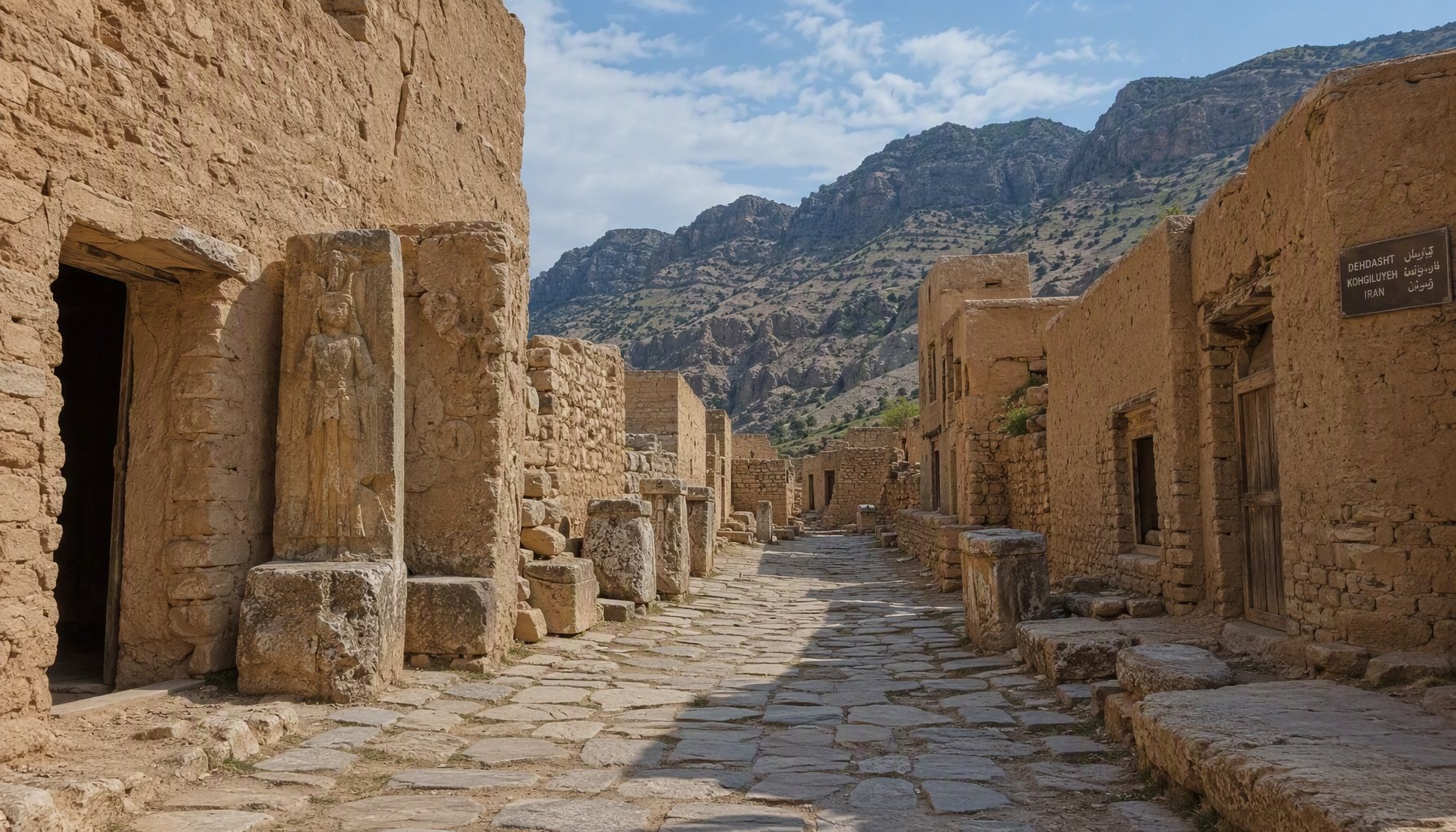
Belad Shapoor is not a tourist site in the conventional sense. There are no ticket booths or museum galleries. What exists of the ancient city is woven into the fabric of modern Dehdasht itself, and into the open fields and olive groves that surround it. Archaeological surveys have identified more than 45 hectares of historical remains, including stone-paved streets, residential quarters, bathhouses, mosques, caravanserais, and the foundations of shrines whose domes gave the site its later name: Haft Gonbad, the Seven Domes. Walking through Dehdasht today, you may pass over Sassanid masonry without knowing it. The city's past is not displayed. It is embedded.
The Historical Significance of Belad Shapoor
The founding of Belad Shapoor is attributed to Shapur I, son of Ardashir I, the founder of the Sasanian dynasty. Shapur I was one of the most ambitious and successful rulers of the ancient world. He defeated the Roman emperor Valerian in battle and took him captive, an event commemorated in the famous rock reliefs at Naqsh-e Rustam and Bishapur. He expanded the Sasanian empire to its greatest extent, stretching from the Euphrates to the Indus. And he founded cities across his domain, settling prisoners of war, deporting populations from conquered territories, and building new urban centres to serve as administrative hubs and garrison towns.
Belad Shapoor was one of these foundations. The original city was known as Jumeh, and it served as a regional centre in the fertile plains between the Zagros mountains and the Khuzestan lowlands. The location was strategic: it controlled routes between the interior of the Iranian plateau and the Mesopotamian plain, and it sat in a zone of agricultural abundance, watered by seasonal rivers and supported by the rich alluvial soil that makes this part of southwestern Iran among the most productive farmland in the country.
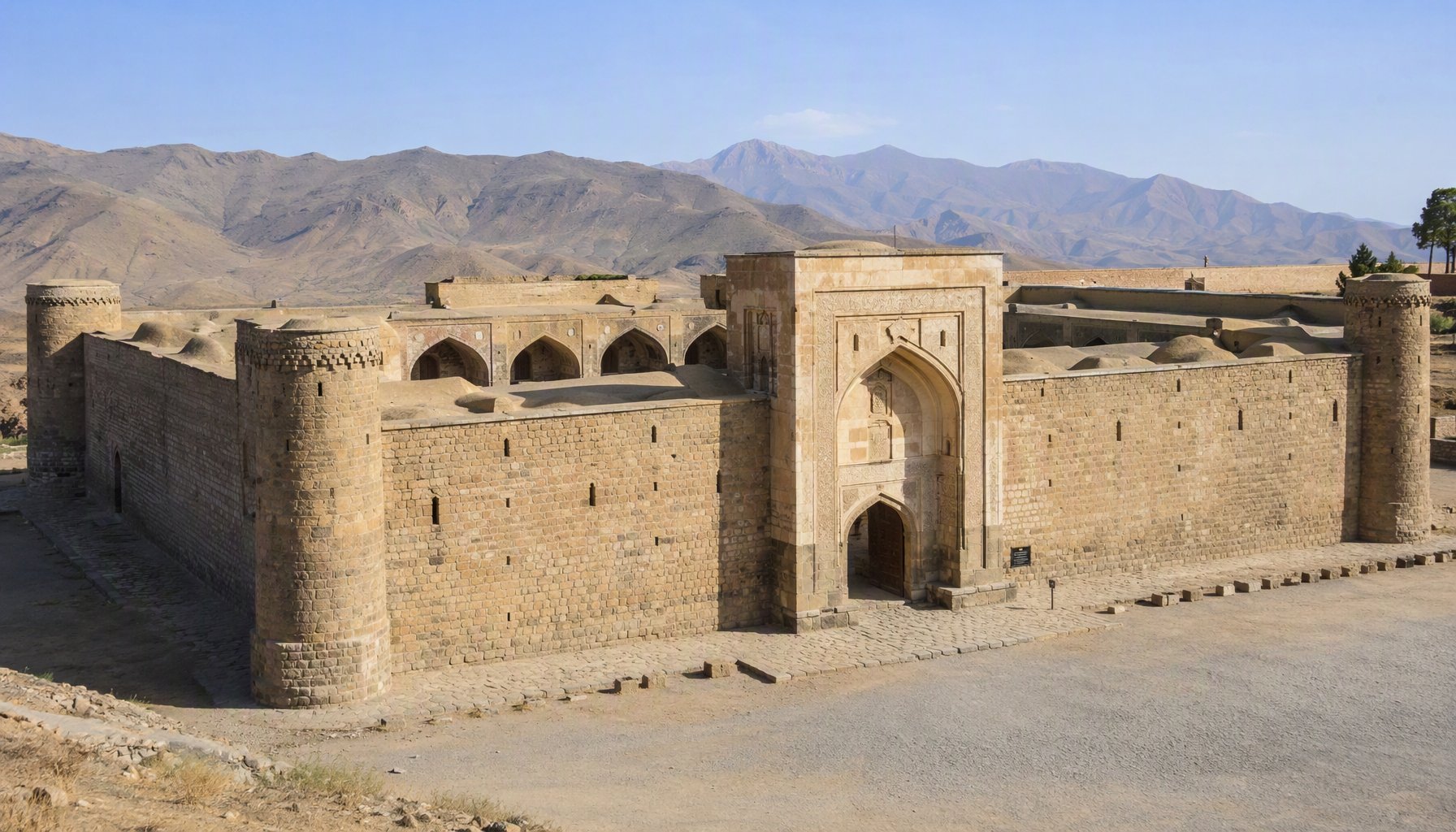
Over the centuries, the city grew and changed. The Sasanian urban core was supplemented by Islamic-period construction, particularly during the Safavid era (1501 to 1736), when Dehdasht experienced a period of prosperity and expansion. The Safavid buildings include the famous caravanserai, a large rectangular structure with stone walls, corner towers, and an open courtyard surrounded by arched iwans and vaulted rooms. This caravanserai is considered one of the most important examples of its type in southwestern Iran, and its registration as a national monument of Iran has brought it international attention.
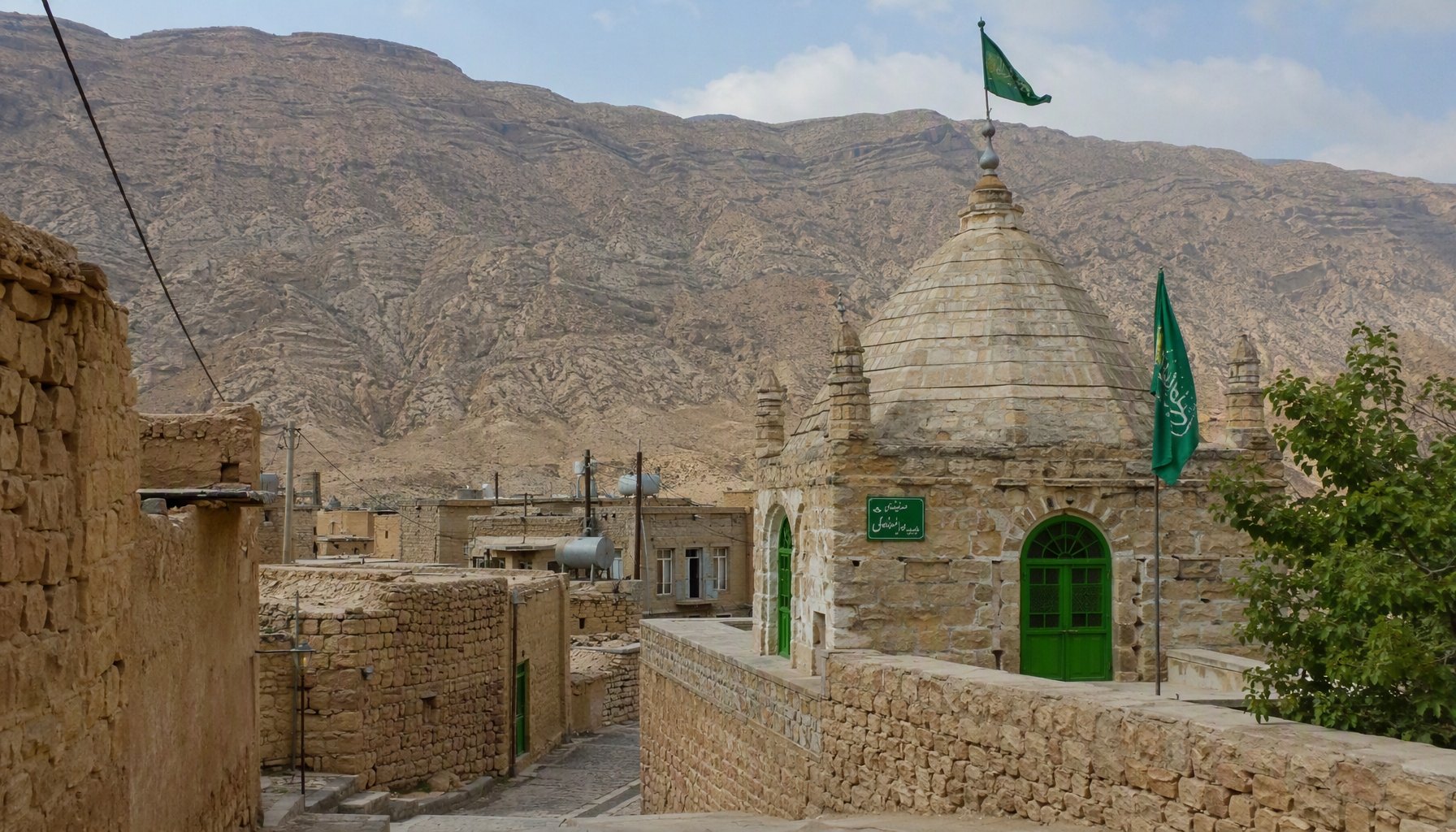
The name Haft Gonbad, Seven Domes, came into use in the Islamic period, when seven domed shrines or mausoleums became the most visible landmarks of the ancient city. These structures, dedicated to local saints and imamzadehs (descendants of the Imams), gave the site a religious as well as a civic character, and they drew pilgrims from the surrounding region. Today, the Imamzadeh Masum in Dehdasht is one of the most visited religious sites in Kohgiluyeh and Boyer-Ahmad province, and its presence links the modern city to the deep historical layers beneath it.

The Archaeological Remains
The archaeological landscape of Belad Shapoor is extensive and varied. Surveys and limited excavations have revealed a city that was planned and built with considerable sophistication. The stone-paved streets indicate a level of urban infrastructure that was advanced for its time. The residential quarters show a mix of housing types, from modest single-room dwellings to larger courtyard houses that suggest the presence of a prosperous merchant or official class.
The bathhouses are among the most distinctive features. Sasanian bath architecture in Iran typically follows a pattern of sequential rooms, from cold to warm to hot, heated by a hypocaust system that circulated hot air beneath the floor. The Belad Shapoor baths follow this tradition, and their remains provide valuable evidence for understanding daily life in a Sasanian provincial city. The water supply for the baths and the city as a whole came from a combination of surface channels and underground qanat systems, the ancient Persian technology of tapping groundwater from mountain aquifers and carrying it to the plain by gravity.
The mosques represent the Islamic layers of the city's history. The Jumeh Mosque (Friday Mosque) of Dehdasht is the principal congregational mosque, and its location in the old city centre suggests that it may occupy the site of an earlier Sasanian fire temple, as was common in Iranian cities that converted to Islam. The mosque has been renovated over the centuries, but its basic plan and some of its structural elements may be medieval or older.
The caravanserai is the most visually impressive of the surviving structures. Built of local stone, it follows the standard Iranian caravanserai plan: a large rectangular courtyard surrounded by vaulted rooms, with a monumental entrance portal and defensive corner towers. Travellers and their animals would enter through the portal, unload their goods in the courtyard, and stable their mounts in the ground-floor rooms while they slept in the upper chambers. The caravanserai of Belad Shapoor is significant not only for its size and state of preservation, but for what it tells us about the trade routes that passed through Dehdasht, connecting the interior of Iran to the Persian Gulf ports and to the Mesopotamian cities to the west.
Where is Belad Shapoor?
Dehdasht, the modern city that encompasses the archaeological site of Belad Shapoor, is located in Kohgiluyeh and Boyer-Ahmad province in southwestern Iran. The city's coordinates are approximately 30.796 degrees north and 50.566 degrees east, placing it on the western slopes of the Zagros mountains, between the high plateau of central Iran and the hot lowlands of Khuzestan to the west.
Kohgiluyeh and Boyer-Ahmad is one of Iran's less-visited provinces, and Dehdasht is not a city that appears on the standard tourist itinerary. But its location, between the major cultural centres of Fars (Shiraz and Persepolis) and the oil cities of Khuzestan (Ahvaz and Abadan), makes it a natural waypoint for travelers exploring the southwestern quarter of the country. The distance from Shiraz to Dehdasht is approximately 280 kilometres and four to five hours by road. From Ahvaz, the distance is about 220 kilometres and three to three and a half hours. From Yasuj, the provincial capital, it is roughly 150 kilometres and two and a half hours.
If you are planning your trip, open Mehyar and check Buses for connections from Yasuj, Ahvaz, or Shiraz to Dehdasht. The roads are mountainous in places, and the drive itself is scenic, crossing Zagros passes with views of oak forests and traditional villages. Mehyar Taxi can arrange the last stretch from the Dehdasht bus station to the old city centre and the archaeological sites.
The Story of the Name: From Jumeh to Dehdasht
The history of the city's names is itself a small archaeological puzzle. The original Sasanian foundation was known as Jumeh, a name that appears in early Islamic geographical texts as a prosperous town on the road between Fars and Ahvaz. Over time, the city acquired the name Belad Shapoor, reflecting its founding by Shapur I and preserving the memory of the Sasanian king in the local toponymy.
The name Dehdasht, the modern name, is of more recent origin. It is said to derive from the Persian words dehdasht, meaning "open plain" or "village plain," and it came into use as the city's agricultural character became more prominent in the Safavid and later periods. The older names, Belad Shapoor and Haft Gonbad, persist in historical and archaeological discourse, and they are the names by which the site is known to scholars and to the cultural heritage authorities who manage its protection.
Recent archaeological work has pushed the known history of the site even further back. Excavations in the Dehdasht area have revealed evidence of human settlement dating back approximately 7,000 years, well before the Sasanian period. This suggests that the location was attractive to human communities long before Shapur I chose it as the site for one of his cities, and that the Sasanian foundation was built on a landscape that already had a deep history of habitation.
Visiting Belad Shapoor Today
Belad Shapoor is not a developed tourist site, and visitors should come with the expectation of exploring a historical city embedded in a living modern town rather than visiting a managed archaeological park. The old city fabric of Dehdasht can be walked on foot, and the main points of interest include the Safavid caravanserai, the Jumeh Mosque, the Imamzadeh Masum shrine, and the remnants of the stone-paved streets and domed structures that can be found in various locations throughout the old quarter.
The caravanserai is the most accessible and the most impressive of the individual monuments. Its stone walls and vaulted chambers are well preserved, and it offers a tangible sense of the scale and ambition of Safavid-period architecture in southwestern Iran. The building is not always open to the public, but it can usually be viewed from the outside, and local cultural heritage office can sometimes arrange access.
The Imamzadeh Masum is an active religious site, and visitors should observe appropriate dress and behaviour. The shrine complex includes courtyards, prayer halls, and the domed tomb, and it is an important centre of local religious life. Non-Muslim visitors are generally welcome to observe the exterior and the courtyards, but should be respectful of the sacred nature of the space.
The best time to visit Dehdasht and Belad Shapoor is in spring, particularly March and April, when the Zagros foothills are green and the weather is mild. Summers are very hot, as the city sits in a transitional zone between the high mountains and the Khuzestan plain, and temperatures can exceed 40 degrees Celsius. Winters are mild but can be wet, and some roads in the surrounding mountains may be difficult in heavy rain.
Belad Shapoor in the Context of a Southwestern Iran Itinerary
For travelers interested in the Sasanian heritage of Iran, Belad Shapoor offers a distinctly different experience from the more famous Sasanian sites of Fars province. Bishapur, near Kazerun, is a planned Sasanian city with spectacular rock reliefs and a famous mosaic-floored audience hall. Firuzabad has the palace of Ardashir I and the surrounding Sasanian landscape. These sites are monumental and well-developed for tourism. Belad Shapoor, by contrast, is quiet, unpretentious, and embedded in the daily life of a small provincial city. It rewards the traveler who is willing to go off the beaten path and to look for history in the fabric of a living community rather than in a curated museum.
A southwestern Iran itinerary that includes Belad Shapoor could begin in Shiraz, with its gardens, mosques, and the gateway to Persepolis. From Shiraz, the road to Dehdasht passes through the Sasanian landscape of Fars, including the ruins of Bishapur and the rock reliefs of Sarab-e Bahram. From Dehdasht, the road continues west into Khuzestan, where the ancient Sasanian landscape gives way to the hot plains and the cities of Ahvaz, Shushtar (with its famous Sasanian hydraulic works), and Dezful. Mehyar Buses and Mehyar Taxi can support travel along this entire corridor, and the combination of Sasanian, Islamic, and natural heritage in southwestern Iran is one of the most rewarding itineraries in the country.
Belad Shapoor is a reminder that the history of Iran is not confined to its most famous monuments. In small cities like Dehdasht, in valleys and on plains far from the tourist highways, the layers of the past continue to shape the landscape, and the names of ancient kings still echo in the streets. For the traveler who takes the time to look, Belad Shapoor offers a glimpse of a side of Iran that is rarely seen but deeply authentic.