
Few places in Iran produce the sense of wonder that Bandar Tang delivers. This small coastal village, tucked into the southeastern corner of Sistan-Baluchestan province, sits at the exact point where the golden sands of the Makran Desert slide into the turquoise waters of the Gulf of Oman. The result is a landscape that looks almost impossible, a place where wind-carved sandstone cliffs stand beside clear coastal waters and where desert wildlife shares the shoreline with marine turtles. For travelers drawn to raw, untouristed landscapes, Bandar Tang is one of the most rewarding destinations Iran has to offer.
Chabahar county, the broader region that claims Bandar Tang, has earned a reputation as one of Iran's most fascinating corners. Its position on the Gulf of Oman gives it a tropical climate unlike anywhere else in the country, and its coastlines host geological formations, marine ecosystems, and cultural traditions that connect Iran to the Indian Ocean world. Bandar Tang sits within this extraordinary county, offering visitors a concentrated dose of everything that makes the Makran coast so compelling.
Location and Geography
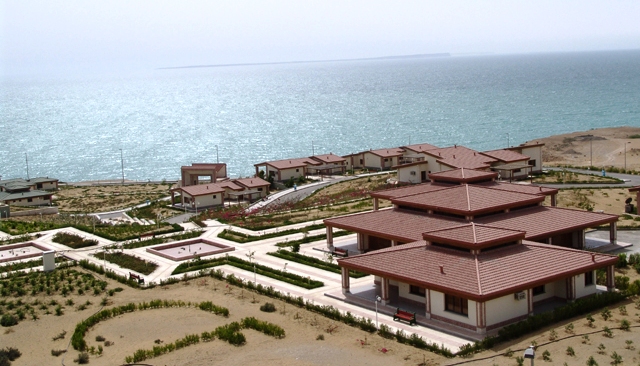
Bandar Tang is a coastal village located in the Kahir Rural District of Chabahar county's Central District. It sits at approximately 25 degrees and 21 minutes north latitude and 59 degrees and 53 minutes east longitude, placing it roughly 35 kilometers southeast of Chabahar city center. The village has a population of around 1,500 people, most of whom belong to the local Baluchi community and earn their living through fishing and small-scale trade.
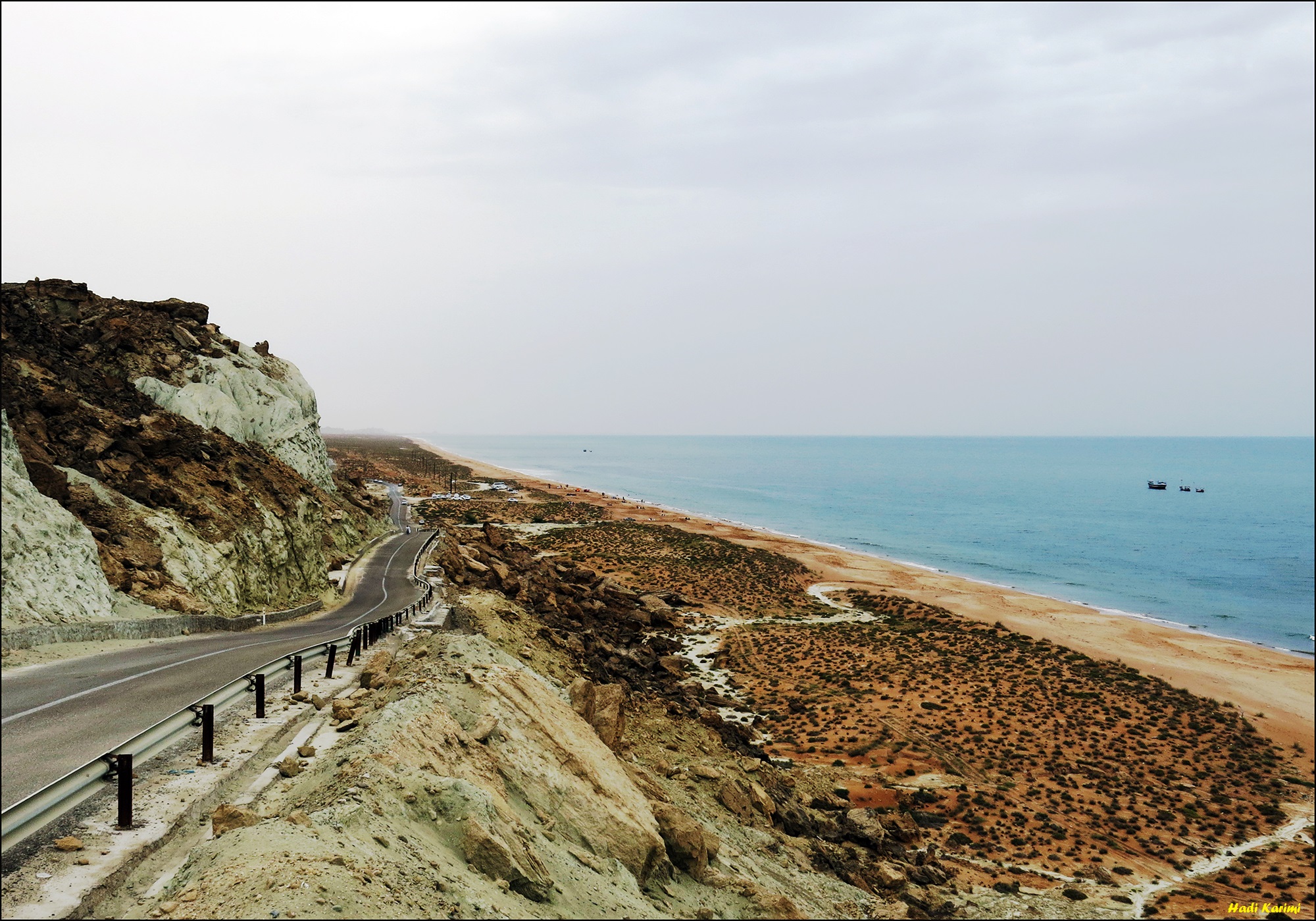
The geography here is dramatic. The Makran coastline, which stretches along the Gulf of Oman from southeastern Iran into Pakistan, is a tectonically active zone where the Arabian Plate meets the Eurasian Plate. This collision has produced a landscape of folded mountains, deep valleys, and sudden coastal escarpments. At Bandar Tang, these geological forces have created a scene of striking contrasts. Wind-eroded rock formations, shaped over millennia by the persistent monsoon winds that sweep across the Makran coast, stand like sculptures along the shoreline. Sandy beaches alternate with rocky headlands, and the clear water reveals colorful marine life just meters from the shore.
The climate is tropical and semi-arid, with very little rainfall concentrated in the winter months. Summer temperatures can climb above 40 degrees Celsius with high humidity, but the sea breeze provides some relief. Winter and spring, from November through April, bring the most comfortable conditions for outdoor exploration.
What to See and Do
The primary attraction at Bandar Tang is the landscape itself. The meeting of desert and sea creates visual contrasts that photographers and nature lovers find irresistible. The wind-eroded cliffs, sometimes called yardangs by geologists, take on fantastical shapes that recall the weathered formations of desert canyons elsewhere in Iran. At Bandar Tang, however, these formations are framed by the sparkling waters of the Gulf of Oman, a combination you will not find anywhere else.
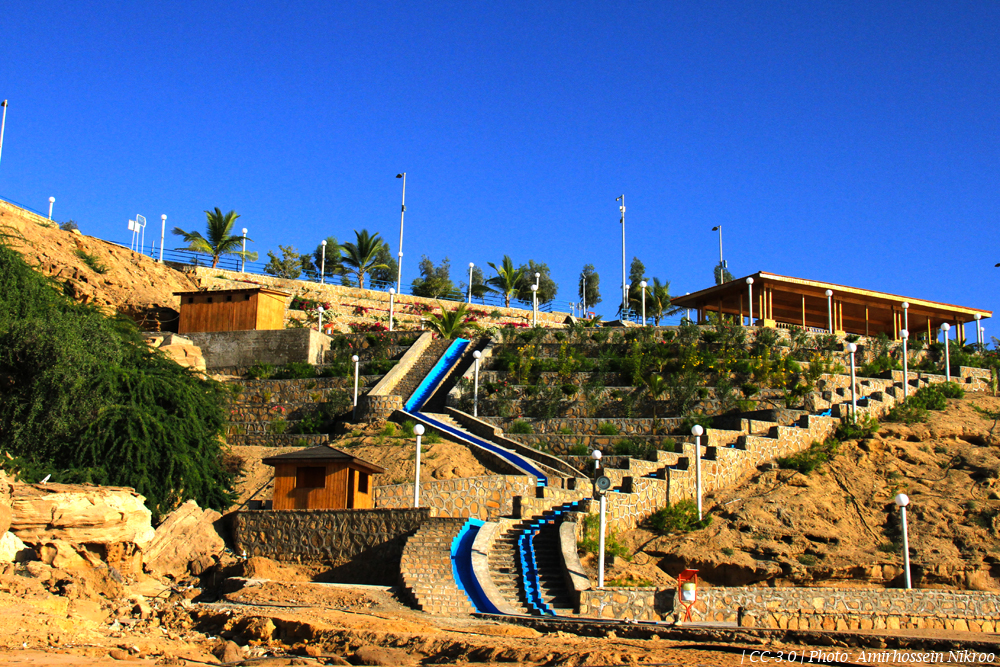
The beaches of Bandar Tang are among the most important sea turtle nesting sites on the Iranian coast. Several species of marine turtle, including the endangered green turtle and the loggerhead turtle, come ashore here to lay their eggs in the sand. The nesting season runs primarily from March through July, and the beach occasionally hosts conservation volunteers who monitor the nests and protect hatchlings. Visiting the beach during nesting season offers a chance to witness this remarkable natural event, though visitors should follow guidelines to avoid disturbing the turtles.
The Gel-Afshan mud volcano, one of the most popular geological attractions in the Chabahar region, lies within easy reach of Bandar Tang. This small but active mud volcano periodically erupts with cool mud and gases, creating a bubbling cone of gray clay that locals believe has medicinal properties. The mud is cool to the touch, unlike volcanic material elsewhere, because the eruptions are driven by trapped gases rather than magma. It is a surreal experience to stand beside a bubbling mud pot with the ocean visible in the background.
Lipar Wetland, also known as Lipar Lagoon, sits nearby and provides another contrast to the desert surroundings. This freshwater lagoon, fed by local springs and seasonal rains, attracts flamingos, herons, and a variety of migratory waterbirds. The wetland is set against a backdrop of barren mountains and is at its most beautiful in early morning when the light turns the water pink and gold. Birdwatchers will find it one of the most productive sites in southeastern Iran.
For those interested in the cultural landscape, the Baluchi communities around Bandar Tang maintain a rich tradition of handicrafts, music, and cuisine. The local needlework, known as susun-duzi, is among the finest in Iran, with intricate geometric patterns embroidered onto fabric in vivid colors. Local fishermen also offer opportunities to observe traditional fishing methods, including the use of small wooden boats called lenj, which have been built along this coast for centuries.
History and Cultural Context
The Makran coast has served as a maritime crossroads for thousands of years. Ancient Greek geographers knew this coastline as part of Gedrosia, the harsh desert province through which Alexander the Great marched his army in 325 BCE. The journey nearly destroyed his forces, and the reputation of the Makran as a formidable landscape has persisted ever since. Yet the coast also facilitated trade between the Persian Empire and the civilizations of the Indian subcontinent, and ports along this shore prospered from commerce in spices, textiles, and precious stones.
Bandar Tang itself is a modest village with no major historical monuments, but its location places it within a landscape deeply marked by human activity over millennia. The nearby port of Tis, an ancient harbor that predates the establishment of Chabahar, contains ruins that suggest continuous settlement since at least the Achaemenid period. The broader Chabahar region has long been home to Baluchi tribes whose cultural traditions, architecture, and social organization reflect a distinct identity within Iran's diverse ethnic mosaic.
The Baluchi people have inhabited the Makran region for centuries, and their culture shows influences from both the Iranian plateau and the Indian Ocean littoral. Traditional Baluchi architecture in the area features thick mud-brick walls designed to keep interiors cool, wind towers that catch the occasional breeze, and compact village layouts that provide shelter from the sun. Visitors to Bandar Tang and surrounding villages will notice the distinctive clothing, music, and cuisine that set the Baluchi communities apart from other Iranian populations.
Practical Information
Bandar Tang is a small village with limited tourist infrastructure. There are no hotels in the village itself, though Chabahar city offers a range of accommodation options from budget guesthouses to mid-range hotels. Mehyar Hotels can help travelers find suitable lodging in Chabahar, with options that place you within driving distance of Bandar Tang and other coastal attractions. Restaurants in the village are informal affairs, with local families selling freshly caught fish and traditional Baluchi dishes. Visitors should carry their own water and supplies, as services are limited.
There is no entrance fee to visit Bandar Tang or its beaches. The area remains largely undeveloped for tourism, which adds to its appeal but also means that travelers need to be self-sufficient. Sun protection is essential, as shade is scarce along most of the coastline. The best approach is to visit as a day trip from Chabahar, allowing enough time to explore the beaches, the eroded cliffs, and nearby attractions like the mud volcano.
Best Time to Visit
The ideal time to visit Bandar Tang is between November and April, when temperatures are moderate and the weather is most comfortable for outdoor activities. The winter months, from December through February, offer daytime temperatures in the pleasant range of 25 to 30 degrees Celsius, with cool evenings. This is also the period when Chabahar hosts various cultural events and the surrounding countryside is at its greenest.
If you are interested in seeing sea turtle nesting, plan your visit between March and July. The peak nesting activity typically occurs in April and May, though the exact timing varies from year to year. Summer months, from June through September, bring extreme heat and humidity that can make exploration uncomfortable and even dangerous without proper preparation. The monsoon winds, which give the Makran coast its name, are strongest during the summer and can create rough sea conditions.
How to Get There
Reaching Bandar Tang requires traveling to Chabahar first. The most practical approach for most visitors is to fly into Chabahar Airport, which receives regular flights from Tehran and other major Iranian cities. From the airport, the drive to Bandar Tang takes roughly 45 minutes to an hour along the coastal road.
By Mehyar Taxi. The most convenient way to reach Bandar Tang from Chabahar is by booking a Mehyar Taxi. The ride gives you the freedom to stop along the way at viewpoints, the mud volcano, or the Lipar Wetland. Your driver can wait while you explore the beach and then bring you back to Chabahar on your schedule.
By private car. Driving from Chabahar to Bandar Tang follows a straightforward coastal road heading southeast. The route is well paved and clearly signposted. Renting a car in Chabahar gives you maximum flexibility to explore the wider Makran coastline at your own pace.
By local transport. Shared taxis and minibuses run between Chabahar and villages along the coast, though schedules are irregular. This option is the most economical but requires patience and some ability to communicate in Persian or Baluchi.
Whichever option you choose, the journey itself is part of the experience. The coastal road from Chabahar to Bandar Tang passes through landscapes that shift from barren desert to sudden green oases, with the Gulf of Oman always visible to the south. It is a road that reminds you why travelers have been drawn to this corner of Iran for centuries, and why Bandar Tang, with its meeting of desert and sea, remains one of the country's most unforgettable destinations.